
Hong Kong Mahjong Tips: Rules, Hands & Strategy
Last updated: Nov 23, 2026
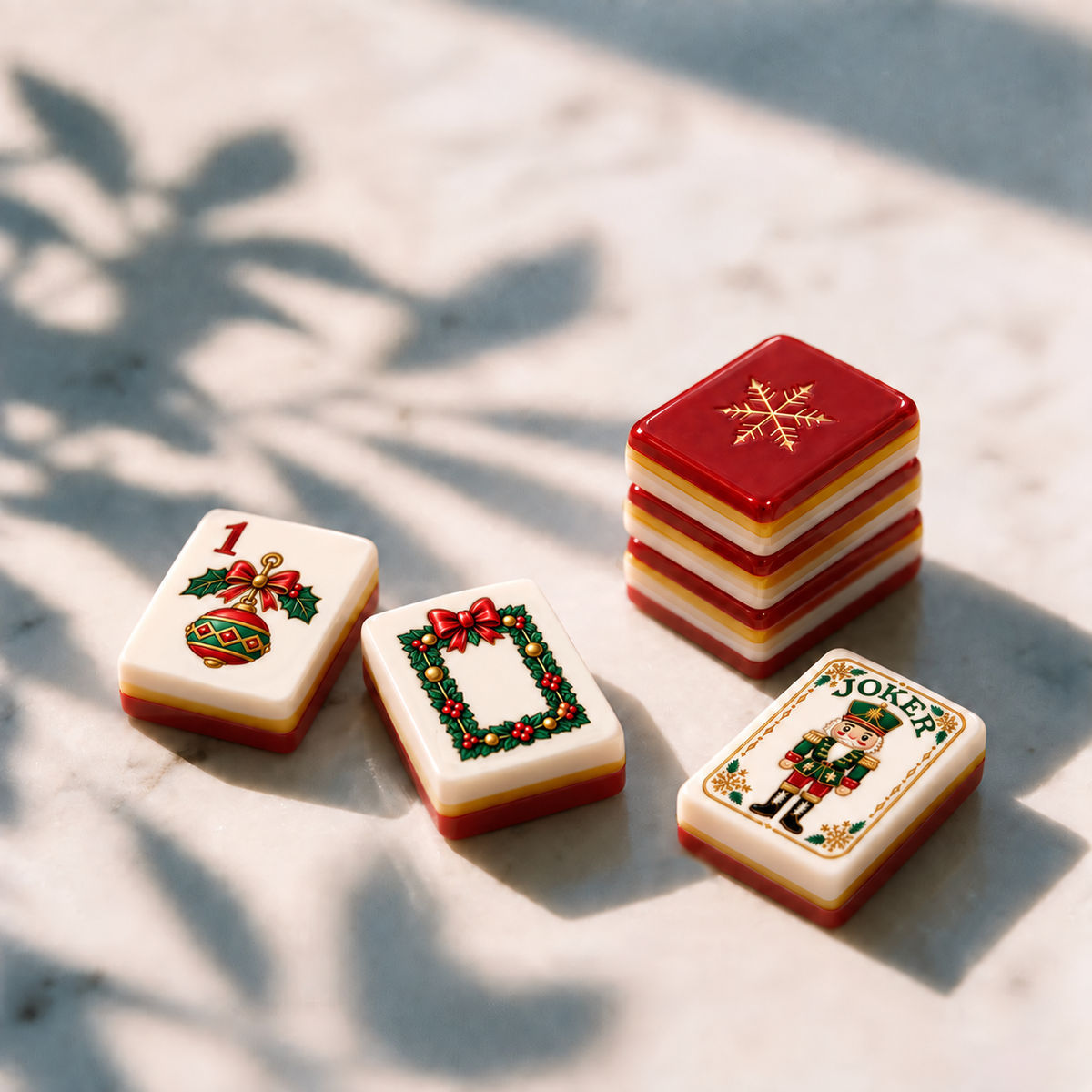
Hong Kong mahjong uses 136 tiles—three suits (Bams, Craks, Dots) numbered 1–9 in four copies each, 16 winds, 12 dragons, and 8 flowers—with no jokers. Play begins with 13 tiles per player; you draw, then discard, aiming to form a complete hand of melds (chows—three consecutive numbers; pungs—three identical; kongs—four identical) plus a pair. Chows are core to Hong Kong strategy; you can call ("chow") another player's discard if it completes a waiting hand. Winning combinations vary by regional house rules, but most players aim for a complete meld-and-pair hand with no "dead" tiles. Speed is central: Hong Kong play runs faster than American, and luck matters less than reading discards and calculating odds. If you're switching from American mahjong's rigid card-based hands, expect to memorize patterns and think on your feet. Mahstead offers best-selling mahjong sets in American format with 152 tiles; if you're mixing variants, keep your sets separate to avoid confusion mid-game. 🀄 Shop best-selling mahjong sets →
How does Hong Kong tile setup differ from American?
Hong Kong uses 136 tiles total; American uses 152. Hong Kong includes no jokers—every meld must be formed from actual tiles. American mahjong is strictly card-based: hands are fixed each year by the National Mah Jongg League, and you cannot call or expose chows. In Hong Kong, chows are the backbone: you call them from the discard pile, exposing them on the table, and your entire strategy revolves around reading what others need. Setup time is faster—no Charleston (tile-passing ritual), just a shuffle and deal. If you're hosting a mixed-variant night, use separate sets and clearly label which table plays which game.

What are chows and why are they worth learning?
A chow is three consecutive numbers in the same suit—for example, 4 Dots, 5 Dots, 6 Dots. Unlike pungs (three identical tiles), chows are not part of the closed hand; you can call them from the discard, expose them, and add to your score. In American mahjong, chows cannot be exposed or called at all. In Hong Kong, chows make up roughly half your winning hand, and the ability to spot a chow opportunity before other players is what separates experienced players from beginners. You can build a chow from discards—if you have 4 Dot and 5 Dot in your hand, and someone discards 6 Dot, you call "chow," expose the set, and continue. Recognizing which tiles are "safe" (unlikely to complete a chow for waiting players) is the core defensive skill.
How do you read your hand and calculate winning odds?
Start by sorting your 13 tiles into suits and rank. Count how many pairs you have—ideally one for the final pair, and note which are "active" (three or more of the same rank nearby). Next, identify your potential chows: any two consecutive tiles in the same suit represent a chow waiting for one more tile. For example, if your hand holds 2 Bam, 3 Bam, you're waiting for a 1 Bam (before your pair) or a 4 Bam (after). Count how many tiles can complete you: if you're waiting for a 4 Bam and three copies have already been discarded, your odds of drawing it drop sharply. Track every discard around the table—Hong Kong players keep a mental map of what's live. A working hand has at least two independent ways to complete (called "outs"); a dead hand has fewer than two. Never hold more than two pairs unless they're part of a winning pattern; dead pairs clog your hand and reduce flexibility.
Which tiles are safe to discard early, and why?
Early game (turns 1–6), players are still forming hands, so most tiles carry risk. However, extreme numbers—1s and 9s—are hardest to use in chows because they anchor only one edge. A 1 Bam completes only chows like 1-2-3; a 9 Crak completes only 7-8-9. In contrast, 4s and 5s are "middle" tiles that fit into many chows, so discarding them early is more dangerous. Winds and dragons are useful primarily for pungs and kongs, not chows; if you don't see three of a wind or dragon within your first two turns, discard them. Terminal tiles (1s and 9s) that nobody has called after three discard rounds are relatively safe. Watch what other players are retaining: if East has kept three Craks and discards a 2 Crak, they're not building a Crak hand, so Craks are safer for you. Never discard a tile that directly blocks another player's obvious chow—for instance, if South has exposed 2 Dot, 3 Dot, don't discard a 4 Dot unless you're desperate. Safe discard order: uncalled dragons and winds, then 1s and 9s, then middle tiles after mid-game.

What's the best strategy for defense when others are close to winning?
Defense begins the moment someone exposes a meld. If East exposes 4 Dot, 5 Dot, 6 Dot, they're building around Dots—hold your terminal Dots (1 and 9) and unusual high-value Dots. Never discard tiles that perfectly continue their exposed melds. If East has 4 Dot, 5 Dot exposed and you see a 3 Dot or 6 Dot in your hand, keep it unless you're one tile away from winning; discarding it gives them an easy extension. Count the number of tiles each player needs: if South is one discard away from going out, immediately shift to pure safety—discard only 1s, 9s, and honors (winds and dragons) unless they've already called them. Discard the most recently played honor from another player's discard pile; if West just threw away a Red Dragon, West probably doesn't need it, so it's safer. Communicate indirectly with body language—hesitation over a tile signals you want to keep it, which can deter others from holding similar tiles. In final turns, players often discard their safest tile last; reverse-read their hesitation patterns.
Setup & Pace | American (152 tiles) | Hong Kong (136 tiles) |
Jokers | 8 included | None |
Hand format | Card-based, fixed yearly | Memory-based, flexible melds |
Chows | Cannot call or expose | Central; called from discard |
Starting tiles | 14 (after Charleston) | 13 |
Play speed | Moderate, ritual-heavy | Fast, decision-focused |
Variant switch | Use separate set; avoid mixing | Use separate set; avoid mixing |
🎁 See our most-loved mahjong sets & accessories →
Common mistakes and how to avoid them
Holding too many pairs. New Hong Kong players often keep three or four pairs, hoping to build a big hand. This slows you down and leaves you with no tiles to chow. Keep only two pairs maximum—one for the final pair, one backup in case your first pair gets blocked.
Discarding middle tiles too late. A 4, 5, or 6 is dangerous in mid-game; once you've seen three copies, the fourth becomes safe. Many beginners hold middle tiles all the way to turn 10, by which time the pool is drained and they're forced to throw it, giving someone else a chow.
Not reading the discard pile. The 20+ tiles in the discard pile are your best source of information. If you see three 2 Craks already thrown, don't expect the fourth; if no 7 Bams have been discarded after eight turns, one player has two or three. Scan before deciding what to hold.
Calling chows recklessly. Yes, you can call a discard to complete a chow, but do it only if you're still working toward a win. Calling exposes your meld; other players now know your suit focus and can adjust their discards. Don't call just to get ahead in the round; stay closed as long as possible.
Underestimating winds and dragons. Many Hong Kong hands include a pung of dragons or winds, not just chows. If you've collected three White Dragons by turn 4, don't dismiss them—they're already halfway to a winning pung.
What to check before you buy a set for mixed-variant play
If you're hosting American and Hong Kong mahjong nights, you'll need two separate sets. Verify your American set has exactly 152 playing tiles plus spare jokers; American sets use jokers, which Hong Kong does not. A 160-tile set, like those from our best-selling collection, includes 152 playing tiles plus extras, and works for American mahjong only. For Hong Kong, source a 136-tile set separately—this is beyond Mahstead's current range but is essential to avoid tile conflicts.
Ensure each set has a consistent face size and weight; if one American set uses 1-inch tiles and another uses 0.9-inch tiles, they'll feel unbalanced when mixed on the same mat. Clarity matters: acrylic tiles with printed symbols are easier to read than engraved tiles in dim light. Consider getting a dedicated mahjong mat for each variant so players know which game is being set up. Label your sets clearly—a marker on the tile pouch or case prevents mid-game confusion.
✨ Find your Mahstead set — free US shipping →
Setting up for your first Hong Kong game
Shuffle all 136 tiles face-down on the mat. Each of four players draws a wall of 34 tiles (two stacks of 17), arranged in a square. The player in East position draws two additional tiles, then discards one. Play moves counterclockwise. Each turn: draw a tile from the wall, then discard one. If someone's discard completes a chow, pung, or kong in your hand, you can call it; announce the meld, expose it face-up on your rack, and play resumes from your discard. When your hand is complete—four melds (chows, pungs, or kongs) plus one pair—you declare and show your hand. Scoring varies by region; most Hong Kong games use a base point system multiplied by your melds' complexity. If nobody wins after all wall tiles are drawn, the round is a draw ("goulash") and players pay a small penalty into the pot for the next round.

FAQ
Can I play Hong Kong mahjong with only four players, or do I need more?
Four players is standard and optimal for Hong Kong mahjong. The game is mathematically balanced for four; fewer players drastically change tile distribution and odds, making strategy less reliable and the game less social.
What happens if I call a chow incorrectly or change my mind?
Most house rules penalize a false call by requiring you to take back the meld and draw penalty tiles, or to "eat" a point loss. Always confirm your meld before announcing; once announced, it cannot be undone. Check local rules before your first game.
Is Hong Kong or American mahjong harder to learn?
Hong Kong has a lower barrier to entry—basic rules take 20 minutes—but mastery requires reading skills and math that develop over months. American mahjong has higher initial complexity (the card, the Charleston) but offers predictability once learned. If you like improvisation, choose Hong Kong; if you prefer strategy grids, choose American.
Can I use American mahjong tiles in a Hong Kong game?
No. American sets have 152 tiles plus 8 jokers; Hong Kong uses 136 tiles with no jokers. Mixing them creates confusion and ruins the game balance. Always use a dedicated set for each variant.
How do I know which version to teach a beginner?
If your group already plays American, teach Hong Kong as a summer variant to keep games fresh. If starting from scratch, American is easier to set up and schedule because hands are predetermined by the card. Hong Kong rewards quick thinkers and memory; American rewards pattern recognition and patience.


View More
View More
View More
