
Mahjong Classes for Beginners in Columbus: Where to Start
Last updated: Nov 23, 2026
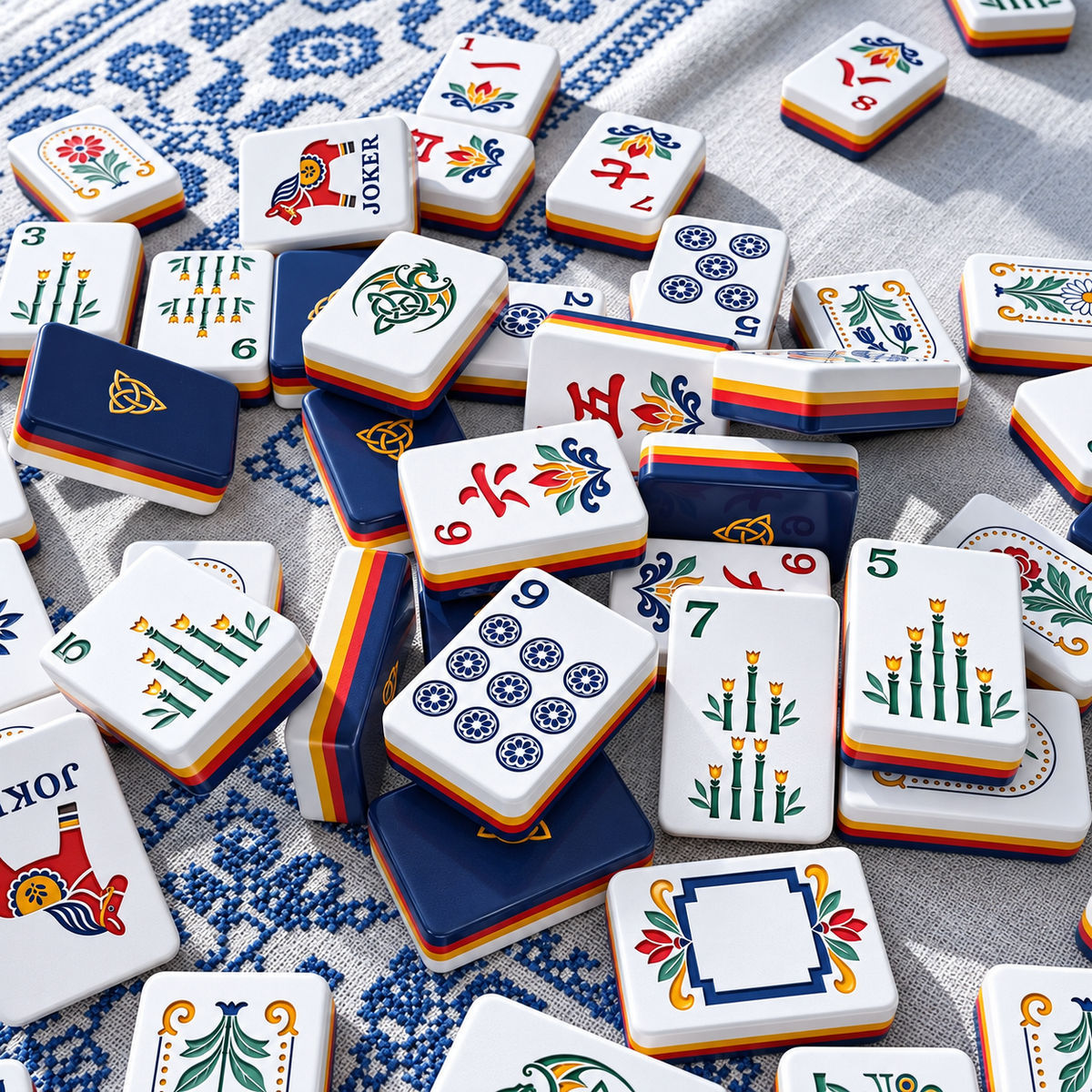
Columbus beginners can find mahjong classes through community recreation centers, local libraries, and synagogues—all common hosts for game groups. Classes typically run 4–8 weeks, 1–2 hours per session, and cost anywhere from free (library-hosted) to modest fees (recreation programs). Most instructors teach American mahjong using the current National Mah Jongg League card and focus on tile recognition, the Charleston (pre-game tile exchange), and reading hand patterns before teaching scoring. Start by calling your neighborhood community center or searching "mahjong" on Meetup; many groups welcome drop-ins to a weekly game after a brief primer. You'll need a 160-tile set with jokers, a mat to protect the table, and a copy of this year's card—our best-selling mahjong sets ship free across the US and include everything a new player needs to get started fast.
Columbus has multiple avenues for learning mahjong: community centers, libraries, and private instructors all offer beginner-friendly lessons. Classes typically run 4–8 weeks, 1–2 hours per session, and cost anywhere from free (library-hosted) to modest fees (recreation programs). Most instructors teach American mahjong using the current National Mah Jongg League card and focus on tile recognition, the Charleston (pre-game tile exchange), and reading hand patterns before teaching scoring. Start by calling your neighborhood community center or searching "mahjong" on Meetup; many groups welcome drop-ins to a weekly game after a brief primer. You'll need a 160-tile set with jokers, a mat to protect the table, and a copy of this year's card—our best-selling mahjong sets ship free across the US and include everything a new player needs to get started fast.
Where do Columbus beginners actually find mahjong lessons?
Community recreation departments often host mahjong for beginners in fall and winter. Call your local park and rec office or check their online class catalog—many offer rolling enrollment. Public libraries in the greater Columbus area frequently sponsor free game nights or teach-and-play events; ask the reference desk or check the event calendar. Synagogues and Jewish community centers (particularly active in the Columbus area) traditionally teach American mahjong and welcome all backgrounds—start by emailing their program coordinator. Private instructors advertise on Meetup, Facebook community boards, and neighborhood apps; look for instructors who mention "American mahjong" and "NMJL card" (National Mah Jongg League). The advantage of a structured class over a drop-in game is paced learning: you'll move from tile names and suits to hand patterns over weeks, not hours. All paths lead to the same skill: recognizing which 14-tile combinations win, how to declare, and how to score.
🀄 Shop best-selling mahjong sets →

What should a beginner bring to their first class?
Bring a notebook, pen, and an open mind—your instructor will likely provide or lend a starter set if you don't own one yet. If you've already bought a set, bring it; most beginners use a basic 160-tile American mahjong set with clear tile markings (bamboo, circles, characters, winds, dragons, flowers, jokers). Wear comfortable clothing; mahjong sessions run 60–120 minutes, and you'll be sitting and handling tiles. Some players bring a tile holder or rack with pushers to keep their hand organized—especially helpful if you've never played before and want to avoid fumbling. A mat protects the table and keeps tiles from sliding; your host may provide one, but having your own means you can practice at home. The single most important thing: no pressure. Beginner classes move slowly, repeat rules constantly, and normalize mistakes—nobody wins their first four games, and that's the point.
How quickly can a beginner expect to play a real hand?
Most beginners play their first complete hand—deal to win or bust—within 2–3 class sessions. The first session usually covers tile names (three suits: Bams, Craks, Dots; plus winds and dragons), the Charleston ritual (the pre-game tile-passing that randomizes hands), and how to draw and discard. Session two introduces the NMJL card and hand patterns; you'll start recognizing which combinations of 14 tiles win. Session three or four, you play a full game with instructors calling out plays and explaining scoring. Real mastery—knowing 30+ hand patterns and playing without coaching—takes 8–12 weeks of weekly play. Speed varies: some players nail hand recognition in a month, others need two. The key is that every hand teaches you something, and there's no timer. Play at your own pace.
What's the best way to prepare between classes?
Buy or borrow the current year's National Mah Jongg League card and spend 10 minutes a day looking at a few hand patterns—start with the simplest (straight runs like "2-3-4-5-6 Bams all same") and move to complex combos. Play practice hands at home using your set; lay out a 14-tile winning hand and ask yourself, "How would I call this?" Most beginners find that studying the card for just 15 minutes before the next class dramatically speeds up pattern recognition. Watch how experienced players sort their hand during games: they group suits together and arrange tiles by number. Copy that habit immediately—it cuts decision time and shows you what you're actually holding. If your class uses racks with pushers, practice organizing tiles in your rack at home so you're not fumbling during the real game. Finally, ask your instructor for one hand pattern to focus on each week rather than trying to memorize the whole card at once.

Which Columbus resources should a new player bookmark?
The National Mah Jongg League's official website publishes the annual card (the rulebook for American mahjong) every spring—bookmark it. Your instructor will hand out a printed copy or PDF; if not, ask for one. Many Columbus game groups share house rules or beginner guides in a shared document or email; ask to be added to the group chat. The Mahstead beginner guide walks you through fundamentals: what's in a set, how the Charleston works, and why jokers matter. If you buy a set and want to understand the rules faster, learn how jokers work before your first class—that single concept trips up many beginners. Bookmark your local library's event calendar and your community center's class listings; these update seasonally and often fill up fast. Finally, follow Facebook community groups for "Columbus mahjong" or "Ohio mahjong"—players post games, newcomer-friendly events, and advice constantly.
What gear should a beginner buy versus borrow?
Item | Borrow First? | Buy If | Why |
160-tile set | Yes, try class | Playing weekly+ | You own the tiles; your set is always ready |
Mat | Yes, class provides | Hosting or at-home practice | Protects table; organizes play; feels official |
Racks with pushers | Yes, optional | If hand-sorting frustrates | Organizes tiles; reduces decision fatigue |
NMJL card (printed) | Yes, instructor gives | Studying between games | Personal copy for reference at home |
Bag or case | No, not essential | If traveling to games | Protects tiles; keeps them clean; easy carry |
Dice | Yes, host has them | If teaching new players | Only needed if you become the dealer/teacher |
Most beginners play 3–4 games before deciding whether to buy a set. Borrow from class or a friend first; you'll know within two weeks if mahjong is your hobby or a one-time curiosity. If you decide to buy, choose a set with large, clear tile markings—acrylic or bone tile sets are standard and durable. A mat costs less than a set but transforms the experience; it mutes tile clacking, keeps everything in place, and signals to other players that you're serious. Racks and pushers are genuinely optional—many veterans play without them—but they do slow down errors for beginners. A bag or case becomes useful only after you've bought a set and want to carry it to friends' homes or classes.
🎁 See our most-loved mahjong sets & accessories →
What mistakes do Columbus beginners make and how do you avoid them?
Mistake 1: Memorizing the entire card before playing. Avoid this: learn 5–10 hand patterns and play real games. Your brain learns pattern-matching fastest through play, not study.
Mistake 2: Confusing "pung" (three identical tiles) with "chow" (sequence like 1-2-3). American mahjong has NO sequences; only pungs, kongs, quints, and sextets. Ask your instructor to explain this one concept at your first class.
Mistake 3: Holding jokers for "emergencies." Jokers must be used in groups of 3+ or in a pair; never save one for a single tile. Throw jokers early if you can't use them.
Mistake 4: Not understanding the Charleston. The Charleston is not optional—it's how the game begins. You pass tiles left, right, and across before dealing a hand. Practice it once at home so you're not confused on day one.
Mistake 5: Buying an incomplete or novelty set. Buy a 160-tile American mahjong set (152 playing tiles + spares) with four copies of each tile number and all winds, dragons, flowers, and jokers. Avoid anything labeled "36-tile travel set" or "decorative"—those are not legal for NMJL play.
Mistake 6: Skipping the Charleston explanation before your first game. The Charleston confuses many beginners, but it takes just 5 minutes to understand. Watch a video or ask your instructor to demo it twice. After that, it's automatic.
What to check before you buy a set
Tile clarity: Can you read the suit symbol (bamboo, circle, character) and the number from 2 feet away? Small or faint markings slow down play and frustrate beginners.
Joker count: The set includes jokers (usually 8 in a 152-tile set). Jokers are essential; if the listing doesn't mention them, ask.
Completeness: The set must include all three suits (1–9 each), winds (North, East, West, South), dragons (Red, Green, White), and flowers (usually 8). Most 160-tile sets include extra jokers or blanks for spares.
Material and weight: Acrylic or bone tiles are standard. Plastic tiles work but feel cheap and slide easily. Hold a sample in a store if you can, or order from a seller with clear return policy.
Included accessories: Does it come with a mat, racks, or case? Many beginner sets bundle a mat and printed card—that's a real value.
Shipping: Confirm free or low-cost shipping. Tiles are heavy; compare total cost, not just set price.
✨ Find your Mahstead set — free US shipping →

FAQ
How much does a beginner mahjong class cost in Columbus?
Free classes (at libraries) to $120–180 for 6–8 week sessions (community centers). Private instructors charge $50–150 per hour. Most groups offer drop-in rates if you don't commit to a full course. Ask your provider about trial sessions.
Can I learn mahjong without taking a formal class?
Yes, but it's much slower. A friend or online guide can teach you, but a live instructor corrects your mistakes in real time and keeps you motivated. Most players learn best with a class for the first 4–6 weeks.
What's the minimum number of players for a game?
American mahjong is designed for exactly four players. Two and three-player variants exist but follow different rules. Always ask your instructor whether the group plays standard four-player or a variant.
Do I need to buy a set before my first class?
No. Instructors provide sets or let you borrow one. Wait until you've played 3–4 games and you're sure you like it before spending money on your own set.
What's the difference between American mahjong and other types?
American mahjong uses a yearly card (NMJL) and allows only exposed groups (pungs, kongs, quints, sextets)—no sequences. Chinese, Hong Kong, and Riichi mahjong follow different rules entirely. Ask your instructor which variant Columbus classes teach; most teach American.
How long does a typical game take?
A casual game with beginners takes 45 minutes to two hours. Experienced players finish in 30–45 minutes. Speed comes with practice; don't worry if your first games drag.
Is mahjong hard to learn?
The basics take two or three sessions. Tile names and hand patterns are learnable in a weekend of focused study. Real fluency—playing without hesitation—takes 8–12 weeks of weekly play. Most people find it easier than they expect once someone explains the card.


View More
View More
View More
