
Mahjong Bluffing Tips: Reading the Table and Playing Mind Games
Last updated: Nov 23, 2026
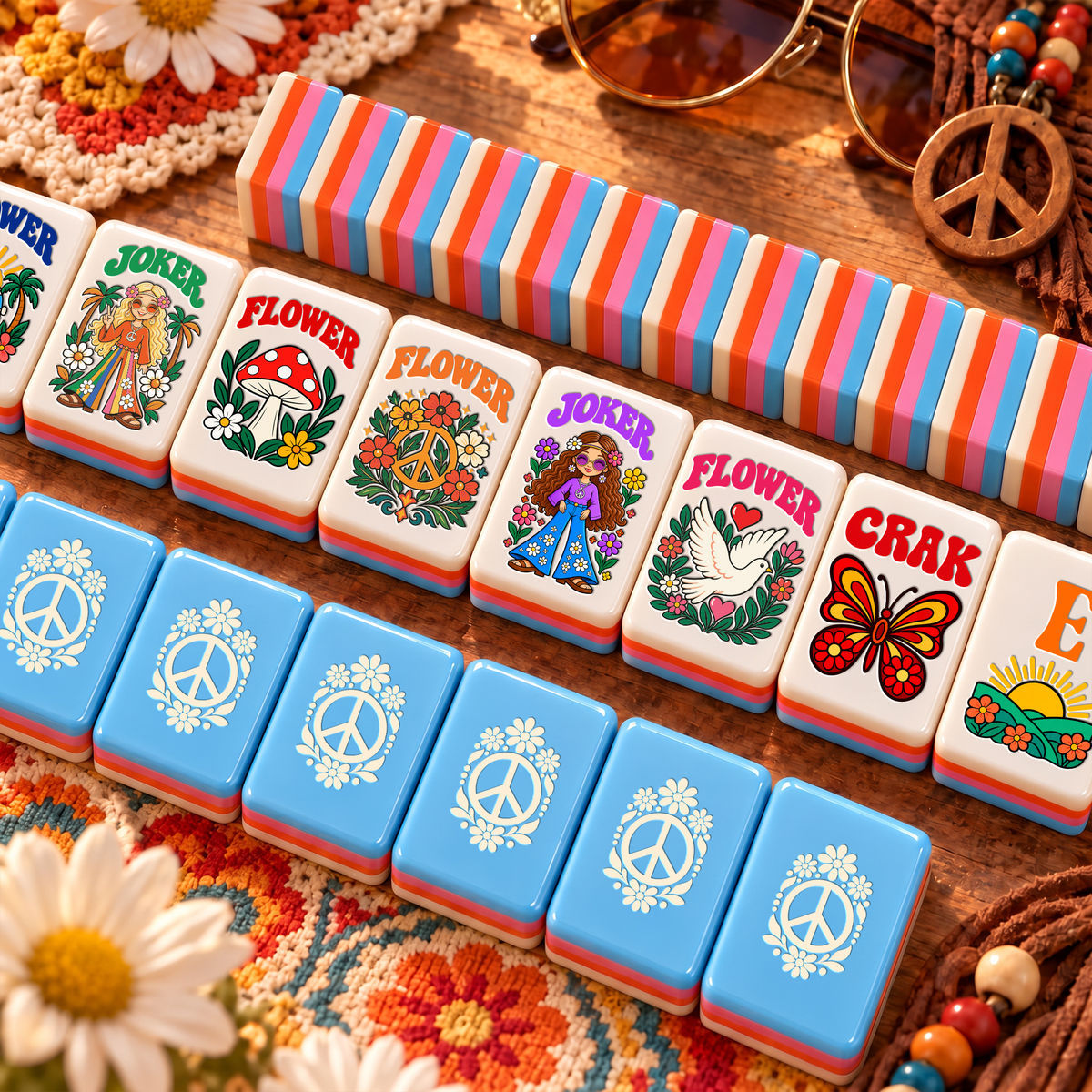
Mahjong bluffing means using discard patterns and rack management to mislead opponents about the hand you're building. Unlike poker, you can't hide what you've exposed—pungs, kongs, and quints are visible—but your unrevealed tiles and discards tell a story. Smart bluffing pivots on three pillars: (1) discard tiles your opponents need, forcing them to guess whether you're chasing that suit or steering them away; (2) delay calling exposed melds until the moment creates maximum confusion; (3) use the first discard after the Charleston to set a false narrative about your strategy. The goal isn't to fake a winning hand; it's to make opponents play defensively or miss genuine winning chances while you edge closer to yours. Real mahjong bluffing rewards pattern discipline and table awareness more than deception—you're reading, not tricking.
Bluffing in American mahjong isn't about lying; it's about controlling information. Unlike poker, you can't hide what you've exposed—pungs, kongs, and quints are visible—but your unrevealed tiles and discards tell a story. Smart bluffing pivots on three pillars: (1) discard tiles your opponents need, forcing them to guess whether you're chasing that suit or steering them away; (2) delay calling exposed melds until the moment creates maximum confusion; (3) use the first discard after the Charleston to set a false narrative about your strategy. The goal isn't to fake a winning hand; it's to make opponents play defensively or miss genuine winning chances while you edge closer to yours. Real mahjong bluffing rewards pattern discipline and table awareness more than deception—you're reading, not tricking.
What exactly is bluffing in American mahjong?
Bluffing in American mahjong isn't misdirection—it's controlled asymmetry of information. Your three exposed melds (or four, if you've called four tiles) sit face-up on your rack; everyone knows exactly what you have. But your 13 unrevealed tiles and your discard sequence remain partly obscure. Bluffing means using that gap to shape what the table thinks you're chasing versus what you actually need. A classic example: you discard a 5 Crak early (signaling you don't want Craks), then quietly pivot to collecting three more 5 Craks in your closed hand because you spotted them as safe discards from the wall. Opponents relax around Craks—and you win. The foundation is reading discard patterns at your own table, not inventing a false hand from nothing. Mahjong bluffing is behavioral, not fictional.

How do your first three discards set the table's expectations?
The first discard after the Charleston is psychologically weighted more than any other single tile you throw. Players assume it reflects your hand's main direction. If you discard a Wind (typically 0–2 uses per game), the table may assume you have no Winds, shifting their caution away from them. If you discard a number tile from one suit, you're implicitly saying "this suit is not my focus"—even if you're lying. The next two discards matter because they either confirm or gently contradict the first. A deliberate pause before your first discard reads as "I'm thinking hard about my hand"—which builds credibility for whatever you signal next. Many new players unconsciously discard their weakest suit first, teaching the table how to beat them. Instead, consciously choose an early discard that either (a) removes a tile the hand you're actually building doesn't need, or (b) suggests you're chasing a direction you're not. The table internalizes this signal by turn two; once set, it's hard for opponents to recalibrate even when the evidence shifts. This single choice—your opening move—can redirect the entire game's defensive strategy around you.
Can you expose melds strategically to hide your true hand?
Yes. Calling a pung or kong delays signaling your direction. If you hold three 2 Dots but don't expose them immediately—you wait, you draw, you strategically expose later—opponents who saw you discard Dots earlier will double-down on the assumption you don't want them. Then suddenly you expose 2 Dots, and they scramble to re-read your hand. The key: only expose when it genuinely improves your position (you're closer to winning, or you need the rack space). Never expose just to confuse, because excessive exposed melds eat your flexibility. A winning hand typically has one to two exposed melds; three or more means you committed early, which ironically makes your hand more readable because opponents have less closed tile data to interpret. Timing an exposure—calling a meld one turn later than you could have—creates a "delayed intent" that reads as a change of mind. Experienced players watch not just what you expose but when. If you exposed Winds on turn 2 and Bams on turn 5, and suddenly you expose Craks on turn 8, the table's reading shifts again. Strategic exposure works because it rewrites the narrative your discards established. Use it sparingly—once per game is often enough to tilt the psychological dynamic.
How does reading the wall inform your bluffing strategy?
The wall is a shared discard narrative from all three opponents. A player discarding mostly Bams and Winds likely doesn't need them; if Bams have been heavily discarded but one player hasn't thrown a single 7 Bam, that player probably wants 7 Bams. Successful bluffing requires you to track: (a) which tiles are still in the wall (via discard flow), (b) which player threw what and in what order, (c) which tiles are over-represented in discards (meaning they're probably safe). If Winds have been discarded seven times out of 16 total Winds (four of each type), roughly nine Winds remain—distributed among four players and the wall. If you hold two Winds and see another come back from the wall, you know exactly how many are left to circulate. This math informs your bluff. If you want players to avoid Winds, you throw a Wind early—confirming their fear that Winds are glutted—then pivot away, letting them focus elsewhere. The wall literally validates or destroys your intended false narrative. If you're trying to signal "I don't want Dots," but Dots have been discarded only twice and three players are drawing heavily from the wall, the table won't believe your Dot-discard signal because Dots are clearly needed by someone. Your bluff works only when it aligns with the wall's objective constraints. Weak players bluff against the wall's evidence; strong players bluff with it.
What are the most common bluffing mistakes that cost you the game?
Inconsistency is the top bluff-killer. If you discard Craks early but then expose a Crak pung on turn 4, you've contradicted yourself—and now the table doesn't trust any signal you send. Consistency doesn't mean you can't change direction; it means you telegraph the change through timing and deliberate tile choices, not random reversals.
Over-bluffing happens when you expose too many melds to confuse opponents or discard tiles "strategically" in a pattern too clever for your own hand. You end up misreading your own hand's actual winning path. Bluffing is about other people's decisions, not about outsmarting yourself.
Bluffing too early (before the wall stabilizes) wastes your psychological capital. By turn 3–4, most tiles in the wall still exist; your discard signal hasn't built enough evidence yet. Bluff gains power around turns 5–8 when the wall's narrative is clearer and opponents are more committed to their reads.
Ignoring dead tiles. If three 7 Bams are already discarded (visible on the table or in history), signaling "I don't want 7 Bams" is wasted breath—everyone already knows 7 Bams are nearly dead. Bluff with tiles still circulating.
Playing too loose when ahead. If you're already close to winning, over-bluffing can tempt an opponent into a desperate call that loses them the game—but also locks you into a narrative you can't break if your hand stalls. Bluffing is for getting ahead, not for toying with a lead.
Mistake | Why it fails | Fix |
Contradicting your first discard | Destroys credibility; table stops believing your signals | Discard strategically once; let tiles flow naturally after |
Exposing more than two melds | Limits your read-ability and flexibility | Expose only when you're close to winning or need rack space |
Bluffing a dead suit | Opponents already know it's gone | Track discards; bluff only with circulating tiles |
Changing direction every turn | Looks panicked, not intentional | Shift direction once, deliberately; hold it for 3–4 turns |
Bluffing before the wall settles | Early signals are noise | Wait until turn 5+; let discard data accumulate |
🀄 Shop best-selling mahjong sets →

How table position and personality affect your bluffing approach?
Sitting in a seat with aggressive or cautious players changes your bluff's impact. If the player to your left discards almost every tile they draw (weak reads, loose play), your subtle signal will sail past them—save your psychological energy for the player opposite you, who clearly studies discard patterns. If the player to your right is aggressive and frequently calls tiles, you can bluff them by discarding tiles they should want, forcing them to second-guess whether you're steering them away or offering a gift. Conservative players are easier to bluff because they discount tiles defensively; they assume threat when they see danger. Bold players require you to layer your signals—they expect reversals and won't fall for a simple early discard.
Your own table's culture also matters. If this is your regular Thursday group, they know your habits; your baseline bluff value is lower because they've learned your patterns. You need to break your pattern intentionally—discard a Wind when you usually hold them, or vice versa. If you're a guest in an unfamiliar game, your bluff value is higher because you're unread—but use that credibility wisely; one broken signal and you're untrustworthy for the night. Pay attention to which players are playing to win versus playing socially. Social players are bluffable; they play a looser game and won't obsessively track your discards. Competitive players are resilient to bluffs and require you to align your signals with objective wall data, not psychology alone. The strongest bluff is one tailored to your opponent's decision-making style, not a generic misdirection.
🎁 See our most-loved mahjong sets & accessories →
What should you track on your rack to keep your bluff coherent?
Keep your closed tiles organized by suit and number, not by hand position. This simple discipline prevents you from accidentally signaling confusion—when you hesitate because you're physically searching your own rack, opponents read hesitation as genuine conflict, which can inadvertently expose a bluff. A well-organized mahjong rack with pushers lets you navigate your tiles silently, confidently, without telegraphing internal doubt.
Mental tracking: Before each discard, you should know (1) what hand you're actually chasing (per the season's National Mah Jongg League card), (2) what you're signaling you're chasing, and (3) why the two differ. If you can't articulate all three, you're not bluffing—you're gambling. A coherent bluff is a deliberate lie with a backup plan. If your signal (early Dot discard) doesn't align with your actual hand (collecting three 5 Craks), but Dots are plentiful in the wall, you've chosen a tile that's genuinely not useful to you and that signals a truth. That's a strong bluff.
Write down (mentally or on a scrap of paper if your group allows) which tiles each opponent has discarded, in order. This isn't cheating; it's table reading. After two or three games, you'll see which players favor certain suits early and which pivot late. That data informs your bluff calibration. A player who always discards Winds first? Their signal about Winds is worthless; ignore it and focus on their late-game discards. A player who throws one tile per suit before committing to a direction? Their early Dot discard is a genuine signal; respect it.
What role does the Charleston play in your early bluffing setup?
The Charleston is your bluffing foundation. During this pre-game tile exchange, you're sorting your hand while also observing your opponents' discards. If a player passes three Winds to you without hesitation, they probably don't want Winds. If they swap out Dots slowly or reluctantly, they might be keeping Dots for a reason. These micro-signals during the Charleston are your first read on the table's initial direction.
Strategic Charleston play for bluffing: if you plan to signal "I'm building Craks" later, don't immediately pass all your Bams and Winds away. Hold one or two to maintain ambiguity; then discard them early in the game to build your false narrative. If everyone assumes you're discard-heavy in Winds and Bams, and you confirmed that during the Charleston by passing them away, your credibility is solid—and now when you discard a Crak, it reads as a strategic pivot, not a lie. Use the Charleston to align your hand's visible evidence with your planned early-game signals. A misaligned Charleston (passing away Craks, then signaling Craks later) creates a 10-turn lag before your signal gains traction; a coordinated Charleston gets you there by turn 2.
What to check before you buy: setting up your table for serious play
If you're hosting regular games with friends who are now studying bluffing, invest in a quality mahjong mat and racks with pushers—they let players organize and hide their closed tiles effectively, which means your bluffs play against a real information gap, not chaos. A mat also keeps tiles from sliding and accidentally revealing your hand's organization to sharp-eyed opponents.
✨ Find your Mahstead set — free US shipping →

FAQ
Can you bluff about joker placement?
No. In American mahjong, jokers cannot be used in a single tile or a pair—they only substitute in pungs, kongs, quints, and sextets. Where you place a joker is transparent. Your opponents see it and know it's a substitute; no bluff possible. Focus instead on which meld you're exposing the joker in, as that signals your direction to the table.
Does bluffing work in casual games?
Yes, but differently. Casual players won't track discards obsessively, so psychological signals (pausing, sighing, sudden exposure) outweigh mathematical reads. Bluff their emotions, not their logic. Competitive players reward data-driven bluffs; casual players reward confident theater.
What's the difference between bluffing and playing defensively?
Bluffing is active misdirection—you're feeding the table false information to alter their choices. Defensive play is reactive avoidance—you're discarding safe tiles and avoiding calls to reduce your exposure. Bluffing attacks their reads; defense protects your hand. Use both in sequence: defend early, bluff mid-game when you're gathering credibility.
Can you bluff if you're chasing the card's most popular hand?
Hard, but possible. If the season's card shows that 1–9 Bam sequences are the go-to hands, everyone expects everyone to chase Bams. Bluff by discarding Bams early anyway—you're confirming the expected narrative, which makes you invisible. Then quietly pivot to a rarer hand (say, pairs and pungs) and opponents won't notice because they're focused on Bam competition between other players.
How do you recover if an opponent calls out your bluff?
Accept it and reset. If you discard a tile an opponent calls, your bluff is public now—they've read you. Don't double down or get defensive. Play the next three turns transparently—discard what your actual hand needs—so the table recalibrates you as honest. A blown bluff is an opportunity to rebuild trust for a later, deadlier one.
Does bluffing work better in American mahjong than other variants?
Yes. American mahjong's rigid hand structure (one hand per card) and visible exposure rules create a tighter information space, making discard patterns more readable and bluffs more impactful. In open variants like Riichi, most tiles are eventually exposed, so bluffing loses leverage. American mahjong's 13-tile closure is your bluffing sweet spot.


View More
View More
View More
