
Is Mahjong Similar to Hanafuda? Game Differences Explained
Last updated: Nov 23, 2026
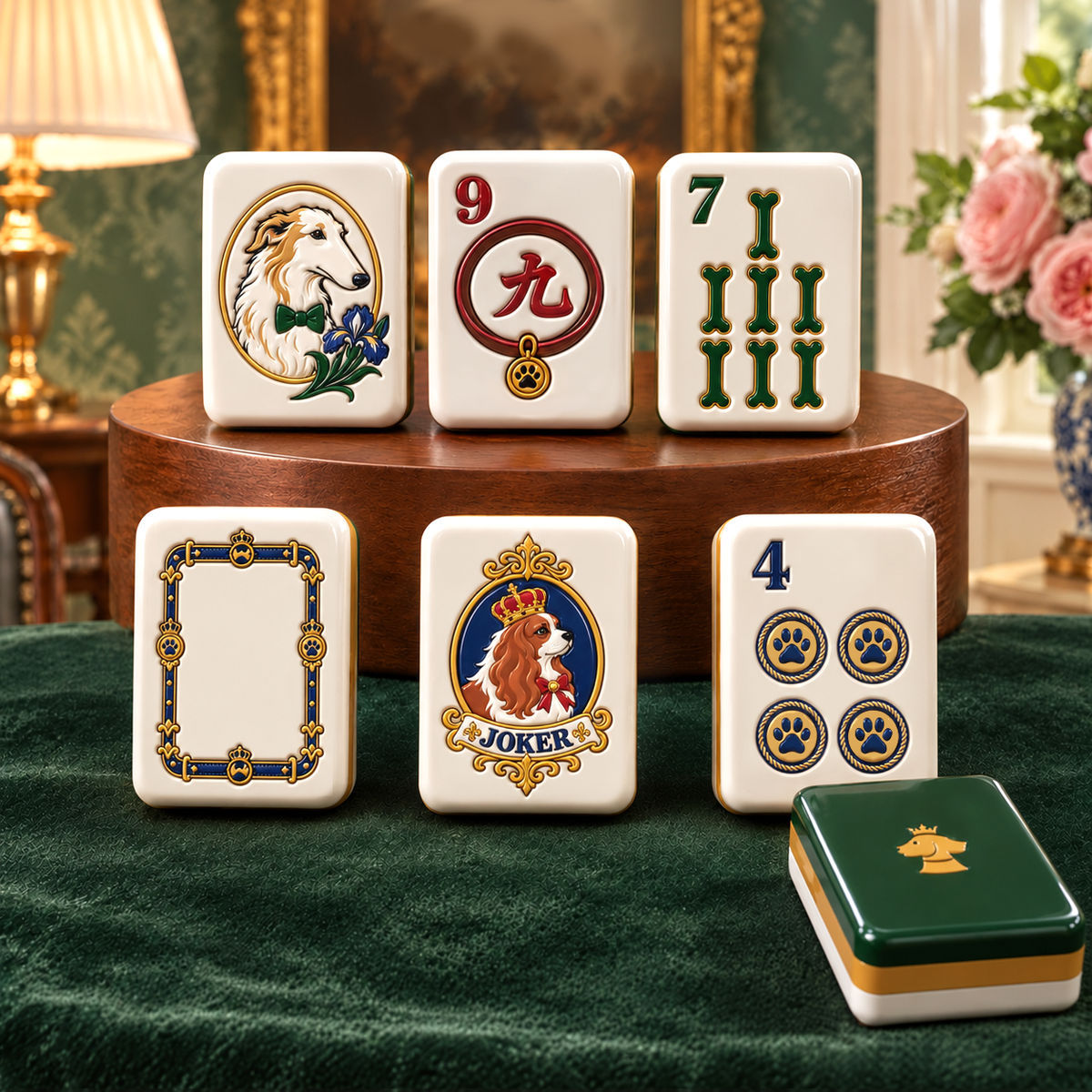
No—mahjong and hanafuda are separate games with different tiles, hand structures, and scoring. Hanafuda uses 48 cards (not tiles) organized into 12 months with flower and animal motifs; players form melds by matching cards into specific month-based combinations. Mahjong uses 152 tiles across three numbered suits (Bams, Craks, Dots), winds, dragons, and flowers; players build hands from the current year's National Mah Jongg League card, combining pungs (three identical tiles), kongs (four), and other patterns. A hanafuda round takes 15–30 minutes; an American mahjong hand takes 30–45 minutes. Both originated in East Asia and reward pattern recognition and memory, but mahjong's complexity—deck rotation, joker rules, the Charleston passing ritual—makes it a deeper commitment. If you're drawn to tile games, our best-selling mahjong sets range from classic acrylic designs to engraved personal sets, all 160-tile standard play.
What exactly is hanafuda and how does it differ from mahjong?
Hanafuda (花札, "flower cards") is a Japanese card game using a 48-card deck divided into 12 suits, each representing a month with specific flower, animal, or seasonal imagery. Players score by collecting cards into designated combinations—such as poetry, brightness, or animal sets—that unlock points per round. Mahjong uses 152 tiles across four number suits (1–9 Bams, Craks, Dots, plus winds and dragons) and scores by completing hands that match patterns on the current year's National Mah Jongg League card. Hanafuda rounds end quickly (15–30 minutes per hand); mahjong games run longer (4–8 hands, 2–3 hours total). Hanafuda rewards speed and memory; mahjong demands strategic tile management, joker allocation, and long-range planning.

Can you play both games with the same tile set?
No. Hanafuda cards are small, visual, and month-indexed; you cannot substitute them for mahjong tiles. Mahjong tiles are larger, engraved with Chinese characters and numeric symbols, and include specialized tiles (winds, dragons, flowers, jokers) that have no hanafuda equivalents. Each game requires its own dedicated deck. If you own mahjong tiles from Mahstead, they work only for mahjong; you would need to purchase a separate hanafuda card deck to play that game.
Which game is easier for beginners?
Hanafuda has simpler rules and faster rounds, making it gentler for first-timers; you learn card-month associations and scoring combinations in one or two sessions. American mahjong involves mastering the Charleston (the four-step tile-passing ritual), reading the National Mah Jongg League card (a laminated reference showing 50+ hand patterns per year), understanding joker substitution rules, and recognizing which tiles form legal melds. Most players need 3–4 weeks of weekly games to play confidently. If you prefer learning-by-doing, start with mahjong—the mahjong for beginners guide covers every foundational rule, and our best-selling sets come with instruction sheets to support your learning.
🀄 Shop best-selling mahjong sets →
How do scoring systems compare?
Aspect | Hanafuda | American Mahjong |
Hand size | 8 cards | 14 tiles (13 + 1 drawn) |
Scoring method | Points per card combination | Points per pattern (from League card) |
Round length | 15–30 min | 30–45 min |
Bonus/penalty | Bonus multipliers per month | Extra points for jokers, concealed melds |
Winning ease | 1–2 valid finishes per deal | 50–100+ valid hands per season |
American mahjong's scoring is deterministic: the League card lists every winning pattern and its point value. Hanafuda uses a point-per-card method where certain cards (the "bright" cards) count more; scoring varies by regional ruleset. For players who like structure and transparency, mahjong wins; hanafuda suits those who prefer flexible, organic scoring.

What are the origins and cultural contexts of each game?
Hanafuda emerged in 16th-century Japan as an adaptation of Portuguese playing cards; it became deeply woven into Japanese pop culture and gambling history. Mahjong originated in 19th-century China as an evolution of ancient domino games and spread across Asia, arriving in North America in the 1920s. American mahjong—codified in the 1930s–1940s by the National Mah Jongg League—added rule standardization and the tile-card pairing (each season's League card defines all valid hands) that distinguishes it from Chinese and Hong Kong variants. Hanafuda reflects seasonal, aesthetic sensibility; mahjong reflects combinatorial logic and risk management. Both games remain deeply cultural—hanafuda is iconic in Japan, while American mahjong is strongest among multi-generational families in the United States, particularly in cities with large Chinese and Jewish communities.
Should I learn mahjong or hanafuda—or both?
Choose mahjong if:
You enjoy 2–3 hour social events with consistent rules across seasons.
You value long-term skill development and pattern-matching strategy.
You host regular weekly games and want a game that scales easily to four players.
You want tiles that are durable, visible at arm's length, and engraved for permanence.
Choose hanafuda if:
You prefer shorter, snappier play sessions (20–30 minutes).
You're drawn to Japanese aesthetics and seasonal symbolism.
You're comfortable with regional rule variants and flexible scoring.
You have limited table space or prefer a compact deck.
Learn both if:
You're a tile-game enthusiast and want genre breadth.
Your game circle includes players from multiple cultures.
You enjoy comparing game mechanics and strategic differences.
Most newcomers to tile games start with mahjong because its structure, standardized rules, and social depth create a sustainable hobby. If you're ready to commit to mahjong, we recommend a durable 160-tile acrylic set in our best-selling collection—they're designed for weekly play and ship free across the US. For a personalized touch (great for gifting or marking your set), browse engraved mahjong sets with custom titles.
What to check before you buy:
Tile quality: Acrylic tiles (used by Mahstead) are durable, readable, and resistant to wear; bamboo or bone tiles require more maintenance.
Set completeness: Ensure you're buying a 160-tile set (152 playing tiles + spares) that includes all winds, dragons, flowers, and jokers—anything less limits hand flexibility.
Reference card: Confirm the set includes a current-year National Mah Jongg League card (updated annually each spring); an old card may reference hands no longer valid.
Mat and storage: For weekly play, a dedicated mahjong mat protects tiles and speeds setup; a bag or case keeps your set organized if you travel to hosts' homes.
🎁 See our most-loved mahjong sets & accessories →
Real-world example: moving from hanafuda curiosity to committed mahjong player
A friend who enjoyed hanafuda at a Tokyo hostel tried American mahjong at a community center in Dallas. She found hanafuda's 30-minute pace charming but wanted deeper strategy. After six weeks of Thursday night games with a standard acrylic set and the League card printed at home, she purchased a custom engraved set to celebrate her first "mah jongg" call (hand win). She now hosts biweekly games and uses a mat with pushers to speed up tile organization. Her journey: curiosity → commitment → community leadership. This is typical for mahjong but rare for hanafuda, which tends to remain a casual, one-off experience.
✨ Find your Mahstead set — free US shipping →
How to dive deeper into mahjong rules and play
Once you've chosen mahjong over hanafuda, spend 30 minutes reading the how to play American mahjong guide and watch one live hand at a community game. Then learn the Charleston explained—the tile-passing ritual that opens every hand—and how jokers work, since joker placement often determines win or loss. Practice reading the mahjong card by identifying 10 hand patterns on the League card each day. By week three, attend a game with a printed card, your tiles, and an open mind; veterans expect beginners and welcome questions between hands.

FAQ
Is hanafuda used in any mahjong variant?
No. Hanafuda and mahjong are separate games with distinct rulesets and equipment. Some regional variants (Chinese, Hong Kong, Taiwanese) exist, but none incorporate hanafuda cards. American mahjong is the most standardized variant worldwide and uses only the 160-tile acrylic or bamboo set.
Can I teach hanafuda players mahjong using the same principles?
Partially. Both games reward pattern recognition and memory, so hanafuda players often grasp mahjong's logic quickly. However, the 14-tile hand size, joker rules, and League card format are unique to mahjong; expect a learning curve of 3–4 weeks for hanafuda players switching to mahjong.
Which game is more popular in North America?
Mahjong dominates North America, particularly among multi-generational families and in cities with large Asian communities. Hanafuda remains niche outside Japan, though interest has grown among anime and manga fans in recent years.
Do I need an engraved set to start, or can I use a basic acrylic set?
A basic acrylic set is perfect for learning; engraving is optional and becomes meaningful once you've committed to regular play (typically after 8–12 weeks). Mahstead's best-selling sets include both plain and custom-engraved options.
Can hanafuda and mahjong be played by the same four-player group?
Yes, as separate games. If your group enjoys both, schedule hanafuda as a warm-up (20 min) before your main mahjong session (2–3 hours). You would need both a hanafuda deck and a 160-tile mahjong set.
What's the time commitment to become competent at mahjong vs. hanafuda?
Hanafuda: 2–3 casual sessions (3–5 hours total). Mahjong: 10–15 weekly games (20–30 hours over 2–3 months) to play confidently and call hand winners. Hanafuda is a hobby; mahjong is often a weekly ritual.


View More
View More
View More
