
Where to Play Mahjong in Tampa: Local Games & Setup Tips
Last updated: Nov 23, 2026
Tampa's mahjong scene centers on community centers, libraries, and informal home groups scattered across the city. To find a game, contact your local library or community center's activities coordinator and ask about mahjong clubs—most meet weekly, often on weekday mornings or Thursday evenings. Country clubs and synagogues frequently host games too; check their bulletin boards or call ahead. If you'd rather start your own game, you'll need four players, a 160-tile American mahjong set, a mat with rack guides, and the current year's National Mah Jongg League card. Most home games meet weekly for 2–4 hours, with players rotating dealer position after each hand. Beginners should expect a learning curve of 3–5 sessions before the rhythms click; experienced players welcome newcomers and will coach you through your first hands. Starting at home means you control the pace and stakes, and hosting regularly builds a loyal player base fast. 🀄 Shop best-selling mahjong sets →
How do I find an active mahjong group in Tampa right now?
Your best starting point is the Tampa-Hillsborough Public Library system. Call the branch nearest you and ask the reference desk if they host or know of mahjong groups; many libraries post flyers for community game nights. Check community center recreation schedules online—most offer mahjong drop-in times or league play. Meetup boards and local Facebook groups for "Tampa mahjong" or "Pinellas County mahjong" often list weekly gatherings. Synagogues and Jewish community centers in the Tampa Bay area frequently host games; cold-calling their front desk works surprisingly well.

What should I expect at my first game?
Walk in 10–15 minutes early. Introduce yourself to the organizer and say you're new; experienced players expect to help you learn. Bring the current year's National Mah Jongg League card (league games use only that year's card—ask the group which year they play). Wear comfortable clothes; games last 2–3 hours per session. Watch the first hand without playing to see the flow: the dealer draws, passes tiles in the Charleston, then players call and expose melds. Most groups play for nominal stakes (a few dollars per hand) or for fun only; confirm the house rules before sitting down. Nobody rushes you, and questions mid-game are welcome.
What's the fastest way to learn the rules before I go?
Read how to play American mahjong and what's in an American mahjong set to understand tile names, suits, and the 152-tile standard. Then watch one 5-minute video showing the Charleston tile pass and a single hand played out start to finish. The hardest part—reading the hand card—takes 15 minutes of focused study. You don't need to memorize hands; you just need to recognize the pattern shape on the card and match your tiles to it. When you arrive at a game, ask another player to sit next to you and help you read your hand card for the first 2–3 hands. That hands-on coaching beats studying alone.
🎁 See our most-loved mahjong sets & accessories →
Should I join a club or start my own home game?
Option | Best For | Time to Start | Social Feel |
Join existing club | Learning fast; instant community; playing immediately | 1 week (find & contact) | Structured, welcoming to newcomers |
Start home game | Control over rules, stakes, and scheduling; hosting regulars | 2–3 weeks (recruit players, get set) | Casual, flexible, loyal crew builds fast |
Attend drop-in library game | Testing the waters; zero commitment; free or low cost | Same week | Rotating players; steady but less personal |
If you've never played, join a club first—experienced players teach faster than learning with three other beginners. Once you've played 5–10 hands, you'll feel confident hosting. Home games win long-term: regulars become close friends, and you set the pace and stakes. Many of our customers start by joining a local game, then buy a personalized engraved set and a quality mat with racks and pushers once they're hooked.

How do I host my first home game?
Week 1: Recruit players. Ask friends, coworkers, or the people you met at a library game. You need exactly four. Plan a specific date—say "Thursday 7 p.m., my house, we'll play until 10."
Week 2: Get your setup ready. You'll need a 160-tile American mahjong set, a mat (which guides tile placement), four racks with pushers, and the current year's National Mah Jongg League card. A travel bag with compartments keeps your set organized and protects it; ours have sections for tiles, the card, and accessories. Arrange a sturdy table and four chairs where each player can sit comfortably.
Week 3: Play. Explain briefly: "We follow American mahjong rules. I'll deal the first game; if you don't know a hand, I'll help you read the card." Shuffle tiles facedown, deal, and begin the Charleston—the tile-passing ritual before play. Most new players relax after two hands. Stop at a set end time (say, four hands) so people know what they're signing up for.
Money (if any). Decide before the first hand. Most home groups play for fun or micro-stakes; discuss house rules so nobody is surprised.
What's the difference between playing at home and at a club?
At a club: Faster pace, stricter adherence to league rules, more competitive play, and you play with rotating players. Clubs often use a mechanical timer for draw phases and enforce scoring rules tightly. Good for competitive learners; can feel rigid to casual players.
At home: You set the speed and tone. New players get coaching mid-hand; stakes and house rules flex based on the group. Games often stretch to five or six hands instead of four, and side conversations happen. Regulars bond deeply over time. Most home groups also follow the official National Mah Jongg League rules but interpret gray areas generously.
✨ Find your Mahstead set — free US shipping →
What to check before you buy a mahjong set
If you're hosting, invest in a complete set once, not piecemeal. Look for:
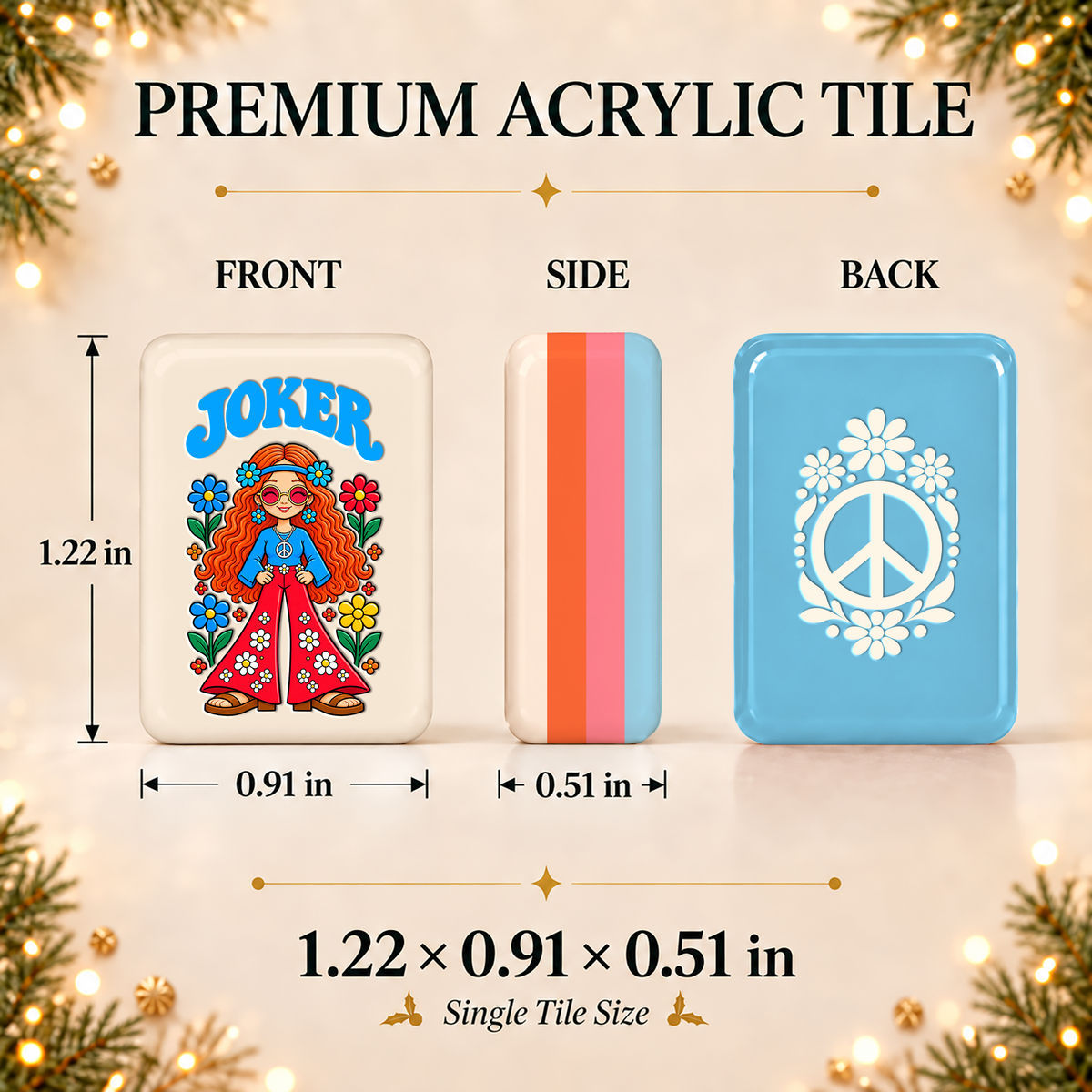
Tile size and weight. Standard American tiles are ¾ inch wide. Heavier acrylic (our sets use precision-molded acrylic) shuffles smoothly without flipping; flimsy plastic frustrates players.
Joker count. American play uses exactly 8 jokers. A set with extras gives you spares if one cracks; we include spares in our 160-tile sets.
Mat and racks. A mat with printed rack guides prevents tiles from sliding; racks with pushers let players see all their tiles without crowding. Poor racks means constant tile-reading fumbles.
Storage. A partitioned bag protects your set and keeps the card, dice, and racks in one place. This matters if you host multiple groups or travel to tournaments.
Card slot. Look for a mat with a small pocket or clip for the current year's hand card; saves reaching across the table mid-game.
🀄 Shop best-selling mahjong sets →

FAQ
Do I need to know Chinese or learn the tile names before I start?
No. American mahjong uses English numbers (1–9) and simple suits: Bam, Crak, Dot. Winds and Dragons are marked in English. Most players learn the names in their first three hands by hearing them called. Beginners memorize "red and white tiles" and "green dragons" long before formal names.
What's the National Mah Jongg League card and why do I need a new one each year?
The League publishes the official hand list each spring. Only hands on that year's card are valid in League play and most clubs. Cards are free to download or inexpensive to print; ask your group which year they play and bring that one. New hands each year keep the game fresh and prevent memorization.
Can I play mahjong with three people or just two?
American mahjong requires four players for the standard game. Special three- and two-player rules exist but are rarely played outside families. Stick with four if you're joining a group.
How long does one game of mahjong take?
A hand (one round of four players dealing) takes 10–20 minutes depending on player speed. A game is typically four hands, so 45 minutes to 90 minutes total. Home players often play longer in relaxed settings.
Is mahjong harder to learn than bridge or poker?
It's different, not harder. You don't memorize odds or bluff; you match tile patterns to a card. The first 3–5 hands feel slow because you're learning to recognize hand shapes. By session two, rhythm clicks. Bridge and poker have deeper strategic layers; mahjong's learning curve is gentler.


View More
View More
View More
