
Board Games for Mahjong Lovers: Beyond Tiles
Last updated: Nov 23, 2026
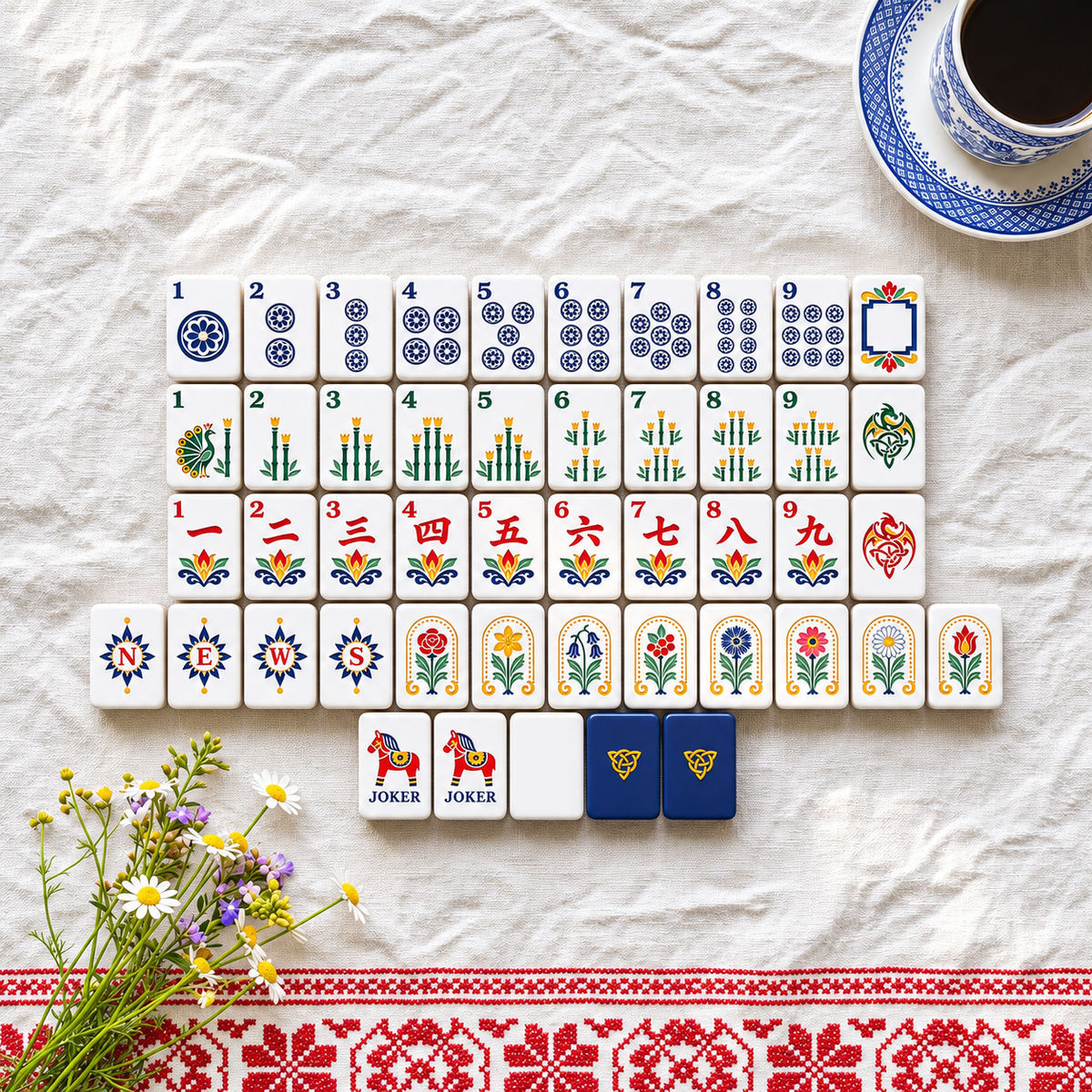
Mahjong lovers thrive on three things: reading hidden information (spotting the card), building hands tile by tile, and the tension of public decisions with hidden consequences. Board games scratching that itch include Rummikub (tile sets and sequences, live hand-building), 7 Wonders (simultaneous card drafting, pattern completion), Cascadia (tile-laying puzzle with terrain matching), Splendor (resource engine with hand strategy), and Ticket to Ride (route-building under constraint). Each shares mahjong's blend of luck, skill, and table reading. Start with what appeals most: hand management? Try Splendor. Real-time play? Cascadia. Social negotiation? Rummikub. A full mahjong night stays incomparable, but pairing one of these games with an American mahjong set creates variety without abandoning the tiles you love.
If you light up when holding 14 tiles and scanning the National Mah Jongg League card, or if you feel that specific grip of pressure when discarding, you know mahjong isn't just a game—it's a way your brain likes to work. Not every player wants to play mahjong four nights a week, though. Some weeks call for something fresh. Board games designed for strategic hand-builders, pattern-spotters, and social players offer that same neurological satisfaction mahjong brings, without requiring a full set and a 2026 card.
We've tested dozens of alternatives over thousands of hands. Here's what actually translates.
What makes a game appealing to a mahjong player?
Mahjong lovers aren't chasing luck alone—you're scanning for patterns, reading opponents' discards, managing hidden information, and making calculated bets with incomplete data. The best board games for this crowd replicate at least two of those mechanics. Look for games where success depends on spotting sequences or sets before your opponents do, where the state of play is semi-visible (you can read what others are building), and where a single choice ripples across the table. Speed matters too—mahjong is live decision-making, not a 45-minute turn to ponder one move.

Why Rummikub remains the closest analog
Rummikub is mahjong's cousin, not its twin, but it's the closest match for hand-building tension. You're laying numbered tiles in sequences and sets, reading your opponents' racks by their discards, and racing to meld down before they do. The difference: Rummikub uses sequences (1-2-3, 4-5-6) heavily, while American mahjong has no sequences—only identical sets. Still, the pressure of organizing chaos into order, the rush of spotting a play mid-hand, and the table dynamic translate perfectly. Games last 30–45 minutes; you can run three rounds in the time one mahjong game takes. Many of our regular players keep Rummikub handy for "quick" nights when a full session isn't happening.
Which games reward reading the table?
Mahjong lives on observation: what did East discard? Why? Is North fishing for Dots or Dragons? Board games that force similar reasoning include 7 Wonders and Splendor. In 7 Wonders, players draft civilization cards simultaneously; you're reading what your neighbors took last round to predict what they'll block this round. In Splendor, players collect gem tokens to buy developments, and the gem scarcity shifts live as other players hoard rubies or emeralds. Both reward the same skill mahjong teaches: spotting what your opponents want and deciding whether to feed them or starve them. Games run 45–60 minutes; the learning curve is steeper than mahjong, but experienced players master it in one session.
What if you want real-time, live-play energy?
Mahjong moves fast once play begins—a discard happens every few seconds, and the pace is relentless. Most heavy strategy board games slow down for analysis. If you crave real-time play, Cascadia (tile-laying puzzle) and Calico (patchwork quilting) deliver flow state. Cascadia has players placing terrain and wildlife tiles to build habitats simultaneously; there's no turn order, just continuous placement as long as your move is legal. Calico works similarly with fabric patches. Neither has the competitive sting of mahjong, but both create that meditative pattern-spotting zone. Expect 30–45 minutes of genuine fun without table friction over timing.

Building a game night rotation: the comparison
Here's the honest breakdown of how these complement (not replace) mahjong nights:
Game | Core Mechanic | Session Time | Mahjong Player Appeal | Best For |
Rummikub | Set/sequence melding | 30–45 min | Highest—hand building, opponent reading | Nights you want mahjong-like tension in 1/3 the time |
7 Wonders | Card drafting, table reading | 45–60 min | Medium—pattern completion, blocking strategy | Groups who want simultaneous play, less downtime |
Splendor | Resource engine, scarcity play | 30–45 min | Medium—hand management, strategic depth | Smaller groups (2–3), lighter cognitive load than mahjong |
Cascadia | Tile-laying, habitat building | 30–45 min | Lower—more puzzle than competition | Solo or co-op nights; brain rest after intense mahjong |
Ticket to Ride | Route-building under constraint | 60–90 min | Lower—longer game, less hand tension | Groups mixing mahjong players with casual gamers |
Our best-selling collection of mahjong sets is designed for the nights you do want mahjong. On alternating weeks, one of these games keeps your game night fresh without abandoning strategy.
🀄 Shop best-selling mahjong sets →
How to host both mahjong and board game nights at the same table
If you're rotating between mahjong and other games, you'll need a setup that works for both. A good mahjong mat provides a slip-resistant surface for tile games and a flat base for board games; the 36–42 inch range fits most dining tables. Racks with pushers keep tile organization clean during mahjong but get stored away for board games—no clutter. For mahjong, an acrylic set with clear, readable tiles prevents squinting at printed numbers; for board games, you'll use the table itself. If you're traveling between homes or hosting at a cafe, a quality travel bag or case fits a mahjong set and a compact board game easily.
What to check before you buy a "mahjong-adjacent" board game
Read player counts first. Rummikub plays 2–4, but mahjong always needs exactly four. If your regular group is three players, Rummikub works; mahjong doesn't (though special three-player variants exist). Ask how much downtime exists. A game where players take 10-minute turns kills the mahjong player's energy; mahjong has near-zero downtime. Check if luck swings dramatically. Mahjong has randomness, but skilled play and card-reading reduce variance; games like Yahtzee or Chutes & Ladders won't satisfy you. Watch a real play video. Board game reviews often gloss over table friction. See how real people react during play—does tension build like mahjong, or do people check their phones?
🎁 See our most-loved mahjong sets & accessories →
Most mahjong lovers find that alternating one board game with two or three mahjong nights per month keeps the hobby fresh without fatigue. The games listed above have all been played hundreds of times at tables where mahjong is the default—they stick around because they deliver.
If you're new to mahjong and exploring the full hobby, start with our beginner's guide. If you're already playing and looking to deepen your strategy, understanding how jokers work or how to read the card often changes how you approach each hand. But for pure variety, mixing in one of these board games once a month keeps the competitive energy alive without burning out on tiles.
✨ Find your Mahstead set — free US shipping →

FAQ
Can I play any of these games with a mahjong set?
No. These are entirely separate games with their own tiles, cards, or components. A mahjong set is built for American mahjong specifically and won't work with Rummikub or board games. Keep your mahjong set dedicated to mahjong.
I have exactly three players most weeks. Should I learn these games instead of mahjong?
Not necessarily. Three-player mahjong rules exist and are fun, though they differ from four-player. Rummikub works cleanly at three players. Try both—three-player mahjong scratches a different itch than the four-player game.
Which of these games teaches strategy most like mahjong?
Rummikub is closest for hand-building and opponent reading. Splendor is closest for resource scarcity and blocking strategy. They're not equivalent to mahjong, but they share the decision-making spine.
How long do I need to learn these games compared to mahjong?
Rummikub: 10 minutes. 7 Wonders: 20 minutes. Splendor: 15 minutes. All faster than learning how to read the mahjong card and play a legal hand, which typically takes 2–3 sessions.
Can I rotate these games into my regular mahjong night, or should they be separate?
Rotate them monthly or every other week if your group agrees. Mixing a 30-minute board game before mahjong works; trying to swap them mid-evening usually kills momentum. Set expectations: "Board game month" or "Games week" communicates the shift clearly.


View More
View More
View More
