
How to Start a Mahjong League: Step-by-Step for New Groups
Last updated: Nov 23, 2026
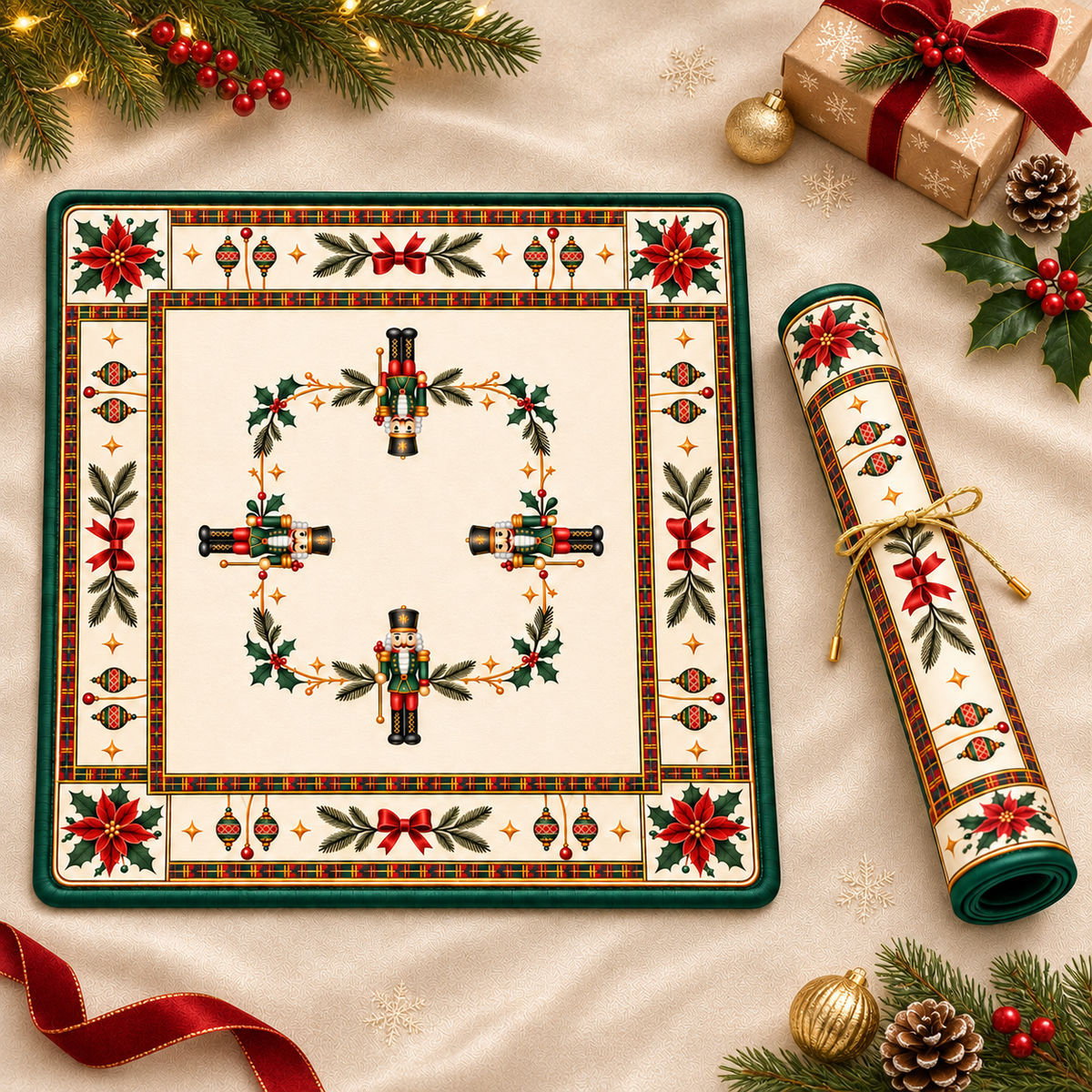
A mahjong league is a recurring group of players (typically 4 per table) who meet weekly or monthly to play American mahjong using the current year's National Mah Jongg League card. You'll need a 160-tile American mahjong set per table, a mat to protect your playing surface, and racks with pushers to hold and organize tiles. Start by recruiting 4–8 players, agree on a regular meeting time and location (home, community center, library, or club space), decide whether you'll track wins or play socially, and choose a standard house rule set (many groups follow the NMJL card exactly, others modify Charleston or joker rules). A single hand takes 10–30 minutes; most sessions run 2–4 hours. You'll need to purchase the current NMJL card (issued each spring), which costs less than a coffee. The biggest mistake new groups make is not deciding on rules before the first game—confusion halts play. Our best-selling mahjong sets come with all tiles you need and are designed to last through hundreds of games.
How many players do you actually need?
Four players per table is the standard for American mahjong and is what the NMJL card and all scoring rules assume. Three and two-player variants exist but play very differently—hands change, tile availability shifts, and scoring adjusts. Start with one full table (four players). If you grow to 8–12 people, you can run two tables in the same room, with winners or runners-up rotating between tables for future rounds, or stay with one table and play in rounds. Avoid having 5, 6, or 7 people at one table—it creates dead time for players waiting and breaks the rhythm of Charleston and hand-picking.
🀄 Shop best-selling mahjong sets →
What rules should your league use?
The National Mah Jongg League publishes one official card each spring—your league must use that year's card to have valid hands. Every hand on the card is legal; hands not on the card are not playable in league play. Beyond the card, choose whether to follow standard American house rules: Does everyone get an extra joker in hand? Can jokers be used as tiles in a pair (answer: no in standard rules)? What happens if someone runs out of tiles before winning? How many Charlestons and exchanges before the hand begins? Most new groups adopt the most common rules without modification first, then adjust after a few months if something feels wrong. Mahstead's guide to reading the card walks you through hand patterns so everyone understands what's valid. Never let house rules drift—write them down and send them to all players before each session.
Where should your league meet?
Home games are simplest if one player has a quiet dining room or card table. Public spaces work too: community centers, libraries, and some country clubs rent small rooms by the hour for minimal cost. Check your local government website for community center availability and hourly rates. Synagogues, churches, and civic organizations often host game groups free or cheap. Visit a few options in person—you need a table at least 3 feet square (6 players can be tight), good lighting overhead, a hard surface to flip tiles, and space to set down drinks and a mat. Avoid outdoor venues; wind moves tiles, sunlight reflects off acrylic, and humidity can warp wooden racks. Once you've chosen a spot and a weekly or monthly time, announce it clearly and stick to it; people will commit if the schedule is predictable.
What equipment does each table actually need?
You need one complete 160-tile acrylic American mahjong set per table—that's 152 tiles for play plus 8 spare jokers. You'll also want a mat to protect the table surface and reduce tile noise, racks with pushers to hold and organize your tiles (four racks, one per player), a die or dice (usually included), and the current NMJL card. Many groups also use a carrying bag or case to transport the set safely between games. Optional but helpful: a scoreboard or notebook to track cumulative wins, a timer if you want to cap hand length, and snacks. Comparison table of league setups:
Setup | Ideal Group Size | Set Cost Basis | Mat? | Racks? | Card | Notes |
Home game | 4 players | One set per table | Recommended | Yes | Required | Casual, no rental fee |
Two tables, community center | 8 players | Two sets | Yes, per table | Yes, per table | Required | Rental cost per session |
League with rotation | 12+ players | 2–3 sets | Yes, per table | Yes, per table | Required | Players rotate to different tables |
Tournament | 20+ players | 5–6 sets | Yes, per table | Yes, per table | Required | Requires coordinator & scoring sheet |
Most new leagues start with one set and one table. If you grow, you can add tables gradually.
🎁 See our most-loved mahjong sets & accessories →
How do you handle scoring and keeping track of wins?
American mahjong scoring is point-based per hand: each hand has a point value on the NMJL card (typically 20–70 points depending on the hand pattern and tile difficulty). When someone wins, they collect points from the three other players according to the card. Many casual leagues don't worry about cumulative scoring and just track who wins each hand for fun. Serious leagues keep a running tally across weeks or months, announce a champion monthly, or hold a prize pool. Decide early: Are you playing for money (and if so, how much per point?), for pride, or just socially? Write the rule down and share it. Use a simple spreadsheet or notebook to record each hand's winner and points. If you have more than four players rotating in and out, decide whether a sub plays for score or just for fun. Transparency prevents resentment. Many groups also post results online or on a group chat so absent players stay engaged.
✨ Find your Mahstead set — free US shipping →
What common mistakes should you avoid when launching?
Unclear rules before game one. The most common failure. Decide and write down every rule—NMJL card year, Charleston procedure, joker use, seat assignment, scoring method—and send to everyone a week before the first game. No backup set. If tiles are lost or damaged mid-session, you can't play. Have a second set on hand or keep spare jokers and high-risk tiles (flowers, dragons) in your best-selling collection. Wrong surface. Playing on bare wood or carpet dulls tiles and gets noisy fast; a mat transforms the experience. Inconsistent timing. If your league meets at different times each week, attendance drops. Pick one slot and hold to it. Mixing rule variants. Don't start with American mahjong, switch to Chinese mid-league, then back to American. Choose one variant and master it first. Skipping the Charleston. New players often want to skip the tile-passing ritual to start faster. The Charleston is core to American mahjong fairness and fun—teach it well and don't cut it. Not teaching the card. Hand new players a card and expect them to read it—they'll be lost. Spend 10 minutes showing how patterns work, how jokers substitute, and why hands are or aren't valid. Ignoring ties. Rarely, two players form the same hand pattern simultaneously (both call the same hand). Decide in advance: Does the first caller win, or do you replay?
What to check before you buy
Player commitment: You need at least 4 dedicated players before investing in a full set. Recruit and test with a borrowed set first if possible.
Venue locked in: Confirm your meeting space is available weekly/monthly at the time you want before buying a set.
Current NMJL card purchased: The card changes every spring. Verify you have the current year's card—using an old card will generate invalid hands and confusion.
Rules documented: Write your house rules on one page and share it. Revisit after three sessions and refine.
Equipment stored safely: Acrylic sets last decades but require a dry, dust-free space. Avoid car trunks and unheated garages.
One backup joker per set: Jokers are the most-lost tile. Keep one or two spares so a lost joker doesn't halt a session.

FAQ
Can I start a mahjong league with only 2 or 3 players?
Not in standard American mahjong—all rules, scoring, and hands assume exactly four players per table. Two and three-player variants exist but play very differently. Start with four or add players until you have four.
Do I need to be a NMJL member to host a league?
No. Membership is optional and mostly benefits competitive tournament players. Casual home leagues use the NMJL card freely.
How often should the league meet?
Weekly is most common and keeps momentum high. Monthly works if players are busy. Bi-weekly often fails because people forget. Pick one frequency and stick to it for at least two months before changing.
What's the cheapest way to start a league?
One four-player group using one set costs the price of one 160-tile acrylic set, a mat, and the current NMJL card. Meet in someone's home. No rental fee.
What if someone wants to join mid-season?
Welcome them. Teach them the rules in 15 minutes before the first hand, let them sit a round as observer if needed, then play. Most people catch on within two or three hands.
Should I charge a fee to join the league?
Casual home leagues don't. Competitive or prize-pool leagues often collect a small buy-in per month (or per hand) to cover venue rental and card updates. Be transparent upfront.
Can we play house rules that differ from the NMJL card?
Yes, but keep it consistent. Common tweaks: extra jokers, modified Charleston, or changed discard penalties. Write it down. Never let rules drift mid-game.
How long does one complete league session take?
Four players, four hands (one per player as discarder/dealer), takes 90 minutes to 2 hours including breaks. Most leagues play 3–6 hands per session.


View More
View More
View More
