
Malaysian Mahjong vs. Mahjong Solitaire: Key Differences
Last updated: Nov 23, 2026
Malaysian mahjong is a four-player competitive game using 152 tiles (Bams, Craks, Dots, winds, dragons, flowers, jokers) where players draw and discard to build winning hands, similar to American mahjong but with different tile suits and hand patterns. Mahjong solitaire is a one-player tile-matching puzzle where you remove pairs of matching tiles from a preset layout until the board clears—no dice rolls, no draws, no opponents. Malaysian mahjong plays 90–120 minutes per round; solitaire takes 5–20 minutes. Malaysian mahjong requires skill, memory, and strategy; solitaire is puzzle-solving. If you want to host a four-person game night with competitive play, you need a Malaysian-compatible tile set; if you want solo downtime entertainment (digital or physical), solitaire is your game. Mahstead specializes in engraved American mahjong sets designed for multiplayer competitive play, not solitaire.
What is Malaysian mahjong?
Malaysian mahjong is a four-player tile game where each player aims to build a legal winning hand by drawing tiles from a wall, making sets (pungs, kongs, chows), and discarding. Play moves counterclockwise; the winner calls "mahjong" when their hand matches a legal combination. Rounds last 90–120 minutes and involve bidding, betting (friendly or serious), and reading opponents' discards. It shares the 152-tile structure with American mahjong but uses different tile names and hand patterns specific to Malaysian house rules.
Most Malaysian variants allow chows (sequences like 4–5–6 Craks) that can be called from the discard pile—unlike American mahjong, where sequences are forbidden and only identical sets (pungs, kongs, quints, sextets) can be exposed. This creates faster-paced gameplay and different strategic depth. Malaysian players often use a simpler reference card than American mahjong's annual National Mah Jongg League card. The game is widely played in Malaysia, Singapore, and the broader Southeast Asian diaspora.

How is mahjong solitaire different?
Mahjong solitaire is a solo puzzle game played with mahjong tiles arranged in a preset pattern (often an ornamental layout like a pyramid, temple, or dragon shape). You remove pairs of adjacent, matching tiles by clicking or tapping them; the goal is to clear the entire board. No drawing, no opponents, no winning hands—just pattern recognition and spatial reasoning. Most versions require matching tiles to have at least one free edge (not blocked on all sides), though some variants allow any two matching tiles to be removed. A typical game takes 5–20 minutes and ends either in victory (board empty) or failure (no more legal pairs).
Mahjong solitaire exists almost entirely as digital games (apps, browser-based, computer software) because the tile-matching mechanic requires rapid visual scanning. Physical mahjong solitaire puzzles exist but are rare; they're usually sold as books or printed cards rather than tile sets. The game requires no knowledge of traditional mahjong rules, strategy, or scoring—it's accessible to anyone who can recognize matching images or numbers.
🀄 Shop best-selling mahjong sets →
Why do people confuse these games?
The confusion stems from the shared name and the reuse of mahjong tiles in solitaire. Many people encounter mahjong solitaire first (through mobile apps, for example) and assume all mahjong games are single-player puzzles. Others know competitive mahjong but see solitaire marketed as "mahjong" and expect similar strategy.
Additionally, Western retailers and digital platforms often label solitaire variants loosely—"Mahjong," "Mahjong Master," "Mahjong Titans"—without clarifying that they're not multiplayer games. A person searching "mahjong game" online might land on a solitaire app, play it, and never realize that the real mahjong world involves four players, a shuffled wall of tiles, discards, and hand-building strategy.
Another factor: the tiles themselves look identical in both games. A 160-tile engraved American mahjong set could theoretically be used for solitaire (though that's not their intended purpose), reinforcing the idea that the games are interchangeable.
Comparison: Malaysian mahjong vs. mahjong solitaire
Feature | Malaysian Mahjong | Mahjong Solitaire |
Players | 4 (rarely 2–3) | 1 |
Tiles | 152 standard tiles | Mahjong tiles in preset layout |
Gameplay | Draw, discard, build sets, bid | Remove matching adjacent pairs |
Duration | 90–120 min per round | 5–20 min per game |
Winning condition | Legal hand (pung, kong, chow) | Clear all tiles from board |
Luck vs. skill | ~60% strategy, 40% luck | ~80% logic, 20% luck |
Scoring system | Yes (complex bidding/points) | No |
Social aspect | High (table conversation, betting) | None |
Format | Physical tiles, card reference | Mostly digital; rare physical |
Learning curve | Steep (6–8 weeks for basics) | Shallow (5–10 minutes) |

How American mahjong fits in
American mahjong (the variant most Mahstead customers play) is also a four-player competitive game using 152 tiles, but it differs significantly from Malaysian mahjong. American mahjong uses the National Mah Jongg League card—a laminated yearly reference—that defines all legal hands for that season. Hands consist only of identical sets (pungs, kongs, quints, sextets); chows are strictly forbidden and cannot be called from the discard.
The Charleston (a pre-game tile-passing ritual) is mandatory in American mahjong and plays a major role in hand strategy. Malaysian mahjong has no Charleston equivalent. American mahjong also strictly forbids jokers in single tiles or pairs—they can only substitute for tiles within exposed sets. In contrast, Malaysian variants often allow joker flexibility differently.
Because the hand card changes yearly and defines all legal combinations, American mahjong is more rigid and standardized than Malaysian house-rule variants. If you're learning American mahjong from scratch, expect 6–8 weeks of practice before you're comfortable; Malaysian mahjong can take similar time due to the chow mechanic and bidding complexity.
🎁 See our most-loved mahjong sets & accessories →
Which game should you play?
Choose Malaysian mahjong if:
You want a competitive four-player game with strategy depth
You enjoy learning different regional rule sets
You have access to a Malaysian mahjong teacher or community (check community centers, libraries, country clubs, or meetup boards in areas with larger Malaysian or Southeast Asian populations)
You're comfortable with house rules that vary by table or region
Choose mahjong solitaire if:
You want solo, casual entertainment with no opponent pressure
You prefer a quick 10-minute puzzle over a 2-hour game night
You like mobile or web-based games you can play anywhere
You want zero learning curve
Choose American mahjong if:
You want a standardized, rule-locked four-player game played consistently across the US
You prefer a published annual hand card over house rules
You're building a game group and want a defined reference everyone uses
You're investing in a quality tile set for regular hosting
If you're planning to host a Malaysian mahjong game night, you'll need a reliable 152-tile set. Our best-selling mahjong sets are designed for competitive play with clear, durable tiles that survive hundreds of shuffles. For Malaysian or American mahjong hosts, a mahjong mat keeps tiles organized and protects your table; racks with pushers help manage your hand and make the game smoother for newer players.
What to check before you buy
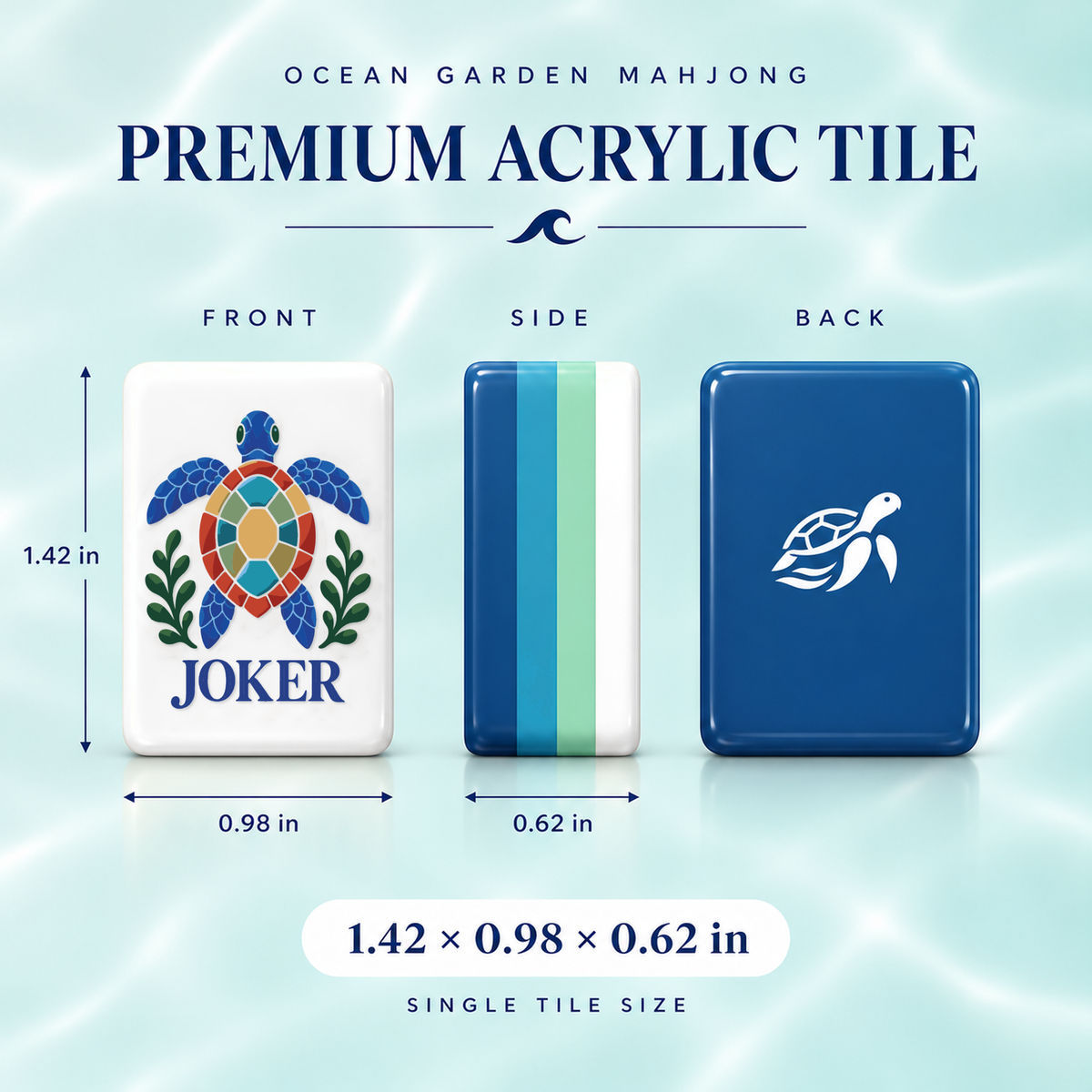
Tile size and readability: Mahjong tiles are typically 1–1.25 inches wide. Confirm tile markings are deeply engraved or printed so they're visible after 100+ uses. Our sets use durable acrylic construction.
Joker count: American mahjong requires exactly 8 jokers; Malaysian variants may differ. Confirm your set matches the rules you'll play.
Complete tile inventory: Verify the set includes all three suits (Bams, Craks, Dots), winds, dragons, flowers, and jokers. A 160-tile set from Mahstead includes 152 playing tiles plus spare tiles.
Storage and portability: If you'll travel to games, check whether the set includes a sturdy bag or case. Mahjong bags and cases protect tiles from damage and make transport easy.
Mat compatibility: If you buy a mat, confirm it's sized for the number of players and tile size you're using.
✨ Find your Mahstead set — free US shipping →

FAQ
Can I use a mahjong solitaire app to learn competitive mahjong rules?
No. Solitaire teaches you nothing about drawing, discarding, set-building, or hand patterns. Start with a teacher, YouTube tutorial, or the annual hand card for American mahjong to learn actual rules.
Is Malaysian mahjong harder than American mahjong?
They're different in complexity. Malaysian mahjong's chows and bidding require memorizing sequences and reading odds; American mahjong's one-card-per-year system is rigid but learnable. Most players find one or the other intuitive based on their learning style.
Can I play mahjong solitaire with a physical tile set?
Technically yes, but it's inefficient. Digital solitaire is faster and cheaper than shuffling a tile set into a preset layout repeatedly. Physical tiles are designed for multiplayer competitive play.
Do I need jokers to play Malaysian mahjong?
Yes, 8 jokers are standard in most Malaysian variants, just as in American mahjong. Confirm your specific house rules; some regional variants use fewer or no jokers.
Where can I find people to play Malaysian mahjong with?
Check community centers, libraries, synagogues, country clubs, and meetup boards in your area, especially in regions with significant Malaysian or Southeast Asian populations. Ask whether groups play Malaysian or American variants before joining.
What's the best set for someone learning either variant?
A 160-tile acrylic set with clear, deeply engraved tiles, durable construction, and a protective bag. Acrylic tiles are easier to read than bone-and-bamboo under table lights and survive repeated shuffling better than cheaper plastic.


View More
View More
View More
