
How to Host a Halloween Mahjong Party
Last updated: Nov 23, 2026
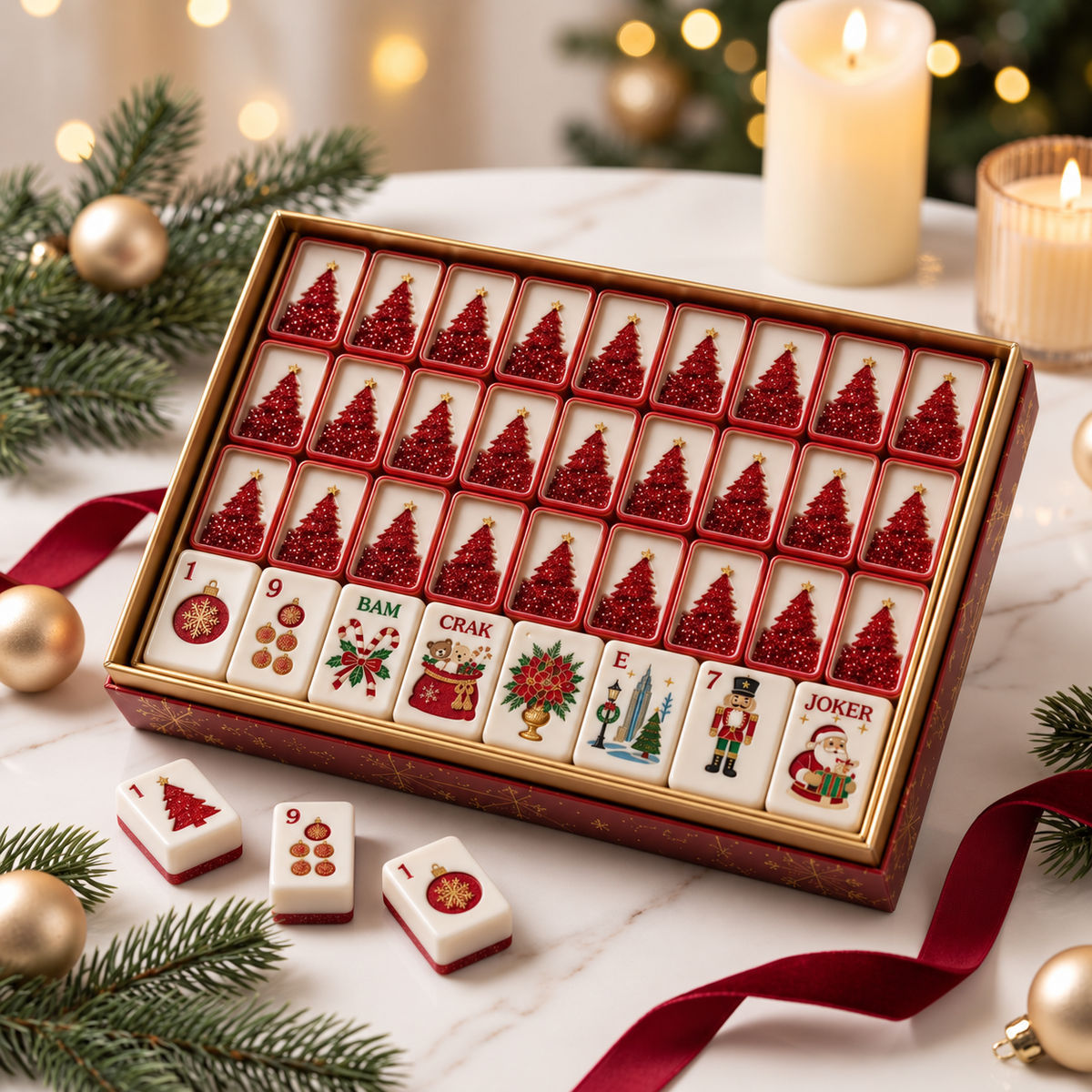
A Halloween mahjong party works best with four players, a 2–3 hour window, a sturdy mat, snacks, and mood lighting. Invite experienced or beginner-friendly players; explain or print the current year's National Mah Jongg League card rules ahead of time so everyone starts at the same level. Set up on a living room or dining table with good light, keep beverages in separate cups away from tiles, and use a mahjong mat to protect surfaces and contain pieces. Theme your night by choosing engraved sets with Halloween motifs or witchy tile designs—many of our acrylic sets come in colors and styles that complement fall décor. Plan 45 minutes to teach, 90–120 minutes to play 3–4 rounds, and 30 minutes for wrap-up and chat. The cost of hosting is mainly the set and mat; snacks and décor are up to you. 🀄 Shop best-selling mahjong sets →
Will my guests know how to play?
Not necessarily—and that's okay. American mahjong has a reputation for complexity, but the core is learnable in 45 minutes if you prep. Assign one experienced player (you) as dealer the first round. Have a printed or digital copy of the current League card ready on a tablet or printout so everyone can see the winning hand patterns. Don't assume your friends know about jokers, the Charleston (the tile-pass ritual at the start), or that you can't call sequences like in other tile games. A 15-minute walk-through—"here's what a pung is, here's how we draw and discard"—saves confusion mid-game. If half your group is brand-new, play two practice rounds before keeping score.

What size mat do I need for four players?
Standard American mahjong uses exactly 152 tiles plus 8 jokers, and a mat should fit all four players comfortably around one table. Look for a mat that's at least 28–30 inches across; this gives each player enough space for their rack, discards, and exposed melds without elbow-bumping neighbors. We offer mahjong mats in multiple sizes and colors, from compact to spacious. If your table is small, a 24-inch mat works, but you'll stack discards more carefully. Measure your table depth and width beforehand—you want 8–10 inches of mat space per side so no one's crushing their rack into the table edge. A mat also protects your table surface and keeps tiles from sliding off during play, which matters when you're refocusing on moves instead of chasing runaway Craks across the floor.
🎁 See our most-loved mahjong sets & accessories →
Should I buy a new set or use what I have?
If you already own a complete 152-tile set in working condition, use it—no need to spend money. But if your set is missing tiles, has cracked acrylic, faded labels, or loose racks, replacing it makes hosting smoother and more fun. A Halloween-themed or engraved set sends a message: this night is special, not just a random weeknight game. We design engraved American mahjong sets with custom tile faces, seasonal designs, and coordinated mats and racks. A new set also arrives complete and uniform—all tiles the same weight and size—so gameplay is fair and tiles don't jam mid-hand. If you're hosting once a year, a modest set works. If you plan to host monthly or travel with a set, invest in a durable acrylic option with a matching travel bag.
Scenario | Set Type | Why It Works | When to Buy |
Hosting casually once or twice yearly | Any complete 152-tile set | Low cost, familiar to regulars | You don't own one or yours is damaged |
Hosting monthly or teaching friends | Quality acrylic set with engraving | Durability, uniform play, memorable theme | Planning a series of parties or gifting |
Traveling to tournaments or friends' homes | Set + matching case or bag | Protected tiles, easy transport, professional look | You play outside your home weekly |
Halloween or seasonal theme night | Engraved or color-coordinated set | Fits décor, conversation starter, fun memory | You want the party to feel intentional |
✨ Find your Mahstead set — free US shipping →
How do I time a three-hour party so everyone finishes happy?
Structure: 15–20 min arrival, 30 min rules + Charleston, 90 min play (3 rounds), 15 min wind-down. Start with light snacks and casual chat while people arrive. Then gather at the table, explain the rules, hand out the current League card, and do the Charleston (the tile-passing exchange that begins each game—learn it here). Play three full rounds; each round typically lasts 25–35 minutes depending on how fast players discard and decide. Between rounds, people grab water, check their phones, or chat, which gives energy and prevents burnout. On round three, mention this is the last game so no one feels trapped. After the final hand, keep the mat up for 10 minutes so people can look at winning tiles and ask questions. Many first-timers light up when they see the final hand layout and understand the pattern they just played.
What snacks and décor fit a mahjong night?
Choose foods that don't require two hands or leave greasy fingers: nuts, cheese and crackers, chocolate, fruit, candies—avoid sticky or wet items. Napkins should be plentiful and far from the tile area. Drinks in lidded cups or glasses kept a full arm's length from the mat prevent spills that ruin tile labels and felt bottoms. For Halloween décor, use things that don't clutter the table: orange or purple ambient lighting (string lights or lamps), a small vase of dried flowers, small pumpkins or skulls as table centerpieces, and a Halloween playlist at low volume in the background. Avoid confetti, fake cobwebs, or props that shed and land on tiles or mats. If you want to carry the theme onto your tiles, choose a set with engraved designs in fall colors or witchy motifs before the party, so it arrives fresh and ready.
What to check before you buy
Player count: Confirm you'll play with exactly four. (Two or three needs different rules.)
Tile count: Buy a complete set with 152 tiles plus jokers; never add extra jokers to the game.
Table size: Measure width × depth; a 28+ inch mat works for most dining tables.
Storage: Do you have a closet shelf or cabinet for the bag between parties?
Guest skill: If hosting first-timers, budget 15 extra minutes for teaching.
Current year's League card: Print or have the 2026 card available; hands change annually.

What if someone wins on the first hand?
It happens—especially if a player is experienced and tiles fall their way. Congratulations to them; pay the points per the card. Don't assume something went wrong. Winning fast is rare but fair. Some first-timers worry they cheated or broke a rule; reassure them the hand is legal if it matches the current card and uses the rules you outlined. This is also a good moment to explain American mahjong scoring if your group hasn't learned it yet (the payout depends on the hand type, not just "first to win").
Do I need racks with pushers?
Racks hold your 13 tiles upright and out of sight from other players. Pushers are small sticks that help you slide tiles without fumbling. If your guests are new or have arthritis or dexterity challenges, yes—racks + pushers make play more comfortable and faster. If everyone is comfortable holding tiles in hand, racks are optional. We offer racks and pushers as part of complete sets or separately; they're especially useful if you're hosting people over 50 or anyone playing for the first time.
Can I use a tablecloth instead of a mat?
A tablecloth protects your table but doesn't contain tiles or provide a non-slip surface. Tiles slide more easily on fabric, and discards scatter. A mahjong mat has a felt or textured backing that grips tiles, marked sections for each player's area, and a raised edge to corral pieces. If you must use a tablecloth, place the mat on top of it for best results.
How many jokers are in a set?
A standard 152-tile American mahjong set comes with 8 jokers (no more, no fewer). In play, all 8 are used. Never add or remove jokers—the game is balanced for exactly 8. Our 160-tile sets include 152 playing tiles plus spares; the spare tiles are never added to active play.
What's the difference between American and Chinese mahjong for a party?
American mahjong uses a printed card of fixed hand patterns that change yearly; no chows (sequences) are allowed. Chinese mahjong uses chows, runs, and traditional hand patterns that don't change. American is easier for first-timers because the legal hands are written down and everyone reads the same card. Chinese has deeper strategy but steeper learning curve. For a Halloween party of mixed skill, American is the safer choice. If your group wants to learn Chinese later, that's a separate project.
🀄 Shop best-selling mahjong sets →

FAQ
Can I host a Halloween mahjong party with fewer than four players?
Yes, but rules change for two or three players. You'll use a subset of tiles and deal differently. Most U.S. clubs play four-player, so two- or three-player mode feels unfamiliar to many. If possible, invite a fourth.
Where do I find the League card to print?
The National Mah Jongg League issues a new card every spring. Check their official website or ask experienced players in your area. Many clubs distribute cards at meetings, or you can purchase them online from League vendors.
What if tiles are missing from my old set?
If you're missing more than 3–4 tiles, the game won't be fair; buy a new set. Mismatched sets cause confusion and unfair draws. A replacement acrylic set is more reliable than hunting down individual replacement tiles.
Should I tell guests it's a Halloween party before they arrive?
Yes. Let them know the theme, the start time, and whether they need experience. Say "No experience needed—I'll teach" or "Best for people who've played once before." This sets expectations and helps shy folks decide whether to come.
Can I play mahjong outdoors for Halloween?
Only if you have a covered, sheltered area and a stable table. Wind knocks tiles over, sun fades tile labels, and moisture warps the mat felt. An indoor or covered porch is safer and more comfortable for a 2–3 hour game.
What do I do if someone wants to learn the hand patterns before the party?
Encourage it. Share the current year's League card link or a teaching guide like how to play American mahjong. A guest who reads the card ahead will ask better questions and play more confidently.


View More
View More
View More
