
Best Mahjong Set for Left-Handed Players: Acrylic Design Guide
Last updated: Nov 23, 2026

Left-handed mahjong players succeed best with acrylic tile sets and racks with pushers that allow flexible hand positioning—since you control how tiles face and sit. Unlike bamboo or bone sets, acrylic tiles weigh less and slide easily on both sides of the rack, letting your left hand reach without overextending. Choose our best-selling acrylic collections with open-top racks: tiles stay visible, pushers live on either side, and you can arrange your hand from the left without rotating the entire rack. A standard American set contains 152 tiles plus 8 jokers and costs considerably less than ceramic alternatives. Avoid sets with right-handed fixed tile slots or mats where the scoring zone sits only on one edge; these create constant repositioning. Mahstead's acrylic sets ship with racks designed for both hands and mats with full-perimeter access, so left-handed play feels as natural as right-handed. 🀄 Shop best-selling mahjong sets →
What makes an acrylic set better for left-handed play?
Acrylic tiles are lighter and glide smoothly on both sides of a rack, so your left hand never strains reaching across. Bamboo and bone sets, by contrast, require more grip strength and stick slightly during pushes—a real friction point for left-handed players working at speed. Acrylic also resists chipping after years of weekly games, and the smooth surface means pushers work equally well from the left or right edge. If you play in a regular group and share sets, acrylic's durability and neutral hand-feel makes pass-around games faster and fairer. Left-handed comfort is maximized when you can choose where to position your rack without adapter tricks.

Do you need a left-handed specific mat or table setup?
Most American mahjong mats are symmetrical—the center scoring zone and throw area sit in the middle, so left and right hands are equally served. The key is choosing a mat where the drawn tile area and discard row sit at the same distance from both sides. Check before ordering: if the mat has a labeled dealer position only on one compass corner, you'll waste energy rotating it mid-game. Our mahjong mat collection includes designs where tile placement is equidistant from all four sides, so a left-handed player at any seat feels balanced. A full-perimeter mat layout—where discard piles, drawn tiles, and calling zones are accessible from north, east, south, and west—removes the need to reposition the whole table. Avoid mats with large right-edge printed scoring guides that assume a dealer on the bottom-right.
How should you arrange your rack and tiles for left-handed play?
Position your rack perpendicular to your body, tiles facing inward, so your left hand can push tiles forward smoothly without crossing your centerline. Most American mahjong racks sit 12–14 inches from your lap, angled so tiles rest at eye level when you're seated normally. For left-handed players, rotate the rack so the pusher side faces left—this keeps your wrist straight and reduces elbow fatigue. Keep the highest-value tiles (dragons, winds, flowers) at the far left of your hand arrangement, not the right, so your eyes follow your natural left-to-right scan. When you expose a pung or kong during play, place it in front of the center of the table, not toward the right edge—this gives all players equal sight lines and speeds calling. The racks with pushers Mahstead carries come with pushers that fit both sides, so you control whether the pusher sits at arm's reach or tucked beside your thigh.
Comparison: What set features matter most for left-handed players?
Feature | Left-handed priority | What to check |
Tile material | Acrylic preferred | Lightweight, smooth glide on all rack positions |
Rack design | Open-top, two-sided pushers | Pusher reachable from left; tiles visible without rotation |
Tile size | Standard (1–1.25″) | Comfortable left-hand span for pushing and drawing |
Mat layout | Symmetrical zones | Discard row, scoring area equally close from all seats |
Bag/carry case | Compartmented | Left-arm carry doesn't tip the set unbalanced |
Joker and blank tiles | 8 jokers minimum | Jokers spread evenly left and right during play |
Left-handed players report the smoothest games when they use lightweight acrylic sets with dual-sided pushers and symmetrical mats—this removes compensation effort and keeps focus on strategy, not logistics. If you're right-handed but host left-handed players regularly, buying an acrylic set with flexible racks benefits the whole group.
🎁 See our most-loved mahjong sets & accessories →
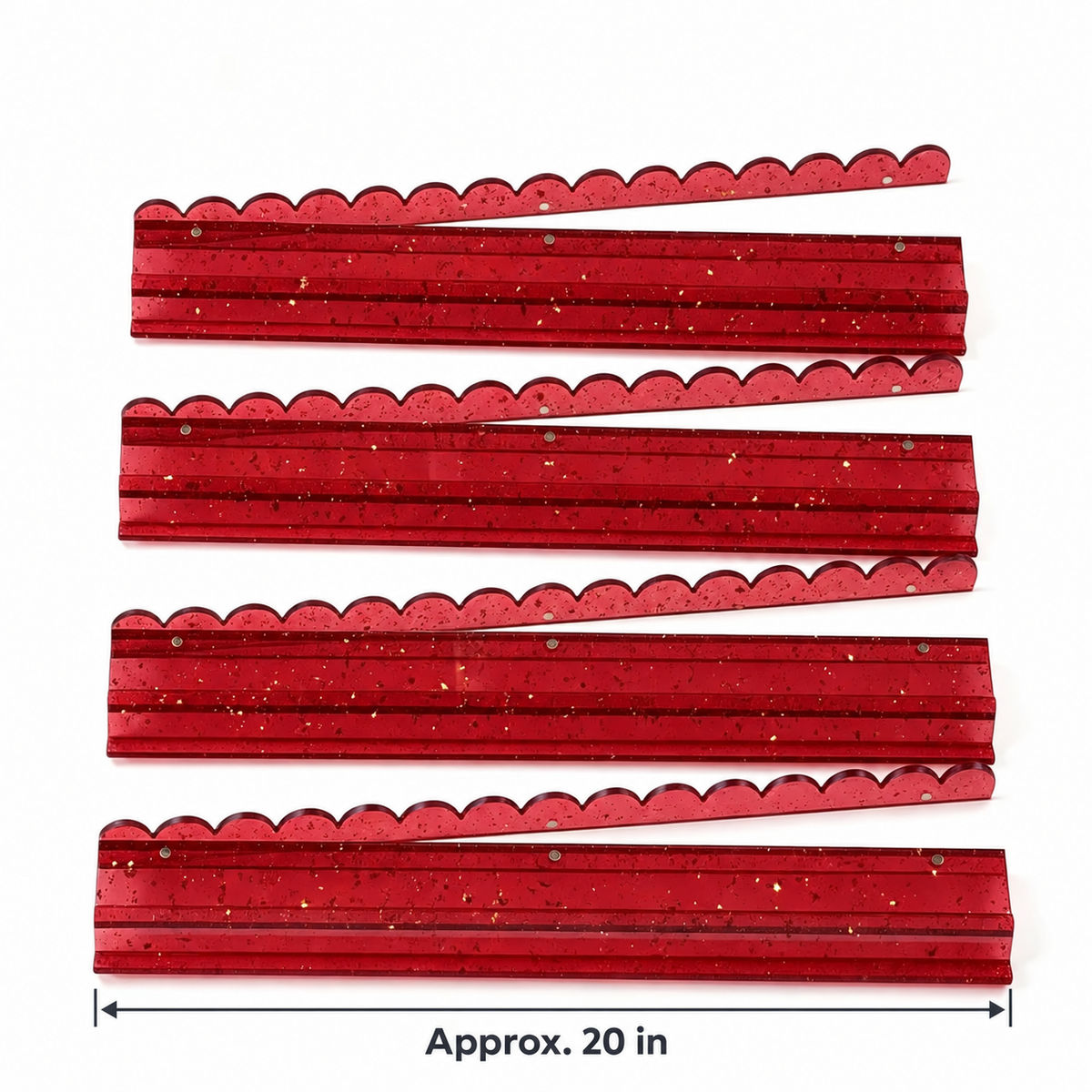
Should you buy a left-handed set, or adapt a standard one?
There's no such thing as a true "left-handed mahjong set" because American mahjong has no inherent handedness—tiles, racks, and mats are neutral tools once you position them correctly. Instead, choose sets where the components—tiles, racks, mats—are flexible enough to accommodate your body mechanics. A standard acrylic American mahjong set with a two-sided pusher rack is instantly left-handed friendly; no special order or adaptation needed. Sets with fixed right-hand slots or one-sided pushers are what to avoid. Buy from makers whose racks have openings on both ends, not just the right, and whose mats show balanced tile placement for all four compass directions. Mahstead's acrylic sets meet this standard out of the box, so you skip the hunt for workarounds and start playing comfortably week one.
What size tiles and pushers work best for a left-handed player with smaller hands?
Standard American mahjong tiles measure roughly 1 inch wide by 1.25 inches tall, and most pushers are 3–4 inches long—proportions that fit left-handed players with smaller hands just as well as average hands, because the pusher length and tile span are uniform across sets. The real factor is rack width: a narrower rack (typically 14–16 inches) gives you a shorter reach when your left hand needs to push from the far left side. Check the product page for rack depth and width before buying; a 14-inch rack is comfortable for players of all hand sizes, while 16+ inches may require slight elbow extension. If you play in a regular group and have had difficulty with standard racks, bring your left hand's span (thumb to pinky fully open) when you shop, or order a set with a return window so you can test fit in your home. Mahstead's mahjong racks ship with specs listed; measure your seat-to-table distance and compare it to the rack depth before finalizing your order. Left-handed players with smaller hands often find that two-sided pushers matter more than tile size, since the ability to push from either end of the rack reduces hand strain.
✨ Find your Mahstead set — free US shipping →
What to check before you buy
Rack design: Pushers on both left and right ends, not just one side. Test pushability from your left side by hand or video walkthrough before purchase.
Tile material: Acrylic is lighter and glides better on all rack surfaces than ceramic or resin. Confirm the product description says "acrylic tiles."
Mat layout: Discard row, scoring zones, and drawn tile areas should be equidistant from north, east, south, and west. Avoid mats with asymmetrical printed labels.
Rack width: Measure your seat-to-table distance; racks under 16 inches reduce left-hand reach fatigue. Mahstead product pages list rack dimensions.
Bag or case: If you carry your set to weekly games, choose a compartmented travel case that lets your left arm carry without tilting or straining.
Return or exchange policy: Test fit the set at home if possible; left-hand comfort is personal, and a good seller will swap it out if the reach or pusher positioning doesn't work.

FAQ
Can I use a standard right-handed mahjong set if I'm left-handed?
Yes, if the set has two-sided pushers and a symmetrical mat. Most American mahjong sets are hand-neutral—what matters is flexible positioning. Sets with fixed right-side pushers or asymmetrical mats force left-handed players to compensate, leading to wrist fatigue and slower play.
Do acrylic tiles slide more easily for left-handed pushes than bamboo?
Yes. Acrylic is smoother and lighter, so your left hand requires less force to push tiles forward or backward on the rack. Bamboo and bone sets are heavier and have slightly higher friction, which compounds reach awkwardness for left-handed players over a 2–3 hour game.
Should the pusher sit on my left side or in the center of the rack?
Position the pusher on your left side, nearest your hand. This keeps your wrist straight and reduces elbow extension. A pusher in the center requires your left hand to reach across, wasting motion and energy—exactly the problem left-handed players are trying to avoid.
What if I'm left-handed but seated to the right of the dealer?
Rotate the mat and rack so your left hand reaches the pusher comfortably, regardless of compass direction. American mahjong has no fixed seating; players sit where space allows. Your comfort at the table is more important than directional convention, and the game rules don't change based on hand orientation.
Are there specific Mahstead sets marketed for left-handed players?
No. Mahstead sells universal acrylic sets with two-sided pushers and symmetrical mats—all are equally left-handed friendly once you position them correctly. The collections listed on the product pages include full racks and mat specs so you can confirm flexibility before buying.
How do I know if a mahjong mat is truly symmetrical for left-handed use?
Check if the discard row, scoring zone, and drawn tile area are labeled or printed equally on all four sides. If scoring symbols or tile positions appear only on the top or right edge, the mat assumes a specific hand orientation and will feel awkward for left-handed play.
What's the best way to carry a left-handed-friendly mahjong set to weekly games?
Use a compartmented travel bag or case that distributes weight evenly so your left arm doesn't tilt or strain. Mahstead cases are padded and sized for standard 152-tile sets with racks; confirm the compartment layout fits your specific set before checkout.


View More
View More
View More
