
How to Clean Mahjong Racks with Pushers
Last updated: Nov 23, 2026
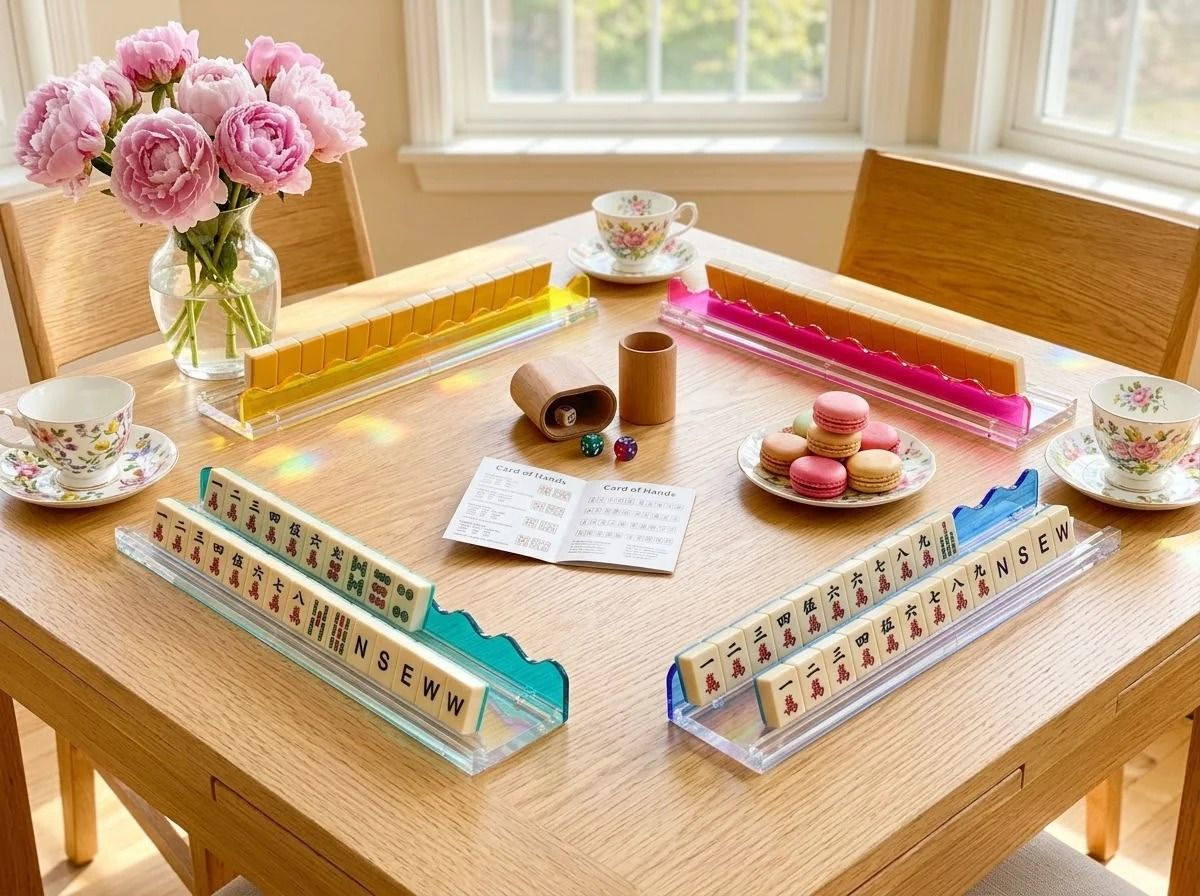
Mahjong racks with pushers sit at the table's friction point—tiles slide across them, dust settles in grooves, and spilled drinks find cracks. Clean weekly with a slightly damp microfiber cloth and mild dish soap; dry immediately to prevent warping or mold. For grooved pusher tracks, use a soft toothbrush or dedicated groove cleaner to dislodge trapped tile dust. Acrylic racks (our most common material) are durable but scratch easily, so avoid scouring pads and abrasive powders; stick to soft cloths. Store racks upright or flat in a cool, dry space—never leave them damp or stacked under weight. A well-maintained rack will glide smoothly and look inviting for years of weekend games.
Why do racks need cleaning after every game session?
Tiles shed a fine dust as they rub together—a mix of acrylic particles and table debris that settles into pusher grooves and the rack's inner track. Fingerprints, humidity sweat, and occasional spills (water, wine, snacks) compound buildup. Over time, sticky or gritty grooves slow the pusher's glide, making tile management frustrating mid-hand. Weekly cleaning prevents residue from hardening and keeps pushers responsive.
🀄 Shop best-selling mahjong sets →

What's the safest way to clean acrylic racks without scratching them?
Use a soft microfiber cloth lightly dampened with lukewarm water and a drop of mild dish soap—not a spray. Wipe the rack's outer edges, inner grooves, and the pusher stem slowly and gently in the direction of the grain or grooves. Never scrub in circles or apply pressure. For stubborn grime, let the soapy cloth sit on the spot for 10 seconds before wiping. Rinse the cloth, wipe again with plain water, and dry immediately with a dry microfiber cloth to prevent watermarks and mold. Skip all bleach, vinegar, and scouring pads—they dull acrylic and create micro-scratches that collect more dust.
How do you clean the pusher track grooves without damaging them?
Grooves trap tile dust most aggressively because pushers compress particles into narrow spaces. Use a soft-bristled toothbrush (child-sized works well) or a dedicated groove brush with gentle, short strokes along the channel. Pair the brush with a damp cloth to collect loosened debris. For deeper grime, soak a cloth corner in soapy water and work it into the groove, then brush lightly. Never use metal picks or hard-bristled brushes—they score acrylic and widen grooves, which then hold more dirt. Dry the grooves fully with a cloth, because standing water breeds mold in tight spaces. A quick groove clean takes 2–3 minutes per rack and prevents sticky pushers weeks later.
Should you disassemble racks to clean underneath the pusher?
Disassembly depends on your rack design. Some racks with pushers have removable pushers; others don't. If your pusher slides freely and isn't stuck, avoid taking it apart—unnecessary disassembly risks cracking the stem or losing small parts. Instead, tilt the rack and wipe under the pusher with a damp cloth, lifting and tilting it gently to expose hidden surfaces. If the pusher is truly stuck or grinds, consult the product guide or contact the maker before forcing it. For acrylic racks, gentle surface cleaning is almost always sufficient; deep disassembly is rarely necessary and often causes more harm.

What cleaning schedule keeps racks looking and functioning like new?
A sustainable routine prevents backslid maintenance. After each game: wipe the rack's outer surfaces and pusher with a dry cloth to remove loose dust. Weekly (after your regular games): do a full damp-cloth clean of all surfaces and grooves, plus a toothbrush pass on grooved tracks. Monthly: inspect the pusher for stickiness, and if you find any, soak a cloth corner in warm soapy water and work it slowly into the groove. Store racks vertically or flat in a dust-free cabinet or bag—never leave them on the table between sessions or stacked horizontally under other items. Over a year, this 5-minute weekly ritual keeps pushers gliding, acrylic bright, and your gear table-ready every time.
Cleaning Task | How Often | Time per Rack | What to Use | What to Skip |
Dust surface & pusher | After every game | 1 min | Dry microfiber cloth | Paper towels, tissues |
Damp wipe & groove brush | Once weekly | 5 min | Damp cloth + toothbrush | Metal picks, scouring pads |
Deep soak (if sticky) | Monthly or as needed | 10 min | Warm soapy cloth + brush | Vinegar, bleach, abrasives |
Dry & store properly | Always | 2 min | Microfiber cloth + dry space | Damp cabinets, stacks |
🎁 See our most-loved mahjong sets & accessories →
What mistakes do players make that damage racks fastest?
Using water or liquid cleaners in a spray bottle — spray leads to oversaturation, water pooling in grooves, and eventual mold or warping. Leaving racks damp overnight — humidity and standing moisture are the fastest path to mildew and acrylic softening. Stacking racks flat under weight — this warps the pusher track and can crack the stem or groove. Ignoring spills immediately — sticky residue hardens fast; the longer you wait, the harder it is to remove without abrasive scrubbing. Using old, dried-out cloth — dusty cloths redeposit dirt rather than cleaning; always use fresh, clean microfiber. Disassembling racks without reason — unnecessary disassembly risks cracking acrylic stems and losing parts. Avoid these five habits and your racks stay smooth and beautiful.
What to check before you buy racks with pushers
Before adding mahjong racks with pushers to your collection, confirm that the pusher slides smoothly right out of the box and holds tiles securely without wobbling. Check that grooves are clean and smooth (no rough edges or stuck debris from manufacturing). Verify that acrylic has no cracks, cloudiness, or rough patches—these invite dirt and worsen with cleaning. If you order online, inspect immediately upon arrival; if a pusher is sticky or cracked, report it before your first game.
✨ Find your Mahstead set — free US shipping →
FAQ
Can I use a dishwasher to clean racks with pushers?
No. Dishwashers use hot water, harsh detergents, and high pressure that warp acrylic, crack pusher stems, and cloud the surface. Hand-wash only with cool water, mild dish soap, and a soft cloth.
Why does my pusher squeak or stick after cleaning?
Either water trapped in the groove stem or acrylic swelling from dampness. Dry it thoroughly with a cloth, then let it air-dry upright for an hour. If stickiness persists, the groove may be warped—avoid using it forcefully and consider replacing it.
How do I remove white mineral deposits or watermarks from acrylic racks?
Soak a microfiber cloth in equal parts distilled water and white vinegar for 5 seconds, then wipe gently. Dry immediately. Vinegar works only on watermarks, not general dirt—use it sparingly to avoid dulling acrylic.
Can I use rubbing alcohol to sanitize racks?
Yes, diluted (50:50 with water). Wipe with a damp cloth, not a soaked one. Dry immediately. Alcohol is harsher than soap, so use it only if you suspect germs, not as a weekly routine.
How should I store racks in a travel bag?
Wrap each rack individually in a soft cloth or place it in a padded sleeve inside a mahjong travel bag. Store vertically or flat, never bent or crushed. Remove them from the bag as soon as you arrive to prevent mold if the bag gets damp during transit.
What if a pusher groove cracks or splinters?
Stop using that rack immediately—a cracked groove won't hold tiles safely and splinters can injure fingers. Contact the maker to discuss replacement or repair. Do not attempt to glue or sand it yourself, as this weakens the acrylic further.


View More
View More
View More
