
How to Host a Fall Mahjong Party: Complete Setup Guide
Last updated: Nov 23, 2026
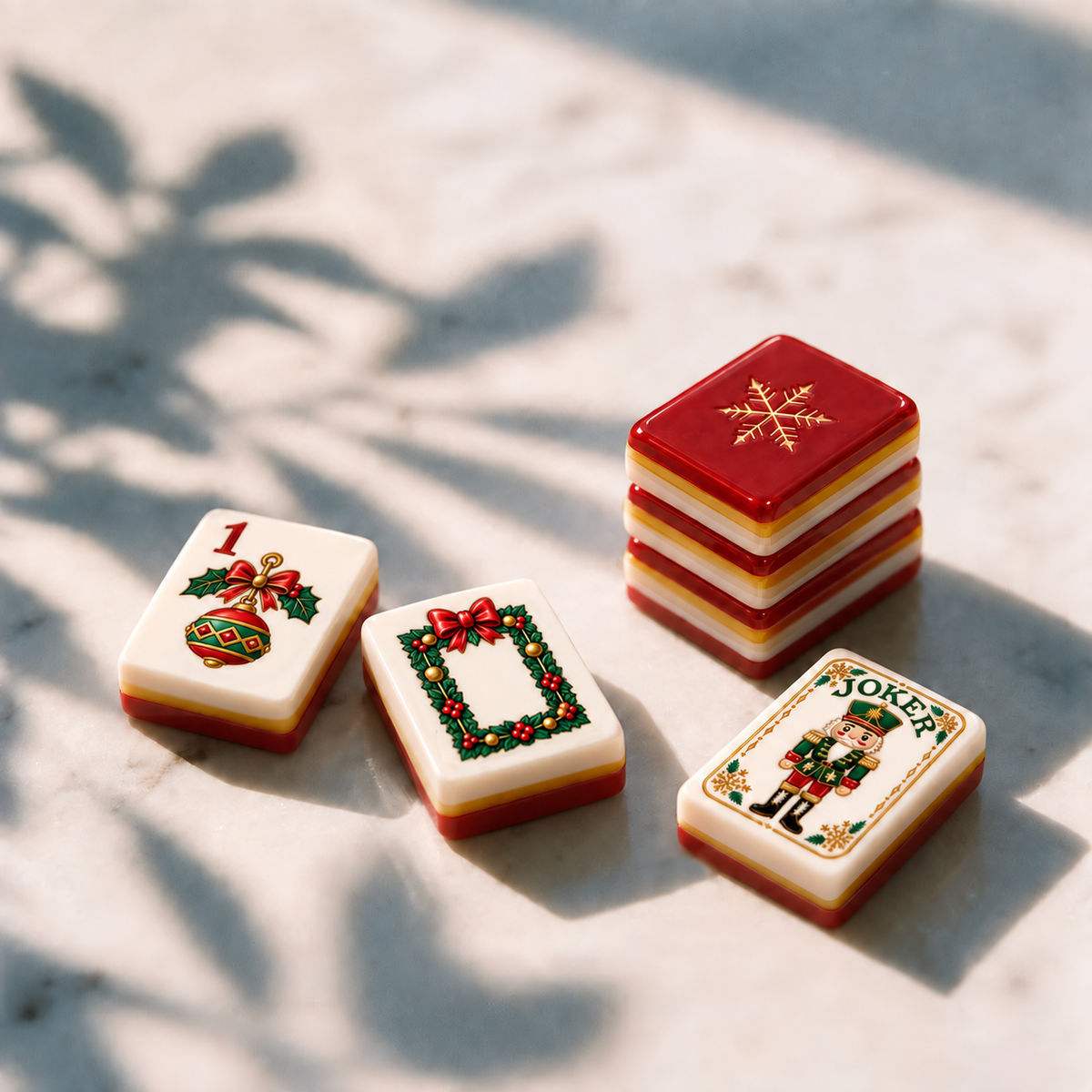
A fall mahjong party works best with 4 players, a 160-tile American mahjong set (152 playing tiles plus spares), a mat for grip and comfort, and the current National Mah Jongg League card. Set up a table large enough for four to sit comfortably; plan 2–3 hours. Invite players familiar with basic American mahjong rules or beginners willing to learn—the Charleston tile-passing ritual and hand-picking from the card level the field. Stock light snacks and water; avoid sticky foods near tiles. Assign one player as scorekeeper and have pen and paper ready. Order a best-selling mahjong set from Mahstead with acrylic tiles (durable and easy to clean) and a matching mat so guests feel the occasion is special.
🀄 Shop best-selling mahjong sets →
How much table space does a four-player mahjong game need?
Each player sits on one side of a square table; tiles are drawn and discarded in the center. A 36–48-inch square table is comfortable; 42 inches is ideal. Leave 12–18 inches of personal space in front of each player for their rack, hand tiles, and the Charleston pass. A round table works if the dealer position is marked clearly with a wind indicator or chip. If your table is smaller, place a mahjong mat on top—it creates visual boundaries and keeps tiles from sliding into laps during play. Mats also protect the table from moisture and scratches. Most fall gatherings happen indoors in September through November; a mat is especially useful if you're playing near windows with changing light or in a room that's still warming up.

What's the ideal player mix for a relaxed fall party?
Two experienced players and two beginners works well; so does all four at intermediate level. Avoid pairing one expert with three brand-new players—the expert will spend the game explaining rather than playing. If you have a mix, seat the two strongest players across from each other (as East/West) so no one beginner is isolated. If all four are learning, keep your first game short (one round, 16 hands) and plan a second once everyone settles. Fall is perfect for drawing beginners into mahjong—people are gathering indoors, looking for social activities that aren't screens. Have the National Mah Jongg League card for the current year printed or pulled up on a tablet so everyone can see the hands without crowding the table.
How do you set up tiles and racks before the first hand?
Start with the mahjong mat centered on the table. Place the tile wall (all 152 tiles turned face-down) in a square outline in the center. Give each player a rack with pushers—it keeps 13 tiles neat and visible, tilted so only you see yours. Shuffle tiles by hand, then stack them in the wall. The player with the East wind (dealer) is drawn by rolling dice or assigned beforehand. East draws from the wall first (14 tiles; others take 13 each in turn, counterclockwise). Each player arranges their tiles on the rack by suit and number. Beginners often struggle with rack organization—tell them to group Dots, Craks, Bams, then Winds and Dragons. Jokers go on the right end. Once tiles are drawn, the Charleston begins: each player passes three tiles to the left, then right, then across in a set order. This ritual equalizes luck and takes 1–2 minutes.
🎁 See our most-loved mahjong sets & accessories →
What are the top mistakes hosts make, and how do you avoid them?
Mistake | Why It Happens | How to Fix It |
Tiles slide or tip during play | No mat; hard table surface | Use a Mahstead mat with grip backing |
Players can't read tiles quickly | Worn or dull tiles; poor lighting | Get acrylic tiles; angle a lamp at the table |
Game stalls while looking up a hand | No card accessible; confusion on names | Print card or use a tablet propped upright |
Scoring disputes | No scorekeeper; unclear hand value | Name one scorekeeper before game 1; write downs |
Someone calls a winning hand incorrectly | Excitement, unclear rules on jokers | Brief group on how jokers work before starting |
Tiles mix with snacks/drinks | No boundary; messy setup | Keep snacks on a side table; tiles only at center |
The most common error is underestimating how much slower a mixed-skill game runs. Build in extra time and treat the first round as practice.

How should you handle scoring and rewards?
American mahjong uses a point value tied to the hand on the current year's card. Basic scoring: the hand's value is multiplied by the discarder's payment (the player who discarded the tile that completed the winning hand pays double; others pay single). Keep a running tally on paper—no app yet captures American scoring perfectly. For a casual fall party, skip money entirely and award a small prize (candy, fall-themed snack, or a tile-themed bookmark) to the player with the highest score after 4–6 rounds (about 90 minutes). If players prefer stakes, a nickel per point keeps stakes low and spirits high. Designate one scorekeeper and announce totals after every hand so no one disputes the math later. If a player calls a hand but can't match it to the card, they lose the hand and pay a penalty. American mahjong scoring rules are exact—review them together before hand one.
What refreshments and atmosphere make a fall party feel special?
Serve hot cider, tea, or coffee in September and October. Add a small charcuterie board with cheese, crackers, and grapes away from the tile table. Avoid chocolate, caramel, and anything sticky near play. Dim lights slightly, use a table lamp to brighten the tile area, and if you have them, light a cinnamon or apple-scented candle nearby—it signals "fall gathering" without distracting. A background playlist at very low volume (jazz, folk, ambient) keeps the mood social. Fall color decorations (small pumpkins, gold napkins, leaf garlands) frame the tiles without cluttering the table. The goal is comfort and focus: players should notice the season but concentrate on their hand. If guests are new to your home, give a quick tour before tiles come out so no one is distracted by curiosity.
✨ Find your Mahstead set — free US shipping →
What equipment checklist do you need before guests arrive?
One 160-tile American mahjong set (acrylic, durable for repeated play)
One mahjong mat (grip backing, easy cleanup)
Four racks with pushers (so tiles stay tidy)
Current National Mah Jongg League card (printed or digital)
Pen, paper, and a calculator for scoring
One pair of dice or a random player selector for determining East
Small clock or phone timer (optional, keeps rounds under 20 minutes per hand)
A small caddy or pouch for loose tiles and jokers between hands
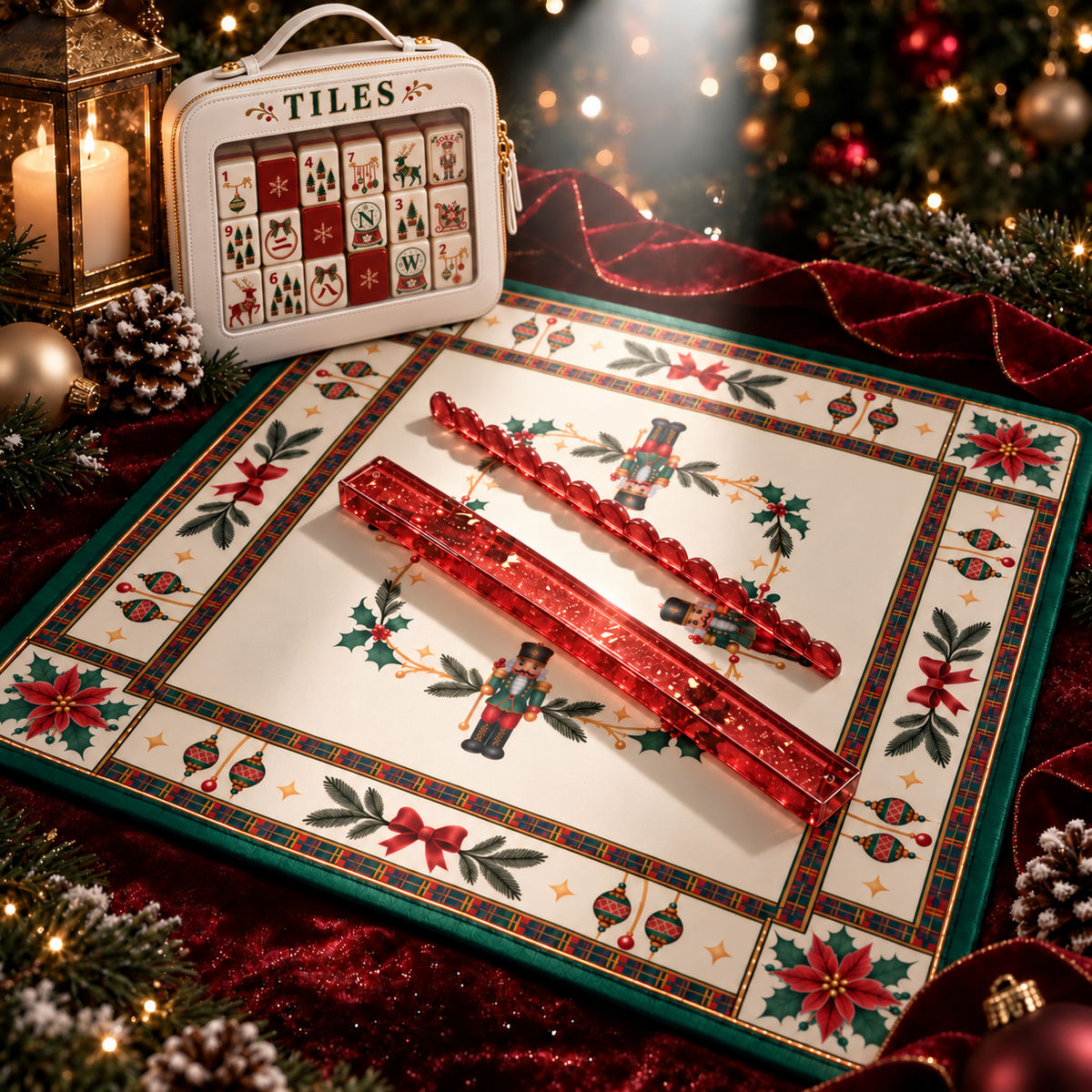
A travel bag or case protects your set before the party and makes cleanup quick afterward. After play, wipe tiles with a soft, dry cloth—acrylic tiles are water-resistant but don't soak them.
Before You Buy: What to Check
Tile size: Mahstead's standard tiles (about 1 × 0.75 inches) suit most hand sizes; if any guest has mobility issues, ask about comfort before ordering.
Mat material: Look for a grip-backed mat—it keeps the playing surface stable and prevents tiles from sliding.
Set color and design: Choose a set whose tile color (jade green, cream, red, or custom engraved designs) appeals to your group—a set with engravings or your initials makes the gathering feel intentional.
Racks and pushers: Verify they're included or order separately; one set of racks for each of four players prevents arguments and slows down play (good for learning).
FAQ
Can I play American mahjong with three players instead of four?
Yes, but rules shift: deal 16 tiles to each player instead of 13 or 14, and adjust hand timing. Refer to the 2 and 3 player rules guide before inviting only three; it changes strategy significantly and uses a different card section.
How do I teach a complete beginner in time for the party?
Send them the mahjong for beginners guide one week ahead; spend 15 minutes on hand selection and the Charleston when they arrive. Plan the first two hands as low-pressure learning rounds.
What if someone calls a hand but it's not on the card?
They lose the hand, pay a penalty (usually half a hand's value to each player), and play continues. Keep the card visible so no one disputes which hands are legal.
Should I provide printed copies of the card for each player?
Yes, or project it on a screen so all four can refer to it without crowding. The National Mah Jongg League card changes every spring, so confirm you're using the current year's version.
How long does a typical fall party last?
One full game (4 rounds × 4 hands per round) takes 2–2.5 hours for intermediate players. Add 30 minutes if teaching beginners. Plan arrival, setup, and cleanup as separate time.


View More
View More
View More
