
Changsha Mahjong Quick Start Guide
Last updated: Nov 23, 2026
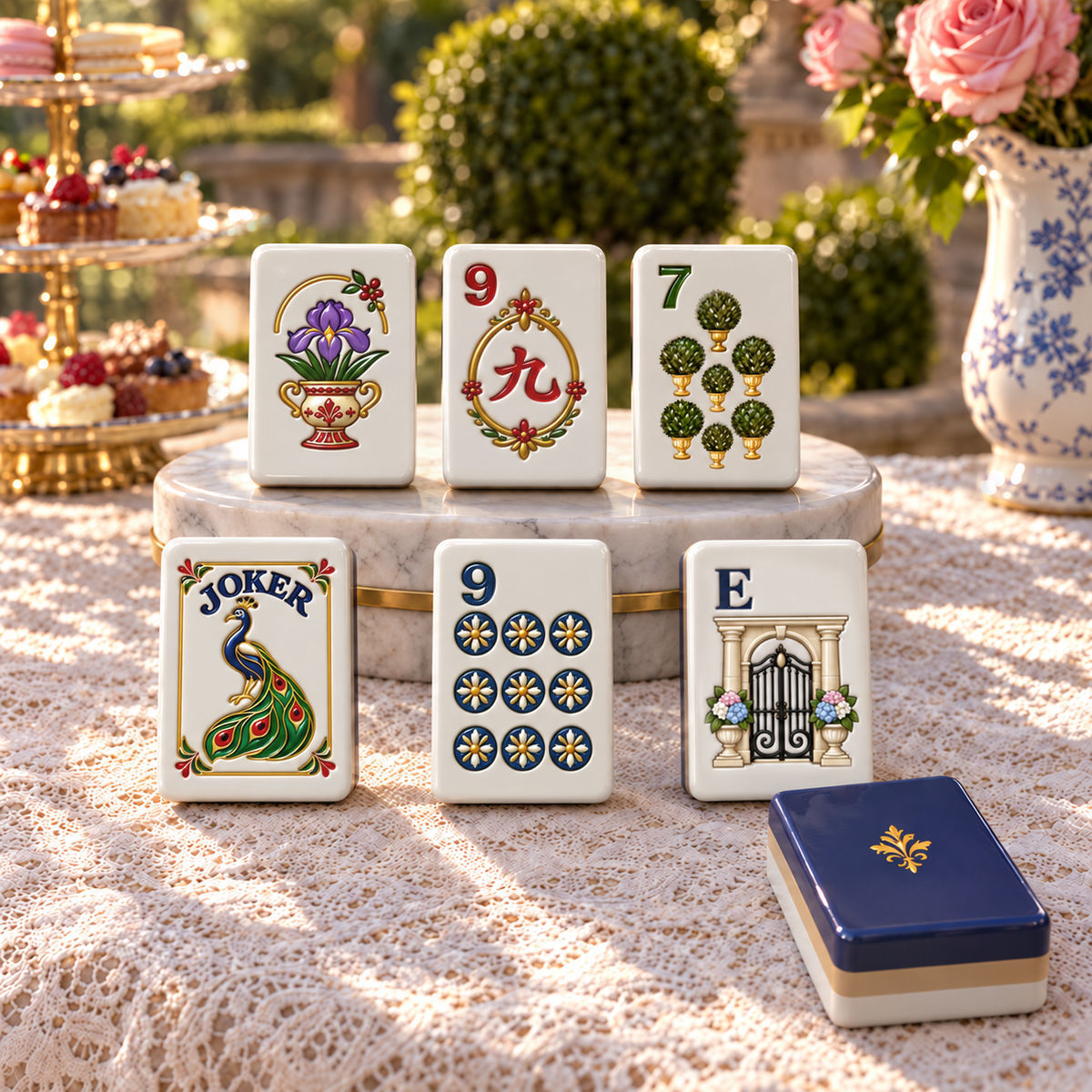
Changsha mahjong is a Chinese variant originating from Hunan Province, played with a standard 136-tile set (34 tiles × 4 copies: Bams, Craks, Dots 1–9, Winds, Dragons). Each player draws 13 tiles plus 1 from the wall; the first to complete a legal hand (four melds plus a pair) wins the round. Games move fast—typically 15–30 minutes per hand—because scoring is aggressive and draws are swift. Changsha uses no flower tiles and no jokers. Unlike American mahjong, it has no annual hand card; hands are fixed by local custom or regional rulebook. Beginners often mistake scoring thresholds or the order of melds, so we recommend learning the basic point system before your first session. We carry best-selling mahjong sets in acrylic that work well for practice, though traditional bone-and-bamboo sets are preferred in Changsha clubs. 🀄 Shop best-selling mahjong sets →
How does Changsha differ from American mahjong?
American mahjong uses 152 tiles, 8 jokers, an annual hand card from the National Mah Jongg League, and no sequences (only pungs, kongs, quints, sextets). Changsha uses 136 tiles with no jokers, no hand card, and sequences (chows) that are integral to legal hands. American is drawn randomly each spring; Changsha hands follow fixed patterns based on centuries of Chinese tradition. Setup differs too: Changsha typically uses a single dealer per round, while American rotates seats. Scoring also diverges: Changsha rewards tile combinations (pairs of Winds, terminal melds, all-simples) while American scores only the hand itself, not intermediate plays.

What tiles and setup do you need?
A standard Changsha set has 136 tiles: Bams, Craks, Dots (1–9 each, four copies) = 108 tiles; 16 Winds (N, E, S, W × 4); 12 Dragons (Red, Green, White × 4). No flowers, jokers, or blanks. Four players each sit at a corner (East, South, West, North). East dealer draws 14 tiles; others draw 13. The dealer plays first. The wall is drawn left-to-right, and a discard pile builds in the center. Each player's hand remains hidden until they are ready to win. Before your first session, verify your local club's house rules on pushing (rapid play) and whether scoring thresholds differ from standard Changsha.
🎁 See our most-loved mahjong sets & accessories →
What counts as a winning hand in Changsha?
A legal Changsha hand has four melds (pung, kong, or chow) plus one pair. A pung is three identical tiles (e.g., three 5 Craks). A kong is four identical tiles. A chow is a sequence of three consecutive numbers in one suit (e.g., 4 Bam, 5 Bam, 6 Bam). A pair is any two identical tiles. Honor tiles (Winds, Dragons) cannot form chows—only pungs or kongs. Many beginners accidentally count a non-sequence like 2 Bam, 5 Bam, 8 Bam as a chow; they are not. The pair must be identical; pairing a 5 Crak with a 5 Dot does not work. Once a player declares their hand complete, the round ends and scoring begins immediately.
How is Changsha scored?
Changsha scoring is point-based and usually calculated per hand, not per season. Common scoring tiers reward:
Pattern | Base points | Notes |
Simple hand (no honors, mixed suits) | 1 fan (base unit) | Fastest to achieve |
All pungs (no chows) | 2 fan | Requires luck on draws |
All honors (Winds, Dragons only) | 3–5 fan | Rare, high reward |
Terminal & honor melds | 2–3 fan | Mixed 1/9 Bam/Crak/Dot + Winds |
Winning on a draw (self-draw) | +1 fan bonus | Beats waiting for a discard |
Winning on first discard (hule) | Base only | Luckiest, lowest modifier |
Scoring rules vary by region and club, so ask your game host for their local multipliers and whether bonus points apply for certain melds. Play-money or chip stakes are typically negotiated before the round begins, not after the hand is called.

How do you avoid common beginner mistakes?
Meld confusion: Don't mix suits in a chow. A sequence must be 4 Bam–5 Bam–6 Bam, never 4 Bam–5 Crak–6 Dot.
Calling too early: Wait until you have exactly four melds and a pair. Announcing a hand prematurely forfeits the round and often incurs a penalty.
Misreading the dealer: East dealer goes first, not last. Missing this throws off the entire turn order.
Joker confusion: Changsha has no jokers. Don't expect them to substitute for missing tiles. Every tile must be real and present.
Honor-tile sequences: Winds and Dragons cannot form chows, only pungs and kongs. Trying to sequence a 1 Crak–2 Crak–East Wind fails.
Pair ambiguity: Your pair must be two identical tiles. A Red Dragon and a Red Dragon form a pair; a Red and a Green do not.
Before playing, ask the table host for the house rulebook or a quick glossary. Most Changsha clubs post a one-page reference sheet. Honest questions before the first hand save frustration during play.
✨ Find your Mahstead set — free US shipping →
What equipment should I bring or have on hand?
Changsha is traditionally played with bone-and-bamboo tiles, though modern plastic or acrylic sets work equally well. You'll want:
A full 136-tile set (four copies each of 34 unique tiles). Verify your set is complete before the first hand.
A mat or table cloth to protect tiles and improve grip. Many players prefer a felt or rubber surface to reduce sliding.
Racks or stands (optional but helpful) to organize and hide your tiles from other players.
Pen and paper for scoring tallies if the club doesn't use a scorecard.
A discard tray or area to keep center-play tiles visible and organized.
A mat designed for mahjong with clear tile zones keeps games running fast and reduces accidental knocks. If you're hosting, acrylic sets from our collection are durable, lightweight, and easy to inspect for missing tiles. House rules often specify materials, so check your local club's policy before buying new equipment.
What to check before you buy
Tile count: Confirm the set has all 136 tiles (34 unique × 4) with no duplicates or gaps.
Tile condition: Inspect for cracks, discoloration, or wear—especially on Dragons and Winds, which take frequent handling.
Back pattern: All tiles should have the same design on the reverse. Mismatched backs can signal a mixed or incomplete set.
Size and weight: Larger tiles (about 1 inch × 1.5 inch) are easier to grip; heavier tiles feel more stable and less prone to sliding.
Storage: A set should come with a bag or case to protect tiles during transport and storage.
Local club approval: Bring your set to one session and ask if it meets house standards before investing further.

FAQ
Can I play Changsha with 144 or 152 tiles?
No. Changsha uses exactly 136 tiles. A 144-tile set (often used in Hong Kong mahjong) adds extra tiles and changes the hand logic. American 152-tile sets include flowers and jokers, which have no role in Changsha. Use only a standard 136-tile Chinese set to ensure fair play and correct scoring.
Do I need a hand card like American mahjong?
No. Changsha has no annual hand card. Winning hands follow fixed patterns based on Chinese mahjong tradition and local house rules. Your game host will teach these patterns at the start of your first session, or you can request a one-page reference sheet in advance.
How fast is a typical round?
A full round (four hands, one per player as dealer) usually takes 30–60 minutes at a casual pace, or 20–40 minutes in fast play. Single hands often finish in 10–15 minutes because there are no flowers or jokers to slow tile cycling, and aggressive scoring encourages quick calls.
What happens if I call a hand incorrectly?
If your four melds and pair are invalid (e.g., a fake chow or a mismatched pair), you must pay a penalty to all players—typically a fixed amount set by house rules—and the hand is void. This is why verifying melds before calling is critical.
Can Winds and Dragons form chows?
No. Honor tiles (Winds: North, East, South, West; Dragons: Red, Green, White) can only form pungs (three identical) or kongs (four identical). They cannot form sequences. Always pair numbers (Bams, Craks, Dots) in chows; pair or pung honors separately.
Where can I find a Changsha game in the US?
Changsha clubs are most active in cities with large Chinese populations. Search online for "Changsha mahjong" + your city, check local community centers, Chinese cultural associations, temples, and social clubs. Many meetup boards and social media groups host casual games open to beginners.


View More
View More
View More
