
How Many Tiles in Cantonese Mahjong? The Complete Breakdown
Last updated: Nov 23, 2026
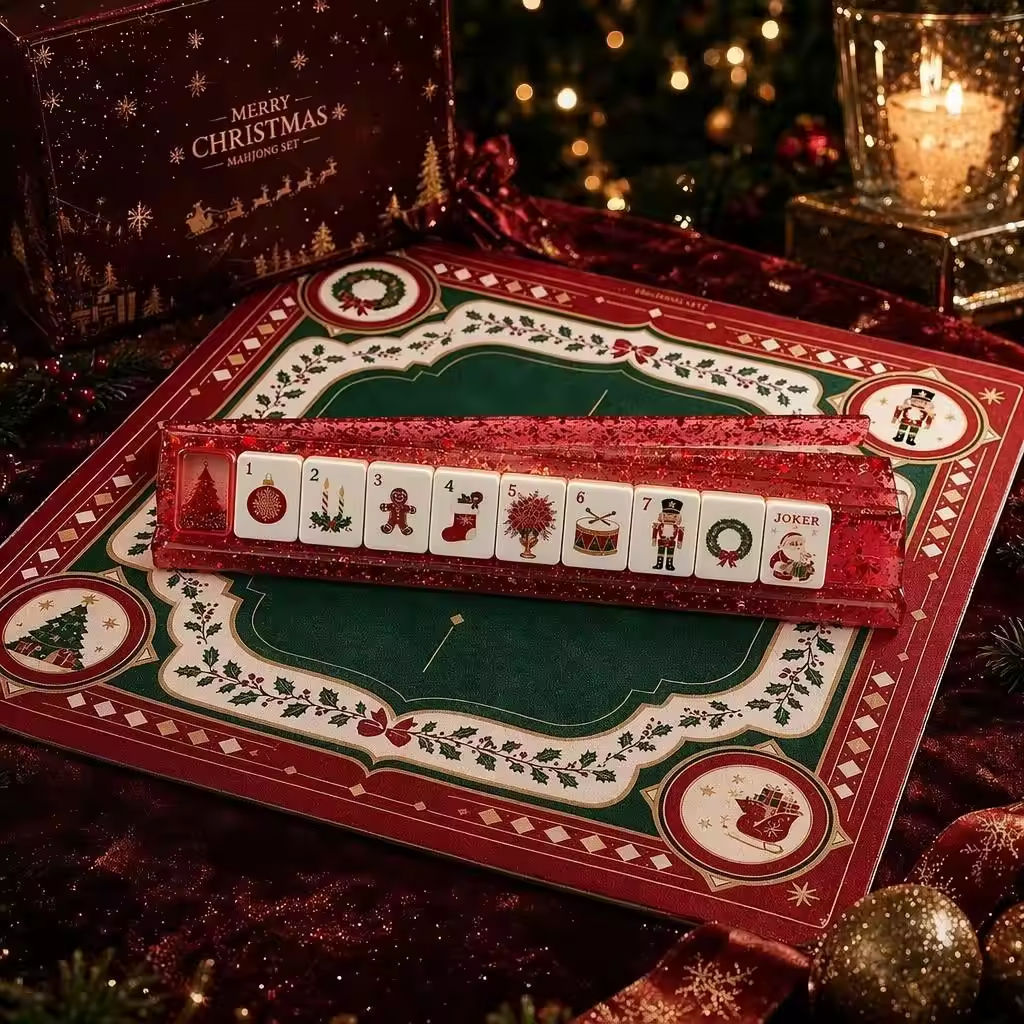
Cantonese mahjong uses exactly 144 tiles in play. The composition includes three suits (Bams, Craks, Dots)—each numbered 1–9 with four copies (36 tiles per suit, 108 total)—plus 16 winds (4 each: North, East, West, South), 12 dragons (4 Red, 4 Green, 4 White), plus 8 flower tiles. There are no jokers in traditional Cantonese play. This differs sharply from American mahjong, which requires 152 tiles plus 8 jokers. Cantonese rules allow sequences (chows) that American play forbids, and winning conditions differ significantly. Many players new to Cantonese expect an American set; buying the wrong tile count causes confusion mid-game. Mahstead specializes in acrylic American sets, so Cantonese players should source sets specifically labeled Cantonese or Hong Kong mahjong to avoid a mismatch.
What Is the Exact Tile Breakdown in Cantonese Mahjong?
Cantonese mahjong contains 144 tiles split into five categories: 108 suit tiles (Bams, Craks, Dots), 16 winds, 12 dragons, 8 flowers, and zero jokers or blanks. The suit tiles form three groups of 36 (one per suit), each containing four identical copies of numbers 1–9. Winds come as four sets of four (N, E, W, S). Dragons are 4 Red, 4 Green, 4 White. Flowers are eight individual tiles (usually 1 Plum, 2 Orchid, 3 Bamboo, 4 Chrysanthemum, repeated twice). No set includes jokers—traditional Cantonese rules rely on dead wall draws and strategic discard, not joker substitution.

How Does Cantonese Tile Count Differ from American Mahjong?
American mahjong requires 152 tiles plus 8 jokers (160 tiles total in a finished set), while Cantonese uses only 144 tiles and zero jokers. American adds 8 bonus tiles: a fourth flower set, and no jokers are used in a pair or single tile. American rules forbid sequences (chows) and require three-tile pungs, four-tile kongs, or longer melds; Cantonese allows and encourages sequences as a core win mechanic. American hands are drawn from an annual card (the National Mah Jongg League); Cantonese has fixed winning patterns that vary by region (Cantonese, Hong Kong, Taiwanese). American uses the Charleston shuffle before play; Cantonese begins with a simpler tile draw. A player switching between variants without adjusting set composition will face missing tiles or illegal melds mid-game.
Why Does Cantonese Mahjong Have Fewer Tiles Than American?
Cantonese rules evolved in Hong Kong in the early 20th century and were designed around sequences as a primary mechanic, not just pungs. Fewer tiles meant faster games and tighter strategy: with 144 tiles and four players drawing 13 tiles each in opening hand, the deck depletes faster and dead wall management becomes critical. American mahjong, standardized in the 1930s–1960s in the US, added extra flowers and jokers to support its no-sequence rule and the annual-card hand system, which requires more tile flexibility. The different tile counts reflect different strategic philosophies: Cantonese emphasizes hand-reading and sequence building; American emphasizes card memorization and rigid pung/kong structure. Understanding this history helps players appreciate why sets are not interchangeable.
Can You Play Cantonese Mahjong with an American Set?
No—not correctly. An American 160-tile set has 8 jokers Cantonese rules don't use; those 8 jokers must be removed before play begins. The American set also usually includes a second set of each flower (total 8 flowers), whereas Cantonese traditionally uses only 8 flowers once. You can strip out the jokers and extra flowers and use the remaining 144 tiles, but you're essentially converting the set on the fly, which invites error during rapid gameplay. If you host both Cantonese and American games, you need two separate sets: a dedicated 144-tile Cantonese set and a 160-tile American set from our best-selling collection. Mixing sets leads to miscounts, confusion about legal melds, and frustration. A dedicated Cantonese set shipped from a Hong Kong or Taiwanese supplier will have the exact tiles, denominations, and back design your group expects.
🀄 Shop best-selling mahjong sets →

What Else Changes Between Cantonese and American Rules?
Beyond tile count, Cantonese and American differ in how you win, how you meld, and how hands are scored. Cantonese allows and requires sequences (three consecutive numbers in one suit, like 4-5-6 Bams); American forbids sequences entirely and accepts only pungs (three identical), kongs (four identical), and longer melds without sequence logic. Cantonese winners typically "go out" with a pung-heavy hand plus one pair, or a mixed pung-and-sequence hand; American winners must match a specific hand pattern from the current year's card. Jokers in Cantonese are absent; American relies on jokers for flexibility in building melds. Scoring in Cantonese is simpler (fixed points per hand type or win method); American scoring is granular (based on hand complexity, win method, and card-listed point value). Wall draws and dead wall management differ too. If you're learning Cantonese after playing American, expect to relearn melds, hand goals, and scoring from scratch.
🎁 See our most-loved mahjong sets & accessories →
Comparison: Tile Counts Across Major Variants
Variant | Total Tiles | Suit Tiles | Winds | Dragons | Flowers | Jokers | Sequences Allowed? |
Cantonese | 144 | 108 | 16 | 12 | 8 | 0 | Yes |
American | 152 | 108 | 16 | 12 | 8 | 8 | No |
Hong Kong | 144 | 108 | 16 | 12 | 8 | 0 | Yes |
Taiwanese | 144 | 108 | 16 | 12 | 8 | 0 | Yes (regional) |
Riichi (Japanese) | 136 | 108 | 16 | 12 | 0 | 0 | Yes |
The table shows Cantonese and Hong Kong mahjong use identical tile counts; Hong Kong mahjong follows similar Cantonese rules with minor regional tweaks. Riichi (Japanese mahjong) uses 136 tiles and omits flowers entirely. American stands alone in requiring jokers and forbidding sequences.
What Should You Check Before You Buy a Cantonese Set?
Before purchasing a Cantonese mahjong set, verify three details:
Tile count: Confirm the product listing states 144 tiles, not 152 or 160. Some sellers market "deluxe" sets with extra tiles; for Cantonese play, extra tiles are incorrect and waste money.
Suit markings: Check that Bams show numeric marks (bird on 1 Bam is optional), Craks show cracks, Dots show circles, and each number 1–9 appears four times per suit. Confirm winds and dragons are clearly labeled.
Flower tiles: Verify exactly 8 flower tiles are included, not 16. Cantonese traditional play uses flowers once; some modern sets bundle two sets by mistake.
No jokers: If the package lists jokers or states "144 tiles plus jokers," that's a hybrid set and not correct for traditional Cantonese.
Seller documentation: Buy from vendors who specialize in Cantonese or Hong Kong mahjong and can answer questions about regional rules and dead wall setup.
If you're hosting both Cantonese and American games, keep sets separate and label them clearly—a marker on the bag or case prevents mid-game discovery of the wrong set.
✨ Find your Mahstead set — free US shipping →
How to Teach Cantonese Mahjong Without Tile Confusion
When introducing Cantonese mahjong to American players, teach the new tile rules and melds first, before touching a set. Explain that sequences are now legal and encouraged, that jokers don't exist, and that the goal is different from American's card-based hands. Then walk through the 144-tile composition on paper: 108 suit tiles, 16 winds, 12 dragons, 8 flowers. When players see the set, they'll recognize the structure. Assign one person to manage the dead wall and tile draw procedure; in Cantonese play, the wall setup and draw order differ from American's Charleston. Use one dedicated Cantonese set for all games and store it separately to prevent accidental mixing. If your group plays both variants weekly, label equipment clearly: a tag on the set bag or a slip card inside identifies which game it belongs to. This small step prevents the frustration of discovering mid-game that someone grabbed the American set by mistake.

FAQ
Can I use a 160-tile American mahjong set to play Cantonese mahjong?
Technically yes if you remove the 8 jokers and set them aside, leaving 152 tiles—but Cantonese requires exactly 144. You'd have 8 extra suit or flower tiles. For correct play, buy a dedicated 144-tile Cantonese set. Mixing sets invites counting errors and rule disputes.
What are the 8 flowers in Cantonese mahjong?
Traditionally: 1 Plum, 2 Orchid, 3 Bamboo, 4 Chrysanthemum—each tile appears exactly twice (8 flowers total). Some regional variants list them differently; check your local rulebook. Unlike American flowers, Cantonese flowers are drawn from a shared pool and used only once in play.
Is Hong Kong mahjong the same as Cantonese mahjong?
Hong Kong mahjong follows Cantonese rules with minor regional tweaks and uses the same 144-tile set. Tile count and core melds are identical. If you have a Hong Kong set, you can play Cantonese mahjong with it, though scoring or hand patterns may vary slightly by region.
Do Cantonese mahjong players ever use jokers?
No. Traditional Cantonese rules have no jokers. The game relies on strategy, discard reading, and the dead wall—not joker substitution. If a set includes jokers and claims to be Cantonese, it's a hybrid or mislabeled product.
Why do American and Cantonese mahjong have different tile counts?
American mahjong added extra flowers and jokers in the mid-20th century to support its no-sequence rule and annual-card hand system, which require more tile flexibility. Cantonese evolved around sequences and was optimized for faster play with fewer tiles. The variants reflect different strategic philosophies.
If I buy a set online, how can I tell if it's truly Cantonese or Hong Kong mahjong?
Check the product description for "144 tiles," "Cantonese," "Hong Kong," or "Chinese mahjong." Avoid listings that mention jokers, American mahjong, or 152+ tiles. Read seller reviews from Cantonese players if possible. When the set arrives, count the tiles and verify no jokers are included.


View More
View More
View More
