
How to Host a Book Club Mahjong Party
Last updated: Nov 23, 2026
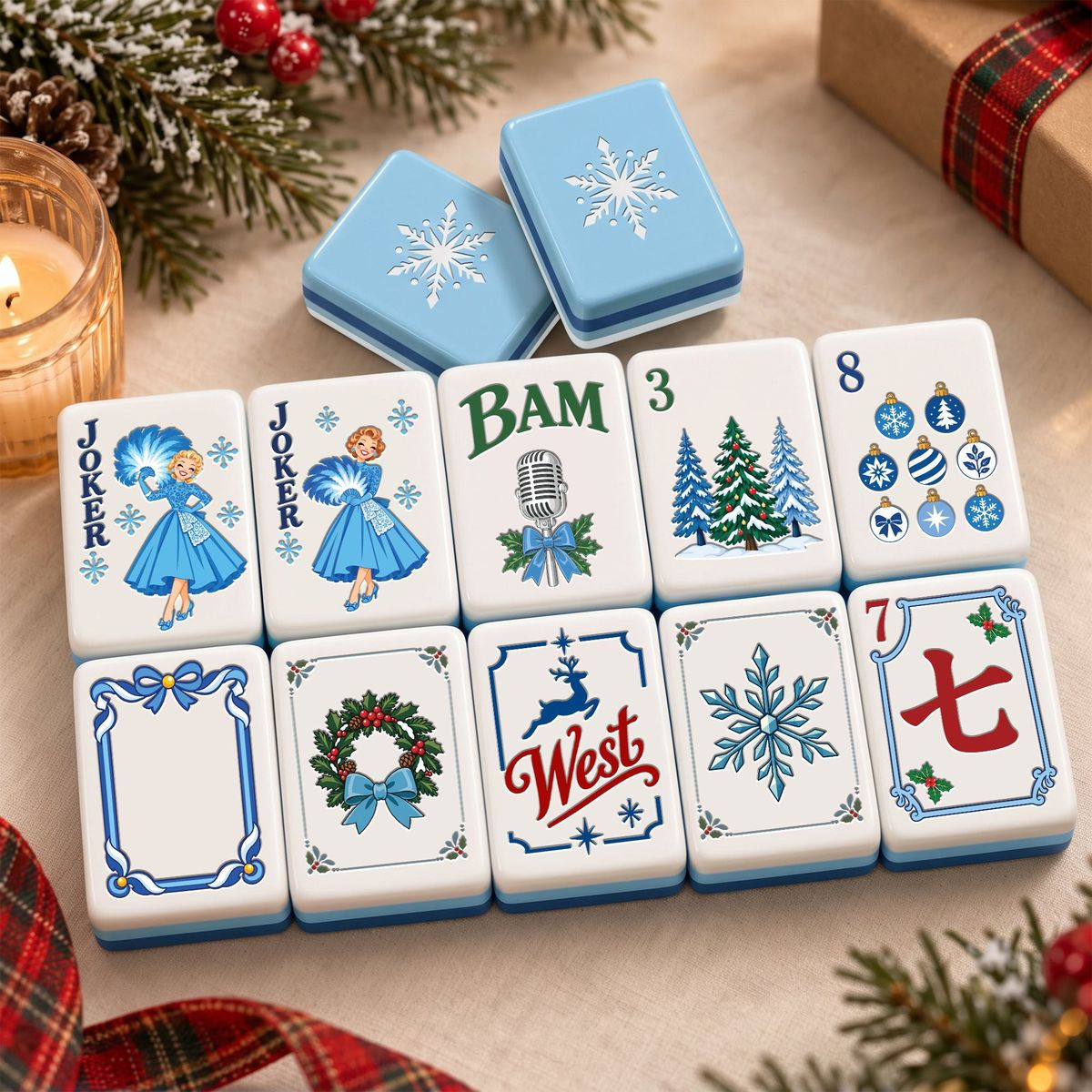
A book club mahjong party works best when you pair a short discussion or reading slot (30–45 minutes) with casual four-player games (20–30 minutes per round). Host it at a home or community space with a flat table, comfortable chairs, and room for snacks. Invite four core players (or six if you'll rotate) and send the National Mah Jongg League card link ahead so beginners can glance at hand patterns. You'll need one 160-tile set per table, a mat to protect surfaces, racks with pushers if players want hand support, dice, and simple scorecards. Budget 2–3 hours total. The key: teach the Charleston (tile pass) in 5 minutes, set a hand time limit (15 minutes max to find your winning hand), and keep snacks light to avoid tile grease. No prior mahjong skill required—book club groups often enjoy the social rhythm and learn as they play.
How do you teach mahjong to a book club in 10 minutes?
Start by showing the tile types: three numbered suits (Bams, Craks, Dots 1–9), winds, dragons, flowers, and jokers. Deal 13 tiles to each of four players, flip one from the wall, and explain the goal: match tiles in patterns shown on the current year's card. Skip detailed scoring; instead say "match your 14 tiles to any hand on the card and win." Demonstrate a simple pattern (three identical tiles = a pung, four = a kong, and jokers can stand in for any tile except a pair). Show how to call out "pung" or "kong" when another player discards a tile you need. Drill the Charleston once: pass three tiles right, three left, one across. Keep it light. Players learn fastest by playing; use the first round as a low-pressure teaching round.

What's the best table setup for a mixed-skill group?
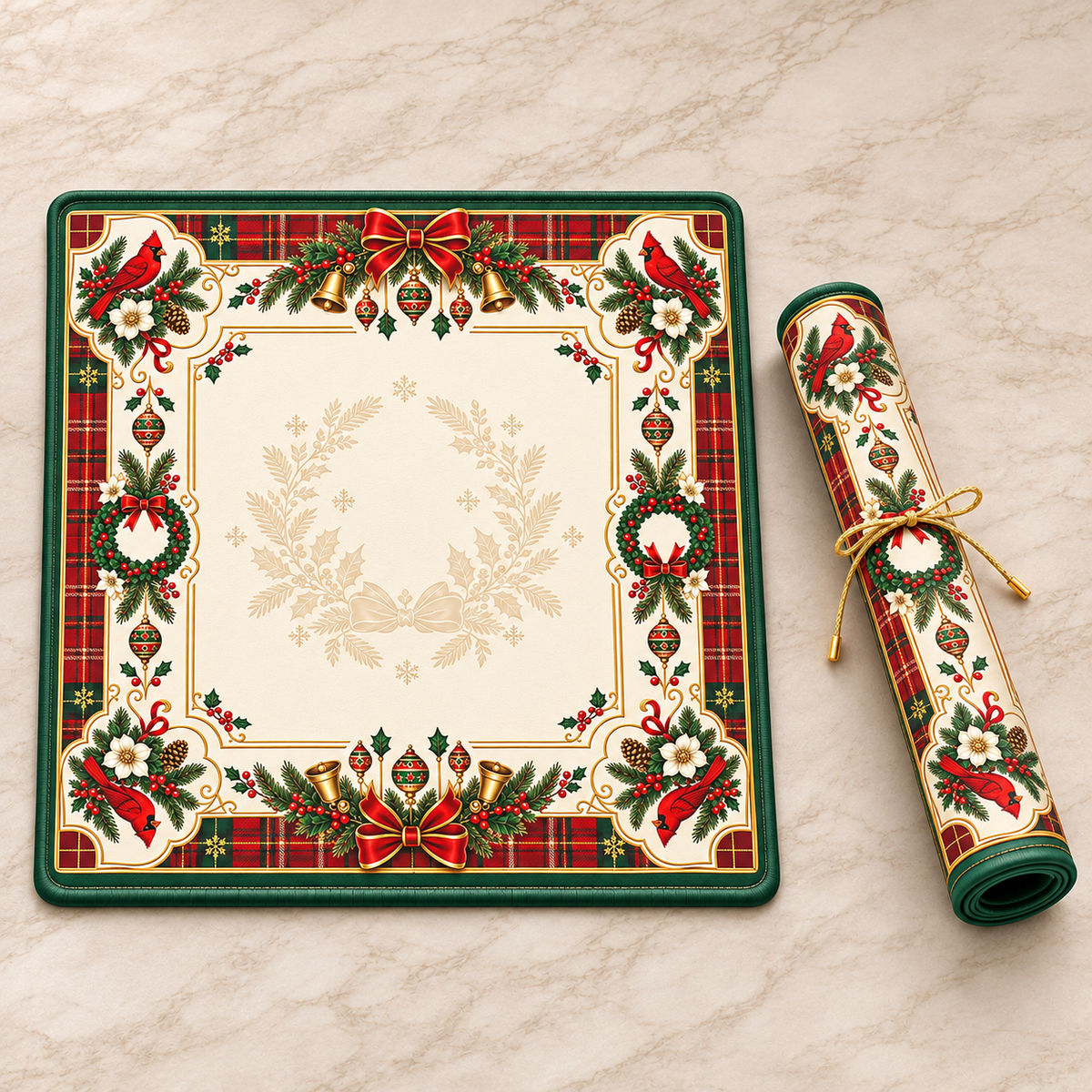
Arrange four chairs at a square or round table so everyone faces inward and can see the wall (the face-down pile of tiles in the center). Place a mahjong mat in the center if your table is bare wood or glass—it quiets tile noise and marks the boundary between players' hands and the center wall. If players want hand storage, set racks with pushers to their left. Put the National Mah Jongg League card, dice, and scorecards to one side. Keep the snack table separate so tiles stay clean and dry. Good lighting (overhead or a lamp angled away from glare) lets everyone read tiles clearly. Comfort matters: seat players in chairs with back support, since a game can run 20–30 minutes, and no one should crane their neck at an awkward height.
How do you keep the pace moving so the party stays fun?
Set a strict 15-minute hand limit per round. Use a phone timer and announce it before the Charleston—players will focus faster. Rotate deal (East) position clockwise, so each player hosts once per four rounds. If someone has not picked a tile after 10 seconds, gently nudge them: "Pick any tile from the wall." Skip detailed hand scoring in early rounds; tally only wins to learn the card patterns. If a player is stuck on a hand (can't find any match on the card), show them one option without taking over. Run two or three short rounds (15 min each) rather than one long marathon. Between rounds, swap players at the table if you have extras, or take a 5-minute snack break. The goal is motion and laughter, not perfect play. A book club group will love the social cadence once they stop worrying about rules.
What equipment do book clubs actually need to own vs. rent or share?
You need one 160-tile American mahjong set per table (book clubs usually host one table at a time). Buy once, use for years. A mahjong mat is optional but saves your table from scratches and dampens noise, which matters in a home setting—a worthwhile investment if you'll host monthly. Dice and scorecards are cheap paper items; most sets include them. Racks with pushers are a nice-to-have: they free hands and reduce clutter, especially for players new to tile handling. A carrying bag isn't essential for home-only hosting, but if your club meets at rotating homes or a community center, a mahjong bag or case keeps tiles and mat protected and makes setup fast. A checklist: set ✓, mat ✓, bag (if moving) ✓, dice ✓, scorecard and pen ✓, and a printed or digital copy of the current NMJL card ✓.
What mistakes kill a book club mahjong night?
Don't skip the Charleston—it's the tile-pass ritual that levels the luck and takes only 3 minutes. Skipping it feels rushed and unfair. Don't crowd too many people at one table; four is ideal, six max if you rotate. Don't use old cards (last year's or a generic Chinese ruleset); American mahjong hands change annually and won't match outdated cards. Don't assume everyone knows the rules; send the card link the week before and say "skim the flower and one suit, don't memorize." Don't set the timer too short (under 10 minutes per hand feels frantic) or too long (over 20 minutes and people zone out). Don't serve sticky snacks near the tiles—grease and dust ruin the felt and stick keys on the pushers. Don't ignore joker rules: jokers cannot be used as a pair or single tile, only as a substitute in groups of three or more. Keep tiles dry, keep talk warm, and keep pace steady, and you'll host a night your club asks to repeat.
Setup Detail | Book Club Host Choice | Why It Matters |
Table surface | Bare wood or glass + mat | Protects finish, quiets tiles, defines play zone |
Chairs | Firm with back support | 30-minute rounds need comfort; no neck strain |
Lighting | Overhead or angled lamp | Prevents glare on tiles; easy to read suits/numbers |
Tile set | Complete, acrylic lasts for years, includes spares | |
Card | Current year NMJL printed or linked | Hands won't match old cards; sync is crucial |
Snacks | Light and dry (cheese, nuts, fruit) | Sticky fingers ruin tile surface and pusher keys |
Racks (optional) | One per player if budget allows | Reduces hand fatigue and tile spillage |
Bag (optional) | If hosting rotates between homes | Safe transport; fast setup at new location |
🀄 Shop best-selling mahjong sets →
How do beginners read the mahjong card without freezing up?
The National Mah Jongg League card is daunting at first glance—it's packed with hand patterns. Tell new players to ignore the card's complexity during setup; instead, show them three simple examples on the card: a hand with all flowers, a hand with one suit and a dragon, a hand with two pungs and jokers. As they play, they'll start recognizing patterns on the tiles in front of them and scan the card for a match. Teach them to look down the card's sections (grouped by hand type) rather than left-to-right. If a player holds three 5 Bams and two jokers, they can search for "three 5 Bams + two jokers + eight more tiles" instead of reading every line. After two rounds, most players stop panicking and start seeing matches naturally. The card is a reference, not a test.
What if someone hasn't played before and feels lost mid-game?
Pause and take 30 seconds to show them what tiles on the table mean: discards are face-up in the center, the wall is face-down in the middle, and their hand is private. Explain their one job: pick from the wall or claim a discard, then discard one tile. If they claim a discard by calling "pung" or "kong," show them the pattern they made. If they're stuck finding a hand on the card, ask what tiles they have and help them match two or three lines on the card—not to win, but to build their reading skill. Pair them with a sharper player for the next round if they'd like a buddy. Most people click by round three; the social permission to fumble matters more than speed.
How long should each game round actually last?
Aim for 15–20 minutes per round. Most hands resolve in 12–15 minutes; the timer prevents endless turns and keeps energy high. If no one wins after 15 minutes, end the hand and move to the next. Call this a "draw"—no points, no drama. Book club groups appreciate the brisk pace; it lets you fit three rounds into an evening alongside food and chat. If a table has faster, more experienced players, they may finish in 10 minutes; that's fine—they can reshuffle and start another round or step back for newcomers to play without the gallery.
Should you score formally or keep it casual?
For a book club first outing, skip formal scoring. Just track wins: each player gets a tally mark when they win a hand. After three or four rounds, see who won the most. This removes anxiety about point math and lets players focus on learning patterns and enjoying the social side. Once your club has played three or four parties, you can introduce simple scoring if interest grows—but most book clubs stay casual forever. The goal is "Did I win?" not "Did I score 50 points?"
🎁 See our most-loved mahjong sets & accessories →
What to check before you buy
Set condition: Acrylic tiles should feel smooth, not rough or sticky. Inspect for cracks or missing tiles before hosting (the 152-tile set you buy is complete and ready).
Tile readability: Test that you can see Bam, Crak, and Dot symbols clearly under your party lighting. Larger symbols help book club players who may not play weekly.
Mat grip: If you choose a mat, confirm it stays flat and doesn't slide around on your table. A slipping mat frustrates players mid-round.
Bag durability: If you transport a set, check that zippers move smoothly and seams are sewn tight before hosting at a second location.
Card printing: Print or screenshot the current year's card and bring it to the party. A digital copy on a phone or tablet works, but avoid tiny screens that force squinting.
✨ Find your Mahstead set — free US shipping →

FAQ
Can book clubs play mahjong if no one has played before?
Yes, absolutely. American mahjong is pattern-matching, not memory. Teach the Charleston, show the card, and play. Most groups laugh and bond faster than in a lecture. Plan two hours; the first round is teaching, the second and third are fun.
How many mahjong sets should a book club own?
One set per table. If you always host at one home with one table, you need one set. If you rotate hosts or plan multiple tables, one set per location prevents transport headaches. Acrylic sets last decades, so it's a one-time buy.
Can you play mahjong with fewer than four people?
Two and three player mahjong exist but use different rules and hand structures than American four-player. Stick with four for book club parties; it's the standard and easiest to teach.
What's the Charleston, and why do book clubs need it?
The Charleston is the tile-passing ritual before play begins: pass three tiles right, three left, one across. It redistributes luck and takes 3 minutes. Skip it, and the game feels unfair and rushed.
Should you engrave a custom set for a book club party?
Only if your club is a long-running, tight group planning to host monthly or as a tradition. Engraved sets (with your club name or a book-themed design) add warmth to the table and make a nice keepsake, but a standard set works perfectly for a first party.
What's the difference between a mahjong mat and a table cover?
A mat vs. table cover — mats are padded, define the play zone, and quiet tiles; covers are thin fabric, protect finish, but don't mark boundaries. For a book club party, a mat is the better choice because it reduces noise and steadies tiles.


View More
View More
View More
