
How Many Tiles in Taiwanese Mahjong: A Player's Guide
Last updated: Nov 23, 2026
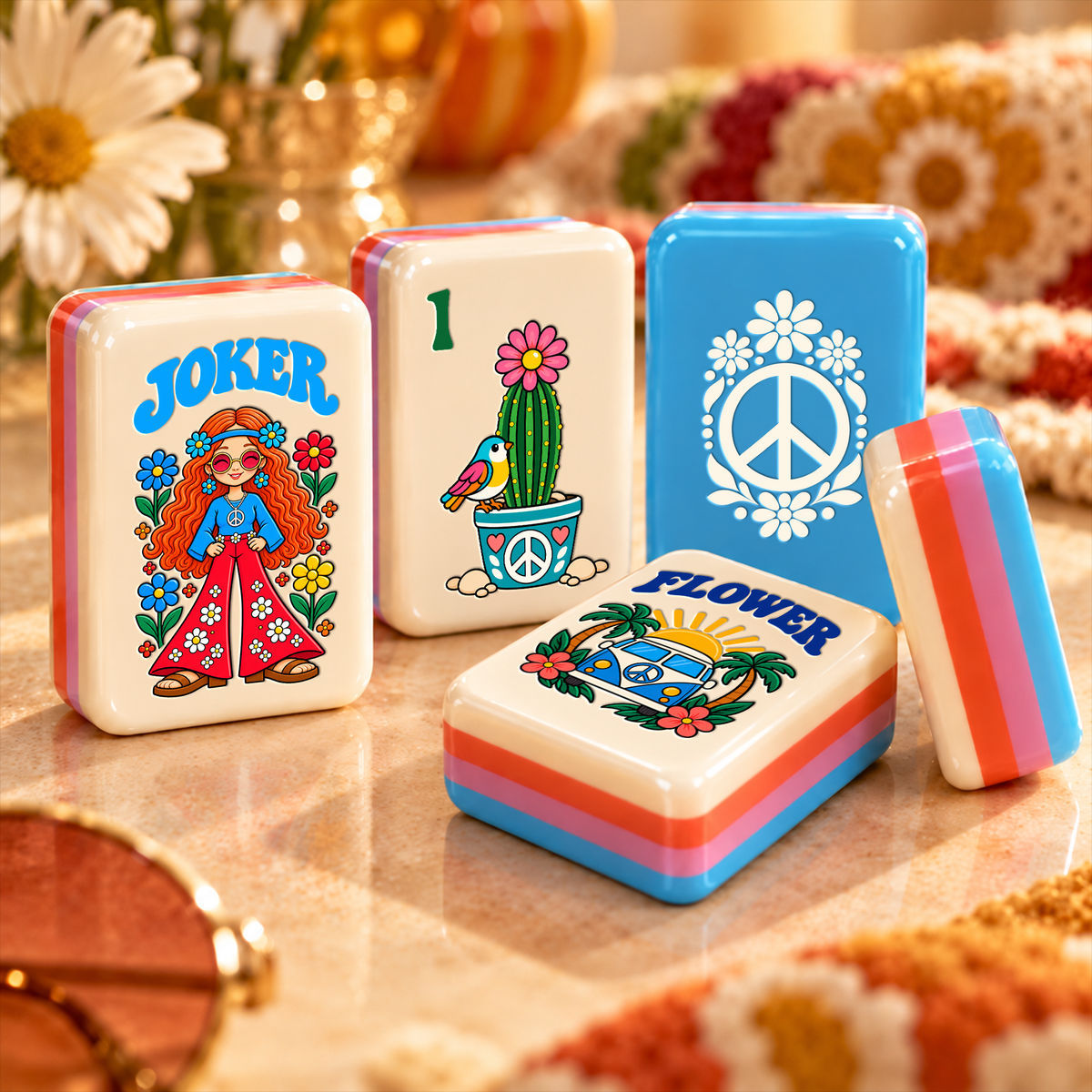
Taiwanese mahjong uses 144 tiles: three suits (Bams, Craks, Dots) numbered 1–9, four copies each (108 tiles); four winds (N/E/W/S, 16 tiles); three dragons (Red, Green, White, 12 tiles); eight flowers (8 tiles). No jokers are included in traditional play—a major difference from American mahjong's 152 tiles plus eight jokers. Taiwanese rounds play faster because fewer tiles remain in the wall, raising the odds of declaring a winning hand early. The game emphasizes concealed hands over exposed melds; most sets sold for Taiwanese play are compact acrylic designs built for portability and speed. If you're learning Taiwanese rules, confirm your set contains exactly 144 playing tiles with no jokers before your first session.
🀄 Shop best-selling mahjong sets →
What's the exact tile breakdown in Taiwanese mahjong?
Taiwanese mahjong packs 144 tiles into six categories. Bams, Craks, and Dots each run 1 through 9 with four identical copies (36 per suit, 108 total). Four winds—North, East, West, South—give you 16 honor tiles. Three dragons (Red, Green, White) provide 12 more. Eight flowers (numbered 1–8 or sometimes showing seasons and plum, orchid, bamboo, chrysanthemum) complete the count: 108 + 16 + 12 + 8 = 144. No jokers, no blanks, no wild tiles. Every tile has a fixed role in the hand rankings. This lean count contrasts sharply with American mahjong's system, where jokers act as universal wildcards and expand the total to 152 playing tiles.

How does 144 tiles change the speed of play?
Fewer tiles in the wall means fewer draws before someone wins. In American mahjong, 152 playing tiles plus eight jokers create longer rounds—you're drawing from a larger pool, and hands take more discards to complete. With 144 tiles and no jokers, a Taiwanese round can finish in under ten minutes once all players are seated and tiles are drawn. The wall depletes faster, forcing quicker decisions. Players reveal fewer melds over the course of a hand because there's less time to build them. If you're used to American's leisurely 20–30 minute rounds, expect Taiwanese games to demand sharper focus and speedier tile evaluation. Many of our weekly players who switch variants comment that Taiwanese play feels like playing American with a timer running.
Why does Taiwanese mahjong skip jokers entirely?
Taiwanese rules prioritize skill and luck in equal measure without wildcards distorting hand values. Jokers in American mahjong let you substitute any tile in an exposed pung, kong, or quint—a flexibility that can mask weaker tile combinations. Taiwanese players argue that removing jokers raises the bar: you must win with the tiles you draw or discard, no substitutes. This shifts strategy toward concealed hands and strategic discarding; you can't lean on a joker to complete a marginal pung. The ruleset also ties closely to Hong Kong and Chinese variants, which similarly omit jokers. If your group plays Taiwanese, always double-check that house rules haven't added local jokers—it happens, and the game changes dramatically if they do.
How do set sizes and designs differ between Taiwanese and American?
Feature | Taiwanese (144 tiles) | American (152 tiles + 8 jokers) |
Total tile count | 144 (fixed) | 160 acrylic sets (152 play + spares) |
Flowers | 8 (seasons or symbolic) | 8 (standard) |
Dragons | 3 (Red, Green, White) | 3 (same) |
Jokers | 0 | 8 (always present) |
Play speed | 10–15 min/round | 20–30 min/round |
Typical set material | Acrylic, bamboo, or bone | Acrylic (Mahstead), bone, bakelite |
Travel-friendly? | Yes; compact by default | Yes; sets like our best-selling designs are portable |
Storage needs | Smaller bag | Larger bag or case |
A Taiwanese set is inherently lighter and more compact—you're packing one-ninth fewer tiles than an American set. Many Taiwanese players prefer bamboo sticks or classic bone; however, acrylic designs work just as well and are easier to maintain. If you're buying your first Taiwanese set and also host American nights, consider two separate sets: mixing the tile counts mid-session derails scoring and hand interpretation.
🎁 See our most-loved mahjong sets & accessories →

How do Taiwanese hand patterns differ from American's National League card?
American mahjong hands are locked to the National Mah Jongg League card, which updates yearly and lists 80–100 legal hand patterns. Taiwanese hands follow no official published card; instead, patterns are determined by local rulebooks and house conventions. Common Taiwanese winning patterns include "all pungs" (no sequences), "mixed honors and terminals," and "seven pairs"—but exact patterns and their point values shift between regions and clubs. This flexibility means you must agree on the rulebook before sitting down; your Tuesday-night game in one city may recognize hands that Friday's game across town does not. American players switching to Taiwanese often find the lack of a standardized card frustrating at first—there's no single answer key. Spend your first session asking the host to walk you through the specific hand list or rulebook the group uses.
What should you check before buying a Taiwanese mahjong set?
Before purchasing, confirm three things:
Tile count: Verify the listing states exactly 144 tiles. Many sets sold online or in shops mislabel counts; a 160-tile acrylic set is built for American mahjong, not Taiwanese. If the seller doesn't specify, ask.
Jokers included?: If jokers are present, the set is not authentic Taiwanese. That doesn't mean you can't use it—just remove the jokers before play. Mahstead's best-selling mahjong sets are designed for American play, so choose a 144-tile set from a specialist vendor if Taiwanese is your primary game.
Flower count: Confirm the set has eight flowers, not zero or a different number. Some modern minimal sets trim flowers, which changes hand calculations.
Rulebook clarity: Before you buy, ask the seller or your host group which Taiwanese rulebook governs the hands (e.g., Singapore, Taiwan standard, or local house rules). This isn't a product defect—it's a game-safety check.
✨ Find your Mahstead set — free US shipping →
What to check before you buy
Tile authenticity: Hold or request close photos. Acrylic tiles should feel solid and not warped; characters should be crisp and not faded. A 144-tile set in acrylic is lightweight but durable for weekly play; bone or bamboo sets cost more but last decades.
Weight and portability: Taiwanese sets are 8–10% lighter than American 160-tile sets because they have 16 fewer tiles. If travel or storage is tight, this matters. Pair a compact set with a drawstring mahjong bag to avoid losing tiles during transport.
Suit and honor clarity: Test the tile symbols in bright light. Bams, Craks, and Dots should be instantly distinguishable; winds and dragons should stand out visually. Poor contrast leads to misreads during fast Taiwanese play.

FAQ
Can I play Taiwanese mahjong with an American 160-tile set?
Technically yes, but remove eight jokers first to get to 152, then set aside eight more random tiles to reach 144. This is messy and error-prone. Buy or borrow a true 144-tile Taiwanese set instead—mixing tile counts mid-game invites mistakes.
Do Taiwanese sets come with racks and pushers?
Some do, some don't. Many compact Taiwanese sets omit racks with pushers to keep the package small. If racks matter to you, confirm the listing includes them or budget for separate bamboo or acrylic racks.
How long does a Taiwanese mahjong game last?
A single round (one hand) typically runs 8–15 minutes. A full session of four rounds is 45–60 minutes. American mahjong rounds usually take 20–30 minutes each, so Taiwanese games move faster overall—useful for casual play or time-limited meetups.
What's the difference between Taiwanese, Hong Kong, and Chinese mahjong tile counts?
Taiwanese and Hong Kong mahjong both use 144 tiles with no jokers. Chinese (Guangdong) mahjong adds bonus tiles and sometimes seasons, varying regionally. All three omit jokers. If your group plays "Chinese mahjong," ask whether they mean a specific regional ruleset—the term is broad and counts can differ.
Can I use Taiwanese tiles in an American mahjong game?
No. American mahjong requires exactly 152 playing tiles plus eight jokers. A 144-tile Taiwanese set is missing 16 tiles and has no jokers. The hand structure, scoring, and game flow depend on that specific tile inventory. Always use the correct set for the variant you're playing.
Where can I find a reputable Taiwanese mahjong set in the US?
Specialty mahjong retailers, Asian import shops, and online vendors focused on Asian games stock Taiwanese sets. Before buying, check the tile count in the listing and confirm the rulebook your local group uses. Many Dallas-area game clubs and community centers keep a few sets on hand; ask the organizer for a recommendation or to borrow a set for your first session.


View More
View More
View More
