
How to Teach Mahjong to Men: A Step-by-Step Guide
Last updated: Nov 23, 2026
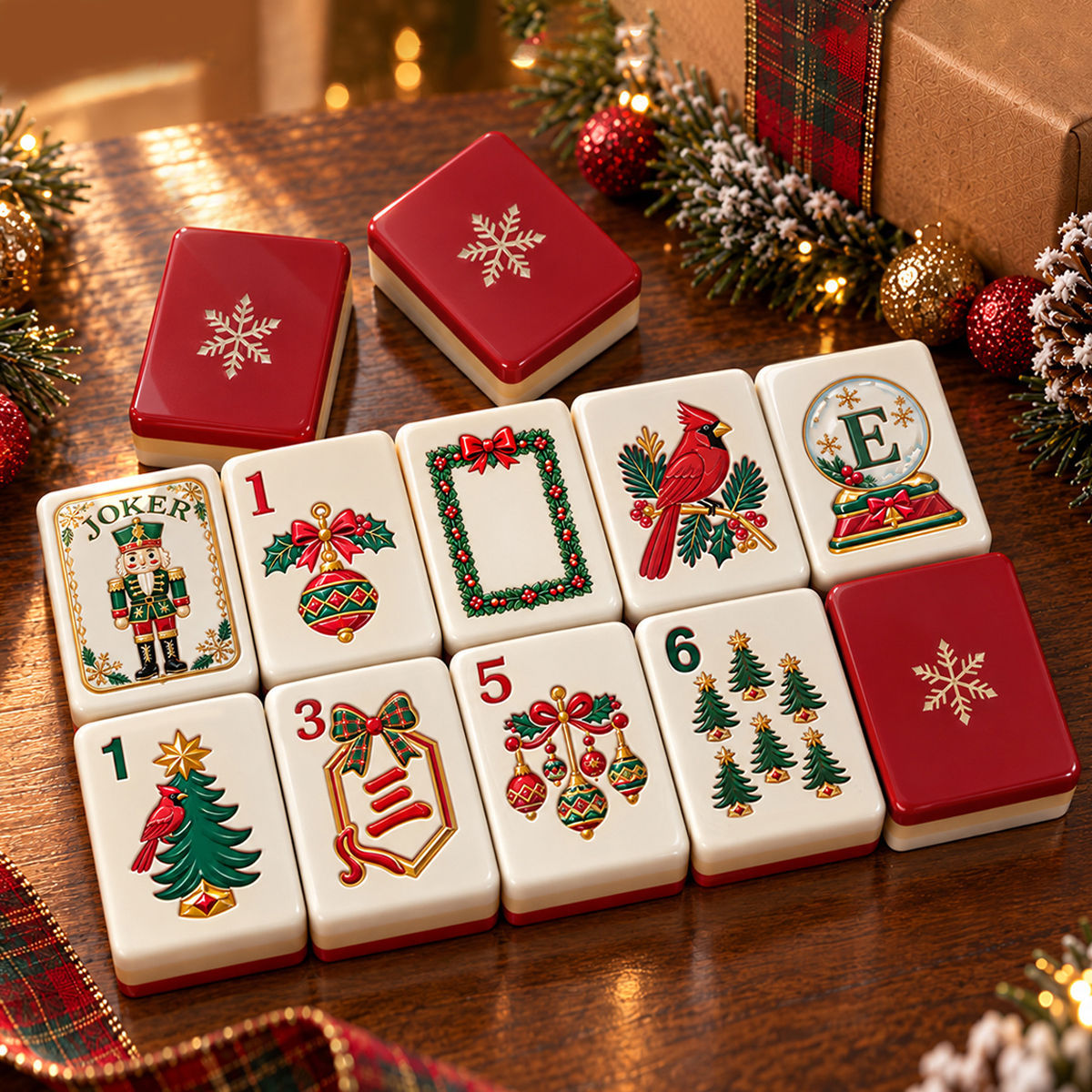
Teaching mahjong to men works best when you emphasize competition, hand-building logic, and the strategic tile flow rather than tradition or aesthetics. Start with one clear rule set—American mahjong is ideal because hands come from a single card each year, eliminating confusion. Gather four players, explain the Charleston (the tile-passing ritual), show how to read the National Mah Jongg League card, and deal your first hand. Most men grasp the basics in 30–45 minutes and want to play again immediately. You'll need a 160-tile acrylic set (Mahstead's best-selling mahjong sets include clear, durable tiles and pushers), a mat to keep tiles organized, and the current year's NMJL card. Plan for 90 minutes per game; scoring confusion ends once one player wins and you check the card together.
Why do men often struggle when learning mahjong?
Men typically come to mahjong expecting a poker-like bluff game or a fast casino experience. Instead, they meet a tile-matching puzzle with no hidden information and no individual advantage—every player sees every exposed tile. Frustration peaks when rules feel arbitrary: "Why can't I just play 1-2-3?" (Because American mahjong has no sequences; only pungs and kongs of identical tiles count.) The fix: frame mahjong as a hand-building logic game where you're competing against the card, not psyching opponents, and where pattern recognition beats luck.

What's the simplest way to teach the four fundamental rules?
Explain these in order, using the tiles in your hand:
One: You always need 14 tiles to win—either all in melds (groups of three, four, or more identical tiles plus jokers) plus a pair, or a specific pattern from the card. Two: Every exposed group must be identical tiles, like three 5 Craks or four 7 Dots, never 1-2-3 in a row. Three: Jokers are wild and can substitute for any single tile inside an exposed group, but they can never form a pair or stand alone. Four: You build your hand by drawing and discarding one tile per turn; once someone melds an exposed group, the next player draws from the wall, and tiles move around the table in order.
After these four rules, shuffle hands and play one round. Most objections vanish once tiles move.
How do you pick the right mahjong set for teaching a group of men?
Men appreciate durability and speed of play over decoration. Choose acrylic tiles—they're lightweight, loud enough to shuffle with authority (which men enjoy), and won't crack if someone gets excited. The tile faces should be large and high-contrast: numbers and suits must be instantly readable, because hesitation kills momentum. Verify the set includes pushers (small racks that hold tiles upright), because hand-sorting slows everything down and beginners lose their tiles mid-play. Our best-selling mahjong sets come with pushers built in, which cuts setup time and keeps the first game flowing.
Look for a mat, too—a felt or faux-leather mat with a clear playing grid and wall markers prevents argument about whose turn it is and where discards go. Get a set with free US shipping so it arrives ready to use.
Factor | Why it matters for men | Red flag |
Acrylic tiles | Fast shuffle, loud play, durable | Bamboo tiles feel slow, risk splitting |
Large print (numbers/suits) | No squinting, instant recognition | Small print = hesitation = frustration |
Pushers included | Keeps hands sorted, speeds play | Holding 14 tiles in your palm feels chaotic |
160-tile set (4 jokers) | Enough jokers for long games | Fewer jokers = fewer winning hand options |
Felt mat with grid | Clear wall layout, fewer disputes | Playing on a bare table invites argument |
What's the fastest way to teach the Charleston?
The Charleston is the tile-passing ritual before any hand begins. Here's the step-by-step for your table:
Deal: Each player gets 13 tiles, dealt one at a time, clockwise from the player holding the East wind. The dealer draws the 14th tile and discards one, starting the game—except we pause first.
First pass: Before the dealer plays, each player secretly selects three tiles they don't want and passes them across the table (to the player directly opposite). Everyone swaps at the same time.
Second pass: Each player picks three more unwanted tiles and passes them left (counterclockwise). Swap again.
Third pass: Three more tiles go right (clockwise). Swap.
Optional pass: If anyone wants it, a fourth pass goes across again. Most games skip this.
Play begins: Now the dealer discards one tile (not the one they just drew in the Charleston), and the player to their right draws and plays.
Practice the Charleston with just three passes once. Men love this ritual—it feels like a real game's opening ceremony. Have one player narrate each pass aloud: "Pass left… swap… now right…" Speed comes naturally after two hands.

How do you explain the NMJL card without overloading beginners?
The card looks overwhelming (144 legal hand patterns, dense notation). Reduce it to this framework:
Show the card and say: "Every winning hand on this page follows one of these patterns exactly. You don't memorize the card—you just know your hand shape (say, three pungs plus a pair), then scan the card's section for hands that match your tiles."
Use one concrete example from your current hand:
You hold: three 2 Bams, three 4 Dots, three Red Dragons, and a pair of 7 Craks.
That's three pungs plus a pair (nine tiles).
Show the card's "Pungs" or "Similar Hands" section.
Scan until you spot "2 Bam pung, 4 Dot pung, Red pung, 7 Crak pair"—or something close.
You win.
Men grasp the card fast once they see it's a lookup tool, not a rule book. On turn two or three, let them scan the card themselves when they think they're close to winning. Don't rush them; the moment they find their hand, they're hooked.
For deeper instruction, our guide to reading the mahjong card walks through notation and sections step by step, and the main beginners page covers all rules once someone's played a round.
What are the three mistakes that kill momentum with new male players?
Mistake 1: Playing too many hands in a row without scoring. Men want to know who's winning and why. Score after every hand using the card's point values (usually listed at the bottom or in a chart). Five minutes of scoring stops momentum—so use a notepad, add points, and announce the leader. Winning matters to men.
Mistake 2: Stopping to look up rules mid-game. Pick your rule source before you deal—use the NMJL card or a single printed guide. Settle disputes fast: "The card says no sequences, so we move on." Endless rule debate kills interest.
Mistake 3: Leaving jokers confused. Before play, hold up a joker and say: "This wild tile stands in for any single tile you need. It can't be a pair, and it can't be used alone—it's always part of a group of three or more." Show an example: "If I need the 5 Crak but drew a joker, I use the joker as the 5 Crak inside a group of three." One sentence, one example, problem solved.
🀄 Shop best-selling mahjong sets →
What equipment makes teaching and hosting easier?
Beyond the set and mat, consider:
Racks with pushers: Essential for beginners who struggle to hold and organize tiles. Our mahjong racks with pushers let each player see their hand clearly and sort tiles quickly, which keeps the game moving and prevents the "I lost a tile" panic that slows new players.
Bag or case: After the first game, your group will want to carry the set to the next host's house. A durable bag makes transport painless and keeps tiles from scattering. Our travel bags and cases include padding and compartments to separate tiles, pushers, and the mat.
Dice: Keep a pair for dealer selection or tie-breaking. Most sets include two; if not, any standard dice work.
Printed rule sheet: Write a one-page cheat sheet (Charleston steps, pung vs. joker vs. pair, how scoring works) and hand it to each player after game one. Saves 10 minutes of questions on game two.
Your second game always runs faster than your first because everyone remembers the rhythm. Don't worry if setup takes 20 minutes the first time.
🎁 See our most-loved mahjong sets & accessories →
What to check before you buy
Tile size and print: Verify tiles are at least 1 inch square with high-contrast numbers and suits. If the listing doesn't specify, ask before ordering.
Acrylic durability: Confirm the set is acrylic (not bamboo or bone), which survives shuffling and drops without chipping.
Pusher fit: Make sure pushers are included and designed for the tile size—a pusher too small won't hold 14 tiles upright.
Joker count: A 160-tile set includes spare jokers and blanks; verify you have at least four jokers for play, with extras to replace lost or damaged tiles over time.
Mat included or separate: Check whether the set includes a mat, or if you'll buy one separately. A mat is not optional—it organizes play and prevents disputes.
Shipping: Confirm free US shipping and reasonable delivery timeframe before checkout.
✨ Find your Mahstead set — free US shipping →

FAQ
How long does it take a man to learn enough mahjong to enjoy a full game?
Most men play competently within 30–45 minutes of instruction, understanding the Charleston, hand logic, and card lookup. The first hand is slow; by game three, they're comfortable. Scoring fluency takes another two or three games. Total: one evening to "gets it," two to three evenings to "wants to play weekly."
Should I teach American mahjong or a different variant to men?
American mahjong is best for groups learning together because hands come from a single card (issued each spring by the NMJL), eliminating rule drift and debate. Chinese, Hong Kong, and Riichi variants have different rules and hand scoring, which confuses mixed tables. Stick to American for a new group; variant players already know their rules.
Why does the Charleston matter if you could just deal and play?
The Charleston is tradition and strategy: it lets each player influence their tile luck before the game starts. Men respect it as a "real" game ritual once they understand it's a built-in mulligan. Skip it and the game feels incomplete.
What happens if someone picks the wrong set—bamboo instead of acrylic, or no pushers?
Bamboo tiles shuffle slowly and crack under pressure; no pushers means players drop tiles and lose count. Both kill momentum. Acrylic with pushers keeps play fast and frustration low.
Can I teach mahjong to a group of four men who've never played before?
Yes. Assign one player as dealer, do the Charleston three times slowly, play one hand start-to-finish without scoring, then play a second hand and score it. By game three, everyone's competitive. Schedule the first session for 2 hours; plan for 90 minutes of teaching and setup, 30 of actual play.
Do men care about fancy or engraved sets?
Generally no—they care about speed, durability, and clarity. Engraved or customized sets appeal to collectors and gift-givers, but for a weekly game, a clean acrylic set outperforms a decorative one every time. Save custom sets for hosts or seasoned players.


View More
View More
View More
