
How Long Does a Game of American Mahjong Take?
Last updated: Nov 23, 2026
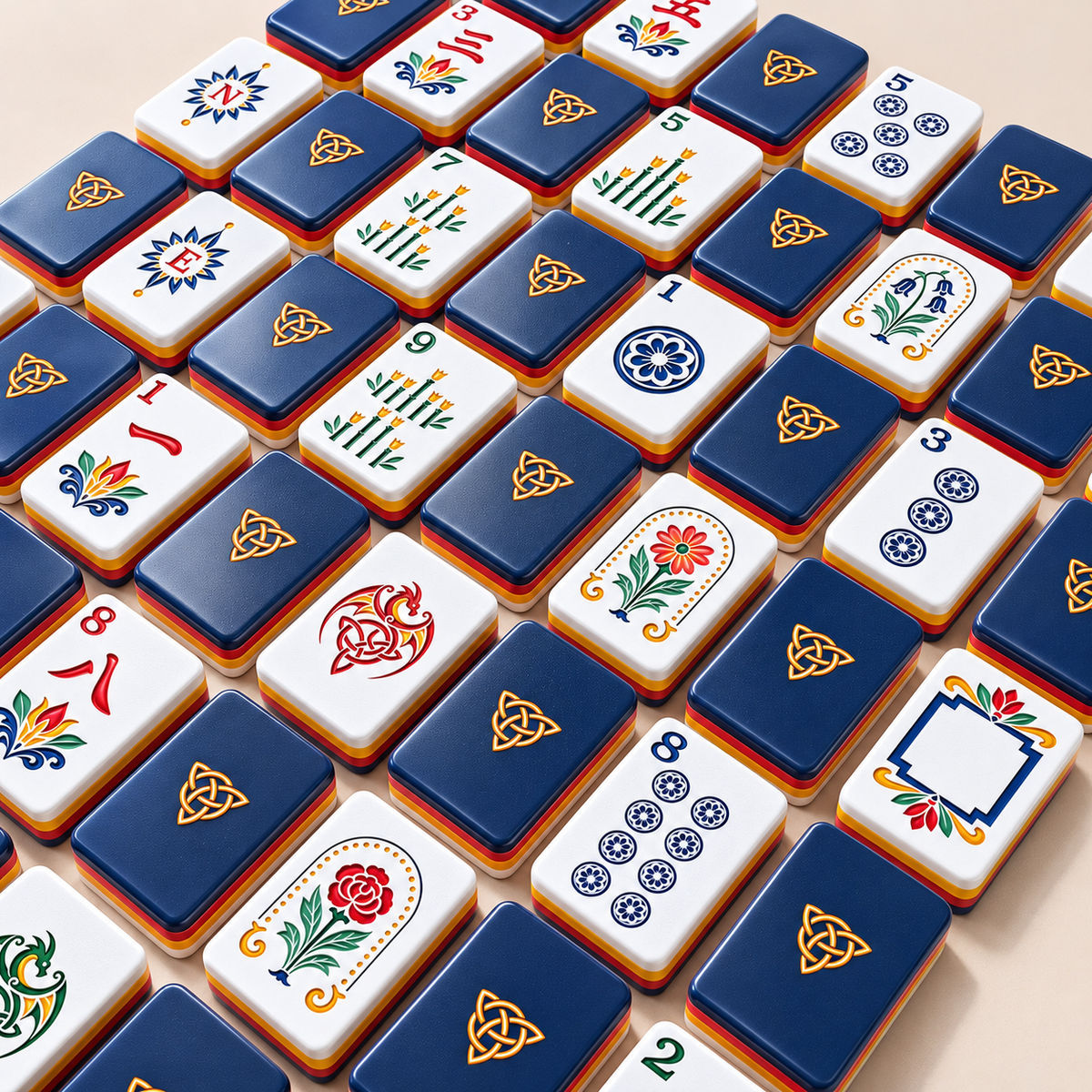
A single hand of American mahjong takes 10–20 minutes for experienced players, 20–40 minutes for mixed groups. A full game usually plays four hands (one per wind position), so expect 40 minutes to 2 hours total depending on table speed. Beginners learning the rules and how to read the mahjong card stretch it to 90 minutes per hand. Disruptions—fumbling tiles, disputes over hand validity, slow tile wall construction—add 5–15 minutes per round. Fast tables with memorized hands and smooth Charleston passing finish in under an hour; casual groups discussing hand strategy between draws run 2+ hours. Most weekly players aim for 1.5-hour sessions, which fits one full game plus a second partial round.
Why Does One Hand Take So Long?
American mahjong is turn-based: each of four players draws and discards in sequence, with one active hand on the table at a time. Every discard pause lets all three other players check if they can claim the tile for a pung, kong, or a winning hand. If nobody calls it, the next player draws from the wall—a moment that repeats 16–18 times per hand until someone wins or the wall runs out. This built-in delay, multiplied by tile-searching hesitations and hand-reading pauses, eats minutes per round. New players often spend 30 seconds to a minute studying the card before discarding; experienced players take 5–10 seconds.

How Does Player Skill Affect Speed?
Beginners unfamiliar with the current year's card patterns move slowly: they study each possible hand on the card, cross-reference with their tiles, and often second-guess their discard choices. Intermediate players (playing 2–3 years) know popular patterns and discard more decisively but still review the card often. Advanced players have internalized the card and spot winning combos instantly, cutting decision time to seconds. A table of four experienced players easily completes a hand in 12–15 minutes; mix in one new player and add 10–20 minutes to that hand. Our weekly group noticed that introducing a fully new player adds roughly 8 minutes per hand across the round—not just their turn time, but the collective rhythm slows.
What Slows Down a Game the Most?
Tile mishaps rank first: dropping a tile, miscounting the wall, or drawing from the wrong spot forces a reset. Rule disputes—whether a Kong call is valid, if a joker placement is legal, or whether a discard was claimed too late—can add 5 minutes while players consult the card or house rules. Slow wall construction (the initial tile shuffle and stacking into the wall) adds 3–5 minutes at the start. Cramped playing surfaces force players to hunt for tiles in their racks, wasting 1–2 minutes per turn for some. The Charleston—the tile-passing ritual before play—takes 2–3 minutes if done carefully and 1 minute if players are practiced. Mercifully, using mahjong mats with tile organization zones and racks with pushers cuts search time noticeably; we've measured roughly 3 minutes saved per hand with organized equipment.
🀄 Shop best-selling mahjong sets →

How Can You Speed Up Your Game?
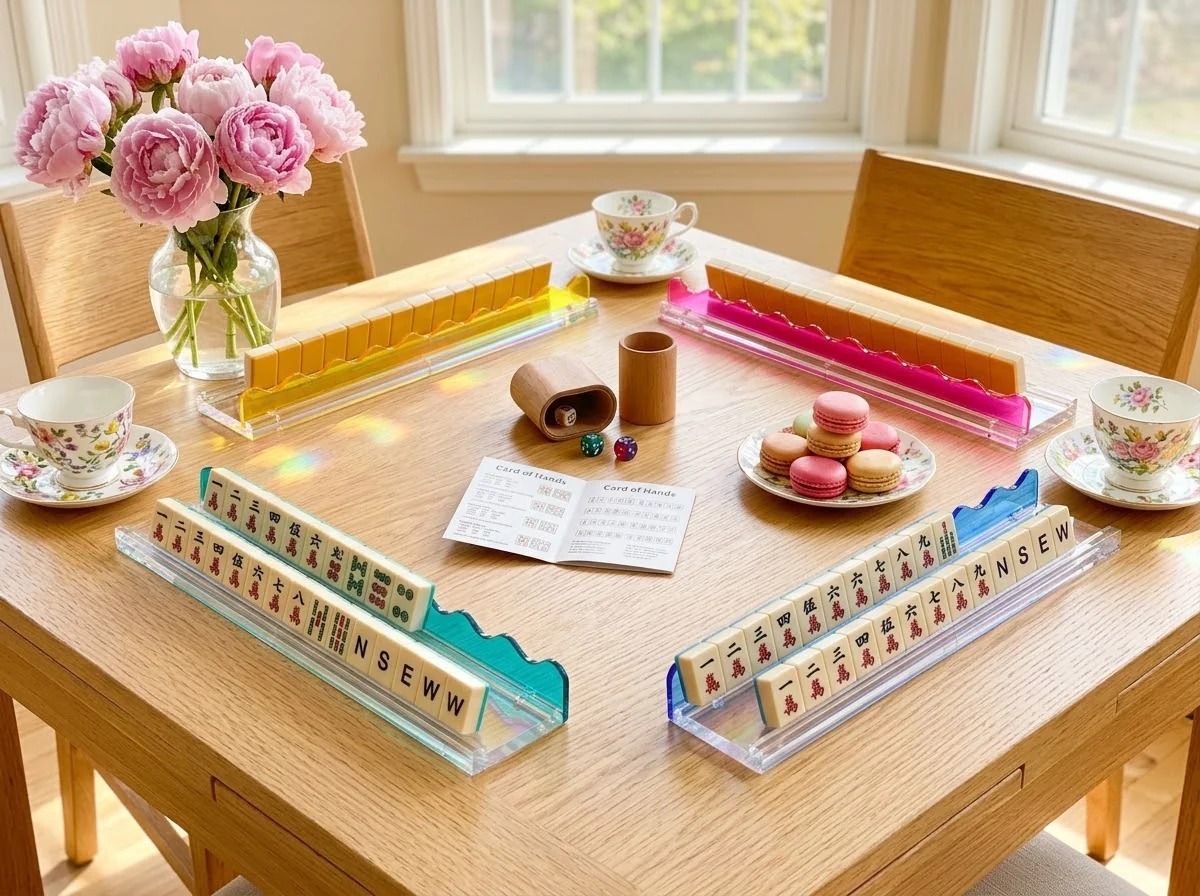
Use mahjong racks with pushers: pushers let you compact your hand without fumbling individual tiles, dropping at least 2–3 minutes per hand from tile management alone. Memorize the card before game night, not during it—a beginner spending 10 minutes pre-game studying hand patterns will shave 20+ minutes off actual play. Agree on house rules beforehand: settle the "slow claim" window (usually 5 seconds), the penalty for claiming too late, and your policy on joker rules, so no disputes stall the table. Play on a mat with clear zones for discards and the wall; a disorganized surface wastes 1–2 minutes per turn. Appoint one person (usually East, who leads) to manage the wall and tile calls so the group moves as one. Start the Charleston exactly when all four players are seated, not after five minutes of chatter.
Situation | Typical Hand Time | How to Improve |
Four experienced players, organized setup | 12–15 min | Keep current-year card handy; use pushers |
Mixed skill levels (2 intermediate, 2 new) | 30–40 min | Give new players 15 min card study pre-game |
Cramped table, no mats or racks | 25–35 min | Invest in a mat and racks for next session |
One highly experienced player, three casual | 20–25 min | Let experienced player call wall management |
Fast casual group, no disputes | 40 min total game (4 hands) | Maintain this momentum—don't introduce rule debates |
The math: If you host weekly and want four full hands in 90 minutes, you need players who average 15–18 minutes per hand and a setup that runs like clockwork. If your group chats heavily during play or disputes hands, budget 2+ hours and accept 2–3 hands instead of four.
What's the Difference in Other Mahjong Variants?
Chinese classical mahjong allows sequences (chows) and melded pairs; a hand resolves faster because players can build open melds on discard, shortening rounds to 8–12 minutes. Hong Kong (HK) mahjong uses 16 tile types (simpler than American's 34-tile universe) and plays the same pace—roughly 10–15 minutes per hand. Riichi (Japanese) emphasizes speed; expert tables finish a hand in 8–10 minutes because drawing/discarding happens in lockstep and less discussion occurs mid-game. Taiwanese mahjong allows more flexibility on melds and tile exchanges, sometimes stretching hands longer but creating faster decision-making once players know variant rules. American mahjong is unique because the card changes every spring (issued by the National Mah Jongg League), so every new season resets player familiarity and slows pace for 2–3 months until patterns stick. This unpredictability is part of American mahjong's appeal but explains why April/May games run slower than December games.
What Should You Check Before You Host?
Test your setup in advance. If you're hosting for the first time, run one practice hand to time it. Measure your table depth (18–24 inches ideal); if you're cramped, borrow or buy a mat that expands usable surface. Check that your tile racks are stable—wobbly racks force players to steady them mid-turn, adding micro-pauses. Make sure your tiles (from a best-selling set) are legible at arm's length; if text is tiny, players squint and slow down. Print the current-year card in large format (11x14 or larger) and place a copy near each player; hunting for one card in the center wastes 30+ seconds per hand. Verify your group knows the rule for claiming a discard (usually 5–10 seconds after it's placed); sloppy claim windows create disputes. Tell players to silence phones and plan to start on time; late arrivals disrupt the wall construction and cost 10+ minutes in regrouping.
🎁 See our most-loved mahjong sets & accessories →
Why Timing Matters for Your Weekly Game
Most groups play for fun, not competition, so speed is less critical than comfort. But if you host or play regularly, understanding the pace helps you set realistic expectations: a beginner's group should plan for 2 hours per game; an experienced group can finish two games (eight hands) in 2–2.5 hours. The first game of the season is always slower because the card is new to everyone. If your table grows to five players, split into two sub-tables or accept that game time extends by 25–30% (no longer a four-way rotation). Finally, recognize that the pace is part of the social experience: mahjong's rhythm—long enough to chat between turns, short enough to stay engaged—is why it's lasted centuries.
Using engraved sets or thoughtful gifts for your group signals that hosting and play matter, which often improves focus and reduces disruptions naturally—a subtle way to speed up without lecturing about clock time.
✨ Find your Mahstead set — free US shipping →
Common Timing Mistakes to Avoid
Don't start before everyone is ready. Waiting for a latecomers adds 5–10 minutes of downtime; start with the four present and swap them in after one hand if the fifth arrives.
Don't leave the card in a pile of other papers. Players will spend 2–3 minutes hunting it mid-hand, breaking focus.
Don't mix tile sets. Playing with tiles from two different sets (different sizes, finishes, or fonts) doubles tile recognition time; stick to one complete set of 152 tiles.
Don't argue mid-hand. Note disputes and settle them after the hand is scored; pausing to debate rules mid-play adds 10+ minutes and kills momentum.
Don't skip the practice wall discard. The first three tiles discarded after the wall is drawn are often placed carelessly; remind players to discard clearly and place tiles upright so others see them instantly.
FAQ
Does American mahjong take longer than other variants?
American mahjong typically takes 10–20 minutes per hand, similar to Hong Kong and Chinese variants. However, because the card changes every spring, April through June games run 20–30% longer as players re-learn patterns. Riichi (Japanese mahjong) is often faster (8–12 minutes per hand) due to lockstep play and fewer pauses for card reference.
How many hands should I plan for a 2-hour session?
A full game is four hands (one per wind). Experienced players complete four hands in 90 minutes to 2 hours. Beginner or mixed groups complete two to three hands in 2 hours. If speed matters, aim for 15–18 minutes per hand by using racks with pushers and organizing your play surface.
What single change speeds up a game most?
Using mahjong racks with pushers cuts tile-handling time by 2–3 minutes per hand. Second most impactful: pre-game card study by new players (adds 15 minutes study, saves 20+ minutes during play). Together, these two changes can reduce a 40-minute hand to 20–25 minutes.
Why is the first game of the season slower?
The National Mah Jongg League issues a new card every spring. No player has memorized the year's hand patterns yet, so everyone references the card frequently and hesitates on discards. By June, most tables have learned common patterns and pace stabilizes. Expect 20–30% longer hands in April and May.
Should I buy special tiles to speed up the game?
Not necessarily. Best-selling sets with clear, large tile faces reduce squinting and tile-search time. More impactful than tile choice are racks with pushers and a well-organized mat, which save 3–5 minutes per hand by eliminating fumbling and tile-hunting.
How much time does the Charleston add to a game?
The Charleston (tile-passing before play) takes 1–3 minutes depending on group practice. Most weekly players complete it in 2 minutes. Practice it once or twice at the start of your hosting season so players move smoothly; a practiced Charleston is invisible but a sloppy one wastes 5+ minutes.


View More
View More
View More
