
History of American Mahjong: How the Game Evolved
Last updated: Nov 23, 2026
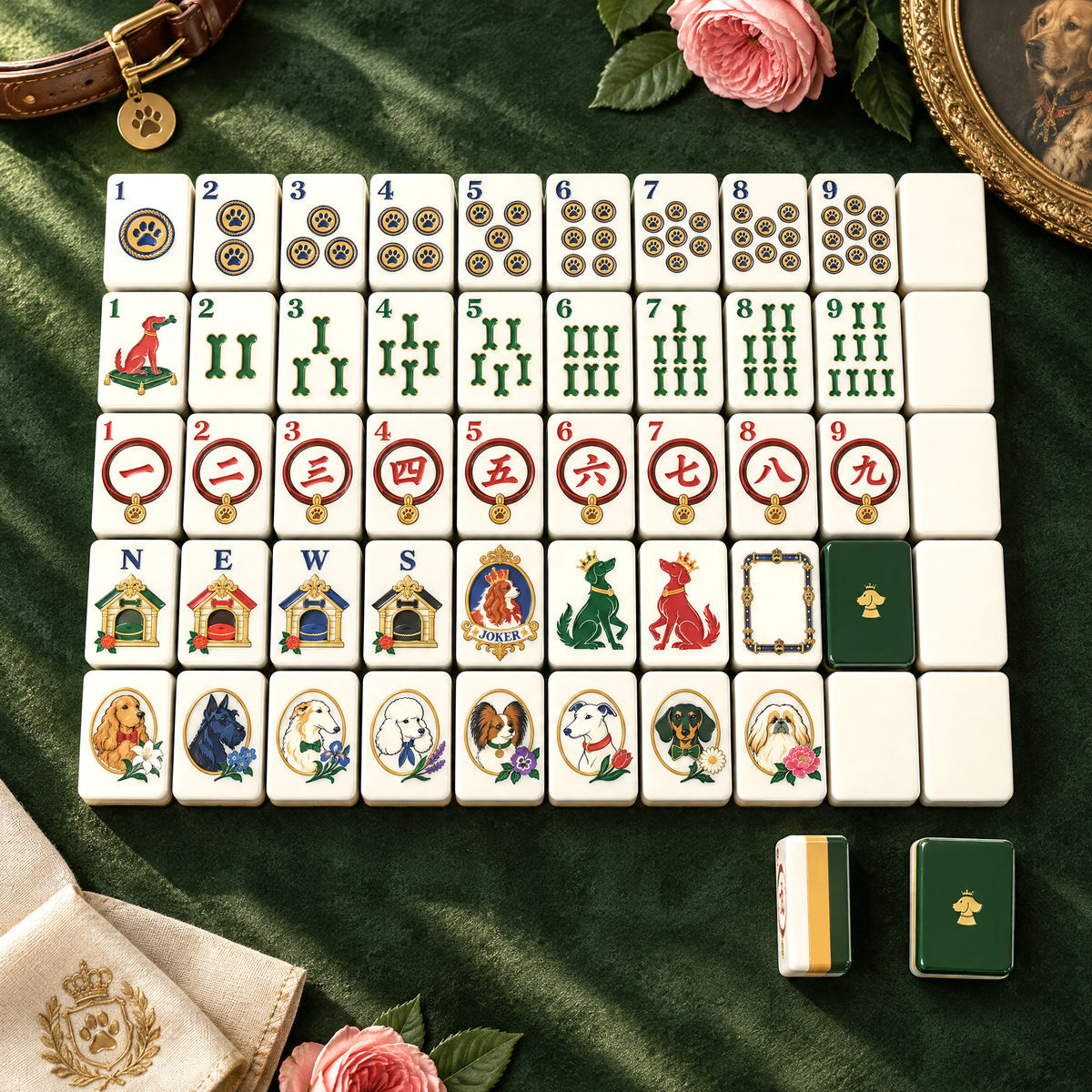
American mahjong began in the 1920s as Chinese immigrants introduced the classical game to the West, but it quickly evolved into something new. By the 1930s, American players had standardized the tile count (152 tiles plus 8 jokers), introduced the National Mah Jongg League card (reissued every spring), and established rules unique to the American variant: no chows (sequences), exposure of pungs and kongs only, and mandatory use of the current year's card for valid hands. This transformation happened because American players wanted faster games, simpler strategy, and a uniform standard for tournaments. Today, American mahjong remains distinct from Chinese, Hong Kong, Riichi, and Taiwanese versions—each with its own tiles, rules, and regional communities. Understanding this history explains why your table uses exactly 152 tiles and consults a laminated card to check hands.
When Did American Mahjong Actually Start?
The game arrived in North America around 1920, brought by Chinese merchants and immigrants. American society embraced it enthusiastically during the Jazz Age, and by the mid-1920s, mahjong clubs were fixtures in wealthy neighborhoods and country clubs across major cities. The National Mah Jongg League formed in 1937, establishing standardized rules and publishing the first official card. This formal organization separated American mahjong from the evolving Chinese classical versions and created a stable ruleset that persists today.

Why Did American Players Change the Chinese Rules?
American mahjong diverged from classical Chinese play for practical reasons. First, American players prioritized accessibility: they wanted a game that didn't require memorizing dozens of regional variations. Second, they valued speed—American hands are designed to complete faster than classical sequences. Third, the League card replaced memorization with a printed reference, democratizing the game for casual and competitive players alike. Chinese mahjong retained melds (chows), honor scoring for rare hands, and regional rulesets; American mahjong eliminated chows entirely, simplified scoring, and locked hands to an annual card. This made American mahjong more standardized but less flexible—you can only play hands listed on the current year's card.
How Did the Tile Set Become Standardized?
Early Western mahjong sets varied wildly in tile count and quality. Some imported Chinese sets had 144 tiles; others had 152 or more. American manufacturers and the League eventually converged on 152 playing tiles (three suits—Bams, Craks, Dots—numbered 1–9, four copies each; 16 winds; 12 dragons; 8 flowers) plus 8 jokers. This became the universal standard for American play. Sets sold today as 160-tile versions include the standard 152 tiles plus spare jokers and blanks for wear, though only the 152 tiles enter play. The consistency of this format is why modern mahjong sets are completely interchangeable at any American table.
🀄 Shop best-selling mahjong sets →
What Made American Mahjong Different from Other Variants?
Variant | Tile Count | Melds Allowed | Hand Source | Game Speed |
American | 152 + 8 jokers | Pungs, kongs only; no chows | Annual League card | Medium-fast |
Chinese classical | 144 | Chows, pungs, kongs | Memory or regional guides | Slower |
Hong Kong | 144 | Chows, pungs, kongs | Memory-based | Slower |
Riichi (Japanese) | 136 | Chows, pungs, kongs | Memory-based | Medium |
Taiwanese | 144 | Chows, pungs, kongs | Varies by region | Varies |
American mahjong is the only variant built entirely around a single printed card issued annually. This removes regional drift and enforces uniform standards, which also meant that women's clubs, synagogue groups, and competitive leagues across the country could sit down and play the same hands. Other variants evolved through regional play and community memory; American play was standardized top-down by the League.
How Did Women's Clubs Shape American Mahjong Culture?
Women's mahjong clubs became the heartbeat of American play in the 1930s–1960s. Primarily organized in urban centers and suburbs, these clubs often met weekly or biweekly, hosted tournaments, and built social hierarchies around skill and experience. Women adapted the game to fit American leisure patterns: shorter sessions (3–4 hours instead of all-night classical play), scheduled meet-ups, and emphasis on friendly competition. The League card worked perfectly for these gatherings because it was portable, updated annually, and didn't require deep ruleset knowledge. This social culture—women hosting regular games, teaching newcomers, and keeping score—remains the dominant American mahjong pattern today. Synagogues, country clubs, and community centers became natural venues precisely because women had already established mahjong as a respectable, organized game.

How Has the League Card Evolved Since 1937?
The National Mah Jongg League publishes a new card every spring, roughly February or March. Each card reflects current League decisions about valid hands, scoring conventions, and which hands should be included or retired. Players must buy or obtain the current year's card; hands from previous years' cards are invalid. This annual refresh keeps the game fresh but also creates a learning curve every spring. Modern cards are printed in large type on laminated plastic, making them durable for table play. Some players laminate their own printed copies or use digital images during casual games. The card has remained the single most important rule document in American mahjong; no card, no official play. This contrasts sharply with other variants, where players rely on knowledge and regional consensus rather than a centralized source of truth.
🎁 See our most-loved mahjong sets & accessories →
Why Did Jokers Become So Central to American Play?
Classical Chinese mahjong didn't use jokers. American players introduced them to speed the game and add flexibility. Jokers function as wildcards—they can substitute for any tile in a pung, kong, quint, or sextet (never in a single tile or a pair). This means a player holding three 5 Bams and one joker can expose a pung using the joker. Jokers transformed mahjong strategy: they made completing hands faster and more forgiving, which was ideal for the social, weekly-game culture American women's clubs fostered. Modern American sets include 8 jokers as standard. Understanding how jokers work is essential to grasping why American mahjong feels so different from classical variants, where jokers don't exist at all.
What Role Does the Charleston Play in American History?
The Charleston is the tile-passing ritual that precedes every American mahjong hand. Before any tiles are drawn or declared, players pass tiles across the table in three rounds—right, across, left—followed by an optional pass back. This ritual appears unique to American play; classical Chinese mahjong has no Charleston equivalent. American players adopted this mechanism to add ritual, equalize tile distribution, and build anticipation. The Charleston is also where much of the social and strategic banter of American mahjong happens: players eye each other's discard habits during passes, assess tile flow, and begin forming melds mentally. Historically, the Charleston reinforced the social nature of American mahjong—it's a moment of collective participation before competitive play begins. Learn Charleston rules in depth to see how tradition shapes each game.
How Did American Mahjong Become a Regional Game?
American mahjong remained primarily an East Coast and major-city game through the mid-20th century. Hotspots included New York, Pennsylvania, New England, California, and Texas. The game thrived in communities with strong Chinese immigrant populations, Jewish women's clubs, and affluent leisure culture where regular games were feasible. Regional variations in house rules existed despite the League card—different groups played scoring variants, hand difficulty levels, or time limits. However, the League card's standardization gradually leveled these differences. Today, American mahjong is most active in older, established communities, though it's gaining younger players nationwide. The beginner's guide reflects how modern teaching tries to sustain this legacy by making the game accessible to new generations.
✨ Find your Mahstead set — free US shipping →
What to Check Before You Buy
If you're starting or upgrading your game, confirm these details:
Tile count: Standard American play uses exactly 152 tiles. Sets sold as "160-tile" include spare jokers and blanks—only the 152 enter play.
Tile material and size: Acrylic tiles are durable and lighter than bone/bamboo; ensure tiles are large enough to read clearly under table lighting.
Current League card access: You must have the current year's National Mah Jongg League card. Check that your club or group provides it or budget to obtain one.
Rack and pusher quality: Racks with pushers reduce hand strain during long games; confirm they fit your set's tile size.
Mat and storage: A protective mat extends tile life; a sturdy bag or case makes transport safe.
Consider engraved sets if your group meets weekly—a personalized set builds identity and makes your game memorable for years.

FAQ
How is American mahjong different from Chinese mahjong?
American mahjong uses 152 tiles, no chows (sequences), and a single annual League card for valid hands. Chinese classical mahjong uses 144 tiles, includes chows, and relies on regional memory-based rules. American play is standardized and faster; Chinese play is more flexible and strategy-heavy.
When should I buy a new League card?
Buy the current year's card every spring when the National Mah Jongg League releases it (typically February or March). Hands from previous years' cards are invalid. Always verify your card is the current year before playing in a club or tournament.
Do all American mahjong sets have the same number of tiles?
Yes, American play always uses exactly 152 tiles. Sets marketed as 160-tile versions include spare jokers and blanks for backup; these extras never enter play. Only the 152 standard tiles are used in every game.
Why don't American players use chows like other mahjong variants?
American mahjong simplified the game to make it faster and more accessible. Removing chows reduced the number of valid hand patterns and made the League card smaller and easier to reference during play. This design choice favored casual weekly games over extended strategic play.
Can I play American mahjong with a Chinese set and rules?
No. American mahjong requires the current year's League card and American-specific rules (no chows, joker rules, exposure limits). Using a Chinese set or ruleset creates confusion because tile counts, valid hands, and strategies differ fundamentally. Always use the current League card and a 152-tile American set.
What's the best way to learn American mahjong history and rules?
Start with the comprehensive how-to guide, then explore specialized topics like the Charleston, jokers, and reading the card. Joining a local club or group accelerates learning because experienced players teach by example.


View More
View More
View More
