
Riichi Mahjong: Rules, Setup & How It Differs from American
Last updated: Nov 23, 2026
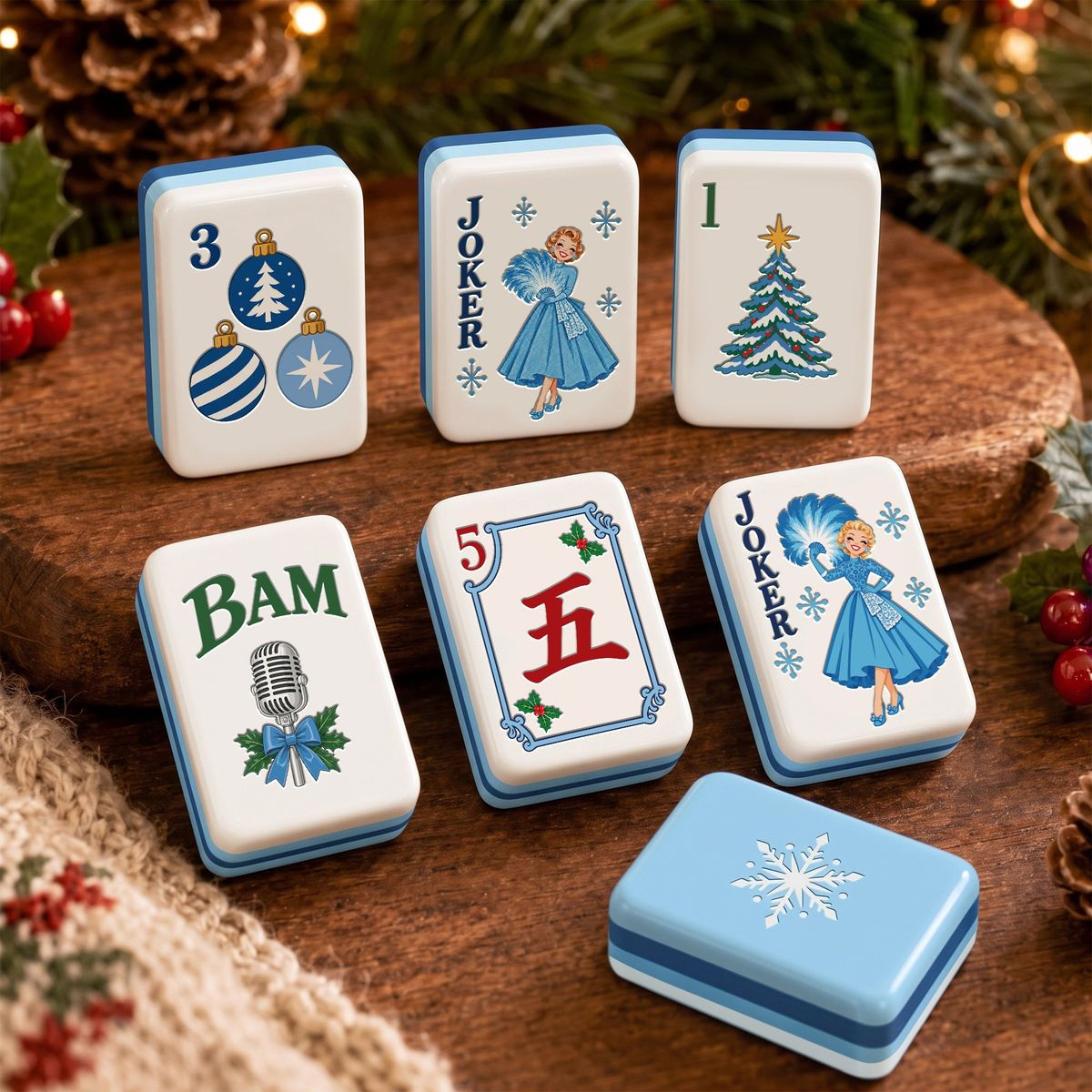
Riichi mahjong is a four-player Japanese variant played with 136 tiles (34 types × 4 copies each): three number suits (1–9), winds (4), dragons (3), and season/flower tiles (8). A complete hand has 14 tiles arranged in melds—three tiles in a group (pung/triplet, kong/quad, or chow/sequence) plus a pair—won by drawing or claiming another player's discard. The game typically lasts 12–16 rounds (one hour per session) and scores by base points plus multipliers based on riichi, hand complexity, and dora (wild tiles marked by the next tile in the wall). Unlike American mahjong, riichi allows chows (consecutive numbers like 4-5-6 Bams), has no jokers, follows no seasonal card, and awards bonus points for declaring readiness before winning; the barrier to entry is lower than American, but learning hand patterns and tile efficiency takes weeks of regular play.
What is riichi mahjong exactly?
Riichi mahjong (麻雀) is the Japanese standard game, ancestor to most modern variants played in Asia, Europe and online. Four players sit around a table, each holding 13 tiles hidden from others, drawing and discarding in turn. The goal: complete a winning hand of 14 tiles (or 13 + 1 drawn) before anyone else, or "claim" (call) a discard to complete a meld. Unlike American mahjong's rigid card-based hand list, riichi rewards learning tile patterns, probabilities and reading opponents' intentions—skill depth increases after 50+ sessions.

How many tiles does a riichi set use?
A riichi mahjong set contains exactly 136 playing tiles: three number suits (Bamboo 1–9, Characters 1–9, Circles/Dots 1–9 = 108 tiles), four winds (N, E, S, W = 4 tiles), three dragon types (Red, Green, White = 12 tiles), and season/flower tiles (Spring, Summer, Autumn, Winter + Plum, Orchid, Bamboo, Chrysanthemum = 8 tiles). No jokers, no blanks, no substitutes. The wall is divided equally among four players (34 tiles each); if all 136 tiles are drawn without a winner, the round is a draw (a tie).
What's the difference: riichi vs. American mahjong?
Feature | Riichi (Japanese) | American |
Tiles | 136 (no jokers) | 152 (8 jokers) |
Suits | 3 numbers + winds + dragons + flowers | 3 numbers + winds + dragons + flowers |
Sequences | Chows (1-2-3, etc.) allowed, exposed | Chows forbidden; no sequences |
Melds | Pung, kong, chow, quint | Pung, kong, quint, sextet only |
Bonus declaration | "Riichi" (ready = +1 base point) | No riichi; Charleston before play |
Wild tiles | Dora (marked by wall tile) | Jokers (8 fixed tiles) |
Winning patterns | 100+ learned patterns + logic | One card's hand list per year (spring) |
Hand duration | 12–16 rounds (60–90 min.) | Varies; one hand per session typical |
Scoring | Base × multiplier (fu × han) | Fixed points by hand type + jokers |
Claim rules | "Pon" (triplet), "Chi" (chow), "Kan" (kong) only | Pung/kong/quint/sextet; no chow calls |
The core shift: riichi rewards reading the game (which tiles are safe, which opponents are close to winning); American rewards memory (does this hand match the card?). Riichi is learned; American is looked up.
🀄 Shop best-selling mahjong sets →
How do you win at riichi mahjong?
To win, complete a 14-tile hand split into four groups (melds) plus one pair. A meld is either a pung (three identical tiles: 5 Bam + 5 Bam + 5 Bam), a kong (four identical), or a chow (three consecutive numbers in one suit: 3 Dot, 4 Dot, 5 Dot). The pair must be two identical tiles (e.g., East Wind + East Wind). You win by:
Drawing a tile from the wall that completes your hand.
Claiming (calling) a discard from another player that completes a meld or the pair.
However, not every 14-tile arrangement is a valid winning hand. In riichi, the hand must meet specific structural rules—for instance, having a pair, and all melds must be "complete" (three or four tiles, one or two pairs). Many hands that look complete are illegal due to violation of the "one pair rule" or fu/han minimums. Beginners often think they've won only to discover the hand breaks a rule; studying hand patterns (like tanyao, sanshoku, or yakuhai) prevents costly mistakes.
What does "riichi" mean and how do you declare it?
"Riichi" (立直, lit. "standing ready") is a declaration that you are one tile away from winning—your hand is complete except for one tile, and any draw or claim will win. When you declare riichi:
You place 1,000 points face-up on the table as a "riichi bet" (returned if you win, kept by the winner if you don't).
You announce "Riichi!" in turn, cannot change your hand, and must wait for a winning tile.
If you win, the hand is scored as "riichi" + any other bonuses, earning at least +1 multiplier (called 1 han in scoring).
If someone else wins before you, you lose your 1,000-point bet.
Declaring riichi is a calculated risk. Experienced players read opponents' discards and timing: if three players discard early in the round, riichi is safe; if discards slow and one player dumps unpredictable tiles, riichi is dangerous (your winning tile may already be in another player's hand, dead in the wall, or waiting for someone else). Riichi is optional—you can win without declaring it, but you won't earn the riichi bonus.

How is riichi mahjong scored?
Riichi scoring is multiplied, not added like American mahjong. The base score is called "fu" (符, "符points"), and multipliers are called "han" (翻, "doubles"). The winner receives: Base Score = Fu × 2^Han.
Fu ranges from 20 to 110+ and depends on:
How the hand was completed (drawing vs. claiming a discard).
Whether the pair is "honor" tiles (winds, dragons) or regular numbers.
How many open melds (exposed pungs, kongs, chows) are in the hand.
Han ranges from 1 to 13 and is earned by completing bonus patterns (called "yaku"). Examples:
Riichi (declaring ready): +1 han.
Tanyao (no terminals or honors): +1 han.
Sanshoku (three-color chow sequence): +2 han.
Yakuhai (a pung of winds or dragons): +1 han.
Chiitoi (seven pairs): +2 han.
The final payment is split among the other three players based on who discarded the winning tile. Learning fu and han takes months of practice; beginners use scoring apps or reference charts. The strategy is: chase high-han patterns (riichi + tanyao + sanshoku = 4 han, worth 4× base) rather than slow hands with no bonuses (which score as 1 han).
🎁 See our most-loved mahjong sets & accessories →
How long does a game of riichi mahjong take?
A complete session is 12–16 rounds (each player sits as dealer 4 times total, called "East, South, West, North" rounds), lasting 60–90 minutes for casual players or 40–60 minutes for experienced players who draw and discard quickly. One round takes 8–12 minutes on average. The pace is faster than American mahjong because:
Draws and discards happen every 5–10 seconds; no reference card lookups.
Rounds end quickly if no one achieves a yaku (winning hand with no pattern bonus is rare, so low-scoring hands fold early).
Wall depletion (all 136 tiles drawn) ends the round in a draw, usually after 15–20 turns per player.
A beginner's first session might stretch to 2 hours because of questions and rule checks. By session 10, you'll finish a full game in 75 minutes. By session 50, a game is 50 minutes and the play is automatic.
Where can you learn and play riichi mahjong?
Riichi mahjong is played in three main venues:
Local clubs (search "mahjong club" + your city name in Google Maps or Meetup; some meet at community centers, libraries, or dedicated gaming spaces).
Online platforms (Tenhou, Mahjong Soul, Majsoul—free-to-play apps with voice chat and real-time ranking).
Home games (friends learning together; best done with printed hand-pattern charts and a scoring app for the first 20 sessions).
Most North American cities with populations over 50,000 have at least one casual club or Meetup group; ask at the venue whether they teach beginners. Online play is the fastest entry point—you can start a game within minutes, opponents explain rules in real-time, and you'll face wider skill levels. Home play is slowest to learn but deepest for bonding.
If you're building a home game and want durable tiles for repeated play, a quality mahjong set with clear number markings and weight (heavier tiles feel more premium and reduce misdeals) is worth the investment; acrylic tiles and bamboo racks keep tiles protected across 50+ sessions per month.
What's a "dora" and how does it work?
A dora (ドラ) is a tile designated as a "wild tile" or bonus tile for that round, similar to a joker in American mahjong but not a substitute. At the start of each round, the dealer flips one tile from the wall (the "dora indicator"); the next tile in the wall sequence is the actual dora. For example, if the indicator is "5 Bam," the dora is "6 Bam." Any 6 Bam in your winning hand adds +1 han to your score.
Key differences from jokers:
A dora does not count as a tile itself; you cannot use it in place of a missing tile.
A dora only scores if you include the actual dora tile (the next one) in your hand.
If the dora is "6 Bam" and you have two 6 Bams in a pung, both add +1 han each (total +2 han for that dora).
Multiple dora can be in play (if the dora indicator is the last four tiles, "red dora" versions are also live).
Understanding dora is crucial: beginners often discard dora early thinking they're useless tiles; experienced players hunt dora tiles aggressively. If you see the dora indicator, immediately scan the wall and your hand: any matching tiles you draw or claim are +1 han gifts.
✨ Find your Mahstead set — free US shipping →
What to check before you play riichi mahjong for the first time
Tile clarity: Ensure all 136 tiles are present, undamaged, and numbers/symbols are visible in low light (riichi play can happen at bars or late-night clubs).
Rack stability: Racks should hold 13 tiles without tiles sliding; poor racks cause misdiscards and angry players.
Shuffling method: Practice the "wash" (shuffling all tiles face-down on the table) for 30 seconds before building the wall; proper shuffling prevents dealer collusion.
Scoring sheet or app: Have a pen-and-paper scoresheet or phone app ready; riichi scoring is modular, and disputes happen if no one records interim scores.
Rule reference: Print or bookmark a one-page riichi hand-pattern chart (tanyao, sanshoku, yakuhai, etc.); most clubs provide this or point you to a free PDF.
Play environment: Ensure a level table (no tilt), good lighting, and quiet—tiles sliding off a tilted table or phones ringing mid-game derail learning.

FAQ
Can you play riichi mahjong with American mahjong tiles and jokers?
No. Riichi uses exactly 136 tiles with no jokers, no blanks, no substitutes. American sets have 152 tiles plus 8 jokers; the tile compositions are incompatible. You'd be missing dora bonuses, flowers, and have excess tiles that violate the game.
How long does it take to get good at riichi mahjong?
Casual competence (understanding melds, basic yaku, scoring) takes 10–20 sessions (5–10 weeks of weekly play). Intermediate skill (reading discards, safe/dangerous tiles, pattern strategy) takes 50–100 sessions (3–6 months of weekly play). Advanced play (predicting opponents' hands, timing riichi optimally) requires 200+ sessions.
Is riichi mahjong harder than American mahjong?
Riichi has a different difficulty: American mahjong requires memorizing one seasonal card (100+ hands per year); riichi requires learning ~30 hand patterns, fu/han scoring, and reading opponents' behavior. Riichi is longer to master (months vs. weeks), but more intellectually rewarding. If you have pattern-recognition skills, riichi is easier.
Can you play riichi mahjong online for free?
Yes. Tenhou, Mahjong Soul, and Majsoul are free-to-play apps with full riichi rulesets, ranked play, and real-time opponents worldwide. Most have English interfaces or English-speaking communities. Starting today, you can play your first ranked game in 30 minutes.
What happens if two players claim the same discard?
Priority follows strict rules: winning (meld + pair) beats meld-only (pung/kong/chow), which beats draw. If both players have a winning hand, the one closest to the dealer (rotated priority) wins. If both are equal distance, the player acting first wins. Disputes are rare in rulesets with explicit priority cards.
Do you need a special mat or table for riichi mahjong?
No. Any flat, level table works. A mahjong mat with felt bottom reduces tile noise, prevents sliding, and protects furniture; clubs and serious players use them. Casual home games work on a dinner table, though bare wood can scratch tiles after years of play.
How does riichi mahjong scoring compare to American mahjong scoring?
American mahjong has fixed point values per hand type (hand list defines all valid hands and their scores). Riichi mahjong has multiplied scoring (fu × 2^han) based on hand patterns and bonus tiles; the same hand configuration scores differently depending on how it was completed (draw vs. discard) and which dora are present. Riichi scoring is learned; American is looked up.


View More
View More
View More
