
Easiest Mahjong Rules for Seniors: Step-by-Step American Game Guide
Last updated: Nov 23, 2026
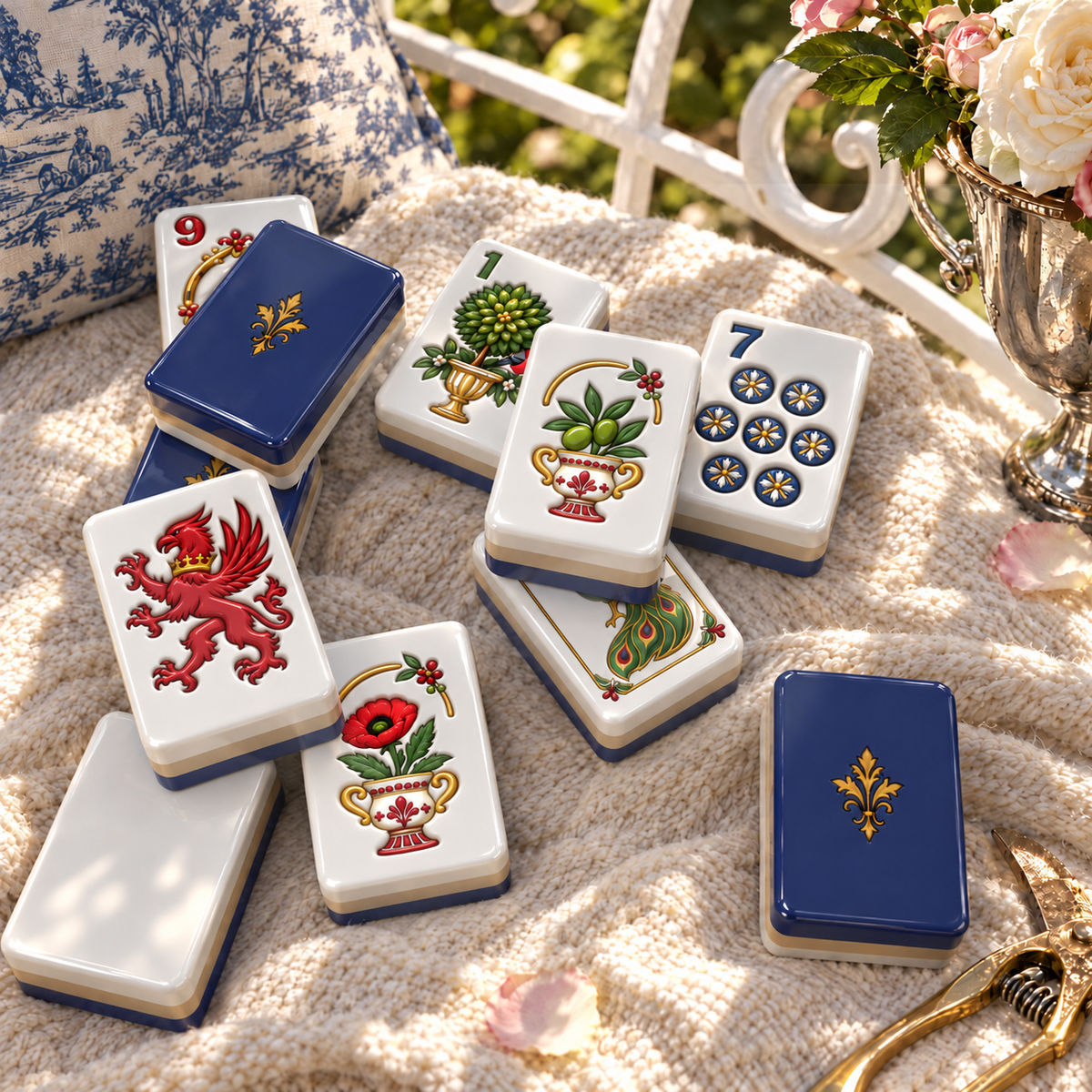
American mahjong for seniors starts with one fact: you don't memorize hands—you match tiles to a card issued each spring by the National Mah Jongg League. A game uses 152 tiles (Bams, Craks, Dots, Winds, Dragons, Flowers, and Jokers) played by four people in roughly 90 minutes per round. The core mechanic is simple: draw a tile, discard one, match exposed groups (3, 4, or 5 identical tiles) to the card, and call "Mahjong" when you complete a legal pattern. No sequences or tricky math. Our best-selling acrylic sets come ready to play—clear tiles, pushers, racks—so you can start today. Seniors love it because the rules stay fixed, the card does the thinking, and every hand feels fresh.
Why is American mahjong easier than other versions?
American mahjong has NO chows—sequences like 1-2-3—so you only learn four types of moves: a pung (three identical tiles), a kong (four identical), a quint (five identical), or a sextet (six identical). You match these groups directly to the card printed each year; the card tells you exactly which tiles win. Compare this: Chinese mahjong requires memorizing thirty-plus hand patterns and sequences that score differently every game. Hong Kong mahjong uses live scoring rules that change mid-hand. American? You read the card, match the pattern, done. Jokers are wild but never stand alone or as a pair—simple limits that prevent confusion. Learn more about how the card works here.

What tiles do I need to recognize?
The 152-tile set divides into six groups. Numbered suits (Bams, Craks, Dots) run 1–9 in four copies each—36 tiles per suit, 108 total. The 1 Bam shows a bird; a 5 Dot is a star; otherwise, pips tell the number. Winds (North, East, West, South) come four per wind = 16 tiles. Dragons: Red (goes with Craks), Green (with Bams), White or "Soap" (with Dots, also acts as zero in sequences). Four of each = 12 dragons. Flowers and Jokers (eight each) add wildcards and decoration. You don't need to memorize this—just recognize that red and green look different, winds have compass marks, and jokers are bright. Acrylic tiles make color-coding instant, which seniors prefer over bamboo or bone that can blur under poor light.
What to check before you buy:
Tile size: acrylic sets are ½ inch square—comfortable to hold and read from six feet away
Weight: lightweight acrylic mixes play comfort with portability
Storage: a complete 160-tile set fits in a compact mahjong bag or case with room for the card and scorepads
How does a turn work in plain English?
Each player takes a turn in a simple loop: draw, expose (if you can), discard, pass to the next player. On your turn, you draw one tile from the wall (pile). If those tiles now match a group on the card, you can expose (lay down) that group on your rack or mat—say "pung" for three identical, or stay quiet if you're saving it. Then you pick one tile from your hand and discard it face-up in the center. The next player draws and repeats. If someone else can use your discarded tile to complete a group, they call "pung" or "kong," take it, expose the group, and then discard. This keeps play flowing. The first player to assemble all tiles into exposed and hidden groups matching a single pattern on the card calls "Mahjong" and wins the hand. No "passing" like poker—everyone stays active. See the full rules breakdown here.
🀄 Shop best-selling mahjong sets →
What does joker use really mean, and why is the limit so simple?
A joker is a wild tile. If your card says "two 5 Craks and two jokers," you can use two jokers in place of the two 5 Craks you don't have. Sounds easy—but here's the catch seniors often forget: a joker can NEVER be a single tile by itself, and NEVER be a pair. It can only sit inside a group of three or more. So if the card wants a pair (two 5 Dots), you must play the actual two 5 Dots; no joker allowed. This rule eliminates confusion: beginners don't waste time debating whether "I can use a joker here." The answer is always "only in a group of 3+." After two dozen games, this feels automatic. Deep dive: how jokers work.

What's the scoring, and do I need to calculate in my head?
American mahjong scoring follows the card only—not complex math. Each hand pattern on the card carries a point value (usually 20–60 points per hand, per player). When you call Mahjong, you announce the hand number on the card, everyone else looks it up, and you score that amount. Some hands pay double or triple if they're rarer; the card tells you. One person keeps a running scorepad—just addition. No mental arithmetic. At the end of a session (usually four games), whoever has the highest total score wins. Seniors appreciate this: no surprise bonus rules, no mid-game negotiations. The card is truth. If someone disputes a win, you check the card together; no arguing past that. Full scoring guide here.
How do I know which tiles to discard to stay safe?
This is strategy, not rules, but it's where the game opens up for experienced players. Discard honors first (Winds and Dragons) if they're not on your current card—honors are the hardest to use, so get them out early. Throw duplicates from suits you don't need (if your hand calls for Craks 1–9 but you have two 3 Bams, toss one). Watch what others discard and expose—if Alice just threw three 7 Dots and exposed a pung of 7 Craks, she probably doesn't need 7s; safe to throw a 7 Dot later. Avoid throwing tiles others have just exposed—if someone just laid down Bam 1, 2, 3, they may have one hidden and be hunting another; don't gift them the 4 Bam. These instincts grow over five games. Beginners should simply throw one suit at a time and see what lands; the card and one season of play teach better judgment than rules.
Decision | For Beginners | Once You Play 10 Hands | Long-Term Strategy |
Tile order | Discard one suit completely | Discard honors, then slow-moving numbers | Discard based on table exposure and current hand hunt |
Exposing groups | Show everything the second it matches | Expose pungs; hold kongs one turn if you're one tile from winning | Hold groups to avoid telegraphing your hand |
Calling Mahjong | Call immediately | Same—winning fast beats fancy | Same—speed + legal match is all that matters |
Joker use | Use freely in any group of 3+ | Use sparingly; save for the final group | Use on the draw you expect to win |
🎁 See our most-loved mahjong sets & accessories →
What should a beginner's first session look like?
Gather four people. Lay out a mahjong mat (optional but it frames the play area and keeps tiles from rolling). Give everyone a rack or place their tiles face-down in a row. The dealer shuffles tiles into a wall—two stacks of 18 tiles per side—then deals 13 to each player (thirteen tiles per person). Keep the card visible at the table. Go around clockwise. Each turn: draw one, look at the card, discard one, pass to the next. The first player to match a full pattern calls "Mahjong." Score it. Start again. Run four hands. After your first game, you'll have asked one rules question out loud—probably "is this pung legal?"—and gotten an instant answer. The second game, you'll recognize tile names. By game four, you'll laugh when someone misreads the card or wastes a joker. That's mastery for a beginner. Gear up with our beginner guides.
One honest thing: what stops seniors from playing?
The biggest wall is fear of the card—it looks like a hundred tiny patterns at first glance. Truth: you use maybe five to eight patterns in your first ten games because they're clustered by difficulty on the card (easy at top, harder below). Ignore the bottom half your first season. Second issue: tile setup intimidation. Solution: ask a player with two seasons of experience to lead the wall-building and dealing; it's five minutes and feels automatic once you've done it twice. Third: worrying you'll slow the table. Reality—a beginner's turn takes eight seconds; a pro's takes six. Nobody cares. Most groups meet weekly specifically to teach newcomers and play for fun.
The physical piece is real for some: tiles are small and bright, but acrylic versions with larger pips and clear color coding help; so do racks with pushers that keep tiles upright and sorted. We've hosted players in their 80s with arthritis who use one-hand racks and play all afternoon. Browse racks and mats designed for comfort.
✨ Find your Mahstead set — free US shipping →

FAQ
Do I have to memorize the hand card?
No. The card stays on the table all game. You look at it whenever you draw a tile. By season two, you'll recognize patterns by shape, but you're never expected to memorize anything.
Can I play with three people instead of four?
Not in standard American mahjong—the game is built for four. Variant rules exist for two and three players, but they're not beginner-friendly and aren't covered by the annual card. Stick to four for your first year.
What if I can't tell the difference between a Red Dragon and a Green Dragon?
Acrylic sets use distinct colors—red and green are unmistakable under any light. Bamboo or bone sets can blur. If someone has a mixed-material set, ask the dealer to point out the dragons before the game starts.
How long does one hand (round) take?
Typically ten to twenty minutes if everyone knows the card. First games run 20–30 minutes. A full session (four hands) is 90 minutes to two hours, plus a break.
If my card expires at the end of the year, can I play with last year's card?
No. The National Mah Jongg League issues a new card every spring, and all official play uses only the current year's card. The hands change entirely each year. Older cards are not legal for League play.
Is there a "best" mahjong set for seniors?
Acrylic sets beat bamboo for clarity and durability, especially for aging eyes. A mat or rack organizes tiles and reduces hand fatigue. Buy a best-selling acrylic set with pushers and you're set for twenty years of weekly games.


View More
View More
View More
