
Three Player Mahjong: Rules, Setup & How to Play
Last updated: Nov 23, 2026
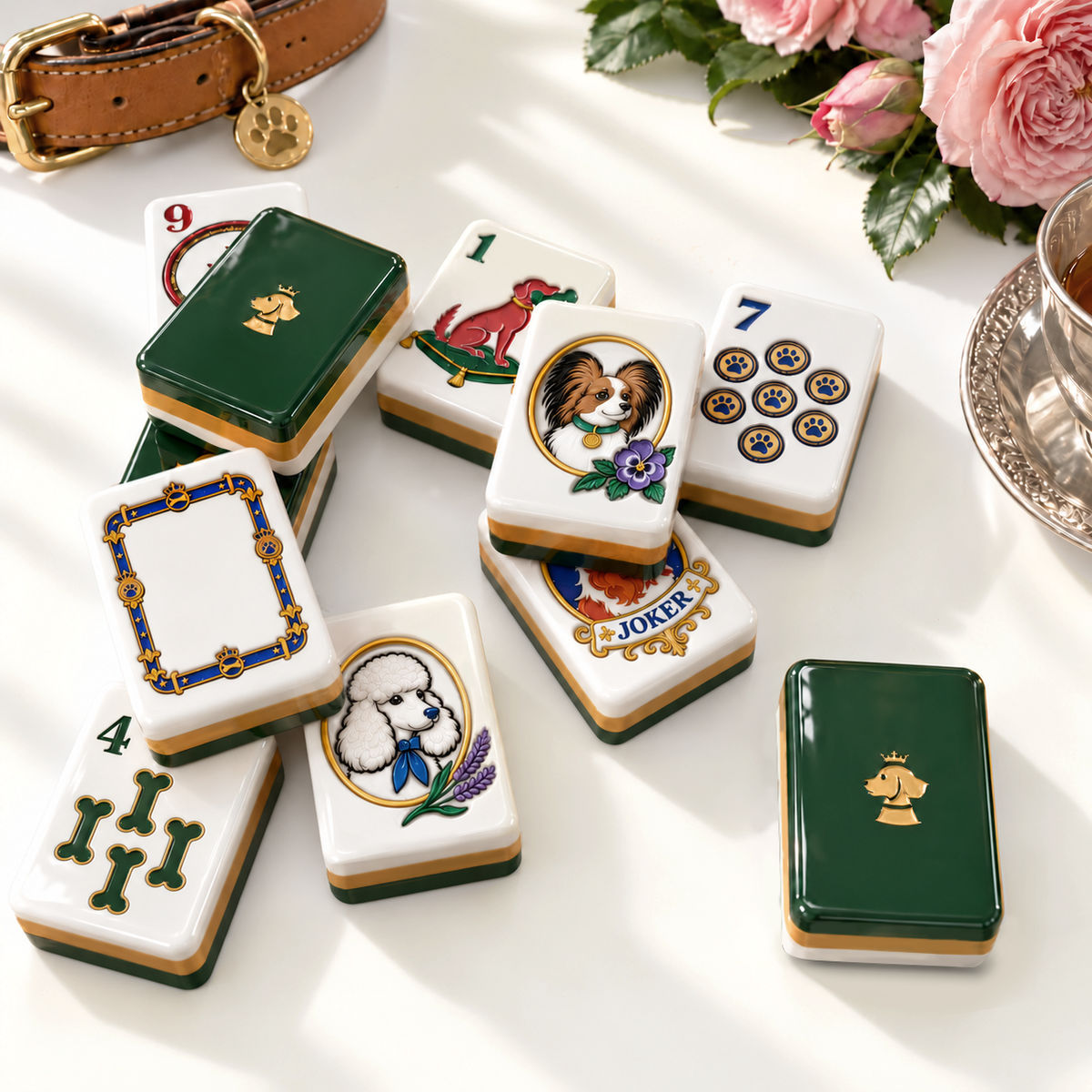
Three-player American mahjong removes one wind (typically North) and redistributes 144 tiles per player instead of 13. The wall still draws from the same 152-tile set; the missing wind's tiles are set aside unused. Gameplay follows standard American rules—melds expose only pungs (3), kongs (4), quints (5), sextets (6), and jokers act as wild cards. Hands come from the current National Mah Jongg League card. The Charleston (tile-passing ritual) adapts: each player passes right, then left, then across instead of four-way. Game duration runs 1–2 hours depending on skill and how much you chat. The biggest adjustment is managing the wall's smaller size and remembering which wind sits out. We recommend a best-selling American mahjong set with clear tile faces so all three players read values from any angle without leaning in.
Why play three-player mahjong instead of four-player?
Three-player mahjong works when a regular partner is sick, traveling, or you have an odd number at your regular table. Some groups rotate it as a skill game: fewer bodies mean faster exposure of discards and more aggressive play. It also teaches tile reading because three players sit wider apart and must call melds audibly. The rhythm differs—you discard faster, wall depletion accelerates, and dead hands happen more often. Most casual groups treat it as a pleasant break rather than a permanent switch, since four-player is the standard and most National Mah Jongg League card hands assume four seats.

Which wind do you remove, and what happens to its tiles?
American mahjong uses four winds: East, South, West, North. Most three-player groups remove North wind; some remove South. Before the game starts, collect all four North wind tiles and place them face-down beside the table—they never enter play. This removes 4 tiles from circulation. Since you began with 152 playing tiles (plus 8 jokers), removing North leaves 148 tiles available. You still draw and play from the same physical set; the missing wind's tiles simply sit out. Agree on which wind to remove before you deal so no one accidentally picks up a North tile mid-game.
How do you redistribute tiles to three players fairly?
Standard three-player setup divides 144 tiles (152 minus the 8 North wind tiles) into three hands of 13 tiles each, leaving a 105-tile wall to draw from during play. Deal 13 tiles to each player in the usual way: going counterclockwise, four tiles per pass, then one final tile to East. East sits out and draws first. The wall now stands smaller—roughly 70% the height of a four-player wall—so keep an eye on how many tiles remain; you'll reach dead hand more quickly. If you like, the player opposite East (call them South) can still be East in the next hand and deal. Rotate clockwise through East, South, West and repeat, skipping North entirely until someone calls the deal differently.
What changes in the Charleston passing ritual?
The Charleston is the tile-passing exchange before each hand. In four-player, each person passes right, then left, then across to opposite—then a second round in the same order. In three-player, two passes work fine: Pass 1 (right), Pass 2 (left), then done. Some groups do a third pass (across) if they want more chaos. Because there are only three players, "across" means to the next person clockwise (not a fixed opposite). Keep passes quick and count to six per bundle so no one passes 7 or 8 by accident. Agree on pass count before you start; most three-player groups use two main passes, then skip the second-round complexity.
How does the smaller wall affect game length and dead hands?
A three-player wall shrinks to about 105 tiles after dealing and the initial draw. Discards accumulate faster when three people throw tiles instead of four, and wall depletion accelerates. A typical four-player hand lasts 30–45 minutes; three-player often runs 20–35 minutes. Dead hands (where no one wins before the wall empties) happen 10–20% more often in three-player because fewer tiles cycle through. Watch the wall visually: when it dips below half height, hand is entering endgame. If the wall empties, the hand is dead; discard all tiles, shuffle unused North winds back into the set, and deal the next hand. This faster pace keeps energy up and lets you play more hands in a session.
Comparison: American four-player vs. three-player rules and pace
Aspect | Four-Player | Three-Player | Why It Matters |
Players | 4 (E, S, W, N) | 3 (E, S, W; N removed) | Fewer players = faster discards. |
Tiles per hand | 13 | 13 | Deal size stays the same. |
Starting wall | 140 tiles | 105 tiles | Smaller wall empties faster. |
Charleston passes | 6 (two rounds) | 2–3 (one round) | Fewer passes = simpler ritual. |
Dead hand rate | ~5–10% | ~15–20% | Fewer tiles in play increase dead hands. |
Average hand length | 30–45 min | 20–35 min | Acceleration due to wall size. |
Hand availability | All from current NMJL card | Most from current card; some may not fit | Three-player adapted hands rare. |
Meld visibility | 4 angles to read from | 3 angles; wider spacing needed | Players sit farther apart. |
Can you use any American mahjong set, or do you need a special three-player version?
Any standard 152-tile American mahjong set plays three-player; no special version exists. You simply remove the four North wind tiles before dealing. What matters is tile visibility: because three players sit farther apart around the table (roughly 120° angles instead of 90°), you need clear, large-print tile faces. Acrylic or resin tiles with high contrast and clean number faces beat smaller bone or bamboo sets. A mat with clear center lines helps define each player's discard row when sightlines are longer. Test your set with three people first; if you squint to read a tile from two seats away, upgrade before hosting regularly.

What is the official three-player rule for the National Mah Jongg League?
The National Mah Jongg League (NMJL) publishes the official American mahjong card each spring for four-player games only. There is no official three-player card or ruleset from the League. Most three-player groups modify four-player rules locally: remove North, deal 13 tiles, follow melds and scoring from the current four-player card, and adapt hands as they fit. Some hands on the card may become impossible to form with only three players (because of reduced tile circulation), so players skip those rows. A few regional clubs publish three-player adaptations or house rules, but nothing is League-sanctioned. Check your local club or group for their three-player house rules before your first game.
How do you score and track points in three-player mahjong?
Scoring follows the same National Mah Jongg League points table as four-player, but the payout math changes. In four-player, the winner collects from all three others; in three-player, you often split the payment differently. Common variants: (1) winner takes from all two others equally; (2) winner takes double from East player (if East didn't win) and single from the third; (3) loser pays triple if they discarded the winning tile. Before you play, agree on payout: fixed points per hand (e.g., 1 point per tile in the hand), a multiplier for East, or a pool that rolls forward to the next hand. Write it on a score sheet and check it after each hand. Spreadsheets or apps avoid argument, but a pen-and-paper tally works fine for casual games.
What common mistakes do three-player groups make?
Forgetting North wind is out. Someone picks up or plays a North tile mid-hand because they lost track. Before each game, lay the four North tiles visibly to the side or remove them from the set entirely until the next session.
Uneven wall height. If dealers don't count tiles carefully, one side of the wall grows taller than the other, and wall depletion is unpredictable. Always count to 35 tiles per side of a three-player wall.
Poor seating for three. If you sit at a four-seat table with one empty spot, players feel cramped and can't read distant tiles. Move to a round or triangular setup with equal spacing so every face is visible from all angles.
Adapting hands that don't work. Some four-player hands depend on all four suits flowing equally. In three-player, a hand requiring 20+ tiles of one suit may be impossible. If a hand won't form after 15 minutes, skip it and move on rather than forcing a win that isn't there.
Ignoring faster pace. Three-player hands end quickly. New players sometimes assume they have the same 45 minutes as four-player and zone out on their racks. Set a timer at the start to train faster thinking.
What to check before you buy a set for three-player hosting
Tile clarity: Can you read Craks (numbers on symbols) from three feet away? Hold each tile at arm's length.
Joker count: Does the set include enough jokers (8 or more) so you never run short if one gets lost?
Wind tiles: Are the four winds clearly marked (E, S, W, N) in consistent font? You'll remove North often.
Weight and feel: Do tiles stack and slide smoothly? Three-player needs brisk tile movement.
Set size for three: A 160-tile acrylic set sits well on a table for three players; test at a round or triangle setup before committing.
Matching accessories: A mat that fits three people, racks that hold 13 tiles clearly, and a small carrying bag if you travel between homes.
🀄 Shop best-selling mahjong sets →
Hosting your first three-player game: a quick checklist
Agree on wind to remove (usually North) and set those four tiles aside visibly.
Test tile clarity with all three players seated before you deal the first hand.
Count wall tiles carefully: 35 tiles per side for a balanced three-player wall.
Practice the Charleston: right pass, left pass, across pass (or just right and left). Go slow the first round.
Decide payout rules (winner takes from two others; East bonus; discard penalty). Write it down.
Use a scorekeeper to avoid confusion after each hand.
Start with familiar hands from the current card rather than trying obscure combos.
Play two or three hands to let everyone feel the rhythm before adding house rules.
Watch the wall. When it drops to half height, hand is in endgame.
Celebrate dead hands. They're normal. Shuffle, reset, and deal the next hand.
🎁 See our most-loved mahjong sets & accessories →
Other variants: how three-player differs from Chinese, Hong Kong, and Riichi mahjong
Chinese mahjong (the parent game) uses 144 tiles, no jokers, and melds called chows (sequences 1-2-3). Three-player Chinese mahjong is traditional and well-documented, with official rules. American three-player, by contrast, adapts a four-player variant and has no official standard.
Hong Kong mahjong plays four-player with sophisticated scoring and rapid-fire melds. Three-player Hong Kong exists but is rare; players instead modify the hand size and wall to match three seats.
Riichi mahjong (Japanese) is designed for exactly four players and does not adapt well to three. The closed-hand mechanics, scoring multipliers, and wall layout break if you remove a wind.
American is the only variant where three-player is common, casual, and easily explained to beginners. If you want a three-player game and simplicity, American is your best choice.
Where to find three-player groups and rules near you
Most three-player games happen informally: a regular four-player group missing someone, or a close-knit trio. To find organized play:
Community centers and libraries often host open mahjong groups (ask if they play three-handed variants).
Synagogues and country clubs frequently host mahjong nights; ask if anyone plays three-player or would try it.
Meetup boards and local Facebook groups for mahjong enthusiasts sometimes list drop-in games; comment and ask about three-player options.
Ask your local mahjong set shop or instructor if they know groups experimenting with three-player; word-of-mouth is fastest.
If no group exists near you, start one: grab two friends, a best-selling set, a mat for three players, and this guide. Three-player games often become regular traditions.
✨ Find your Mahstead set — free US shipping →

FAQ
Can you play American three-player with a standard 152-tile set?
Yes. Remove the four North wind tiles, then deal and play as usual. Any 152-tile set works; no special version is needed. The key is tile clarity so three players can read faces from farther apart.
Do you still use the National Mah Jongg League card for three-player hands?
The current NMJL card is written for four-player, but most hands adapt to three-player. Some rows become harder or impossible to form due to reduced tile circulation. Use the card as a guide; if a hand won't work after 10 minutes, skip it and try another.
How many jokers do you need for three-player mahjong?
A standard 152-tile set includes 8 jokers, and you'll use all of them the same way as in four-player. If a joker is lost, a 160-tile set contains spare jokers so you always have 8 to play with.
Is three-player faster or slower than four-player?
Faster. The smaller wall and fewer players mean hands typically run 20–35 minutes instead of 30–45. Dead hands occur more often because fewer tiles cycle through the game.
What's the easiest payout rule for three-player scoring?
Winner collects equal points from each of the two losers, based on tiles in hand (per the NMJL scoring table). Simplest: if the hand is worth 25 points, winner gets 25 from each other player. No bonus for East; just divide equally.
How do you handle melds and jokers differently in three-player?
Melds work the same: expose pungs (3), kongs (4), quints (5), sextets (6). Jokers remain wild in any exposed meld and cannot form a pair or single tile. Three-player doesn't change joker rules—only the player count and wall size.


View More
View More
View More
