
Wright-Patterson Mahjong vs Mahjong Solitaire: Which Game Is Right for You?
Last updated: Nov 23, 2026
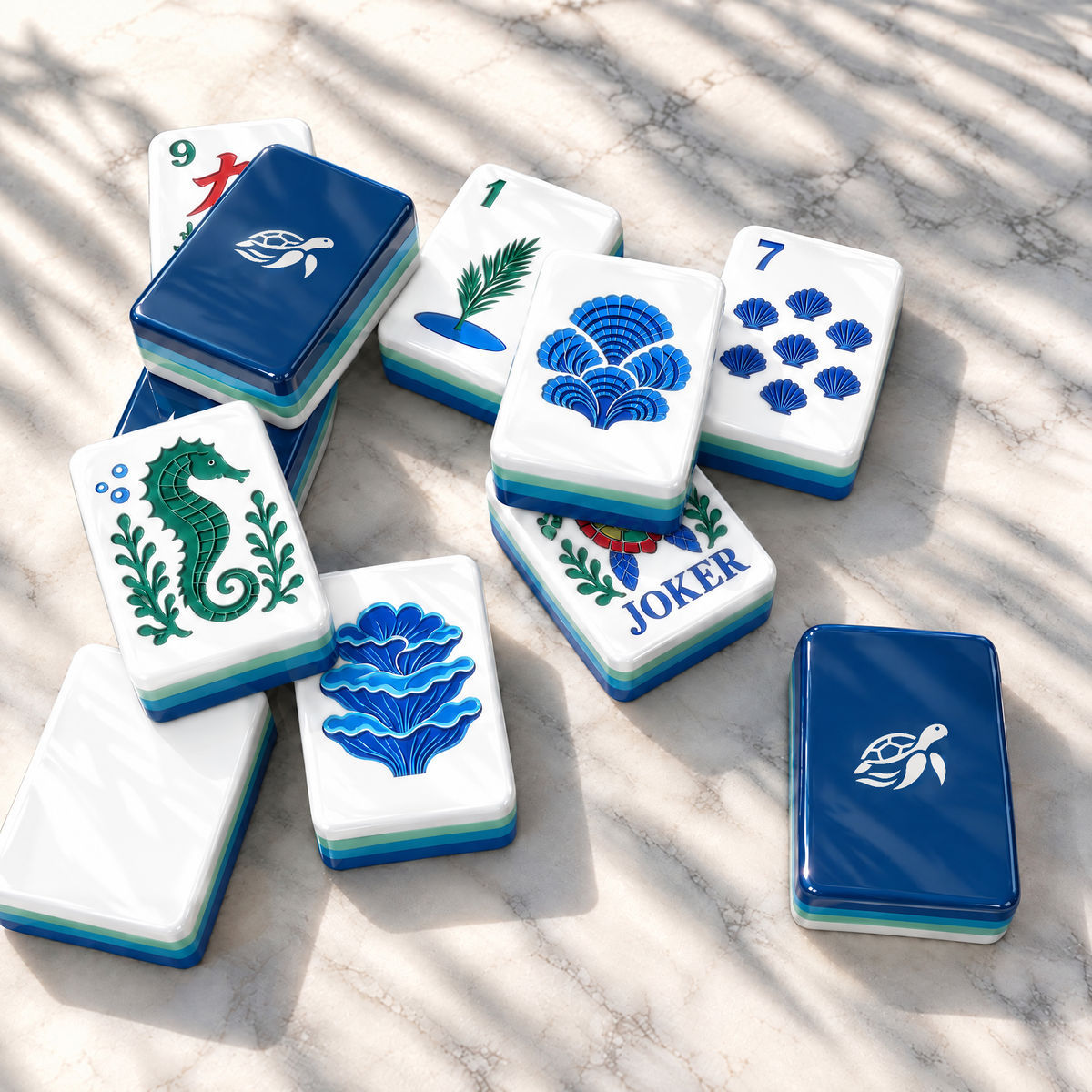
Wright-Patterson mahjong doesn't exist as a recognized variant—you likely mean Wright State or a local rule set. Mahjong solitaire, by contrast, is a single-player matching puzzle (not a gambling or trick-taking game) played on a computer or with tiles laid in patterns on a mat. If you've heard "Wright-Patterson" in a mahjong context, check whether someone meant American mahjong, which uses 152 tiles, four players, the current year's National Mah Jongg League card, and a passing ritual called the Charleston. American mahjong involves real strategy, negotiation, and live scoring; mahjong solitaire is a memory and pattern game with no luck or bidding. If you're looking to host regular table games, you'll want quality equipment. If you play only solo online, no physical tiles are needed.
Is "Wright-Patterson Mahjong" an Actual Game?
No—there is no recognized mahjong variant called Wright-Patterson mahjong. You may have encountered the term in a local context, online forum, or as a nickname for a house-rule version played at a specific venue or military base. If someone invited you to "Wright-Patterson rules," ask directly what that means: Do they play American, Chinese, Hong Kong, or Riichi? Does the group use the National Mah Jongg League card? Are you playing for points, money, or fun? The term is too vague to build a game plan around. Search your local community center, library, or synagogue bulletin boards to find established games with published rules—those will always be one of the five major variants (American, Chinese, Hong Kong, Riichi, or Taiwanese), not a place name.

What Is Mahjong Solitaire, Really?
Mahjong solitaire is a matching puzzle, not a real mahjong game. You face a board (digital or tiled) where identical pairs of tiles are stacked in a specific pattern—often a pyramid, dragon, or spider shape. Your goal is to remove all tiles by clicking (or pointing to) two matching tiles that are not blocked by adjacent pieces. Most digital versions score based on speed and moves. No cards, no bidding, no luck involved—just pattern recognition and planning ahead to avoid dead ends. Thousands of free versions exist online; some people collect physical tile sets to recreate the patterns on their home table. Mahjong solitaire teaches you tile names and suits but teaches nothing about actual mahjong rules, play, or strategy.
How American Mahjong Differs from Solitaire
American mahjong is a four-player game with active negotiation, hand-building, and real-time strategy. You draw and discard tiles, pass the Charleston before each hand, and consult the current year's National Mah Jongg League card to claim winning combinations. Learn how to play American mahjong with our full guide. Unlike solitaire, you interact with three opponents, listen for discards, and must adapt your hand when other players take the tiles you need. Solitaire is solo; American mahjong is collaborative and competitive at once. American games last 30 minutes to two hours per hand; solitaire is over in minutes. American mahjong uses exactly 152 tiles and 8 jokers per game; solitaire uses whatever layout is on screen or in your pattern book. If you've never played American mahjong, the Charleston and the current year's card are the two barriers to entry—but they're learnable in an afternoon.
🀄 Shop best-selling mahjong sets →
Why Someone Might Say "Wright-Patterson"
The phrase "Wright-Patterson mahjong" most likely arose in one of these contexts:
A local nickname: A game group at Wright-Patterson Air Force Base or nearby community adopted a house-rule version and named it after their venue.
Mishearing or misspelling: "Wright State" (Ohio's university) or another place was simplified or altered in retelling.
An outdated or obscure rule book: Very old regional rule sets sometimes carried geographic names; these are rarely played today.
A confusion with another game: Someone conflated mahjong solitaire (which they played online) with a variant they heard mentioned.
To resolve this, ask the person who used the term to describe a complete hand, show you a rule book, or tell you where they learned it. If they cannot, they may not play it regularly themselves.

Choosing the Right Game for Your Situation
Here's a practical comparison:
Scenario | Game Type | Setup Time | Player Count | Equipment Needed | Learn Time |
Weekly friends' night | American mahjong | 10 min | 4 (or 2–3 with variants) | 152-tile set, card, mat | 2–4 weeks |
Solo relaxation | Mahjong solitaire | 0 min | 1 | Phone/laptop or tile layout | 10 min |
Corporate event | American mahjong | 15 min | 2–4 tables | Multiple sets, space | 1–2 hours |
Family gift | Either (confirm first) | Varies | Varies | Physical set if American | Varies |
American mahjong is the right choice if you want to gather people regularly, enjoy strategy and real interaction, and are willing to learn rules and the current year's card. Mahjong solitaire is best for personal decompression, pattern-building confidence, or trying tiles before committing to a group. Never buy a 160-tile American set expecting to play solitaire with it—that's wasted money. But if you're hosting regular games, invest in a quality set from our best-selling collection that will last years of weekly play.
The Right Setup for American Mahjong Table Play
If you've decided to host American mahjong games, you'll need three things: a set with 152 tiles and 8 jokers (sold as 160-tile sets with spare tiles included), a mat to protect the playing surface and keep tiles organized, and ideally a rack with pushers to keep your hand tidy and hidden. A typical 160-tile acrylic set from Mahstead includes four color-coded racks, pushers, and a storage case—everything a new player needs. Mats vary by size and material; choose based on your table's dimensions and whether you prefer cloth, vinyl, or bamboo. Racks come in sets of four or can be purchased individually. Dice are included to determine the dealer. The whole setup costs less than a few dinners out and will host hundreds of games.
🎁 See our most-loved mahjong sets & accessories →
What to Check Before You Buy
If you're about to spend money on mahjong equipment, confirm these three things first:
Are you joining an existing group or starting your own? Ask whether they play American, Chinese, Hong Kong, Riichi, or Taiwanese mahjong. A set made for American play won't work for Riichi, which uses different tile counts and no jokers. Beginners should confirm their local game type.
Will this be a one-time experience or a recurring commitment? If you're trying mahjong once, borrow a set or play solitaire online first. If you're hosting weekly, buy your own—you'll use it.
Is "Wright-Patterson mahjong" an actual rule set at your venue, or was it a vague recommendation? Ask for the rule book or the name of the variant. If no one can specify, you're likely learning American mahjong with local tweaks—start with the standard game and adapt later.
Don't confuse mahjong solitaire videos or apps with real mahjong. Don't buy a set based on color alone; buy based on tile size, acrylic quality, and included accessories like racks and mats. Don't assume all 160-tile sets are the same—they vary in design, engraving options, and whether the case is fabric or hard plastic.
✨ Find your Mahstead set — free US shipping →

FAQ
Is Wright-Patterson mahjong a real variant I can find rules for online?
No. There is no published rule set by that name. If you encountered it in a local context, contact that group directly for clarification. Standard variants (American, Chinese, Hong Kong, Riichi, Taiwanese) have published books and online communities; a place-name variant does not.
Can I play American mahjong solitaire with a 160-tile set?
Not really. Mahjong solitaire is a matching puzzle played on a flat layout or computer screen—it doesn't use strategy or the National Mah Jongg League card. You'd be wasting a set designed for four-player competitive play. Play solitaire online or buy a specific solitaire tile set if you prefer the tactile version.
How long does it take to learn American mahjong if I've only played solitaire?
Solitaire teaches you tile names and suits but no real strategy. Learning American mahjong takes 2–4 weeks of weekly games—you need to understand the Charleston, how to read the card, and when to pass or hold tiles. Budget 2–3 hours for your first game and expect slow play.
What's the minimum equipment I need to host an American mahjong game?
One 160-tile set (includes tiles, jokers, and storage), the current year's National Mah Jongg League card (free online or $5–10 printed), and a flat surface. A mat, racks, and pushers are optional but highly recommended for comfort and speed.
If someone says they play "Wright-Patterson" rules, what should I ask them?
Ask: "What variant is that—American, Chinese, Hong Kong, Riichi, or Taiwanese?" Ask them to show you a rule book or describe a complete winning hand. If they can't answer clearly, they may not actually play that version or may be confusing it with another game.


View More
View More
View More
