
Easiest Mahjong Rules for Grandparents and Grandkids
Last updated: Nov 23, 2026
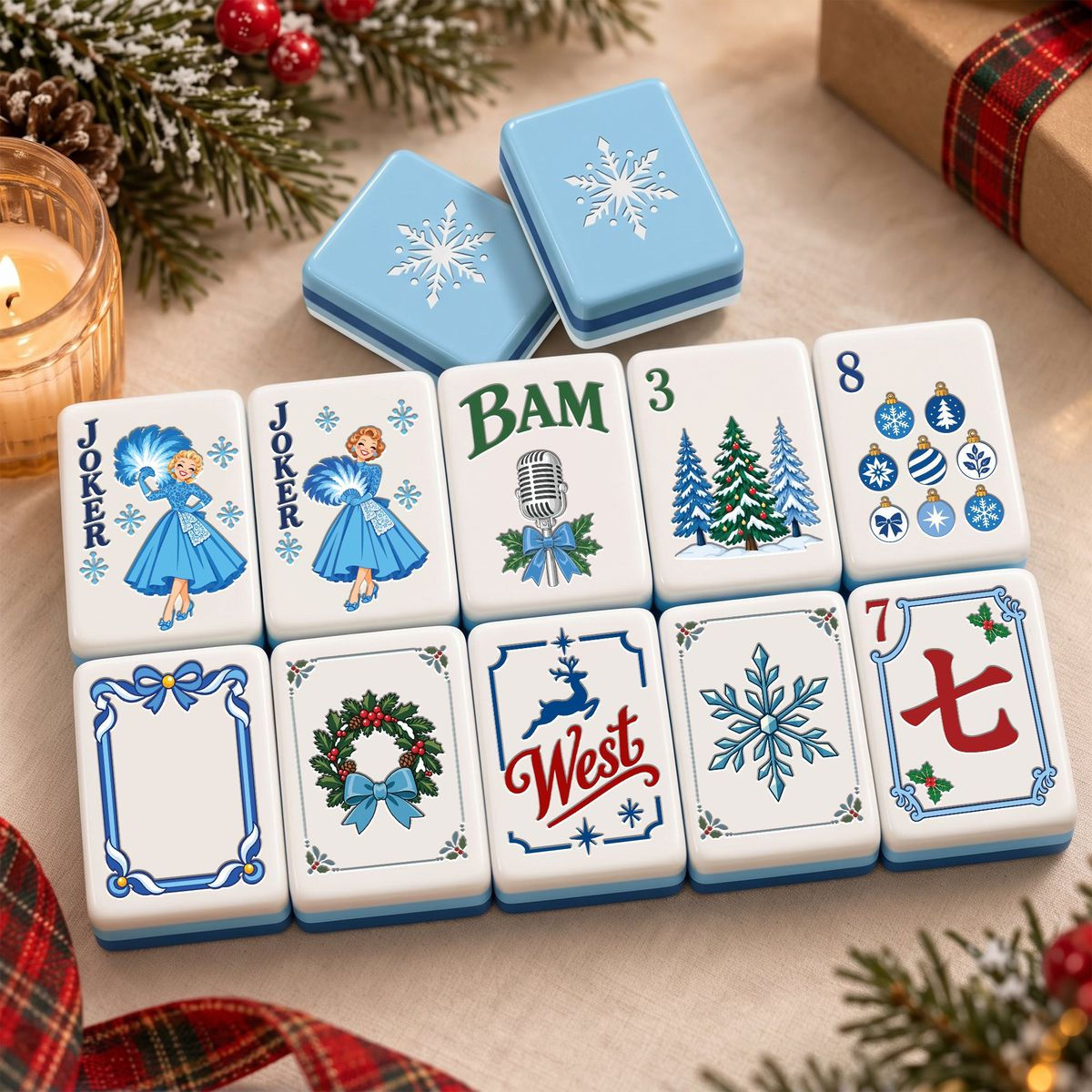
American mahjong uses 152 tiles (plus 8 jokers) across three suits: Bams, Craks, and Dots numbered 1–9, plus Winds, Dragons, and Flowers. A complete game needs exactly four players and runs about 60–90 minutes per round. The core mechanic: each player draws one tile per turn, discards one, and tries to match their 13 tiles to a hand listed on that year's National Mah Jongg League card. You don't need to memorize hands—just follow the card. Grandparents appreciate the slow pace and clear turn structure; kids like the puzzle logic. Start with a best-selling set that includes a printed card and beginner-friendly tile size, skip the Charleston (tile-passing ritual) on game one, and keep a rule sheet visible. The hardest part isn't the rules—it's resisting the urge to coach mid-hand.
Why is mahjong actually simpler than it looks?
Mahjong feels complex because there are many hand options, not because the turn sequence is hard. Every single turn follows one rule: draw a tile from the wall, look at your hand, then discard one tile face-up. Repeat until someone calls "mahjong" (they've matched a legal hand). There's no bluffing, no hidden scoring math during play, and the card does all the thinking for you. Unlike poker or bridge, you're not competing against other players' strategy—you're competing against the math. Grandparents and kids both find this refreshing: everyone plays by the same public card, and luck matters as much as skill.

How do you actually teach the tiles in five minutes?
Show the three suits one at a time. Bams (sticks): 1–9 in bamboo; Craks (characters): 1–9 in Chinese script; Dots: 1–9 as circles. Then show Winds (North, East, South, West), Dragons (Red, Green, White), and Flowers (not used in American mahjong hands, but your set includes them). You need four identical tiles to make a pung (three) or kong (four); jokers can substitute for missing tiles. That's it. Don't explain honor tiles or suit rankings yet—just show examples: "Three 5 Dots = a pung. You can show that to the table." Let them hold a few tiles and pass them around. Hands-on beats explanation every time.
What does one actual turn look like, step-by-step?
Here's a real example: Turn 1 (Grandpa). The wall is stacked; Grandpa draws the first tile—it's a 3 Bam. He looks at his 13 starting tiles and discards a 7 Crak face-up in the center. Turn 2 (Grandma). She draws the next tile—a 2 Dot—and discards a 1 Bam. Turn 3 (Kid): Draws, looks, discards. Turn 4 (Other player). Draws, looks, discards. Then back to Grandpa. If anyone's discard matches a tile someone else needs, they can claim it: "Pung!"—take that discard, lay three identical tiles on the table, then discard a different tile. Play continues until someone has a legal hand on the card and calls "Mahjong!" You score, reset, and play again. No hidden moves, no simultaneous reveals. That predictability is gold for multi-generation games.
What's the top mistake that stalls new players?
New players wait for the perfect hand. They hold tiles too long, hoping to match a specific pattern on the card, and discard randomly to buy time. This clogs the table—everyone's waiting, and the game stalls at 90+ minutes. The fix: teach the discard rule first. You must discard after every draw; you can't pass. Keep discards in a row so everyone sees what's gone. Tell your grandchild: "Throw away the tile you're least likely to use in a hand on the card." This sounds small, but it cuts game length by 20–30 minutes and removes the paralysis. A printed card sitting face-up on a quality mahjong mat helps—everyone reads the same hands at the same time instead of arguing over whose card version is "right."
When should you skip the Charleston and when shouldn't you?
The Charleston is the tile-passing ritual before each hand—players pass three tiles left, then three right, then one across. It's real mahjong tradition and teaches tile strategy. But skip it on game one. New players need to focus on turns, discards, and reading the card, not simultaneous passes. After they've played two complete hands and understand the rhythm, introduce the Charleston in the second session. Grandkids often love it (it feels like a secret ritual), and grandparents appreciate the skill layer it adds. By session three, the Charleston becomes automatic, and your family's game feels like real mahjong. If someone says, "Do we do the weird tile-passing thing?" on game one, you're not ready yet. Save it.

Decision Table: Which Ruleset Fits Your Group?
Your group | Ruleset | Game length | Best first game? | Setup tip |
All new players, mixed ages | American (no Charleston) | 60–75 min | ✓ Yes | Use one printed card; sit together |
Two experienced, two new | American (with Charleston) | 75–90 min | Maybe round 2 | Experienced players coach gently |
All grandparents, one curious kid | American (simplest scoring) | 90 min | ✓ Yes | Large-tile set; printed card; extra light |
Grandkids only (ages 10+) | American (full rules) | 75–90 min | ✓ Yes after one session | Younger kids play West (fewer hands memorized) |
A Real Checklist: Your First Family Game
Before you sit down:
[ ] All 152 tiles present (check inside each bag)
[ ] Printed National Mah Jongg League card for the current year (included or downloaded)
[ ] Four players, each seated on one side of a table
[ ] A mahjong mat (optional but stops tiles sliding around; kids knock things over)
[ ] Pen and paper for scoring (or skip scoring on game one)
[ ] Dice (to determine who plays East first; included in most sets)
[ ] 15 minutes to shuffle and build the wall
During the game:
[ ] One person reads the card aloud for each hand ("We're looking for like 2024-A: Pung, Pung, Pung, Pair")
[ ] Each player keeps their hand hidden until someone calls "Mahjong"
[ ] Discards face-up in a row—never mixed with your hand
[ ] If someone claims your discard, they announce it, lay it on the table, then discard a different tile
[ ] No undo: once you discard, it's gone
After hand one:
[ ] Did it take 60–90 minutes?
[ ] Did anyone finish first try, or did the wall run out?
[ ] Did the joker rules make sense (jokers = wildcards)?
[ ] Do they want to play again?
If yes to the last one, you've won.
What to Check Before You Buy a Set
Tile size and weight: Older eyes need tiles ≥ 0.8 inches. Acrylic tiles feel substantial (not cheap plastic); they stack well and don't crack if dropped. Look at the photos—if the tiles look thin or glossy, they'll chip on the 50th game. Our best-selling acrylic sets use industry-standard sizing and thickness.
Printed card inclusion: The card is non-negotiable. If it's not in the box, you'll spend game one arguing about which hand is legal. A current-year card (issued each spring) is required; old cards have retired hands.
Jokers and extras: A 160-tile set includes eight jokers for play plus spares. Count them before game one; if you're missing even one during play, restart.
Case or bag: If you're hosting weekly, your set lives in a case between games. A good mahjong bag or case protects tiles from sun fade and keeps everything organized. Loose tiles in a shoebox get sorted wrong by game three.
Racks (optional):Racks with pushers let players hold and move tiles smoothly without fumbling—especially helpful for grandkids with smaller hands or arthritis. Not essential for game one, but they change the experience.
🀄 Shop best-selling mahjong sets →
The Honest Truth About Learning Speed
Your family will play a complete legal hand in 60 minutes if you follow the steps above. Your grandkid will remember the rules by game three. By game five, they'll be teaching a friend. The plateau comes at game 10–15, when they start recognizing hand patterns on the card and optimize their discards—that's when the skill game begins. But here's what most guides don't say: the first three games are about fun and flow, not winning. If Grandpa gets mahjong on turn 20 because he lucked into five jokers, celebrate it. If the wall runs out and no one finishes, reshuffle and play again. The goal is "I want to play next week," not "I need to beat you." Once that's true, the rules stop feeling like rules and become second nature.
✨ Find your Mahstead set — free US shipping →
For a deeper dive into the full American ruleset and scoring, see our guide to mahjong for beginners. If you want to understand jokers in detail or how the Charleston works, those guides cover the advanced parts you'll add after your first few family games.

FAQ
Can we play with three people instead of four?
American mahjong is designed for four; three-player variants exist but change scoring and hand structure. Play your first few games with four. If a third player is all you have, check 2 and 3 player mahjong rules for adapted versions. Most families add a fourth—a neighbor, older sibling, or guest—once they catch the bug.
What if my grandkid doesn't understand the card?
The card is a picture menu. Point to one hand: "See this? Three Bams, three Craks, three Dots, and a pair of Whites. That's a legal hand. Match it." Show them how to scan left to right. Let them hold the card and match tiles to the paper picture. After game two, they'll speed-read it. Never memorize hands—always reference the card.
Do jokers really work like wildcards?
Yes. If a hand calls for five 2 Dots and you only have three 2 Dots, you can swap a joker into the slot. But jokers can never be used alone or in a pair—only filling a spot in a pung, kong, quint, or sextet. See how jokers work for full rules.
How do we keep score on game one?
Skip it. Your first game is about rhythm and learning turns. Once everyone's comfortable, introduce scoring on game two or three. Scoring uses multipliers (points × base hand value), and it's a separate skill. Order of play and the discard rule matter first.
What's the difference between American mahjong and the Chinese version my neighbor plays?
American mahjong uses a card-based hand system (no hand memorization required), bans sequences (chows), and includes jokers in the tile set. Chinese mahjong requires hand memory, allows sequences, and uses a different scoring system. American is simpler for casual family play; Chinese is deeper. Start with American—it's easier to teach.
Can we play on a regular table or do we need a mat?
A regular table works fine—tiles slide less on a smooth surface. A mat protects the table, keeps tiles organized, and feels more official. For weekly games with grandkids, a mat cuts frustration (tiles stop sliding around) and makes cleanup faster. Optional, but worth it after game three.


View More
View More
View More
