
9 Crak Tile in Chinese Mahjong: What It Means
Last updated: Nov 23, 2026
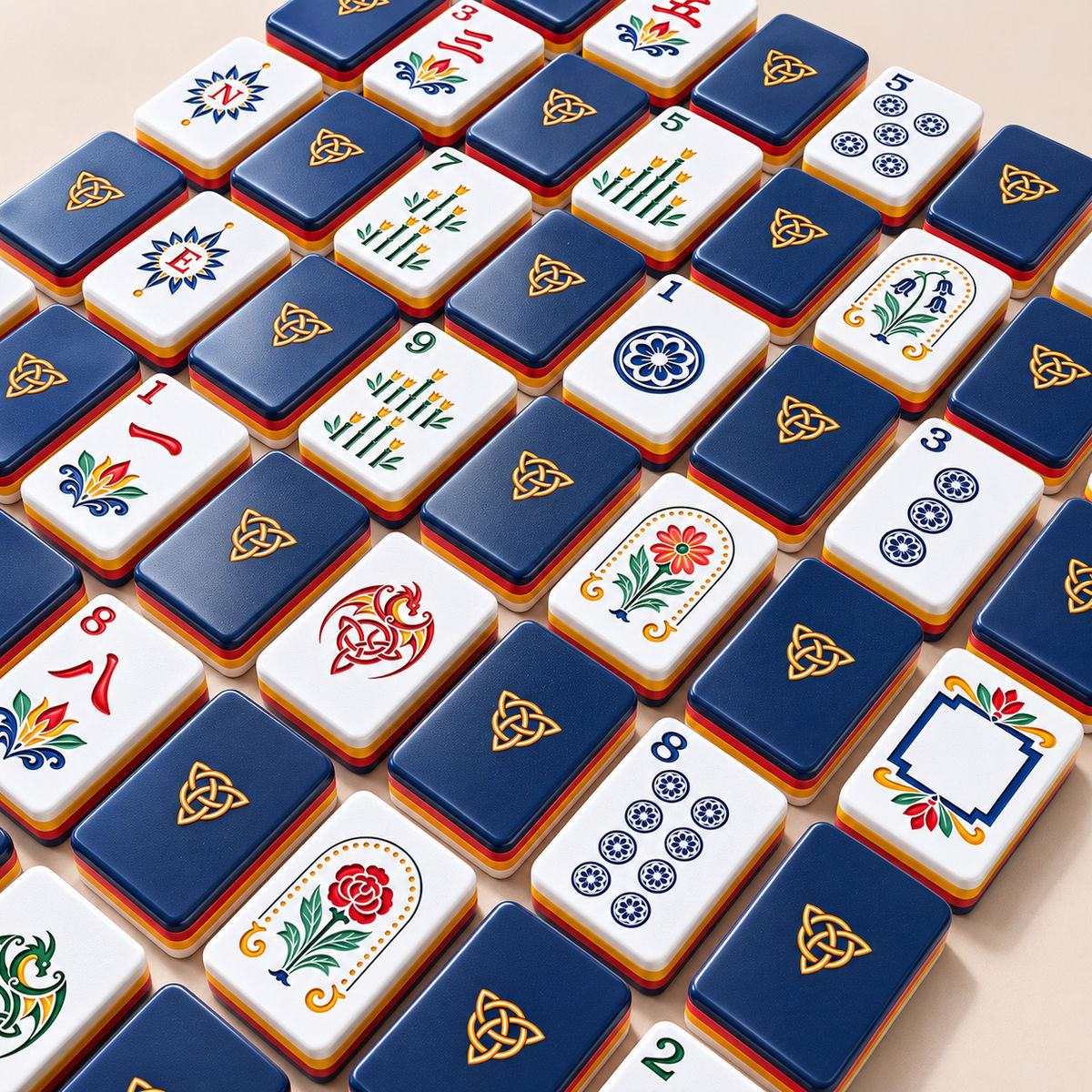
In Chinese mahjong, the 9 Crak tile depicts nine Chinese characters or coin symbols and ranks as the highest pip in the Crak suit (also called the Character suit). Every standard set contains four identical copies—one for each player's discard pile, Kong box, or hand. American mahjong treats it as a regular number tile; it plays no role in terminals (1s and 9s are both valid end tiles), pairs, pungs, or Kongs. Chinese, Hong Kong, and Taiwanese variants often weight 9 Craks higher in scoring systems because terminal tiles (1s and 9s) form restricted hand combinations. In all variants, the 9 Crak cannot substitute for jokers and is never left blank. Mahstead 160-tile acrylic sets include four 9 Crak tiles as part of their standard Crak suit inventory.
The 9 Crak tile represents the pinnacle of the Crak suit—the highest numbered tile in that line. In American mahjong, it sits alongside 1–8 Craks as a standard foundation tile; in Chinese and Hong Kong play, its value extends into hand ranking and scoring weight. Understanding what the 9 Crak is, how it behaves across game variants, and why it matters to your play will sharpen both your tile recognition and your strategic hand-building.
What does the 9 Crak tile actually show?
The 9 Crak displays nine Chinese characters arranged in rows (often three rows of three), or nine coin symbols (circles with a square hole in the center, mimicking historical Chinese currency). The face is always red or dark red ink on a pale or white tile, making it instantly recognizable from across the table. In modern engraved acrylic sets, the design remains crisp and bold—the 9 sits at roughly the same visual weight as the 1 Crak but at the opposite end of the numerical spectrum.

How is the 9 Crak different in American mahjong versus Chinese play?
American mahjong treats all number tiles—1 through 9 in each suit—with mechanical equality: each can form pairs, pungs, Kongs, quints, sextets, or be used in any combination the current year's National Mah Jongg League card permits. The 9 Crak has no inherent scoring bonus and no hand-building restrictions. Chinese, Hong Kong, and Taiwanese mahjong, by contrast, assign special weight to terminal tiles (1s and 9s). Hands that include "all terminals and honors" (a combination of 1s, 9s, and wind or dragon tiles) score significantly higher. In some Hong Kong variants, a hand of only 1s and 9s Craks, Bams, and Dots, plus honors, earns top-tier points. This means the 9 Crak, though played identically in most mechanics, carries strategic prestige in closed-hand variants.
Can the 9 Crak be used as a wild tile or joker?
No. In every mahjong variant played today—American, Chinese, Hong Kong, Riichi, or Taiwanese—the 9 Crak is a fixed-rank tile and cannot substitute for any other tile, blank, or joker. Jokers in American mahjong are separate, distinct tiles printed with a Joker face; how jokers work is governed by the hand on the card and cannot override a number tile's identity. The 9 Crak also cannot be left blank, split, or split with another tile. If your set contains tiles with printed blanks (extra spares beyond the standard 152 playing tiles), those blanks remain unassigned until you engrave them during set customization.
🀄 Shop best-selling mahjong sets →
Why do beginners sometimes confuse the 9 Crak with other tiles?
New players often mix up the 9 Crak with the 9 Bam or 9 Dot because all three sit at suit boundaries. However, each suit has a distinct color and symbol set. Bams (bamboo) display bamboo stalks (sometimes with a bird on the 1 Bam). Dots are simple circles. Craks show characters or coins. The 9 Crak's "coin" imagery—nine circles arranged in a 3×3 grid—is its most reliable marker. When learning to read tiles, spend two minutes handling a full set and naming each suit's 1–9 sequence aloud. Muscle memory and verbal naming beat visual scanning alone, especially in low-light game rooms or when tiles are stacked at angles.
What role does the 9 Crak play in hand reading and strategy?
Because the 9 Crak is the highest Crak number, it often closes "run" or "sequence" logic in other mahjong minds—if someone is building a sequence in Craks, the 9 is the natural endpoint. In American mahjong, where sequences (chows) cannot be called or exposed, this matters less; however, in Chinese and Hong Kong play, knowing that a player discarded a 9 Crak suggests they were not building a terminals-honors hand (since keeping terminal tiles is strategically rewarded). If you see three 9 Craks on the board and someone is picking heavily from the wall, they are unlikely holding the fourth 9 Crak. Conversely, if you hold the 9 Crak yourself, protect it if terminals are scoring high that round. For how to play American mahjong specifically, the 9 Crak follows the same call and exposure rules as any number tile: it can be part of a Pung, Kong, quint, or sextet if three or more are identical.

Comparison: 9 Crak Across Mahjong Families
Aspect | American Mahjong | Chinese / Hong Kong | Riichi / Japanese |
What it shows | 9 coins (red) | 9 characters or coins (red) | 9 characters (red) |
Can form Pung/Kong? | Yes, like any tile | Yes | Yes |
Special scoring? | None; same as 1–8 | High in terminal hands | High in terminal hands |
Can be wild or joker? | No | No | No |
Counts in number sequences? | Does not apply; no chows exposed | Yes, often ends 7-8-9 runs | Yes, often ends runs |
Strategic weight | Neutral | High if building terminals | High if building terminals |
Real-world table example: why the 9 Crak matters
You're playing American mahjong, Round 1, and the current hand card includes "Pung 7 Crak, Pung 8 Crak, Pung 9 Crak, Pung White Dragon, Pung Green Dragon." You hold two 9 Craks in your hand. On your second turn, another player calls a Pung of 9 Craks from the player to your left—meaning the discarder threw a 9 Crak, and the caller grabbed it with the two already in hand. That call removes two of the remaining two 9 Craks from play (the called pair is now exposed on the table). You still hold two 9 Craks; knowing a pair is already on the table, you understand the fourth 9 Crak is either in the wall or in someone's concealed hand. If the same player later discards a 7 or 8 Crak, you may infer they were not building the 7-8-9 Pung combination and have moved on—or they broke a pair or Kong. This read is not about the 9 Crak itself but about how tile frequency and discard patterns interlock across suit boundaries.
Comparing 9 Crak across our tile collections
If you're shopping for a new set to learn or refresh your game, our best-selling mahjong sets include standard 160-tile acrylic decks with four sharp, high-contrast 9 Crak tiles. Each set is engraved with permanent design (not painted, so no wear over years of play). Our engraved American mahjong sets offer custom titles, logos, or player names—perfect for regular groups who want personality without sacrificing legibility. All sets include the full Crak suit (1–9) in four copies each, plus suits, winds, dragons, flowers, jokers, and racks, mats, and bags bundled or sold separately.
🎁 See our most-loved mahjong sets & accessories →
What to check before you buy a mahjong set with 9 Crak tiles
Verify suit colors: Confirm Craks are red, Bams are green, Dots are white or black. Faded or unclear colors cause table errors and frustration.
Test readability in low light: Bring a set to your game room; if overhead lighting is warm or dim, ensure the 9 Crak's coin detail remains sharp.
Count all four 9 Craks: Open the set, lay out each suit 1–9, and verify you have exactly four of each. Missing tiles are often discovered mid-game.
Check for blanks or spares: A 160-tile set ships with spare tiles beyond the 152 in play. Confirm your set includes blanks or extra jokers and confirm they're stored separately so they never accidentally land in active play.
Review the pillar page on what's in an American mahjong set: This guide breaks down every tile type and count, so you know exactly what you're receiving.
Why this matters for your next game
The 9 Crak is not a special or restricted tile in American mahjong—it follows all the same rules as the 1 Crak or any number—but understanding its role in Chinese and Hong Kong play enriches your reading of why other players value terminals and your confidence when teaching newcomers from backgrounds other than American mahjong. When you sit down with a best-selling set or a custom engraved deck, you'll see those four crisp 9 Crak tiles as part of the whole; your pattern recognition and tile naming speed will compound as you play week after week, and you'll find the 9 Crak sits in memory alongside the suit it closes—a quiet anchor at the numerical boundary.
✨ Find your Mahstead set — free US shipping →

FAQ
Is the 9 Crak tile the same in all mahjong variants?
It shows the same design (nine coins or characters) in every variant but carries different strategic weight: American play treats it neutrally; Chinese, Hong Kong, and Riichi variants reward hands with multiple terminal tiles (1s and 9s), so the 9 Crak scores higher in those contexts.
Can I use a 9 Crak as a blank or substitute tile?
No. The 9 Crak is always a fixed-rank number tile and cannot be wild, joker, or blank. Jokers and blanks are separate, distinct tiles in the set.
How many 9 Crak tiles come in a standard mahjong set?
Exactly four—one for each player's possible hand or discard pile. Mahstead 160-tile sets include all four, guaranteed.
Why do the 9 Crak and 9 Dot look similar at first glance?
Both sit at suit boundaries, but the 9 Crak displays nine coin or character symbols (red color), while the 9 Dot shows nine simple circles (white or black). Naming them aloud—"9 Crak, 9 Dot"—while handling the tiles strengthens your recognition speed.
Is the 9 Crak considered a terminal tile in American mahjong?
Yes, the 9 Crak is a terminal, meaning it ranks as an end tile (alongside the 1 Crak). However, American mahjong hand patterns allow both terminals and non-terminals equally; there is no bonus for terminal-only hands as there is in Chinese or Hong Kong play.
What if my set is missing a 9 Crak tile?
Contact the seller immediately. A complete 160-tile set must include four of every number tile (1–9) in each suit. Mahstead ships sets with a full inventory check; confirm all four tiles are present before your first game by laying out each suit 1–9.


View More
View More
View More
