
Common Mistakes in Western Classical Mahjong
Last updated: Nov 23, 2026
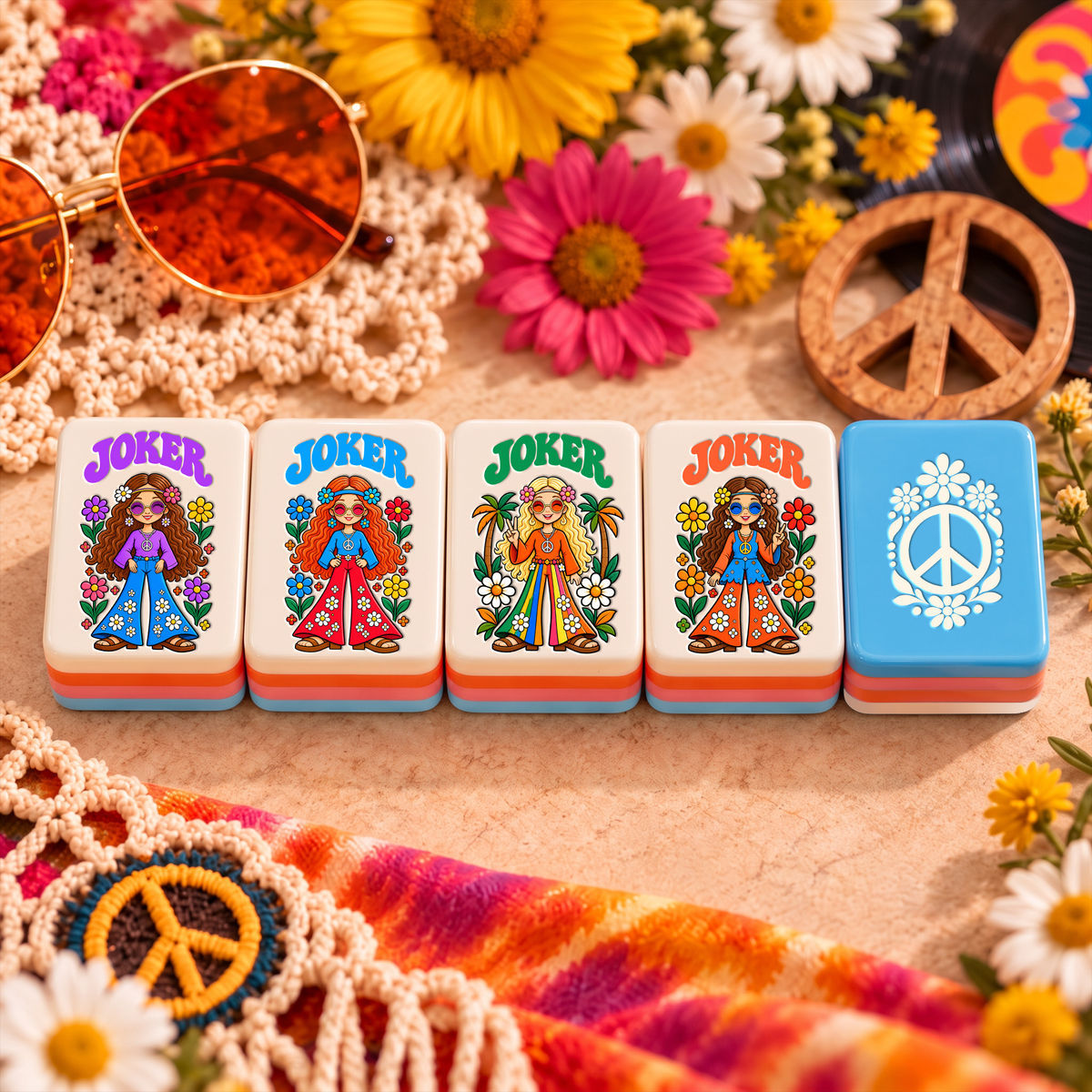
American mahjong has strict rules that trip up newcomers and veteran players alike. The most frequent mistakes include calling hands that don't appear on the current year's National Mah Jongg League card, using jokers incorrectly (especially in pairs or single tiles), building sequences where only pungs and kongs are allowed, miscounting the Charleston passes, and forgetting that the 1 Bam shows a bird. A game always uses exactly 152 tiles plus 8 jokers; never add spare tiles to play. Confusion often stems from mixing American rules with Chinese or Hong Kong variants, which have completely different hand sets, calling mechanics, and sequence rules. The fix: learn the League card first, master joker placement, and play from a fresh best-selling mahjong set so every tile is clear and consistent.
What tiles are in an American mahjong set—and why it matters?
An American set contains exactly 152 playing tiles: three suits (Bams, Craks, Dots) numbered 1–9 with four copies each (36 per suit), 16 winds (four each: North, East, West, South), 12 dragons (four Red, four Green, four White), and eight Flowers. A full game also includes eight Jokers. Many players confuse American sets with Chinese sets, which lack Flowers and use a different tile count. Misidentifying a tile—or adding spare tiles to play—breaks the game immediately. What's in an American mahjong set walks through every tile type. Always verify your set has the correct count before the first deal.
🀄 Shop best-selling mahjong sets →

Why can't I call a sequence like 3–4–5 Craks?
American mahjong does not permit chows (sequences). You may only expose and call pungs (three identical tiles) and kongs (four identical tiles). The National Mah Jongg League card lists valid hand combinations—all built from pungs, kongs, quints (five identical), sextets (six identical), and pairs; never sequences. This is the biggest rule gulf between American and Chinese mahjong, where sequences form the foundation of play. Many players moving from Chinese games get frustrated when their 1–2–3 hand is rejected. The fix: study the current year's League card before your first game. You'll see immediately that every hand follows the pung-and-kong pattern—no 1–2–3 anywhere. This single rule change transforms strategy entirely.
When and where can jokers go—and where can't they?
Jokers can substitute for any tile except in a pair or as a single tile. If a hand requires a pair of Red Dragons, you cannot use two Jokers—they must both be Red Dragons. Jokers also cannot stand alone; every Joker must be part of a pung, kong, quint, sextet, or Eye (the final pair after melds are complete). A common error: new players place a Joker alone and call it a pair, or use Jokers to complete a pair. Neither is legal. How jokers work covers this in depth. Check the League card before calling; if your meld has no Joker in the picture, do not use one. The rule keeps the game tight and prevents creative—but illegal—shortcuts.
How does the Charleston work, and where do players go wrong?
The Charleston is the tile-passing ceremony that begins every game: three rounds of passing (right, across, left) before play starts. Most players miscount the passes or pass in the wrong direction, or they pass back tiles that were just handed to them, which breaks the sequence. Some groups skip the Charleston entirely and deal straight from the wall—that's not American mahjong. The Charleston explained shows the exact steps. Count aloud: first right, then across, then left. Each round involves all four players simultaneously. A wrong direction derails the whole ritual. Practice the Charleston once before dealing hands; it takes 60 seconds and ensures fair tile distribution.
🎁 See our most-loved mahjong sets & accessories →
Why does the League card seem to change the rules every year?
The National Mah Jongg League issues a new card every spring. The card does not change the game rules; it changes the valid hands for that year. Your game rules (how to call, how jokers work, how to score) stay the same. But the specific combinations you can win with are printed on the card only—play is not legal off-card. Many players memorize a hand from three years ago and then get confused when it vanishes from the new card. The fix: buy a current printed card or app subscription from the League, or use Mahstead's best-selling mahjong sets, many of which come packaged with guidance on where to source the current card. Never rely on memory. Keep the card in your rack or bag so every player can check before a hand is called.

How do I avoid mixing up American rules with other mahjong variants?
Chinese, Hong Kong, Taiwanese, and Riichi mahjong are entirely different games with different tiles, hand rules, and scoring. A chow (1–2–3 sequence) is illegal in American mahjong but standard in Chinese. Flowers appear in American sets but not in Riichi. Kongs are called differently, and scoring is completely separate. The biggest trap: playing with someone who learned a different variant and assuming "mahjong is mahjong." It isn't. Before your first game with a new group, ask: "Are we playing American mahjong with the League card, or a different variant?" If American: get the current card, use a standard 152-tile set, and follow the pung-and-kong rules above. If another variant: learn that variant's rules separately. Do not mix them.
What equipment mistakes lead to rule confusion?
A worn or incomplete set introduces ambiguity: a faded Dot that looks like a Bam, or a broken Dragon tile. Players argue about what they're holding, and the game grinds to a halt. A cheap mat with faded numbers or a rac with broken pushers slows play and creates distractions. Jokers should always be distinguishable from regular tiles (usually a different color or pattern). If your set has unclear tiles, confusion blooms instantly. Upgrade to engraved American mahjong sets or new mahjong arrivals with crisp, readable engravings. A high-quality mahjong mat and racks with pushers keep tiles organized and visible. Good equipment prevents half the arguments.
Mistake | Why it matters | How to fix it | Result |
Calling off-card hands | Hand is illegal; game halts and score is void. | Check current League card before calling. | Smooth, valid game. |
Using Jokers in pairs | Violates core American rule; hand is illegal. | Study joker rules; verify meld on card first. | Faster play, fewer disputes. |
Passing wrong in Charleston | Tiles don't distribute fairly; unfair advantage. | Count passes aloud: right, across, left. | Fair deal every time. |
Adding spare tiles to play | Game must use exactly 152 + 8 Jokers, no more. | Remove spare tiles before dealing. | Accurate scoring, clear rules. |
Mixing in sequences | American mahjong forbids chows; hand rejected. | Study American card; memorize pung rule. | Fewer rejections, faster learning. |
Misidentifying suit | Confusion cascades; scoring becomes impossible. | Use sharp, engraved sets; practice tile names. | Confident, error-free play. |
Skipping the Charleston | Unfair tile distribution; game lacks integrity. | Perform all three passes every game without exception. | Standard, fair play. |
Comparison: American vs. other variants at a glance
Variant | Hand type | Sequences allowed? | Jokers work? | Yearly card? | Best for |
American | Pungs, kongs, pairs only | No | Yes (except pairs/single) | Yes (League card) | Social play, strict rules |
Chinese | Chows, pungs, kongs, pairs | Yes | Limited or no | No fixed card | Strategic play, flexible hands |
Hong Kong | Chows, pungs, kongs, pairs | Yes | Yes | Sometimes | Fast-paced, variable hands |
Riichi | Chows, pungs, kongs, pairs | Yes | No | No | Competitive, pure tile sets |
✨ Find your Mahstead set — free US shipping →
What to check before you buy a new mahjong set
Tile count: Verify the set contains exactly 152 playing tiles plus 8 Jokers (standard American).
Clarity: Tiles must be engraved or printed clearly; no fading, chipping, or ambiguous markings.
Completeness: Count all three suits, winds, dragons, and Flowers—missing tiles break the game.
Joker visibility: Jokers should look visually different from regular tiles (color, pattern, or marking).
Carrying case or bag: A quality travel bag protects tiles and keeps them organized between games.
Card access: Confirm you can get the current year's National Mah Jongg League card (app or print).
Racks and pushers: Crisp racks with pushers make tile organization effortless and reduce misdeals.

FAQ
Can I use a Chinese mahjong set to play American mahjong?
No. Chinese sets lack Flowers and have different tile counts and suits. American mahjong requires exactly 152 tiles including Flowers. Using a Chinese set breaks the game and makes scoring impossible.
What's the difference between a pair and a pung in American mahjong?
A pair is two identical tiles (used once per hand as the final Eye). A pung is three identical tiles (can appear multiple times in a hand). Sequences of numbers like 1–2–3 are never legal in American mahjong, even as pungs.
Do I have to use the current year's League card, or can I play off an old one?
You must use the current year's card. The League updates valid hands every spring, and hands not on the card cannot be called. Using an old card leads to invalid wins and disputes.
Why does my set have spare tiles if the game only uses 152?
Spare tiles (extra Jokers or blanks) are backups in case a regular tile breaks or is lost during play. They are never added to the game; keep them separate in the box or bag.
What happens if I call a hand that's not on the card?
The hand is rejected, you do not score, and play continues. This is why reading the League card carefully before calling is critical. Ask the other players to verify before you expose your tiles.
How many passes happen in the Charleston, and in which direction?
Three passes: first to your right, then across the table, then to your left. Each pass involves all four players simultaneously handing tiles at the same time. After all three rounds, the Charleston is complete and dealing begins.
Can I use a Joker as part of a pair?
No. Jokers cannot be used in a pair or as a single tile. A pair must be two identical regular tiles (e.g., two 5 Dots). Jokers can only substitute within pungs, kongs, quints, sextets, or as fillers in melds.
Why do people say the 1 Bam is a bird?
In traditional tile art, the 1 Bam is illustrated as a bird (usually a peacock or crane). This is a visual identifier to distinguish it from other Bams at a glance, especially useful in play.


View More
View More
View More
