
Common Mistakes in American Mahjong & How to Fix Them
Last updated: Nov 23, 2026
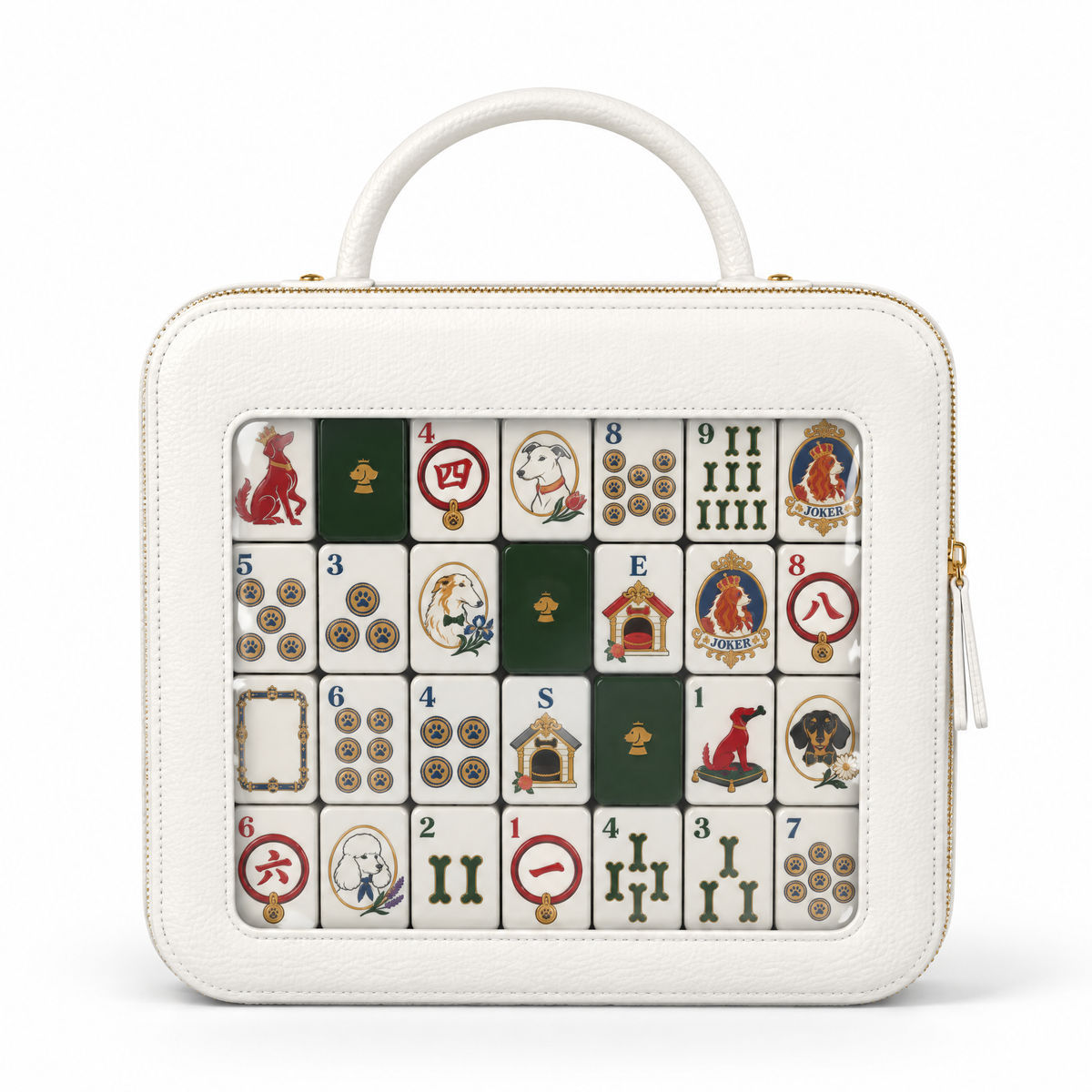
American mahjong players commonly misuse jokers (placing them in pairs or single tiles), misread the League card (confusing number sequences with suit rules), expose wrong tile counts (calling a pung of four instead of three), and fail to verify hand legality before declaring. The 152-tile standard deck plays only with hands from the current year's National Mah Jongg League card; jokers substitute for specific tiles in melds of three or more, never alone or as pair filler. Tile counts matter: a pung is always exactly three identical tiles, a kong exactly four, a quint five, a sextet six. Before you call Mah Jongg, check the card for your exact combination, confirm all jokers replace real tiles in legal melds, and count your hand total—14 tiles for Mah Jongg on your turn, 13 if you draw. A single wrong move cascades through scoring and table trust.
The moment a new player sits down at our table, we know two things: they'll learn fast, and they'll probably make one of five predictable mistakes in their first game. We've hosted enough weekly rounds to recognize the pattern—it's never about memory or intelligence, but about how American mahjong breaks its own intuitive rules in ways other tile games don't. The good news? Once you know the gotchas, you avoid them for good.
Why Do Players Misuse Jokers More Than Any Other Rule?
Jokers feel like wildcards that should do anything, but American mahjong locks them into one job: substitute for a specific tile inside a meld of three or more identical tiles. You cannot use a joker as a single tile, as part of a pair, or in place of a tile that belongs in a chow—American mahjong has no chows at all. The confusion usually starts because jokers are so visually prominent (often a bright color or emblazoned with a smiley), and new players think "wildcard" means "slot it anywhere." It doesn't. If you have two 5 Dots and a joker, the joker is a third 5 Dot pung; it is not a blank filler, not a substitute for any other number, and not a pair mate. We've seen players declare Mah Jongg with a hand that includes a joker as a "bonus" tile outside any meld—automatic busto. Before you finalize any hand, ask yourself: is every joker replacing one real tile inside a pung, kong, quint, or sextet? If you can't point to it, it doesn't belong there.
🀄 Shop best-selling mahjong sets →

What's the Most Common Mistake on the Mahjong Card?
The card is your law, but many players skim it. The biggest error is confusing a numeric range or suit rule with an actual playable hand. For example, you might see a row that says "Same number, all winds"—that means exactly those four tiles (North, East, West, South winds), not "any wind and any number." Or you miscount a pung line: the card might show a section for "three Bams (1, 5, 9)," and you think "I have three Bams, so I'm good"—but you might have three 1 Bams instead of one each of 1, 5, and 9. The card is literal; your hand must match letter-perfect. Before you call, place your tiles on the mat in the exact arrangement the card shows, then overlay your hand on top. Most card-reading errors vanish when you do this physical check. If anything is off, it's not a legal Mah Jongg, no matter how close. Learn to read the card the right way to avoid these slip-ups.
Do You Know Why Pung Counts Trip Up So Many Players?
A pung is three identical tiles—three 7 Dots, three North Winds, three Red Dragons. Yet we watch players grab four tiles and say "pung." That's a kong. Or they grab two tiles and a joker and hesitate because they know something is off. The rule is absolute: pung = 3, kong = 4, quint = 5, sextet = 6. No exceptions, no "close enough." The error usually happens when you're drawing, counting fast, or distracted by conversation. Your hand is illegal if a single meld is the wrong count. Stop and count on your fingers if you have to—we do. One tabletop tip: if you're building your hand during play and haven't yet exposed it, do a silent tile recount every few turns. Stack each meld and verify the number before you set it down. A 160-tile best-selling set gives you quality tiles that don't slip during a count recheck, so you can confidently verify your work without fumbling.
Why Does Hand Total Count Get Forgotten?
Your winning hand must total exactly 14 tiles on the player's turn, or 13 plus a draw if another player discards into your Mah Jongg. Many players lose track of this total mid-hand because they're focused on collecting a specific pattern. You think you have one more tile to get, so you draw, and you now have 15—you can't call Mah Jongg from an illegal count. The fix is simple: when you think you're close, count your entire hand face-up (you can do this privately on your rack without showing the pattern). If it's 13 or 14, you're legal; anything else means you're not ready yet. Some players deliberately hold extra tiles "just in case" and plan to discard later—this is sloppy and costs you if you miscalculate the discard. Build lean. Count often. Declare only when the math is certain.

What Happens If You Expose the Wrong Number of Tiles?
You can expose a pung (3), kong (4), quint (5), or sextet (6)—no other count is legal. If you expose four tiles intending a pung, you've broken the rule, and the table (and scorekeeper) will ask you to clarify or reverse it. Some tables enforce a hard penalty; others just correct the record before play continues. The safest play is to expose only after you're 100% sure of your count and your exact pattern—don't rush the motion. Slide your tiles forward with intention, count them aloud if anyone questions, and sit back. One mistake we see often: a player exposes a "quint" (five matching tiles) but hasn't declared that they're running a quint hand—this creates confusion about whether they intend to fill it into a sextet later, or whether they're over-claiming. Before you expose, know your final meld type and stick with it. Understand hand structures better with our guide to how to play American mahjong.
Mistake | What Happens | How to Avoid It | Impact on Game |
Joker in a pair | Hand is illegal; cannot declare Mah Jongg | Jokers only go in 3+ tile melds | Lose turn, reshuffle hand |
Wrong pung count (e.g., 4 instead of 3) | Meld is exposed incorrectly; confusion on intent | Count on fingers every time | Penalty or hand reversal |
Misread card pattern | Declare Mah Jongg on wrong hand | Place tiles to match card layout exactly | Busto, other players score |
Over 14 tiles | Cannot declare; hand is overfull | Recount before drawing | Forced draw/pass |
Joker in single tile slot | Illegal hand element | Never let a joker sit alone | Busto if declared |
🎁 See our most-loved mahjong sets & accessories →
How Does the Charleston Fit Into Early Mistakes?
The Charleston (the tile-passing ritual before play begins) is not where most rule errors happen, but it's where habits form. Many new players pass tiles carelessly, assume they know what they're doing, and then get confused mid-Charleston about who passes to whom or in which direction. The Charleston follows a strict order: right pass, across pass, left pass, then a blind pass if all four players agree. If you botch the order or pass to the wrong person, you're starting with a scrambled hand from the start. Slow down during Charleston. Make eye contact. Name the direction aloud—"passing right"—so everyone syncs. This one investment of 30 seconds upfront prevents 20 minutes of "wait, whose hand is messed up?" mid-game.
What Should You Check Before You Declare?
Before you call Mah Jongg, run a five-step checklist:
Tile count: exactly 14 (or 13 if you drew).
Card match: lay your tiles in the card's exact order; every element aligns.
Joker placement: each joker is inside a meld of 3+ tiles, never alone or in a pair.
Meld counts: each pung is 3, kong is 4, quint is 5, sextet is 6.
Identical tiles: every tile in a meld is the same (e.g., all three are 5 Dots, not mixed).
If any step fails, don't declare. Set the hand down, draw again, and try next turn. One premature busto ruins the round; ten seconds of double-checking saves it.
✨ Find your Mahstead set — free US shipping →
What to Check Before You Buy a Set
When you're shopping for a set to host your weekly game, avoid the frustration that comes from unclear tiles or poorly marked cards. Look for:
Clear tile markings: symbols should be distinct (bird on 1 Bam, no confusion on face tiles).
Smooth finish: tiles that move easily across a quality mat (not sticky or rough).
Bright, contrasting jokers: if your jokers don't visually pop, you'll miscount melds.
A current-year card: always confirm your set ships with the 2026 National Mah Jongg League card, not an outdated version.
Spare tiles included: a 160-tile set includes extra jokers and replacement tiles so you're never short mid-game.
If you're hosting regularly, invest in an engraved set with your group name or pair it with a dedicated mat to keep the game crisp and the rules visible.
FAQ
Can a joker ever be used as a pair?
No. In American mahjong, jokers may only substitute for a specific tile inside a meld of three or more identical tiles. A joker cannot be a pair mate, a single tile, or fill any other role.
What's the difference between a pung and a kong in tile count?
A pung is exactly three identical tiles; a kong is exactly four identical tiles. Both must be exposed on the mat before you can use them toward a Mah Jongg hand. Neither can be the wrong count.
If I accidentally expose four tiles instead of three, can I fix it?
It depends on your table rules, but the safest move is to not expose until you're certain of your count. If you do expose four, clarify immediately whether it's a kong or a pung-plus-one-error, and correct before play continues.
How do I know if my hand matches the card exactly?
Place your tiles on your mat in the same layout as the card shows, then compare one-to-one. Every tile type, number, and suit must align. If anything is off—even one wrong number—your hand is not legal.
Why is counting hand total so important?
American mahjong requires exactly 14 tiles on your turn to declare Mah Jongg, or 13 tiles plus a draw. If your count is wrong, you cannot declare, even if your meld pattern is perfect.
Can I play American mahjong with fewer than four players?
Yes, but the rules change. Special rules apply for two and three-player games, including different tile usage and discard piles. Check those rules before starting a reduced-player game.


View More
View More
View More
