
2468 Section of the Mahjong Card Explained
Last updated: Nov 23, 2026
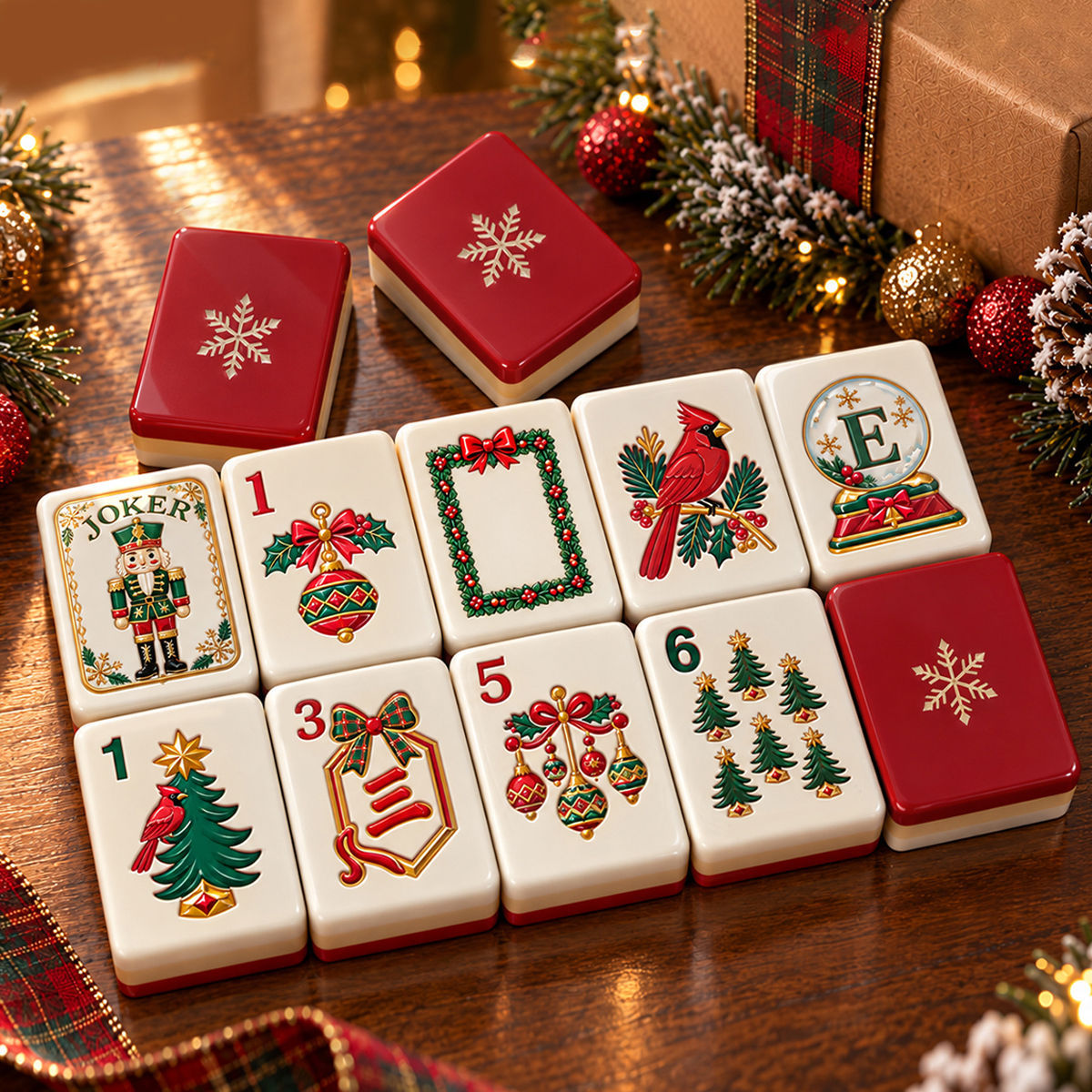
The 2468 section contains hands where all tile numbers are even (2, 4, 6, or 8). On the card, this section typically occupies one or two pages and is organized by hand type—such as Like Numbers, Consecutive Runs, or mixed exposed and concealed patterns. Each hand shows how many tiles are exposed (pungs, kongs, quints, sextets) and how many remain concealed in your hand. Most hands require all four copies of a number to form pungs or kongs, and jokers can fill gaps or complete exposures only under the card's strict rules for that year. The 2468 section usually contains 12–20 distinct hand patterns; once you spot the tile grouping, matching it takes seconds. Study your card before the game begins—Mahstead's best-selling mahjong sets come with printed cards, so you can drill hands at home and arrive at the table confident.
The 2468 section of the National Mah Jongg League card groups hands built from even-numbered tiles. On the card, this section typically occupies one or two pages and is organized by hand type—such as Like Numbers, Consecutive Runs, or mixed exposed and concealed patterns. Each hand shows how many tiles are exposed (pungs, kongs, quints, sextets) and how many remain concealed in your hand. Most hands require all four copies of a number to form pungs or kongs, and jokers can fill gaps or complete exposures only under the card's strict rules for that year. The 2468 section usually contains 12–20 distinct hand patterns; once you spot the tile grouping, matching it takes seconds.
What exactly counts as a "2468" hand?
Any hand where every single tile—both exposed and concealed—is numbered 2, 4, 6, or 8. A hand made of three 2 Bams, a pung of 4 Craks, a kong of 6 Dots, and a pair of 8 Winds qualifies. The name comes from the digits themselves, not from the card layout. When you draw your thirteen tiles, you instantly know if you're chasing 2468: all your tiles match that constraint or you discard immediately and hunt a different hand. This is why the 2468 section feels locked—there's no mixing 2468 tiles with odd numbers (1, 3, 5, 7, 9); the card forbids it.

Where do you find 2468 on the card?
The card is divided into sections by hand pattern type and number constraints. The 2468 section sits near the front, right after odd-number or mixed sections (depending on that year's card layout). Turn to the table of contents printed on most cards—it lists "2468" or "Even Numbers" with a page number. If your card doesn't have a contents page, scan the top header of each page; you'll see the section name. The section opens with simple hands (Like Numbers: all 2s, all 4s, all 6s, all 8s) and progresses to mixed patterns (2 Bams with 4 Craks and 6 Dots, for example). Within 2468, hands are further sorted by exposure level—how many tiles you show versus keep hidden. This sorting helps you scan faster: if you have mostly concealed tiles, skip the "all exposed" subsection and jump to "5 concealed" or similar.
How many exposed tiles do 2468 hands typically have?
2468 hands vary widely in exposure. A hand might show zero tiles (all concealed), three pungs (9 exposed), a kong and two pungs (11 exposed), or even a sextet and a pung (10 exposed). The card lists each hand's exposure count in the hand notation. For example, a hand reading "2P 4P 6P 8P 2P" means two pungs of evens (exposed) plus one pair (concealed) = 6 exposed, 7 concealed. Some 2468 hands require heavy exposure—five or six exposed groups—which means you're fishing for specific tiles to complete them. Other 2468 hands are mostly concealed, giving you flexibility in draw order. Study the exposure structure before the game: if you're holding mostly odd numbers, don't commit to a heavily concealed 2468 hand because you'll need to draw twelve more specific tiles. How to read a mahjong card covers the full notation system in detail.
🀄 Shop best-selling mahjong sets →
What role do jokers play in 2468 hands?
On the current year's card, jokers can substitute for missing tiles in exposed groups only—never in concealed tiles or pairs. A 2468 hand with a kong of 4 Bams can use a joker to replace a missing 4 if you've drawn only three 4 Bams. However, jokers follow strict limits: the card specifies how many jokers a hand permits, and you cannot use more than that limit. Many 2468 hands allow one or two jokers; some allow none. Also, jokers cannot form a tile by themselves or sit in a pair—a pair must be two identical tiles from the wall. When studying 2468 hands, note the joker allowance next to each hand on the card. If a hand permits zero jokers and you're down to one 4 Bam with two jokers in hand, you cannot use that hand. How jokers work explains substitution rules in full detail and common mistakes that lead to invalid melds.

How do you spot a 2468 hand quickly at the table?
The fastest method is pattern matching: count your even tiles first. If you have six or more even-numbered tiles, check if they form natural groups (two 2s, two 4s, one 6, for example). Then glance at the 2468 section of your card and run your finger down the hands, looking for that exact combination. If your hand shows five evens and eight odds, 2468 is not your hand—move on. Many experienced players memorize the most common 2468 hands (straight runs of 2-4-6-8, all pungs of evens, mixed sets with one suit dominating). Drilling at home with a printed card before game night is the real win: pick ten 2468 hands and practice spotting them in random tile combinations. Time yourself. After two weeks of practice, you'll recognize 2468 hands in three seconds flat. A mahjong mat with a card pocket keeps your studied reference visible and protected during play.
🎁 See our most-loved mahjong sets & accessories →
Quick Comparison: 2468 Hand Types and Exposure Levels
Hand Pattern | Example | Exposed Tiles | Concealed Tiles | Jokers Allowed | Best For |
All 2s pung, 4s pung, 6s pung, 8s pair | 2B 2B 2B / 4C 4C 4C / 6D 6D 6D / 8W 8W | 9 | 4 | 0–1 | Quick melds early game |
2 Bam, 4 Crak, 6 Dot sequence (three sets) | 2B 2B 2B / 4C 4C 4C / 6D 6D 6D / 4W 4W | 9 | 4 | 1–2 | Flexible draw order |
Heavy exposure (sextet + pung + pair) | 2B 2B 2B 2B 2B 2B / 4C 4C 4C / 8W 8W | 10 | 3 | 0–2 | Aggressive players |
Mostly concealed (pung + pair + mixed) | 2 Bam Pung exposed, rest hidden | 3–6 | 7–10 | 0–1 | Conservative draw |
Common mistakes when reading 2468 hands
Mistake 1: Mixing even and odd numbers. You hold 2 Bam, 3 Crak, 4 Dot, 6 Dot, 8 Wind and assume it's a 2468 hand. It's not—the 3 Crak disqualifies it instantly. Always check every tile.
Mistake 2: Forgetting the pair must be two identical tiles. A hand requires a pair of 2s, not a 2 and a 4. The card notation shows the pair explicitly; don't skip reading it.
Mistake 3: Exceeding joker allowance. The card says one joker maximum for a hand, but you meld with two jokers. Invalid—your win doesn't count.
Mistake 4: Using jokers in concealed tiles. You keep three 2 Bams (visible) and two jokers (concealed) as your hidden tiles. Wrong—jokers only substitute in exposed groups. The pair and concealed sets cannot contain jokers.
Mistake 5: Not noticing exposure constraints. A 2468 hand requires "all exposed" or "1 concealed"—you hold it mostly concealed anyway and waste time waiting for the exact meld. Read the exposure requirement first.
✨ Find your Mahstead set — free US shipping →
Study steps: mastering 2468 before game night
Print your card or buy a set with a printed card. You cannot study from memory; the card is law.
Highlight the 2468 section. Use a colored marker to flag the pages so you find them fast under pressure.
Read five 2468 hands aloud. Say each hand notation out loud: "Pung of 2 Bams, pung of 4 Craks, pung of 6 Dots, pair of 8 Winds." This locks it in your memory.
Draw random tiles and match them. Ask a friend to hand you thirteen tiles; you spot which 2468 hand (if any) you can win.
Practice in real draws for one week. Play casual games and only chase 2468 hands. Track how fast you spot them.
Move to mixed-section play. Once 2468 feels automatic, add 1357 (odd) hands and alternating sections to your study.
A mahjong rack with pushers keeps your tiles organized during this drill, so you can see each hand clearly without fumbling.
What to check before you buy a new card or set
Card year: The National Mah Jongg League card changes every spring. Check the year printed on the front. A 2025 card and a 2026 card have different hands—using last year's card in tournament or club play is against the rules.
Card readability: Font size matters when you're under pressure. A tiny 8-point card forces squinting; choose 11-point or larger if your eyes are aging.
Set tile count and quality: A standard American game uses exactly 152 tiles. Best-selling mahjong sets include a printed card and sturdy tiles that survive weekly play.
Joker clarity: Count the jokers in your set. You need exactly eight jokers for legal American play. If your set is missing jokers, you cannot run a full game.

FAQ
Can a 2468 hand include wind or dragon tiles?
Yes. Winds (North, East, West, South) and Dragons (Red, Green, White) are never numbered, so they don't conflict with the 2468 constraint. A hand of 2 Bam pung, 4 Crak pung, 6 Dot pung, and a pair of East Winds is a valid 2468 hand. The "even number" rule applies only to numbered tiles.
What if I have some 2468 tiles and some odd tiles but they form a punishable pattern?
You cannot play a mixed hand (both even and odd tiles) in the 2468 section. Only hands listed in that section are legal. If your tiles don't match a specific 2468 hand on the card, you must discard and hunt a different section or call "no hand" if you cannot win.
Do jokers in a 2468 hand have to be marked or placed differently?
No. Jokers sit in their position within the exposed group just like regular tiles. However, many players place a small marker (a paper flag or colored clip) under a joker to remind everyone—especially the player keeping score—which tiles are wild. Check your table's local rule before the game starts.
If I expose a pung of 4 Bams and later draw the missing 4 Bam, can I swap out the joker I used?
No. Once you meld a group with a joker, the joker stays. You cannot remove it and replace it with the real tile. This is a core rule: jokers are permanent once exposed.
How many 2468 hands are typically on the card each year?
The count varies year to year based on the League's design. Most cards include 12–20 distinct 2468 hands spread across simple (like numbers) to complex (mixed exposure) patterns. Check your card's table of contents or count them yourself when you first open the card.
Can I use the same 2468 hand twice in a single game if circumstances allow it?
No. In American mahjong, each player wins once per game using one specific hand. Once you win with a 2468 hand, that game ends. You cannot win twice or use the same hand pattern twice in one game.


View More
View More
View More
