
Where to Learn Mahjong Competition Rules: American & Variants
Last updated: Nov 23, 2026
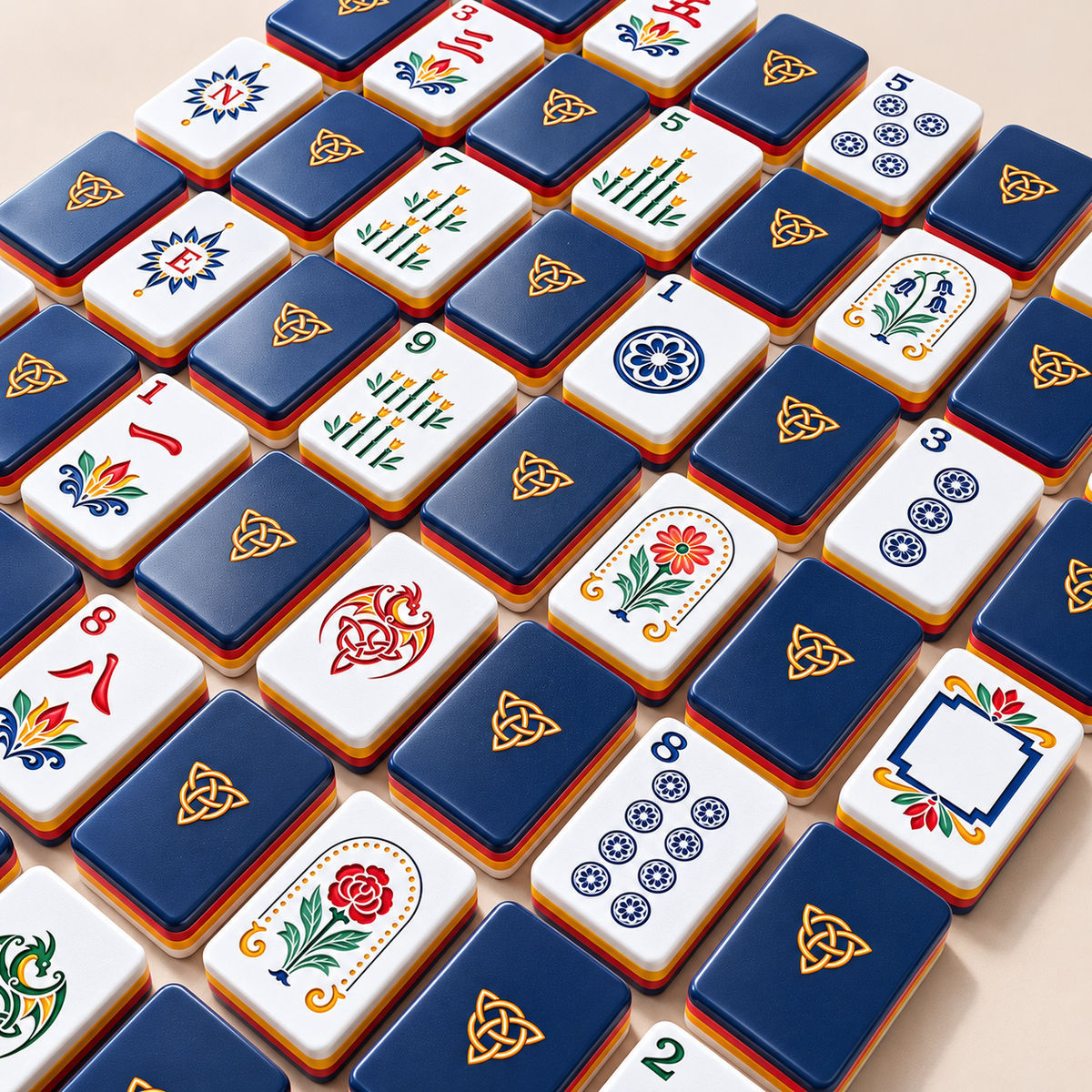
Competition mahjong rules center on the National Mah Jongg League (NMJL) card, issued every spring, which dictates all legal hands for American mahjong. The NMJL publishes the official rulebook and card; you order both through their website or local clubs. Learn the Charleston tile-passing ritual, hand-calling procedures, scoring, and joker mechanics—typically taking 4–8 weeks of weekly practice to play confidently. The rulebook covers hand validity, table talk, dead wall procedures, and how to handle disputes; variant rules (Chinese, Hong Kong, Riichi, Taiwanese) differ significantly in hand structure, calling rights, and scoring. Mahstead's best-selling mahjong sets include a reference card pocket—perfect for keeping rules at the table while you learn.
Why does the NMJL card matter so much?
The NMJL card is the only source of legal hands in American mahjong. Unlike Asian variants that allow any meld combination, American play restricts you to patterns printed on that year's card. You cannot go to mah-jong without it. The card changes yearly, so players study the current year's version. You need one physical card at the table and mental familiarity with at least 20–30 patterns before playing in a game. Without the card, you're guessing; with it, you're playing by the rules everyone else follows.
🀄 Shop best-selling mahjong sets →

How do you access official NMJL rules and the card?
The NMJL (National Mah Jongg League) sells the annual card and rulebook directly through their website—search "NMJL" online and visit their shop. Local mahjong clubs, libraries, and community centers in cities with active play (check senior centers, synagogues, or country clubs in your area) stock copies or offer group discounts. Many clubs hold teaching nights where experienced players walk beginners through the card's layout and scoring. You pay a flat fee for the card plus rulebook; no subscription needed. The physical card fits in your pocket or set bag, and most sets include a small reference card for quick lookups during play.
What's the difference between American rules and other variants?
Variant | Hand Structure | Calling Rights | Scoring Method | Card Needed? | Best for |
American | Melds from NMJL card only | Limited; card-dependent | Points per hand, no doubling | Yes, mandatory | Formal clubs, tournaments |
Chinese (Classical) | Any pung/kong/chow combo | Free; call any legal set | Fan/points scale | No | Casual, family play |
Hong Kong | Specialized patterns | Limited; hand-specific | Limit scoring + bonuses | No | Speed, street play |
Riichi | Closed hand + one pair | Strict tile-by-tile calling | Mangan/limit system | No | Competitive, Japan-origin |
Taiwanese | Mixed melds + sequences | Moderate | Double/limit system | No | Taiwan/diaspora clubs |
American mahjong forbids sequences (chows)—you can only expose pungs (3), kongs (4), quints (5), and sextets (6). Chinese and variants allow sequences freely. American jokers cannot appear in single tiles or pairs; Riichi and Chinese have no jokers at all. Scoring in American is hand-based points per the NMJL card; Chinese uses a fan/double system that can multiply quickly. If you're joining a formal club, learn American first; if playing casually with family, Chinese gives more flexibility.
Where should you practice before joining a game?
Start with a friend or family member who already plays—ask if they'll do a teaching round where you ignore scoring and focus on tile recognition, melding, and calling procedures. Many cities host beginner nights at community centers or libraries; search "[your city] + mahjong club" or check Meetup boards for game announcements. Online platforms (search "mahjong solitaire" or "online mahjong practice") let you drill hand-matching and tile mechanics without real stakes. Buy or borrow a 160-tile American mahjong set and practice shuffling, building the wall, and the Charleston pass sequence. Read through the NMJL rulebook's section on disputes and dead wall procedures—these come up fast in real games. Aim for 3–5 practice sessions with a coach or experienced player before sitting at a competitive table.

What mistakes do beginners make with competition rules?
Calling too early: New players call "pung" the moment they see three matching tiles, then realize they still need to wait for a legal winning hand. Sit on melds until your winning hand matches the card exactly.
Confusing joker placement: Beginners often put a joker in a single-tile slot or as a pair, which breaks American rules immediately. Jokers replace only tiles within a pung, kong, quint, or sextet—never alone or as a pair.
Misreading the card layout: Each pattern row shows the melds in order; new players miss which tiles must be identical versus which can include jokers. Study a few rows with a mentor before play to learn the card's format.
Ignoring the Charleston: Skipping proper tile-passing or passing incorrectly stalls the game and can lead to a dead wall situation. Practice the three passes (right, across, left) until it's automatic.
Dead wall errors: Players forget which tiles stay in the dead wall or don't realize they cannot draw from it mid-game except for loose tiles. Verify dead wall setup with the table before starting.
Not tracking what's been played: Competition requires tracking discards to deduce remaining tiles. Keep older discards in a clear line; don't shuffle or hide them.
How do competition formats differ from casual play?
Casual play often skips the NMJL card, allows house rules, and forgives missteps. Competition play enforces every rule, penalizes missteps with replay or score adjustments, and may include time limits. Tournament games rotate seating and dealer position to ensure fairness; casual games may stay seated all night. Scoring is tracked cumulatively across multiple games (typically 4 rounds = 1 "sit"); casual play often scores only per hand. Rule disputes in tournaments go to a designated arbiter; casual games settle by table vote. If you want to compete, commit 2–3 months to weekly games under a club's rules to internalize the format.
🎁 See our most-loved mahjong sets & accessories →
What to check before you buy a set for competition play
Tile readability: Competition requires clear suit symbols (Bam, Crak, Dot) and numbers—avoid sets with worn or faint markings.
152-tile count: American tournament play uses exactly 152 tiles plus 8 jokers; confirm your set includes this count (160-tile sets have spares for backup).
Rack and pusher combo: Competition tables expect clean, fast tile management; racks with pushers speed up your game and show you're serious.
Mat with clear marking zones: A mahjong mat prevents tile spillage and keeps the dead wall in the right spot—especially in crowded tournament rooms.
Bag or case for portability: You'll carry your set to clubs and games; a travel bag or case protects tiles and keeps everything organized.
Card pocket or reference guide: Look for sets that ship with a pocket-sized NMJL card or cheat sheet—Mahstead's sets include this feature for quick rule lookups mid-game.
✨ Find your Mahstead set — free US shipping →

FAQ
Can I learn American mahjong rules from online videos instead of joining a club?
Videos teach basics, but competition requires real-table practice. You'll miss the Charleston ritual, how tiles feel, speed of play, and how seasoned players spot rule breaks. Watch videos first, then join a club for hands-on coaching—rules stick faster in live games.
Do I need to memorize the entire NMJL card before my first game?
No. Learn 15–20 common patterns and the card's overall layout; you'll reference the card during play. Memorization comes naturally after 10–15 games. Competitive players eventually internalize 50+ patterns, but beginners start small.
What happens if I call a hand incorrectly during a tournament game?
The hand is typically declared void (dead), play resumes from the discard point, and scoring may be adjusted per club rules. Some clubs penalize with a score reduction. Always verify with the arbiter or table captain before the game starts.
Are Asian mahjong rules easier or harder than American rules?
Different, not easier or harder. Chinese mahjong is more flexible (any meld, no card) but has a complex fan/scoring system. American is rigid (card-only) but scoring is simpler once you memorize the card. Choose based on your community—play what others play locally.
How long does a formal tournament game last?
One round (dealer change or 4 hands) typically takes 45–90 minutes depending on table speed and disputes. A full tournament sit (usually 4 rounds) runs 3–5 hours. Casual games move faster or slower depending on experience and chat level.
Can I use a 160-tile set for NMJL competition?
Yes. American tournament play uses 152 tiles; a 160-tile set contains the full 152 plus spares (extra jokers and/or blanks). Only play with the base 152 tiles, stored per NMJL protocol—never add the spares to the game.


View More
View More
View More
