
American Mahjong Terms and Glossary: Every Word You Need
Last updated: Nov 23, 2026
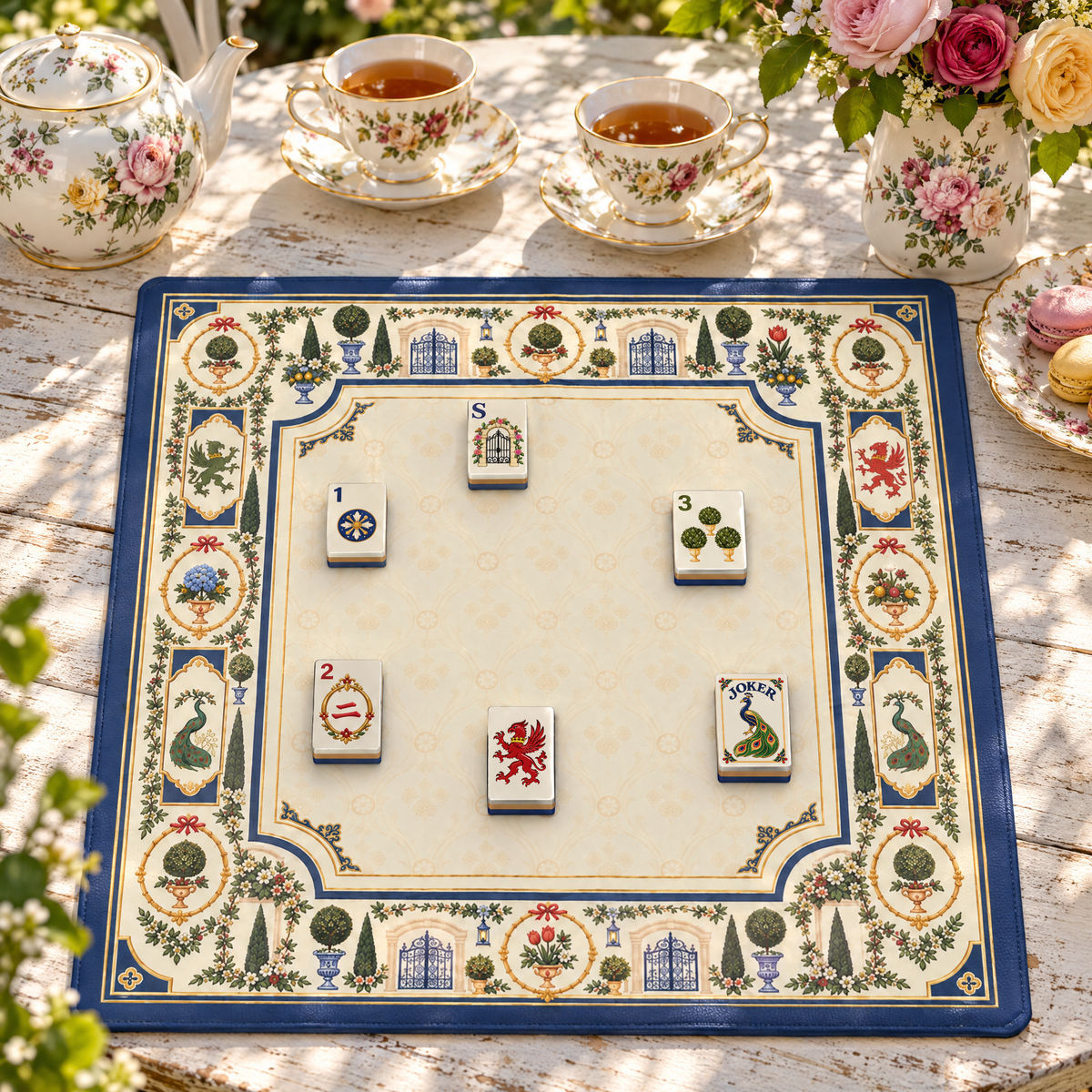
American mahjong uses distinct terminology for tile groupings, game mechanics, and calling conventions that differ sharply from Chinese or Riichi variants. Key terms include pung (three identical tiles), kong (four identical tiles), quint (five identical), sextet (six identical), and joker substitution rules unique to the American game. The Charleston is the tile-passing ritual before play begins. Hands come only from the current National Mah Jongg League card (refreshed each spring), and you call hands by matching specific patterns—never by building sequences or chows. Understanding these terms—from wind tiles and dragon tiles to exposed melds and the wall—is essential for participating in any American game.
What are the four tile suits and how do you read them?
American mahjong uses three numbered suits plus honor tiles. Dots show circular pips (0–9 pips), Bams show bamboo sticks (one Bam has a bird), and Craks show Chinese characters. Each numbered suit runs 1 through 9, and you'll see each number in four copies per suit. Honor tiles include four wind tiles (North, East, South, West—one of each), twelve dragon tiles (four Red, four Green, four White or "Soap"), and eight flower tiles. The White Dragon also represents zero in scoring notation. Learning to name tiles aloud—"two Craks," "East wind"—speeds up calling and limits confusion.

What does it mean to call a hand, and what's an exposure?
When you match all your tiles to a pattern on the current year's League card, you call "Mah Jongg" to win the hand. Before calling, you typically expose melds (three, four, five, or six identical tiles) to the center of the table so other players verify them. In American mahjong, you can only expose pungs, kongs, quints, and sextets—never sequences or chows. An exposure must contain jokers only as wild tiles substituting for missing identical tiles; jokers cannot form a single tile or pair. Once exposed, a meld stays face-up and locked; you cannot rearrange it. Understanding exposures matters because they signal to other players which tiles you need and which you're blocking.
What is the Charleston and why do players dread it?
The Charleston is the tile-passing ritual before play begins—East passes three tiles right, then three tiles left, then one optional exchange. Each player receives tiles discarded by neighbors, reshuffles their hand, and draws the first tile from the wall. It's not random; experienced players use the Charleston to seed specific tiles and read what opponents might be hunting. The Charleston rhythm—right, left, then optional trade—must be followed exactly. New players often pass in the wrong order or hesitate on timing; watching a few games live before your first Charleston removes most anxiety. The term comes from the 1920s dance craze, not from the city (though the game was popular in the US South).
What is the wall and how does drawing work?
The wall is the face-down stack of 152 tiles arranged in a square at the table center. The dead wall is a subset of 14 tiles set aside at the start; you draw from it only when you've just played a kong. Drawing happens in a strict order: East draws first before any discard, then South, West, North, and the cycle repeats. When you draw a tile, you take it from the outer face of the wall (the edge closest to you). If you claim a tile from another player's discard—a process called claiming or drawing—you draw from the wall afterward to maintain 14 tiles in hand. The wall shrinks predictably; when it runs out, the hand ends in a draw. Understanding the draw sequence prevents slow games and false calls.
What are the key penalty terms and special situations?
A dead hand results from invalid play (wrong tile count, illegal exposure, or calling a hand not on the current card). The player sits out that hand, and play continues with three remaining players. A kong replacement lets you draw a tile from the dead wall after you've declared a kong; you then discard one tile, keeping 14 in hand. A robbing the kong situation arises when another player forms a kong and you hold the fourth identical tile—rarely applicable in modern League play but still named. Going out means calling Mah Jongg; if your hand fails verification, you are dead and pay penalties to all players. Flowers are bonus tiles drawn from the wall; when you draw one, you replace it immediately with a tile from the dead wall and don't discard until your next turn. These terms prevent disputes and ensure fair play.
Quick Reference: Core Terms by Category
Category | Term | Definition | Example |
Melds | Pung | Three identical tiles | Three 5 Dots |
Melds | Kong | Four identical tiles | Four West winds |
Melds | Quint | Five identical tiles (rare) | Five 3 Craks + 1 joker |
Melds | Sextet | Six identical tiles (rarer) | Six 7 Bams |
Play | Exposure | Face-up meld shown at table center | Pungs placed during turn |
Play | Draw | Taking a tile from the wall | After your discard |
Play | Discard | Placing unwanted tile in center | After drawing |
Ritual | Charleston | Pre-game tile exchange (East right, left, optional) | First action before round |
Tiles | Honors | Winds and dragons (non-numbered) | Red, Green, White, N/E/S/W |
Call | Mah Jongg | Winning hand announcement | Matches current year's card |
How do jokers function and when can't you use them?
Jokers are wild tiles that substitute for any missing tile in an exposure or a final hand. You can place a joker in a pung, kong, quint, or sextet to stand for the absent fourth, fifth, or sixth copy. Crucially, a joker can never form a single tile or pair—if you need just two identical tiles for a pair, you must have two real tiles. This rule stops players from faking final hands. When you use a joker in an exposure, it's locked in place; you cannot swap it out later. A single deck usually contains eight jokers; Mahstead's 160-tile sets include extra joker tiles so you have spares if one is lost or damaged. Understanding joker limits prevents illegal calls and keeps the game honest.
What's the difference between a standard hand and a special hand?
Every valid hand on the current League card is standard—it uses your 14 tiles (in hand and one drawn) to match a specific pattern. Most patterns require three or four melds plus a pair. A special hand doesn't exist as a formal category in American mahjong; instead, hands vary by point value based on the League card patterns. Some patterns score higher (and are rarer) than others. The card is reprinted every spring with new patterns, so no two years share identical hands. This rotation keeps the game fresh and prevents memorization. If you're new, our guide to reading the mahjong card walks you through finding patterns in your hand.

What does "going dead" mean and what's the penalty?
Going dead means your hand is invalid—you have the wrong tile count, exposed an illegal meld, or called Mah Jongg when your tiles don't match the card. When you go dead, you pay all players—typically double the hand's point value—and sit out the remainder of that round. No one else collects points for the hand; the wall stays intact for the remaining three players to finish. Calling a hand you haven't verified against the card is the most common way beginners go dead. Always lay your tiles down, match them visually to the card, and have a second player confirm before announcing the win. Learning American mahjong rules thoroughly upfront saves embarrassment and cash.
🀄 Shop best-selling mahjong sets →
What should you check before playing with a new set?
Count your tiles before the first hand: a full game uses exactly 152 tiles plus 8 jokers. Mahstead 160-tile sets include 152 playing tiles and spare jokers so you always have backups. Make sure all numbered suits run 1–9, you have four of each wind, and four each of Red, Green, and White dragons. Missing even one tile breaks the game. Store your set in a padded bag to prevent chipping; acrylic tiles last decades with care. Check that jokers haven't faded or cracked—they're the most-used tiles in every hand. Before your first game, practice reading the card with a friend who knows the patterns; a 30-minute orientation prevents hours of confusion. Quality sets come with clear plastic racks (with pushers) and a mat so you can organize your hand and keep tiles aligned—both hugely helpful for beginners.
Does American mahjong use different terms than Chinese or Riichi?
Yes, terminology diverges sharply. American mahjong has no chows or sequences that can be called; Chinese and Riichi allow them. American uses pung, kong, quint, sextet; Chinese uses pung, kong, chi (chow). The American Charleston has no Chinese or Riichi equivalent. Flowers in American are bonus tiles drawn from the wall; in Chinese, flowers can be part of melds. Riichi mahjong uses dora, tsumo, and ron (self-draw and win-from-discard calls) which don't exist in American. American hands are always taken from the current League card; Chinese uses a large pool of traditional patterns. If you learn one variant well, switching to another requires unlearning rules and relearning new terms. Most American players stick to one variant; branch out only after you're solid on the basics.
🎁 See our most-loved mahjong sets & accessories →
What are wind and dragon tiles, and why do they matter?
Wind tiles represent the four cardinal directions: North, East, South, West—one of each per direction (four per tile total). East wind is the first dealer in each round; it rotates after each hand. Dragon tiles come in three colors: Red (associated with Craks), Green (associated with Bams), and White or "Soap" (associated with Dots, and also represents zero). You can form pungs or kongs with any of these honor tiles. Many hand patterns on the League card require honors—for example, a pattern might need two dragon tiles plus melds of numbered suits. Learning to name them aloud prevents confusion: "East," "Red Dragon," "Green Dragon," not colors alone. Wind tiles also track game rotation; memorizing which player is dealer, who receives passes during the Charleston, and how East moves clockwise is essential.
How do you score a hand and what do hand values mean?
Each pattern on the current League card has a point value, usually ranging from 20 to 70 points (based on rarity and difficulty). The player calling Mah Jongg collects that point value from each player—so a 40-point hand nets 120 points total. Penalty scores are typically double the hand value; if you go dead on a 40-point hand, you pay 80 points to each player. Scoring happens in rounds: play continues until one player wins four rounds or reaches a target score (often 1000 points). American mahjong scoring is detailed in dedicated guides that show how to track points and calculate final standings. Beginners sometimes memorize only a few point values and guess the rest; always check the card each time you call. Having a printed mat with scoring notes at the table keeps everyone on the same page.
✨ Find your Mahstead set — free US shipping →
What to check before you buy a mahjong set:
Tile count: Confirm the set is 152 tiles (play set) plus spares.
Suit clarity: Can you see the bird on the 1 Bam? Are Craks and Bams distinct?
Joker quantity: Do you have at least eight jokers for a full game?
Racks and mat: Does it include pushers so you can organize your hand vertically?
Storage: Is there a padded bag to protect tiles during travel?
Card: Does it ship with the current year's National Mah Jongg League card?

FAQ
What's the difference between "pung" and "kong"?
A pung is three identical tiles; a kong is four identical tiles. Both must be of the same tile (e.g., three Red Dragons or four North winds). You expose both face-up at the table. Kongs earn higher point bonuses because they're harder to complete.
Why can't jokers form a pair?
American mahjong rules prevent using jokers for pairs to stop false calls. If you need just two identical tiles, both must be real tiles from the deck. This ensures hands are verified and legitimate before payout.
What happens if I draw a flower tile from the wall?
You set it aside immediately, draw a replacement from the dead wall (without discarding), and continue your turn normally. Flowers are bonus tiles that don't change your hand count but give you an extra draw—a strategic advantage players watch for.
Can I use the same joker in multiple exposures?
No. Each joker is a single physical tile. Once placed in an exposure on the table, it stays there and cannot be moved or reused. You need multiple jokers if you want to use them across different melds.
How do I know if my hand matches the card?
Lay all 14 tiles down in front of you (hand plus the one just drawn). Flip open the current year's League card, find the patterns, and trace your tiles onto each pattern line-by-line. Ask another player to verify before calling. Most mistakes happen from skipping the verification step.
What's the penalty if someone calls a dead hand?
The player pays double the hand's point value to all three other players and sits out the rest of that round. The remaining three players continue with the wall until someone wins or it runs out.
Are American mahjong terms the same across all regions in the US?
Almost always, yes. The National Mah Jongg League standardizes terminology nationwide. Regional variations in house rules exist (especially scoring bonuses), but terms like "pung," "Charleston," and "going dead" are universal.


View More
View More
View More
