
History of Mahjong Solitaire: From Ancient Game to Modern Puzzle
Last updated: Nov 23, 2026
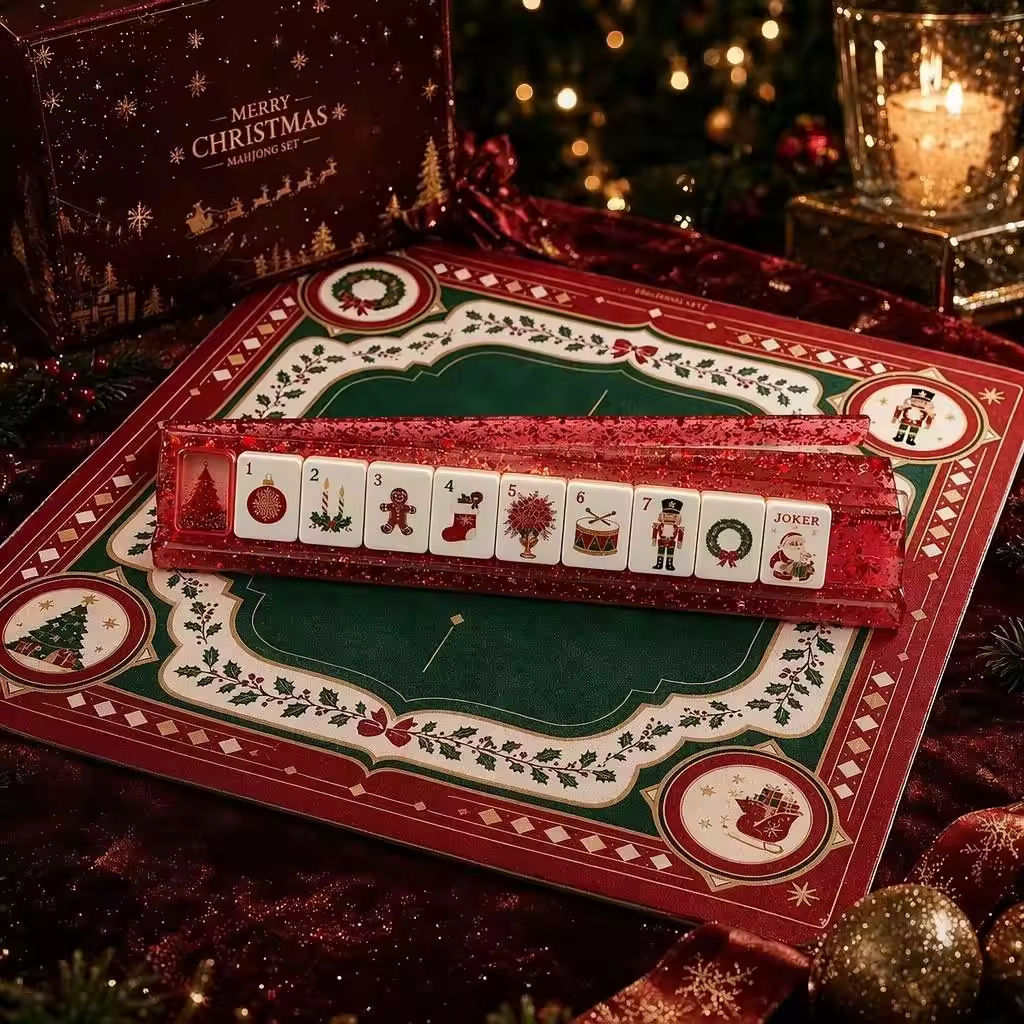
Mahjong solitaire is a modern single-player puzzle game that emerged in the 1980s, inspired by the classical four-player Chinese game of mahjong. Unlike the original, which involves melding, drawing, and competitive scoring, solitaire removes tiles from a stacked layout by matching pairs—typically identical symbols or ranks. The game became a cultural phenomenon through digital versions released on early personal computers, particularly on Windows in the 1990s, where millions played free bundled editions. Today it exists as software, mobile apps, and physical tile sets from makers like Mahstead, though purists distinguish it sharply from American mahjong, which follows the National Mah Jongg League rulebook and requires four players. The puzzle variant has no official winning hand structure—victory simply means clearing the entire layout—making it accessible to anyone, regardless of whether they know competitive mahjong rules.
Where did mahjong solitaire actually come from?
Mahjong solitaire was invented in the 1980s and is not a historical variant of the original 19th-century Chinese game. Computer programmers in the West, inspired by the aesthetic and symbolic richness of traditional mahjong tiles, created a tile-matching puzzle that could run on personal computers. The game borrowed the tile imagery—Bams, Craks, Dots, winds, dragons, and flowers—but discarded the complex melding rules, competitive play, and multiple rounds of the classical game. Early digital versions, particularly bundled with Windows operating systems in the 1990s, introduced millions to the mechanic of matching and removing pairs. By the 2000s, the puzzle had spawned countless variations, including digital apps, physical board games, and physical tile sets designed specifically for tabletop play.
🀄 Shop best-selling mahjong sets →

How does solitaire differ from traditional four-player mahjong?
The original mahjong is a complex four-player game involving strategy, drawing, discarding, and melding tiles into sets—played with a current-year hand chart and subject to strict rules enforced by leagues. Mahjong solitaire requires only one player, no partner, no chart, and no melding rules. You match pairs of identical tiles and remove them from a fixed layout until none remain. Traditional mahjong uses exactly 152 tiles in structured play; solitaire uses a stacked physical or digital board where tiles are arranged in often-pyramid or pattern shapes. Solitaire has no scoring system tied to hand value—you simply win or lose by clearing (or failing to clear) the board. The original game is competitive and driven by luck and hand-reading skill; solitaire is purely logic and tile-spotting.
Why did mahjong solitaire become so popular on computers?
Mahjong solitaire succeeded as software because it required minimal computing power, ran smoothly on 1990s personal computers, and offered unlimited replay value with procedurally generated or hand-designed layouts. The visual appeal of colorful tile graphics—combining Eastern aesthetics with Western game design—attracted casual players who had no interest in learning competitive mahjong rules. Digital versions eliminated the need for a physical board, table space, or multiple players, making it portable and solitary. The tile-matching mechanic is intuitive: anyone can understand "find two matching pairs and remove them" within seconds. Free bundled versions, particularly on Windows systems, achieved massive distribution. The game also adapted well to mobile and web platforms, sustaining popularity into the 2010s and 2020s through apps and browser-based clones.
Format | Year emerged | Players | Requires rules learning | Tile count basis |
Classical Chinese mahjong | 1880s–1920s | 4 | Yes, extensive | 108–144 tiles per region |
American mahjong (NMJL) | 1920s–1937 onward | 4 | Yes, yearly card | 152 tiles + 8 jokers |
Mahjong solitaire (digital) | 1980s | 1 | No | Varies by layout |
Mahjong solitaire (physical sets) | 1990s–2000s | 1 or casual groups | No | 144–160 tiles |

Can you play mahjong solitaire with physical tiles at home?
Yes. Many households use standard mahjong tile sets, either traditional Chinese or American (with 152 tiles), to play solitaire on a table or mat by arranging tiles in a pattern and matching pairs manually. Some players create their own layouts; others follow published solitaire patterns found online. Physical tile sets offer a tactile, screen-free experience and work well for family game nights or casual play. However, solitaire-specific tile sets do exist and are marketed separately. When choosing physical tiles, look for clear, readable symbols—especially if players have vision limitations. A mahjong mat with a grid pattern can help organize tiles neatly. American mahjong sets like those at Mahstead are durable for long-term solitaire play but are traditionally designed for competitive four-player games; they work just fine for solitaire, though competitive-specific tile images (like NMJL card references on Craks) are unnecessary for casual puzzle play.
🎁 See our most-loved mahjong sets & accessories →
What variants of mahjong solitaire exist today?
Modern mahjong solitaire comes in at least a dozen digital and physical variants, each with unique layout shapes or matching rules. Common digital versions include pyramid stacks, spider (multiple rows), pyramid (triangular), and free-form (any two matching pairs). Some require matching tiles by suit or number only; others require identical tiles in every detail (including orientation in 3D layouts). Physical board games often use wooden pieces or printed cards. Mobile apps frequently add power-ups, time limits, or hint systems to increase engagement. Competitive tournament solitaire barely exists outside casual contexts, unlike American mahjong, which has national league play and scoring standards. Most solitaire variants are solo experiences; a few allow pass-and-play between two people. The puzzle is flexible enough that house rules are common.
What should you check before buying a physical mahjong solitaire set?
Before purchasing a physical set for solitaire, verify tile readability—symbols must be clear and large enough to spot matches quickly from an arm's length away. Check that the set includes a carrying bag if portability matters; many tile sets do. Confirm the tile material: acrylic and wood are durable for repeated handling; bone or bamboo can be beautiful but more fragile. Verify the tile count: a standard American mahjong set has 152 tiles plus 8 jokers (160 total), which is sufficient for most solitaire layouts. Look for sets with a mat or recommend pairing your tiles with one separately—a mat protects tiles and provides a clean playing surface. Ensure the set comes with clear symbols: the 1 Bam (usually showing a bird), distinctive wind and dragon markings, and bright Bam, Crak, and Dot suit colors. Avoid sets where tiles are too small or text is faded. If you play solitaire socially with others, ensure all tiles have a consistent back design so no one accidentally sees tile faces during shuffling.
✨ Find your Mahstead set — free US shipping →
Many players begin with mahjong solitaire and later discover the strategy and social depth of competitive four-player American mahjong, making a durable acrylic set a wise one-time investment. Engraved sets with custom names or designs also make meaningful gifts for puzzle enthusiasts.

FAQ
Is mahjong solitaire the same as the ancient Chinese game of mahjong?
No. Ancient mahjong is a four-player strategy game with complex melding and scoring. Solitaire is a modern single-player puzzle that borrows tile imagery but none of the original rules. Solitaire emerged in the 1980s, centuries after classical mahjong began in 19th-century China.
Do I need to know mahjong rules to play mahjong solitaire?
No. Solitaire requires no rule knowledge. You simply match two identical tiles and remove them until the board is clear. The game is intuitive and accessible to anyone, regardless of competitive mahjong experience.
Can I play mahjong solitaire on a computer or phone?
Yes. Hundreds of free and paid solitaire apps exist for Windows, macOS, iOS, and Android. Browser-based versions also run on any internet-connected device without installation. Digital solitaire is the most accessible format.
What's the difference between mahjong solitaire and American mahjong?
American mahjong is a four-player competitive game using a yearly National Mah Jongg League card with specific hand patterns and scoring. Solitaire is a solo puzzle with no partners, no card, and no scoring—you win by matching and removing all tiles from a fixed layout.
Can physical American mahjong tile sets be used to play solitaire?
Yes. American mahjong sets work perfectly for solitaire play. Players arrange tiles in any pattern, match pairs, and remove them. Solitaire-specific physical sets also exist and may have simpler designs, but any mahjong tile set with clear symbols works.


View More
View More
View More
