
American Mahjong Minimum Points to Win: Rules & Scoring
Last updated: Nov 23, 2026
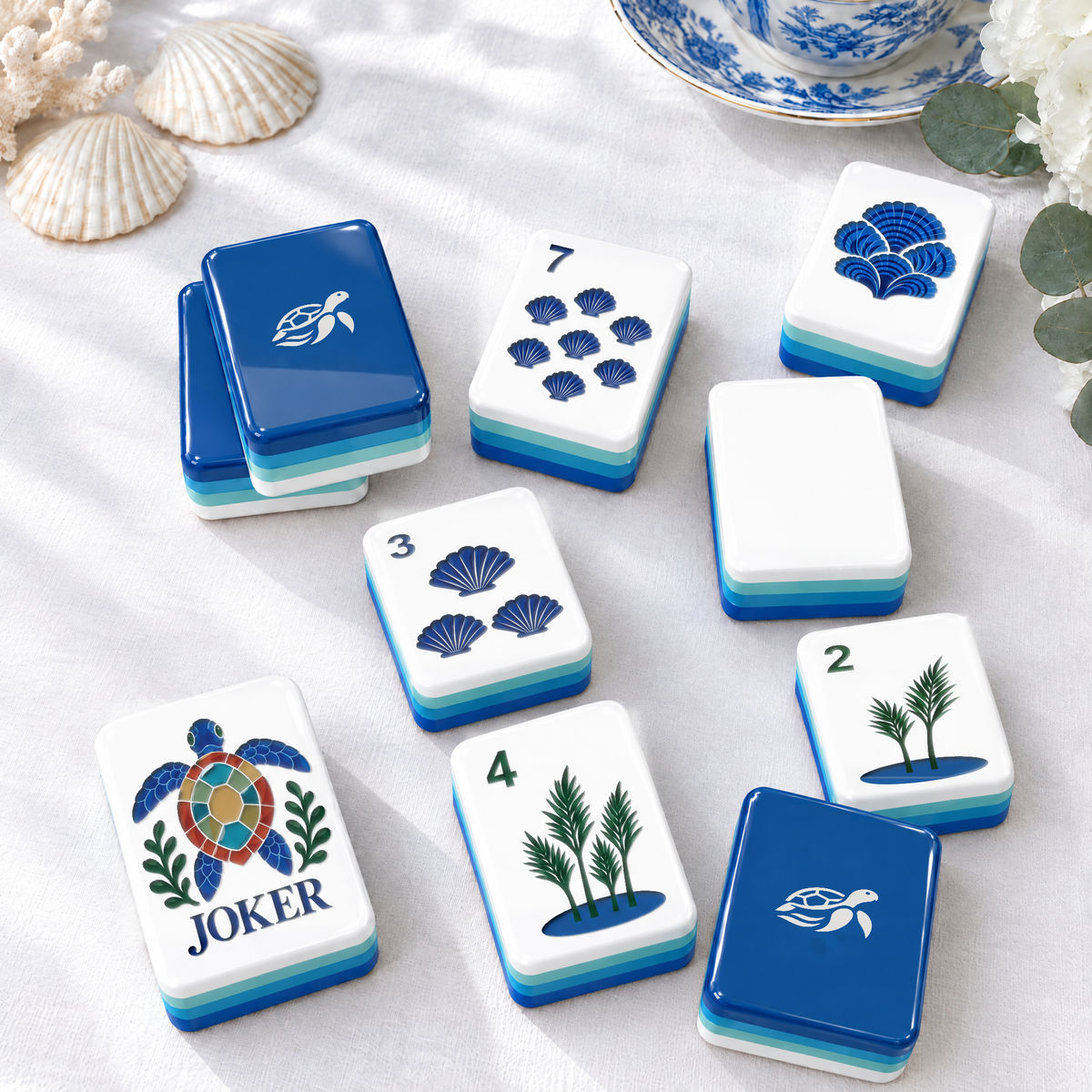
American mahjong requires a minimum of 30 points to win, and the winning hand must appear on the current year's National Mah Jongg League card—no exceptions. Points come from tile combinations: pairs are worth points based on their tile value (Honors like winds and dragons score higher than number tiles), and bonus points apply for exposure (calling a pung, kong, or quint during play). The 8 jokers in play act as wildcards but never substitute in a single tile or pair. Games use exactly 152 tiles plus 8 jokers; hands are scored after you draw your 14th tile and declare a win. Mahstead's best-selling mahjong sets come ready to play with the correct tile count and include a current-year card reference. Understanding the 30-point floor prevents wasted turns chasing hands that cannot score.
In American mahjong, you cannot win with any hand—the minimum is 30 points, and the winning hand must appear on the current year's National Mah Jongg League card—no exceptions. Points come from tile combinations: pairs are worth points based on their tile value (Honors like winds and dragons score higher than number tiles), and bonus points apply for exposure (calling a pung, kong, or quint during play). The 8 jokers in play act as wildcards but never substitute in a single tile or pair. Games use exactly 152 tiles plus 8 jokers; hands are scored after you draw your 14th tile and declare a win. Understanding the 30-point floor prevents wasted turns chasing hands that cannot score.
What does the 30-point minimum actually mean?
The 30-point floor is a hard rule: if your hand totals fewer than 30 points, you cannot win, even if the hand pattern matches the card. Points accumulate from your pair (2 points or more, depending on tile rank) and your four melds (each pung, kong, quint, or sextet earns points based on the tile type and whether it's hidden or exposed). A 1 Dot pair (the bird) scores lower than a Red Dragon pair, for example. Exposure bonuses (revealing a pung as you form it) add points. You must hit 30 or more points total—there is no ceiling, and higher-scoring hands rank above lower ones in settlement.

How do tile ranks affect my point total?
Each suit tile (Bam, Crak, Dot numbered 1–9) and Honor (wind, dragon) carries an intrinsic point value. Number tiles 1–9 in any suit score their face value: a pung of 5 Craks is worth 15 points (5 × 3 tiles). Winds and dragons (Honors) score 10 points per tile. The White Dragon (also called Soap) and the 1 Bam (with the bird) occupy special positions on hands and have fixed scores. When you expose a meld (call it during the game rather than declaring it hidden at the end), you earn bonus points. A hidden pung of 9 Bams scores differently than an exposed one. The card layout groups hands by point count, so you can scan for hands in the 30–40, 40–50, and higher ranges to plan your strategy before the first draw.
Why can't jokers substitute in a pair or single tile?
Jokers are wildcards for melds only—pungs, kongs, quints, and sextets—never for your pair or for a single exposed tile. This rule protects the integrity of the pair (the foundation of every hand) and forces you to hold or draw the exact two tiles needed. If you have one 3 Dot and a joker, you cannot form a pair with them; you must find the second 3 Dot or abandon the pair. This constraint sharpens decision-making: do you keep your drawn joker to complete a 4-tile kong, or use it elsewhere? The joker restriction means discards carry weight—when you throw a tile, opponents gain information that a 3 Dot pair is probably not your target. Learn how jokers work to spot these moments and adjust your hold.
How do exposure bonuses push me over 30 points?
When you call a pung, kong, or quint during play (not at the end), you expose it face-up on the table and earn a bonus. A hidden pung (one you never revealed until you won) is worth its base points; an exposed pung earns bonus points on top. A hidden kong of 7 Bams (70 base points) becomes even more valuable if exposed. Hands designed with exposure in mind—especially kongs and quints—are often worth 40, 50, or more points. Because you earn exposure credit, chasing hands with exposed melds is often faster and more profitable than hoping to hide everything. A common error: holding tiles for a hidden hand when an exposed variant of the same pattern is worth more and closer to complete. Read American mahjong scoring for the exact point tables—they show you exactly which hands are below 30 and which are safe bets.

What's the fastest way to spot a 30+ point hand on the card?
Scan the card by point range. Most cards organize hands into sections: look for the 30–39 point section first if you're building your first hand. Memorizing the high-scorers (mostly kongs and quints) saves time mid-game. A quint (5 identical tiles) is nearly always worth more than a pung of the same tile—so if you're holding three 8 Dots and a joker, pivoting to a quint hand could leap you from 30 to 50 points. Compare your drawn tiles against the card's hand shapes: if you have two dragons and three winds already, look for patterns that use those tiles, not ones requiring unrelated number sequences. Beginners often waste turns pursuing any matching hand instead of the one closest to 30 points on the current draw. Pro tip: at the start of your turn, list your strongest partial hands and their point scores; discard the tile that breaks the lowest-scoring one. This keeps you flexible and stops accidental commitment to hands you can't hit.
Hand Type | Example Tiles | Point Range | Why It Matters |
Basic pung trio | Three 5 Craks | 15–30 | Fast to form, low risk, safe minimum |
Exposed kong | Four 8 Dots + bonus | 40–60 | Visible advantage, high value, competition |
Quint sextet pair | Five 2 Bams + five 3 Bams + pair | 50–80+ | Elite hands, rare draws, high settlement |
Mixed honors | Winds, dragons, number pair | 30–50 | Flexible, harder to read, strong mid-game |
All-hidden hand | No exposure until win | 30–40+ | Risky, harder to defend, but survives longer |
What mistakes drop players below 30 points?
The most common error is committing to a hand without verifying the point total. A player forms a pung of 1 Dots, holds two 1 Bams and a joker (thinking it's a pair), and discards aggressively—only to realize the hand scores 12 points and cannot win. Always check the card before the first discard. A second mistake: ignoring exposure. A hidden hand you've been building in secret might score 28 points, but if you call your first pung halfway through, the exposure bonus lifts you to 32. Flexibility wins. Third error: tunnel vision on one suit. If you're chasing Craks and Dots, you miss opportune winds or dragons that could push you into the 30–40 range faster. Fourth: not reading the card's organization. Some cards list hands in point clusters or by suit; learn your card's layout so you can scan efficiently under time pressure. Finally, forgetting that a hand must be exactly on the card—no variations. If the card shows 1 Bam, 1 Bam, 1 Bam, 2 Bams, 2 Bams, 2 Bams and a 3 Bam pair, you cannot replace one 2 Bam with a joker and call it a win. The hand must match precisely.
🀄 Shop best-selling mahjong sets →
Reading the card without panic
When you sit down, take 30 seconds to flip through the current card and spot its structure. Is it organized by suit, by point range, or by hand type? Familiarize yourself with where the 30–50 point hands live; you'll draw from that zone often. Skim the highest-value hands (usually top or back pages) so you remember them when opportunity strikes. Mark your cards' point ranges with a mental anchor: "Section 2 is all 40-pointers" helps you recall without re-reading. Practice how to read the mahjong card before game night so you're not squinting at it during play. Many players carry a portable reference card or phone photo (if house rules allow it) to cross-check a borderline hand. The goal is confidence: you should know within two seconds whether your tiles qualify for a 30+ hand on that year's card.
🎁 See our most-loved mahjong sets & accessories →
What to check before you buy
Before your first game, verify that your set includes a current-year National Mah Jongg League card and that it's this year's edition (2026). An older card renders hands unrecognizable. Ensure your set has exactly 152 playing tiles plus 8 jokers—sets sold with spares are labeled as 160 tiles total, so the spare jokers are not added to play. Count your tiles: 36 Bams, 36 Craks, 36 Dots (108 total), plus 16 winds (4 each), 12 dragons (4 Red, 4 Green, 4 White), 8 flowers, and 8 jokers. If a tile is chipped, cracked, or illegible, the set is compromised. Buy from a vendor who stands behind their product and includes a clear card. Mahstead's sets come with a current card and are built to last through weekly play; our best-selling mahjong sets are a reliable starting point for any player.
✨ Find your Mahstead set — free US shipping →

FAQ
Can I win if my hand is 29 points?
No. The minimum is 30 points. A 29-point hand, no matter how close, cannot win. Always double-check the card before you declare.
Do bonus points count toward the 30-point minimum?
Yes. Exposure bonuses and tile rank points all stack toward your total. A hidden pung of 5 Craks (15 points) plus exposure might reach 20 points; add more melds to hit 30.
If I declare a winning hand and it's not on the card, what happens?
You cannot win. You must draw a replacement tile and continue playing. Some houses impose a penalty turn or pass. Always verify the card before declaring.
Do all kongs and quints automatically score above 30 points?
No. A single pung of 1 Bam is worth only 3 points; even with one kong, you need additional melds to reach 30. The card shows exactly which hand patterns qualify.
What's the highest-scoring American mahjong hand?
Hands on the card vary yearly, but all-kong or all-quint hands with high-value tiles (dragons, winds, 7s, 8s, 9s) typically score 70+ points. Check your card's back page for the elite hands.
Can a beginner memorize the 30-point hands in advance?
Yes, many players study the card before game night. Focus first on the 30–40 point section and kongs/quints, which score reliably. With 10–20 sessions, you'll recognize patterns instantly.


View More
View More
View More
