
How to Choose a Mahjong Bag: The Complete Buyer's Guide
Last updated: Nov 23, 2026
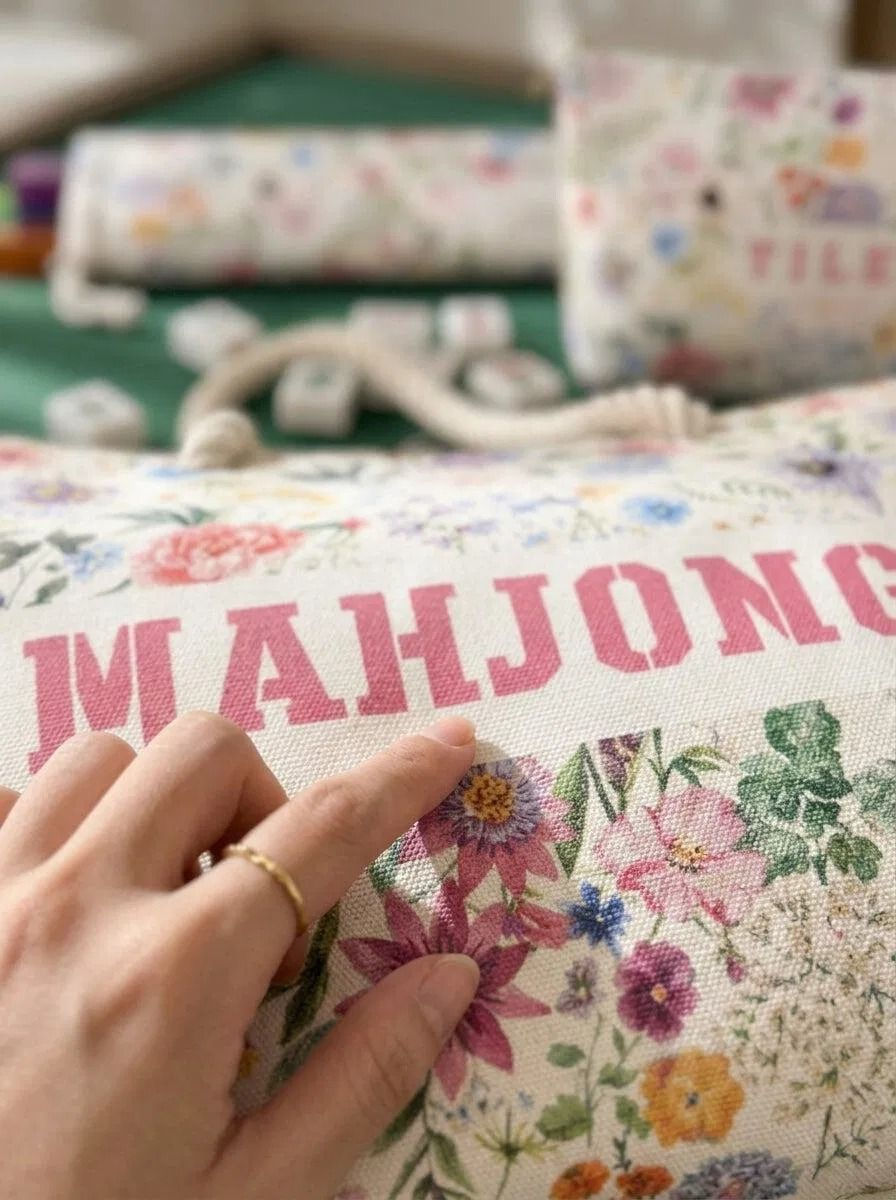
A mahjong bag holds a complete American mahjong set (152 tiles plus 8 jokers), racks with pushers, dice, and a mat—everything you need to host or join a game. Most players choose between soft tote-style bags (easy to pack, visible, lighter) and hard cases (more protection, more weight, fits under seats). Material ranges from canvas to faux leather to reinforced nylon. Size matters: a bag that fits your set comfortably will last years; one that's too snug damages tiles at the seams. The best choice depends on whether you're traveling weekly by car, flying occasionally, or walking to a neighbor's house. We recommend checking internal dimensions before ordering, confirming the bag fits your exact set size (Mahstead sells 160-tile sets), and reading returns policies—some players discover mid-game that a bag's padding shifts or zippers jam.
A mahjong bag is more than storage: it's your introduction to a table, a shield for tiles that cost real money, and a daily choice about how seriously you take the game. After years of hosting weekly games and packing sets for tournaments, we've learned that the "best" bag depends entirely on your travel pattern, tile investment, and how much protection you're willing to carry. Let's cut through the options.
What size mahjong bag do you actually need?
An American mahjong set contains 152 playing tiles plus 8 jokers in a single-tier or two-tier container, plus racks, pushers, dice, a scorepad, and often a mat. Your bag must hold all of these without forcing them together—compressed racks can crack, and stacked tiles can shift during transport and crack at the edges. Measure your set's carrying case first: length, width, and depth. Then add 2–3 inches of padding space to account for a mat rolled separately (mats fold into rectangles roughly 27" × 27" when nested). A bag rated for "one complete set plus accessories" should have internal dimensions at least 16" long, 12" wide, and 8" deep; bags smaller than this force you to choose between leaving the mat at home or overstuffing. If you own multiple sets or travel with friends' sets too, you need a weekender-sized bag—typically 18"+ long—or a hard case that stacks vertically. Soft bags under 14" are good for occasional single-set transport; anything larger becomes harder to carry one-handed.

Should you choose a soft bag or a hard case?
This decision divides players sharply. Soft bags (canvas, faux leather, reinforced nylon) weigh 2–4 pounds empty, fit easily into car trunks, and compress when not full. Hard cases weigh 6–10 pounds, take up fixed space, but protect tiles from crushing if someone steps on your bag or it's jostled in an overhead bin. A soft bag works best if you travel short distances (under 2 miles), drive to games, and store the bag in a climate-controlled space. Hard cases suit frequent travelers, players who take flights, or anyone whose bag might be stacked under tables or in garages. The durability trade-off is real: a soft bag's zippers and seams will fray after 200–300 uses if not reinforced; a hard case's hinges and latches sometimes crack if over-tightened or dropped. Many experienced players own both—a soft weekday tote for car games and a hard case for tournament travel. Inspect the handle attachment points (stitching or screws?) before buying; handles are the first failure point on heavy bags.
🎁 See our most-loved mahjong sets & accessories →
What material withstands weekly play the best?
Canvas and reinforced nylon last longest in our experience. Canvas develops character—it softens and molds to your sets—and resists punctures; nylon resists moisture and staining. Faux leather looks elegant and wipes clean but can crack in dry climates or sun-baked cars after 12–18 months. Genuine leather is durable but expensive and demands maintenance (conditioning every 6 months). Velvet-lined interiors look luxurious but snag easily; cotton lining is practical and replaceable. For a bag that will see 2–4 games per week for years, we recommend canvas or nylon with reinforced handles and a padded divider between tile container and racks. Zippers should be heavy-duty coil or metal teeth, not plastic sliders—plastic jams after 50–100 open-close cycles. If you play in a humid climate or store your bag in a basement, choose nylon or treated canvas over suede or velvet.

How does price relate to lifespan and protection?
Mahjong bags range widely in cost depending on material, size, and brand. A basic soft canvas weekday bag typically offers a reasonable balance of durability and price. A mid-tier reinforced nylon tote with padded compartments costs more but withstands 400+ uses. Hard cases represent a higher upfront investment but can last a decade with minimal wear if handled gently. Budget players often buy two budget bags (rotate them to extend life) rather than one premium case. Premium leather or designer-branded bags aren't worth the cost unless you're a dealer or tournament host who needs your bag to carry brand prestige; the tile protection is identical. The honest truth: a bag that costs twice as much doesn't necessarily last twice as long—it depends on material and construction detail (thread count, handle stitching, padding density). Our recommendation is to match your spending to your play frequency. Weekly players justify mid-tier bags; tournament travelers justify hard cases; casual once-a-month players can choose a budget option guilt-free.
What features make a bag work for your weekly routine?
Before you order, ask yourself these questions. Do you need interior pockets for dice, scorepads, or joker racks separate from the main tile container? Do you drive to games or walk/use transit (soft bags are lighter for walking, but hard cases protect better in vehicle accidents)? Will you store the bag in a car, closet, or garage (moisture-prone garages favor hard cases with gaskets)? Do you host games at home, requiring the bag to sit visibly (soft bags photograph better, hard cases look more professional)? Will you ever fly with your set (hard cases are TSA-friendly and less likely to be damaged by baggage handlers)? Do you want one bag for your own sets or one that can hold two smaller sets or borrowed tiles?
The comparison below maps these needs to bag styles:
Use Case | Bag Type | Key Feature | Why It Works |
Weekly car games, one set | Soft canvas tote | Handle + padded divider | Light, fits trunks, protects tiles |
Frequent flights | Hard case | Rigid shell + latches | Survives baggage handling |
Host games at home | Soft faux leather | Attractive exterior + pockets | Looks intentional, hides storage mess |
Multiple sets or borrowed tiles | Weekender hard case | Stacking compartments | Holds 2–3 sets, organized transport |
Walk to neighbors' games | Soft crossbody bag | Shoulder strap | Hands-free, lightweight (one set only) |
Tournament or dealer use | Premium branded hard case | Custom foam insert | Professional appearance, maximum protection |
We offer mahjong bags and cases in canvas, nylon, and faux leather styles, sized for single or multiple sets. Browse the options to match your routine—then add a padded mat and pushers and racks if you're starting fresh.
✨ Find your Mahstead set — free US shipping →
What to check before you buy
Internal dimensions: Confirm the bag's inside length, width, and depth accommodate your set's carrying case (or measure Mahstead's 160-tile set size and add 2 inches in each direction for padding).
Weight rating: If the bag has one, confirm it's at least 15 pounds (tiles + racks + mat total roughly 8–10 pounds).
Handle attachment: Look for reinforced stitching or screw fasteners, not glue alone. Test the handle by pulling gently; it should not flex or twist.
Zip quality: Open and close the zipper 3–5 times mentally; sliders should move smoothly. Coil zippers (metal teeth) outlast plastic sliders by 3–4 times.
Return policy: Confirm you can return or exchange the bag within 14–30 days if it doesn't fit your set or feels flimsy in hand.
Warranty: Some brands cover zippers or seams for 1–2 years; confirm this before checkout.
Shipping time: Mahstead offers free US shipping—verify the expected delivery window so you're not rushing a game day.
If you're choosing your first bag, a soft canvas option in our best-selling mahjong collection is the safest starting point. Many players graduate to a hard case after 1–2 years once they know their play frequency. Neither choice is wrong; the wrong choice is a bag too small that damages your set.
🀄 Shop best-selling mahjong sets →

FAQ
Can I fit a mahjong mat inside the bag, or should I carry it separately?
A mat rolled into a cylinder fits alongside most tile containers in a soft bag; some hard cases have a slot for mats. Rolling (not folding) prevents creasing. If space is tight, carry the mat in a separate drawstring or canvas bag—mats are light and don't need hard protection.
What's the difference between a mahjong bag and a regular luggage bag?
Mahjong bags are sized and padded specifically for tile containers and racks; luggage bags are bulkier and designed for clothing. A mahjong bag keeps tiles secure and organized; luggage shifts its contents during transport, risking tile damage.
How often do zippers fail on mahjong bags?
Heavy-duty metal or coil zippers typically handle 300–500 open-close cycles before stiffening; plastic sliders jam after 50–100. At two games per week, a well-made zip lasts 3–5 years before needing replacement.
Is a hard case worth the extra cost if I only play once a month?
No. A soft bag is sufficient for casual monthly players. Reserve hard cases for players who travel frequently (weekly) or fly with their sets. Once-a-month play doesn't justify the weight and space.
Can I store my mahjong bag in a garage or car trunk year-round?
Canvas and reinforced nylon tolerate garages if not damp; avoid damp cellars. Cars in hot climates can warp zippers over time. Store indoors in a cool, dry closet when not in active use to extend lifespan.
Do I need a special bag if my set is engraved or custom?
No. Engraved tiles need the same protection as standard tiles. Choose a bag based on size and your travel pattern, not the tile art. Custom tile sets (standard 160-tile American sets) fit the same bags as non-engraved sets—our engraved American mahjong sets use identical dimensions.


View More
View More
View More
