
8 Dot Mahjong Tile: Symbol, Role & Game Rules
Last updated: Nov 23, 2026
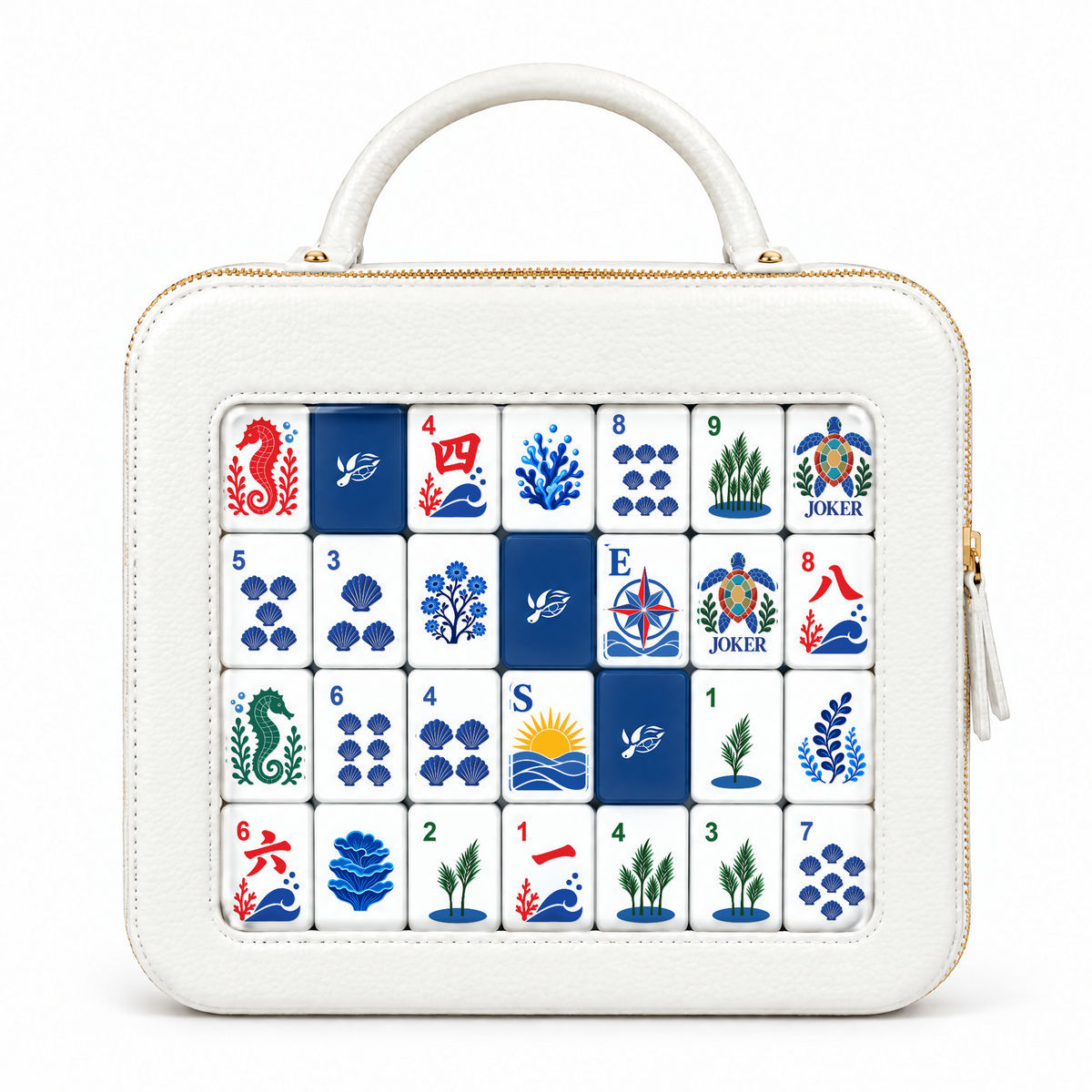
The 8 Dot is a numbered tile in the Dot suit, one of three core suits in American mahjong (Bams, Craks, Dots). Every standard 152-tile set contains exactly four copies of the 8 Dot. The tile displays eight small circles arranged in a decorative pattern; the Dot suit traditionally associates with coins or pearls in Chinese mahjong's origins. In American mahjong, you'll use the 8 Dot to build pungs (three identical tiles), kongs (four identical), or as part of longer exposed combinations, but never in sequences—American mahjong has no chows. The tile's position in hands depends on the current National Mah Jongg League card you're playing from; consult that card to see which patterns require or allow the 8 Dot. Mahstead's 160-tile acrylic sets include all standard tiles in clear, durable designs so the 8 Dot symbols remain easy to read across any table size.
The 8 Dot is one of nine numbered tiles in the Dot suit, appearing four times in every American mahjong set. The tile displays eight small circles arranged in a decorative pattern; the Dot suit traditionally associates with coins or pearls in Chinese mahjong's origins. In American mahjong, you'll use the 8 Dot to build pungs (three identical tiles), kongs (four identical), or as part of longer exposed combinations, but never in sequences—American mahjong has no chows. The tile's position in hands depends on the current National Mah Jongg League card you're playing from; consult that card to see which patterns require or allow the 8 Dot.
🀄 Shop best-selling mahjong sets →
Why does the 8 Dot look the way it does?
The 8 Dot displays eight small circles (called pips) arranged in a fixed, symmetrical pattern on the tile face. This design comes from traditional Chinese mahjong, where the Dots suit originally represented coins stacked in piles. In modern American mahjong tiles, the 8 Dot typically shows those pips in two columns of four or in concentric rings, depending on the tile design. The visual clarity of the pattern matters: when you're scanning your rack or the table during fast play, you need to spot the number instantly. Acrylic tiles with crisp embossed or printed numerals make the 8 Dot unmistakable, whereas worn or low-contrast older tiles force you to count pips—slowing the game and inviting mistakes. Our best-selling sets use high-contrast engraving so every tile, including the 8 Dot, stays legible across years of play.

How many 8 Dots are in a complete set?
Every American mahjong set contains exactly four copies of the 8 Dot—no more, no fewer. This is true of every numbered tile (1 through 9) in all three suits: four Bams, four Craks, four Dots at each number. With three suits × nine numbers × four copies per tile, you get 108 numbered tiles total in the core game. The other 44 tiles (winds, dragons, flowers, jokers) add up to 152 playing tiles plus 8 jokers, which equals 160 tiles in a standard set. If you're setting up a game and count your tiles, verify you have four 8 Dots; a missing or damaged tile should prompt a replacement so the set stays legal. Learn what's in a complete American mahjong set for a full breakdown of all tile types and counts.
Where does the 8 Dot appear in winning hands?
The 8 Dot's role in a hand depends entirely on that year's National Mah Jongg League card. The card lists dozens of hand patterns (called "like" hands), each specifying which tiles must appear and in what combinations. Some hands might call for two 8 Dots in a pung (three identical) plus another combination elsewhere. Others might need all four copies—a kong (four identical tiles) exposed on the table. Still others use no 8 Dots at all. You cannot predict from the tile itself which hands will want it; you must study the card before your game. The card changes every spring, so an 8 Dot pattern valid this season may not exist next year. Begin by reading how the mahjong card works to understand how to scan for tiles like the 8 Dot when you're hunting for a winning combination.
Can you use the 8 Dot in chows or sequences?
No. American mahjong permits no sequences or "chows"—that rule distinguishes it from Chinese, Hong Kong, and Riichi variants. You cannot call or expose three tiles in order like 6-7-8 Dots, even though the numbers run consecutively. The only exposed combinations in American mahjong are pungs (three identical), kongs (four identical), quints (five identical), and sextets (six identical). This means the 8 Dot is always grouped with other 8 Dots, never with 7 or 9. If you're new to American mahjong and learned a variant that uses chows, this is a critical shift: abandon the sequence habit. Every hand on the card uses only identical-tile combinations (plus jokers, which can substitute). This restriction makes hand-building more puzzle-like and hand recognition faster once you've practiced a season or two.

How do you distinguish the 8 Dot from other Dots?
The number eight itself is your guide: count the pips or read the numeral printed or embossed on the tile face. The eight-pip pattern is unique—not six, not nine. Most modern sets add Arabic numerals (8) alongside or instead of just pips, so you don't have to count. If your tiles are worn, faded, or printed in low contrast, counting becomes tedious and error-prone during rapid play. This is why investing in clear, durable tiles pays off: you spot the 8 Dot in a glance, not a squint. Compare it to the 7 Dot (seven pips) and the 9 Dot (nine pips) if you're learning, but once you've played a few hands, muscle memory kicks in and you recognize the 8 Dot instantly.
Dot Tile | Pip Count | Common Confusion | How to Check |
1 Dot | One pip (often a bird) | Could miss it in a crowded rack | Look for the single symbol or numeral "1" |
6 Dot | Six pips (two columns of three) | Similar symmetry to 9 but fewer | Count the pips or read "6" |
7 Dot | Seven pips (often 3+4 arrangement) | Close to 8 in quick glance | One fewer pip than 8 |
8 Dot | Eight pips (symmetrical pairs) | Mistaken for 6 under poor lighting | Read the "8" or count carefully |
9 Dot | Nine pips (3×3 grid) | Only more numerous Dot tile | One more pip than 8 |
The table above shows how Dot tiles cluster visually. When you're learning, practice laying out one of each numbered Dot tile and staring at them until the 8 Dot's specific arrangement becomes automatic. Within a few games, you'll spot it without thinking.
🎁 See our most-loved mahjong sets & accessories →
What should you check before you buy a set to avoid 8 Dot confusion?
Before purchasing a mahjong set, hold or inspect a sample if possible. Look at the numeral clarity: is the 8 embossed (raised), printed (flat), or both? Test the contrast—can you read tiles under typical room lighting without tilting? Ask whether replacement tiles are available if an 8 Dot cracks or fades. Inspect the tile material (acrylic, bone, plastic) to gauge durability; acrylic resists fading better than some alternatives and holds engraving longer. If you're playing weekly or more, prioritize sets designed for frequent handling. Mahstead's engraved American mahjong sets offer custom tile clarity and come with spare tiles, so a damaged 8 Dot won't halt your game. Check the product page for tile size, material specs, and whether the set includes extras before committing.
Why does tile clarity matter for gameplay and scoring?
Misreading a tile—confusing an 8 Dot with a 6 or 7—can invalidate a hand during scoring. In American mahjong, the score depends on the exact combination you claim; if judges or scorekeeper spot a wrong tile, the hand fails and points are forfeited. Fast, accurate tile recognition keeps the game flowing and eliminates disputes. Poor lighting, worn tiles, or careless design all slow play and breed errors. When you're hosting a weekly game or teaching beginners, clear tiles cut training time and boost confidence. Experienced players speed up, and newer players learn faster without squinting. This is one reason choosing a mahjong mat with good surface lighting (or playing near a window) is as important as the tiles themselves: your 8 Dot won't help if you can't see it.
Comparing tile materials: acrylic vs. bone vs. bamboo
Material | Durability | Clarity | Feel | Best for |
Acrylic | High; resists fading and cracks | Excellent; engraving stays sharp | Smooth, slightly cool | Weekly play, bright rooms, households with pets or kids |
Bone | Very high; ages beautifully | Good; numbers may fade with years | Warm, slightly porous | Collectors, low-wear display, heirloom sets |
Bamboo | Moderate; can warp or stain | Fair; design may blur over time | Light, natural feel | Aesthetic preference; not ideal for frequent competitive play |
Plastic | Low; yellows and cracks easily | Poor; numbers fade quickly | Thin, noisy | Budget sets, travel (one-off games) |
Acrylic dominates among serious weekly players because the material holds engraving indefinitely, resists table scratches, and photographs clearly under any light—crucial for teaching or disputes. The 8 Dot on an acrylic tile stays legible after hundreds of hours of shuffling. If you're hosting regular games or playing in a club, acrylic is the practical choice. Bone tiles carry prestige and feel luxurious, but they demand more care and the numbers may fade; reserve them for collectors or low-play-frequency heirloom sets. Bamboo and plastic don't hold up to serious use.
✨ Find your Mahstead set — free US shipping →

FAQ
What does the 8 Dot symbol represent in traditional mahjong?
The Dot suit originally symbolized coins in Chinese mahjong; the eight pips represent eight stacked coins. In modern American mahjong, the symbol is purely a tile identifier with no gameplay meaning beyond its number.
Can you use the 8 Dot in a kong with any jokers?
Yes. A kong is four identical 8 Dots, or three 8 Dots plus one joker (jokers substitute for any tile). You cannot expose a pung or kong without at least three identical tiles or two 8 Dots plus two jokers.
How do you tell the 8 Dot from the 6 Dot at a glance?
The 8 Dot has eight pips arranged symmetrically; the 6 Dot has six. Modern sets print Arabic numerals (8 or 6) alongside pips, making the distinction instant. Under poor lighting or on worn tiles, count the pips carefully.
Does the 8 Dot appear in every hand on the mahjong card?
No. The card lists dozens of hand patterns, and each specifies which tiles are required. Some hands use no 8 Dots at all; others use multiple. You must study the card to know when the 8 Dot is part of a winning combination.
What's the difference between a pung and a kong of 8 Dots?
A pung is three identical 8 Dots; a kong is four identical 8 Dots (or three 8 Dots plus one joker). Both are exposed on the table during play and count toward your hand. A kong scores higher than a pung in most situations.
Why do acrylic tiles keep the 8 Dot symbol clearer longer than plastic?
Acrylic resists fading, scratching, and UV damage better than plastic. The engraved or printed numeral on acrylic remains sharp after years of shuffling and table contact, whereas plastic tiles yellow and blur quickly.


View More
View More
View More
