
American Mahjong Jokerless Strategy: Winning Without Wild Tiles
Last updated: Nov 23, 2026
A jokerless hand in American mahjong is a complete winning pattern built entirely from identical tiles—no jokers substituting anywhere—drawn from the current year's National Mah Jongg League card. Jokerless hands typically require four or five groups of matching tiles (pungs of three, kongs of four, or extended groups like quints and sextets) plus a pair, all in a single suit or mixed across Bams, Craks, and Dots. The strategy hinges on three decisions: whether to pursue a hand early when jokerless tiles cluster in your draw, whether to sacrifice board safety to hunt specific tiles, and how to read discard patterns to sense when opponents chase jokerless hands too. Jokerless hands score higher on the card because they eliminate the wild-tile buffer; this scoring bonus rewards discipline and tile-reading skill. You cannot find jokerless patterns on a typical best-selling mahjong set's box—they live on the card—but mastering them separates casual players from consistent winners in club and home games.
Why pursue a jokerless hand at all?
Jokerless hands carry a point premium: they appear in specific rows or sections of the card and reward you for completing a pattern without any joker substitution. That premium exists because constraint is real—you must draw or keep the exact tiles needed, not swap a joker in when you're one tile short. The payoff justifies the risk only when the hand aligns with your early draw. If your first 13 tiles cluster around one suit and one pattern type (say, three pungs of Dots in sequence), a jokerless hand becomes viable before you even play the first discard. If your tiles scatter across multiple hands and suits, chasing jokerless now is gambling; you'd exhaust your keep-wall and miss safer hands instead.

How do jokerless patterns differ from joker-heavy hands?
Jokerless hands use no joker substitutes anywhere in the pattern—no joker standing in for a missing tile in a pung, kong, quint, or sextum. Joker-heavy hands, by contrast, allow multiple jokers to plug gaps. A jokerless pattern forces you to complete groups only with identical tiles: if you need a second 7 Crak in a pung and no 7 Crak appears in the wall, you abandon that pung and pivot to a different hand entirely. Joker-heavy hands give you flexibility—if a tile never surfaces, a joker covers it. That flexibility costs you points on the card. The trade-off is stark: jokerless plays reward discipline and long-term board awareness; joker-heavy plays reward adaptability and quick pivots. Most winners alternate between both strategies depending on draw composition and opponents' discards.
When should you declare a jokerless hand commitment?
Commit to a jokerless hand only if two conditions hold: your first 13 tiles after the Charleston include three or more identical tiles in at least two different groups, and you've scanned the card to confirm the hand exists at a scoring level you'd accept. Declare no earlier than your second draw. If by draw three you've collected only scattered pairs and no complete groups, jokerless is dead—pivot to a joker-heavy hand and move forward. The mistake most new players make is optimism bias: they spot a pung of 3 Bams early, see one other 3 Bam in mid-game, and convince themselves a second pung will appear. It rarely does. By the time they realize it won't, they've burned three turns passing high-value tiles that other hands could have used. Instead, set a hard checkpoint: if you don't hold at least one complete group (three identical tiles) by draw two, exit jokerless now.
What tile-reading signals tell you an opponent is chasing jokerless?
Watch for discards of jokers and high-value dragons late in the hand—jokers mean nothing to a jokerless player, so they flush them early. Watch for players who expose groups (pungs, kongs) instead of keeping them hidden; they're often confirming to other players that a jokerless path is alive and trying to signal they're not a threat. Watch for hesitation on discard: if someone picks a tile and holds it for 3–4 seconds before discarding a different tile, they often calculated that this tile might complete a jokerless group. The most reliable tell is consistency: a player holding jokerless rarely picks from the dead wall (the joker-rich zone) late in hand. If someone hasn't touched the joker wall in five turns and is still actively picking from the live wall, they're hunting exact tiles—jokerless or a very rigid joker hand. Use that information to protect yourself: don't discard tiles that match their exposed groups, and accelerate your own hand so you win before they draw into their completion.
How does the current-year card affect jokerless strategy?
The National Mah Jongg League card changes every spring, reshuffling which jokerless hands exist, where they sit on the card, and at what point value. A jokerless hand that scored at 20 points one year might move to 30 points the next or disappear entirely. This variation matters because it changes your risk calculus: a 20-point jokerless hand in February might be worth the wait; a 12-point one might not. Always consult the card before committing. You cannot memorize jokerless hands across seasons; the card is law. Learn how to read the card effectively so you spot jokerless sections fast and know what they're worth. The card also dictates which tile combinations are legal jokerless patterns—American mahjong allows only specific group types (pungs, kongs, quints, sextets, and pairs), never sequences or "chows." Verify on the card that your proposed jokerless hand actually exists before you've committed two draws.
Decision Framework: Jokerless vs. Pivot
Situation | Pursue Jokerless | Pivot to Joker Hand | Why |
After draw 1: hold 3 identical tiles + 1 more of same number | YES | — | Foundation intact; next tiles high-probability |
After draw 2: hold 2 identical tiles + scattered pairs | NO | YES | Odds collapse; jokerless card sections are specific; flexibility now saves time |
Opponents exposing same-suit pungs | CAUTION | MAYBE | Competition heats up; jokerless pools drain fast; re-evaluate point value |
Wall nearing end (10+ tiles remain) | NO | YES | Jokerless needs long runway; joker hand wins faster |
20+ point jokerless vs. 15-point joker hand available | YES | — | Premium rewards patience; board safety permitting |
Your hand shows 1 pung + 3 loose pairs | NO | YES | Jokerless is a dead metric; move on immediately |
What to check before you buy a new mahjong set for jokerless play
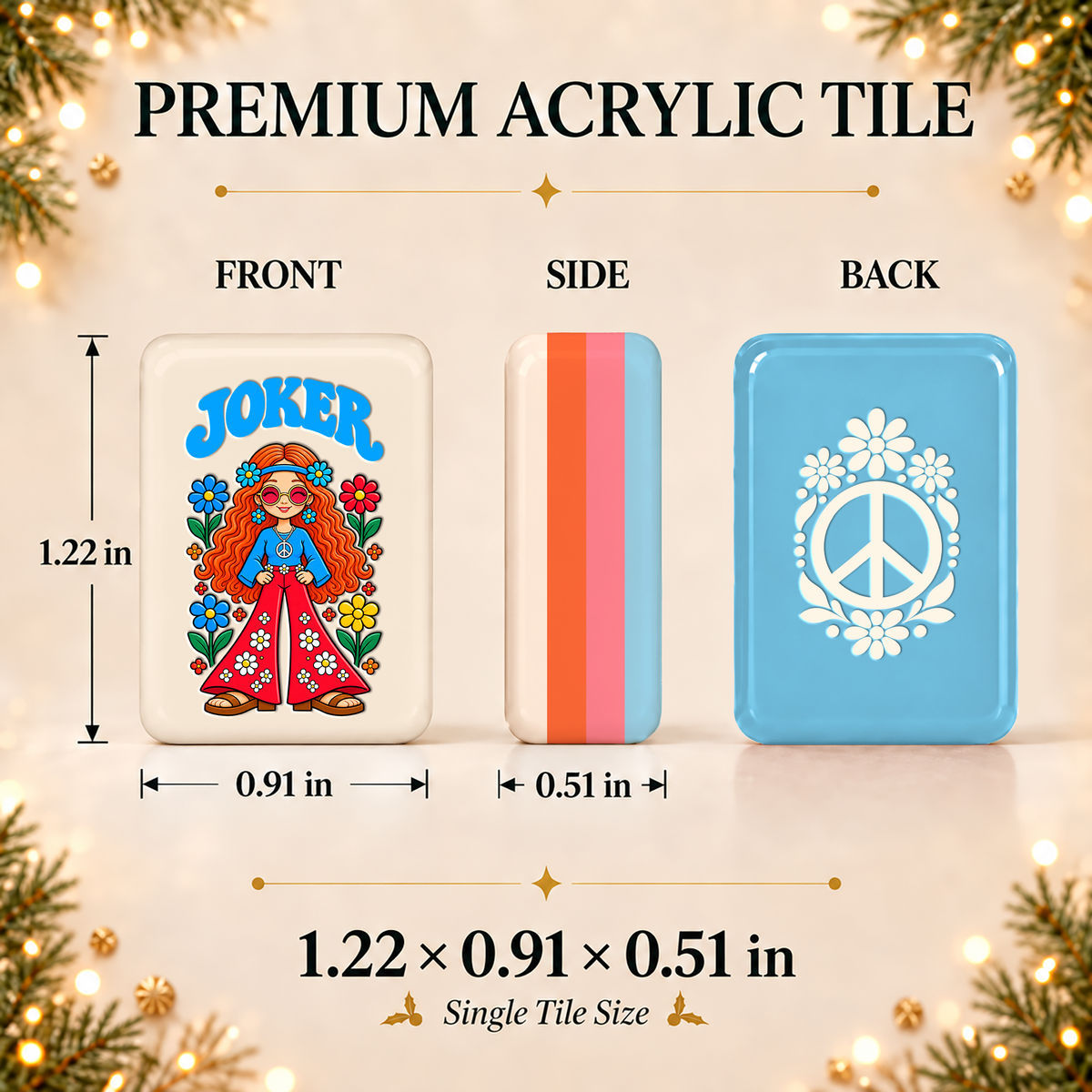
If you're building a game room to practice jokerless strategy, you need a full 160-tile set with clear tile printing so you spot matching tiles instantly—fog or worn imagery costs you decision time. Buy a set with a readable card storage slot (or buy a slim card case separately) so the current year's card stays at the table, not in someone's bag. You need a comfortable mat with clear quadrants so each player's wall is distinct; jokerless play demands tight wall tracking, and a bad mat breeds tile-reading errors. Racks with pushers aren't essential, but they reduce fumbling during rapid draws—fumbling costs you information and slows your calculation of remaining jokerless tiles. If you host weekly jokerless-focused games, a quality travel bag or case protects your set during transport; a chipped tile or missing joker mid-hand ruins the strategy entirely. Check the tile count: American mahjong always plays with exactly 152 tiles plus 8 jokers. A best-selling mahjong set from Mahstead ships as 160 tiles (152 playing tiles and extras), which is standard. Verify your set includes 8 jokers visible and distinct from other tiles—if you can't count them fast, jokerless analysis falters.
🀄 Shop best-selling mahjong sets →
Common mistakes in jokerless play—and how to avoid them
Mistake 1: Assuming a pung will complete. You pick one 5 Dot, see another in the discard, and imagine a third will surface. American mahjong keeps only four copies of each tile in the deck. If two are visible and neither draw nor discard adds the third after five turns, it's gone. Adjust immediately.
Mistake 2: Holding jokerless tiles past the safe window. A jokerless pattern is only viable if you complete it by roughly turn 10–11. If you're at turn 12 and still need two tiles for completion, you've held non-working tiles too long and blocked pivots. Cut losses earlier.
Mistake 3: Ignoring opponent discards. If two players are flushing Dragons and jokers, one is often jokerless (Dragons and jokers don't fit jokerless hands). Watch who discards what and when; it predicts their strategy.
Mistake 4: Playing jokerless in a three-player game without adjusting. Jokerless strategy assumes a four-player wall and turn structure. In a 2–3 player variant, tile distribution and draw frequency change; jokerless patterns become rarer and riskier. Re-evaluate the card for your player count.
Mistake 5: Forgetting the card changes annually. A jokerless hand you won last February may not exist this year. Refer to the current card always, or you'll chase a phantom pattern and lose.
🎁 See our most-loved mahjong sets & accessories →
The psychological edge: reading hesitation and table rhythm
Jokerless strategy is as much psychology as tile logic. Players hunting jokerless hands often telegraph themselves through hesitation: a split-second pause on discard while they recalculate whether a tile fits their phantom hand. Experienced players dampen this tell, but beginners rarely do. Watch for the player who pauses on discarding a joker or high dragon—jokerless players have no use for these tiles, so they flush them fast and rarely hesitate. Conversely, watch for speed anomalies: if someone usually deliberates 2–3 seconds per turn but suddenly burns 5 seconds, they've either spotted a new hand opportunity or lost confidence in their current one. That shift predicts a pivot. Table rhythm also matters: if one player is visibly collecting groups (exposing pungs, kongs), jokerless intensity at that seat rises; the rest of the table should accelerate their own hands to win before that player connects. Use rhythm as a strategic tool, not just a social cue. Jokerless play thrives on patience and observation—the moment you spot a pattern in an opponent's behavior, exploit it by adjusting your own discard order and wall timing.
✨ Find your Mahstead set — free US shipping →

FAQ
Can you use a joker as part of a jokerless hand?
No. A jokerless hand contains zero joker substitutes anywhere in the pattern. If a joker appears anywhere in your winning groups, the hand is no longer jokerless and scores at a lower point value on the card.
If I'm one tile short of two different jokerless hands, which do I pursue?
Consult the card and compare point values. If both are equally likely (you need the same number of missing tiles), choose the higher-scoring hand. If one is worth 25 points and the other 18, the 25-point hand justifies more risk. Draw one more tile; if neither completes, pivot to a joker-heavy hand.
Does the Carnegie card or house rules change jokerless strategy?
The National Mah Jongg League card is the legal standard for American mahjong. House rules and alternative cards may reorder hands or alter point values, but the fundamental constraint remains: jokerless hands use no joker substitutes. Always clarify which card your group uses before playing.
How many jokers does a standard American mahjong set contain?
Eight jokers in a standard 160-tile set (152 playing tiles plus spares). All eight are in active play during a single hand. If jokers are missing or miscounted, the game is void because American mahjong equilibrium depends on exactly 8 jokers available to all four players.
Is a jokerless hand always better than a joker hand?
Not always. A jokerless hand scores higher in point value, but a lower-scoring joker hand you win on turn 10 beats a higher-scoring jokerless hand you never complete. Strategy adapts to draw: if your tiles don't support jokerless after draw three, a joker hand you can feasibly finish is the right play.
What's the fastest way to confirm a jokerless hand exists on the card?
Scan the card for sections marked as "all identical" or "no jokers" or patterns that list only one tile value per group (e.g., three 7 Bams, two 7 Bams, one 7 Bam, and a pair of 7 Bams). Most cards use text or color coding. Learning to read the card efficiently cuts this time to seconds.


View More
View More
View More
