
Designer Mahjong Rack Bag: Choose the Right Carry Case
Last updated: Nov 23, 2026
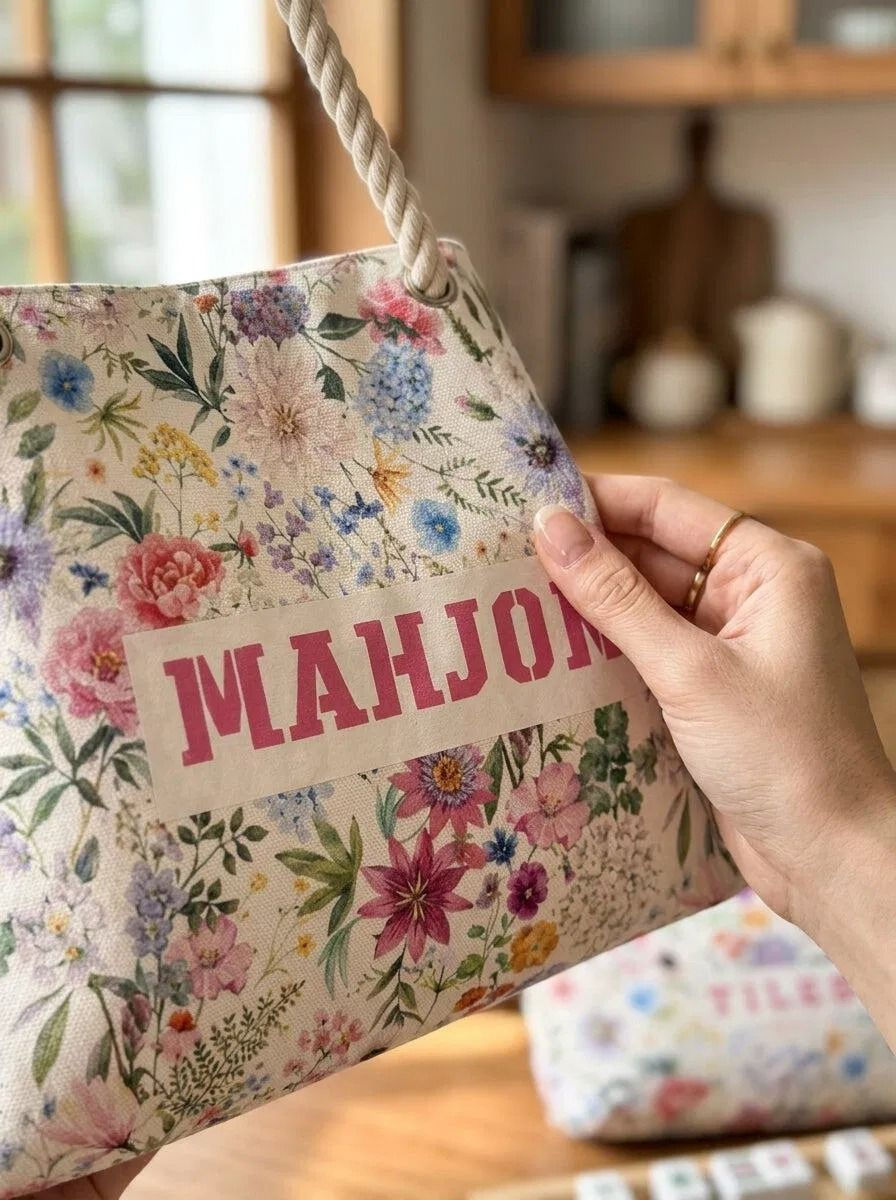
A designer mahjong rack bag is a padded carry case engineered to hold a complete American mahjong set—152 tiles, racks with pushers, mat, dice, and jokers—safely through travel and weekly game nights. Mahstead offers engraved and patterned bags in several sizes: compact designs hold just tiles and racks, while full-capacity cases accommodate a mat and accessories. Quality matters: reinforced zippers, interior pockets, padded dividers, and water-resistant exteriors prevent tile damage and extend play life. Pricing reflects durability and customization options. Choose based on how often you transport your set, whether you need mat storage, and whether you prefer personalized branding or statement graphics that spark conversation at the table.
What Does a Designer Mahjong Bag Actually Hold?
A standard designer rack bag holds your 160-tile acrylic set, four wooden racks with pushers, dice, extra jokers, and the current year's National Mah Jongg League card in a single organized compartment. Full-size bags add dedicated pockets or a separate section for your mahjong mat, brush, and scorecards. Interior dividers keep tiles from shifting; some designs feature a removable tile tray so you can pull out only what you need for a hand or travel leg. The difference between a compact and a full-capacity bag is roughly 2 to 3 inches in length and depth—meaningful if you live in a car or apartment, negligible if you host at home.
🀄 Shop best-selling mahjong sets →

Why Bag Design Matters More Than You Think
The stitching, handle attachment points, and zipper quality determine whether your bag survives weekly hauling or fails within a season. Reinforced stress points at the handles prevent tearing under tile weight; metal or high-grade plastic hardware outlasts cheap alternatives. Water-resistant fabric protects tiles if you're caught in rain or set the bag on a wet floor during setup. Padding thickness (typically 10–15 mm on acrylic sets) absorbs jolts when you place the bag in a car trunk or set it on the ground. A well-designed bag also includes a key fob loop or ID pocket, so you're not fumbling to identify your set in a pile of cases at a game night. We choose bags that feel stable when you pick them up—no shifting, no rattle—because loose tiles echo a sloppy setup.
Size Comparison: What Fits Where
Bag Type | Best For | Holds | Fits In |
Compact rack bag | Solo tiles & racks | 152 tiles, 4 racks, dice | Standard car seat, small closet |
Standard travel bag | Full set + accessories | Tiles, racks, mat, scorepad | Standard car trunk, under airline seat |
Premium full-capacity case | Weekly games + backup tiles | Complete set, spare jokers, multiple mats, brushes | Backseat, closet, game room shelf |
Choose a compact bag if you travel light or store your set at home and bring only tiles to a friend's house. Pick a standard bag if you rotate hosting duties and want to carry your mat. A premium case is worth it if you host biweekly or live far from your regular game venue. All three types should have a shoulder strap or handle that doesn't dig into your palm after five minutes of carrying.
Personalization vs. Statement Graphics: What Speaks for You
A personalized engraved bag with your name, initials, or a private joke ("Tile Me About It," "Mahjong Mogul") signals that you're invested in the game and take your set seriously—especially if you host or share tiles with a rotating table. These bags feel like a trophy and cut down confusion in a crowded game night. Statement graphics—hand-painted florals, traditional tile imagery, bold geometric patterns—work if you want your bag to be conversation bait or match your home décor. A engraved bag is a one-time choice; a graphic one is timeless and appeals to both novices and veterans. We've noticed that players who host regularly lean toward personalization (it's a subtle flex), while travelers and guests prefer graphics that let them fade into the background.
🎁 See our most-loved mahjong sets & accessories →

Durability Testing: What Actually Goes Wrong
Zippers jam when tile dust accumulates in the slider tracks; we prevent this by keeping the bag dry and wiping down racks before storing them. Handles tear at the stress point where they're sewn to the bag body—so never carry a full set by one handle or swing the bag from the strap. Padding compresses over time, reducing shock absorption; a quality bag's padding stays firm for years if you don't overstuff or store it in extreme heat. Water damage creeps in through seams and the zipper header if the bag isn't water-resistant; a quick spray of silicone or wax on external stitches extends life. We pack our bags flat in a dry closet, never rolled or stuffed into tight spaces, to keep their shape. Most failures happen because players treat the bag like a laundry hamper instead of a precision container.
What to Check Before You Buy
Zipper type: Metal sliders last longer than plastic; test the slider on the product page or ask if you can inspect it in person. Handle feel: Grasp the handles in your palm; they should be padded and at least 1.5 inches wide. Padding thickness: Press the exterior with your thumb; a quality bag resists your finger without collapsing. Interior pockets: Count them; at least two separate compartments prevent tiles from rolling loose. Warranty or return policy: Ask if the bag can be exchanged within 30 days if zippers jam or handles loosen. Fabric: Run your hand over it; water-resistant fabric feels slightly waxy or has a faint chemical smell; uncoated fabric feels soft but offers no protection. Weight: Pick up the empty bag; it should feel light (under 2 pounds), so you're not paying for padding you don't need. Seam quality: Look for continuous, even stitching with no gaps or loose threads along the stress points.
Mahstead's travel bags come in several styles and fit 160-tile acrylic sets with room for mats and racks. Each design balances protection, portability, and aesthetics—so your set arrives at game night ready to play, not damaged in transit.
When a Bag Isn't Enough: The Role of Your Racks and Mat
A bag protects tiles, but your racks with pushers and mat also determine travel durability. Wooden racks absorb moisture and can warp in humid climates; acrylic racks are lighter and more stable but louder when tiles click during shuffling. A padded mat adds 2 to 3 pounds but prevents tiles from scratching the table surface and doubles as a noise dampener. If you're buying a designer bag for the first time, pair it with a mat designed to roll—they compress flat and fit inside standard bags without creasing. We treat the bag, racks, and mat as a system: the bag protects the set, the racks organize tiles for speed, and the mat makes play comfortable and quiet for your neighbors.
✨ Find your Mahstead set — free US shipping →

FAQ
Can I fit a mahjong mat inside a standard designer rack bag?
Depending on mat thickness and bag depth, a rolled mat fits in full-capacity bags or alongside tiles in standard bags. Measure your mat (typically 25–27 inches long when rolled) against the bag's interior dimensions before ordering. If the mat won't fit, store it flat in a separate bag or at home.
What's the difference between a water-resistant and a waterproof bag?
Water-resistant fabric repels light rain and spills but isn't fully waterproof; water can seep through zippers or prolonged saturation. Waterproof bags have sealed seams and gasketed zippers, costing more and often restricting access. For mahjong, water-resistant is sufficient if you keep the bag away from standing water.
Do designer bags with personalized engraving cost more than plain ones?
Engraving typically adds to the base price of a bag, but exact pricing varies by design complexity and material. Check the product page for each style to compare options. Plain bags are usually the most affordable entry point.
How do I clean a mahjong bag without damaging the padding?
Wipe the exterior with a damp cloth and mild soap; avoid saturating the seams. Air-dry it flat or hanging. Never machine-wash or dry-clean a padded bag—heat and agitation destroy padding and zippers.
Should I buy a bag that matches my mahjong set's color or theme?
Matching bags look coordinated and make your set instantly recognizable at a crowded game night. Non-matching bags work just as well if you prefer a neutral tone or graphic design. Choose whichever feels right for your playing style and storage space.
What size bag do I need if I own both acrylic and bone-and-bamboo sets?
A full-capacity premium case holds two complete 160-tile sets side by side with room for mats. A standard bag fits one set at a time. If you rotate between two sets, one large bag is more convenient than two smaller ones.


View More
View More
View More
