
6 Crak Tile in Chinese Mahjong: Rules, Meaning & Play
Last updated: Nov 23, 2026
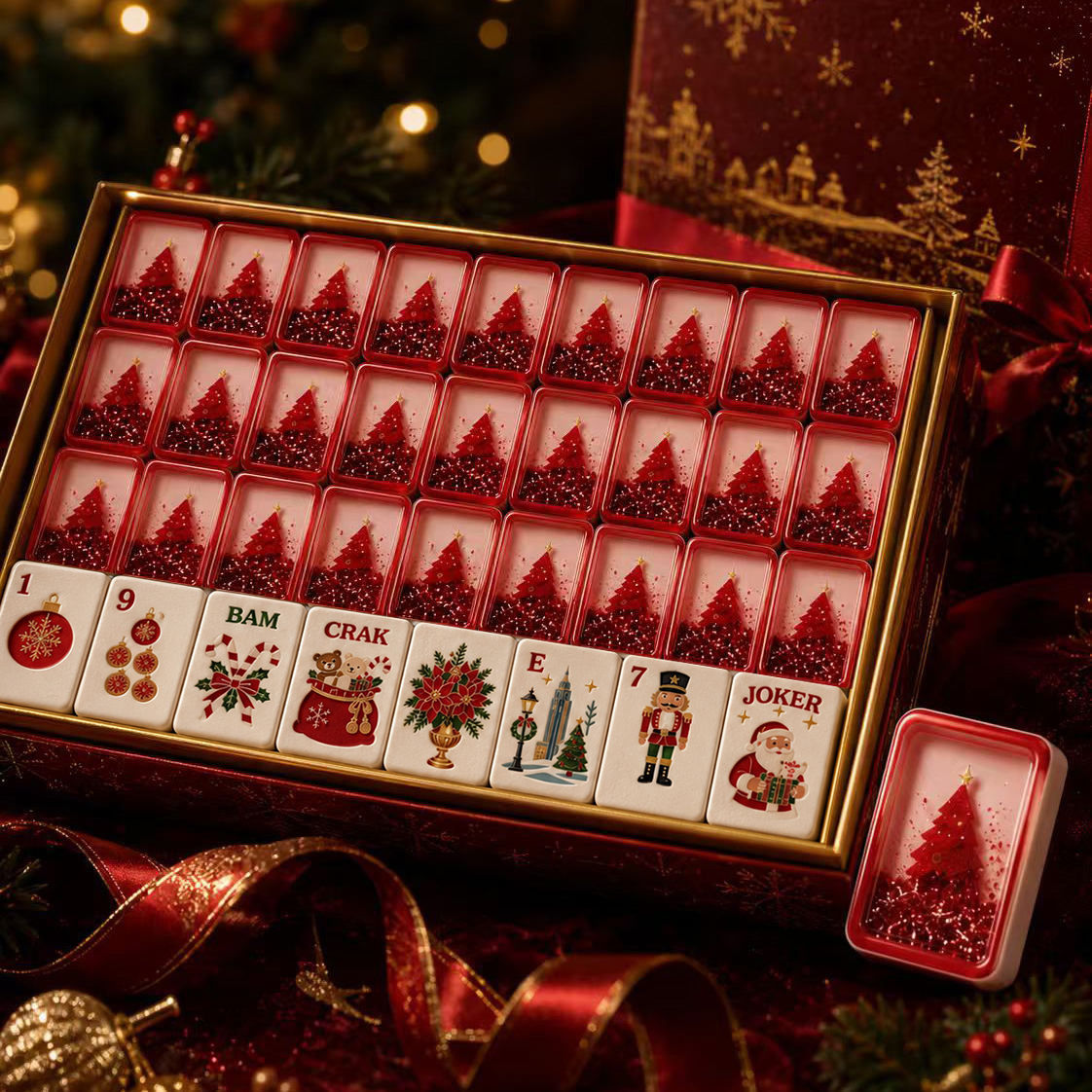
In Chinese, Hong Kong, and Taiwanese mahjong, the 6 Crak (bamboo) tile shows six bamboo stalks and ranks as a mid-value tile in the Crak suit (ranks 1–9). It functions as a regular numbered tile—playable in sequences (chows), pungs, and kongs—and carries no special power. In American mahjong, by contrast, the 6 Crak is one of 108 numbered tiles (three suits × nine ranks × four copies each) and cannot form a sequence; you may only expose pungs, kongs, or joker-inclusive groups. Unlike Chinese variants, American play depends entirely on the current year's National Mah Jongg League card to define which hand patterns are legal, so a 6 Crak's role shifts hand-to-hand. Across all variants, the 6 Crak is neither a wind, dragon, flower, nor joker, making it a straightforward utility tile. Our best-selling mahjong sets include full American-standard Crak suits if you want to learn all three suits together.
What does the 6 Crak symbol look like?
The 6 Crak displays six bamboo stalks arranged vertically or in a stylized bundle. In traditional Chinese carved bone or bamboo tiles, the stalks are clearly etched; modern acrylic sets (like ours) print or engrave the same image in bold colors—typically green or a natural wood tone—for instant readability. The tile's back side usually matches all other tiles' backs, marked with a uniform design or blank. Consistency in symbol clarity matters at the table: if you can't count or recognize the bamboo at a glance, misdeals slow play.

How does 6 Crak play in Chinese mahjong vs. American?
Chinese, Hong Kong, and Riichi variants: The 6 Crak is a numbered tile (rank 6) in the Crak suit and participates fully in sequences. A legal hand might include a chow (5–6–7 Crak), a pung (three 6 Craks), or a kong (four 6 Craks). Winning hands blend honors (winds, dragons), terminals (1s and 9s), and midrange tiles like 6 Crak with few or no melds, depending on the variant's scoring rules.
American mahjong: The 6 Crak exists as one of four identical copies in your set. You cannot call or expose a sequence; you may only expose a pung (three identical 6 Craks), a kong (four identical 6 Craks), or a group containing jokers. Every legal hand comes from the current year's National Mah Jongg League card. If no year-card hand uses a pung of 6 Craks, that pung remains a draw tile only—never "winning." This rigid structure is what makes American mahjong uniquely strategic: tile value is fixed by the card, not by the player's interpretation.
Why does the 6 Crak rank differently across variants?
Chinese, Hong Kong, and Taiwanese mahjong evolved independently over centuries before American mahjong was systematized in the 1920s–1930s. In Chinese play, any numbered tile (1–9 of each suit) can form a sequence, and the game's goal is to declare a winning hand by melding melds into a valid pattern (usually seven pairs, a standard chow-heavy hand, or a rare all-honors hand). The 6 Crak is neither rare nor weak—it's a workhorse.
American mahjong, by contrast, was designed for Western players unfamiliar with Chinese card-dealing traditions. The National Mah Jongg League published a single, published-annually hand card to standardize play and prevent endless house rules. This meant every 6 Crak is preassigned a role by the year's card: it might appear in a "6-7-8 Crak pung + flowers + pair" hand one year and be absent entirely the next. That unpredictability—and the absence of sequences—creates a very different game: more puzzle-like, less about reading opponents' discards for chow completion. Both are valid; they're just different cognitive challenges.
What hands commonly include the 6 Crak?
In American mahjong, consult your year's National Mah Jongg League card (available through the League or in our blog on reading the card):
Hand pattern | Example use of 6 Crak | Group type | Why it works |
Pung hands (triplet-heavy) | Three 6 Craks + two 7 Craks + flowers + dragons | Pung (exposed) | Mid-suits are stable; easy to collect |
Like sets (matching numbers across suits) | 6 Bam, 6 Crak, 6 Dot + pair + flowers | Mixed pung (if legal that year) | Suits are the same rank but different colors |
Honors and melds | 6 Crak pung + wind pung + flower pair + dragon kong | Pung (exposed) | Common in simplified 2026 card patterns |
Kong-heavy patterns | Kong of 6 Craks + pung + pung + pair | Kong (exposed, 4 tiles) | Jokers often fill the fourth tile |
In Chinese variants, the 6 Crak is frequently part of chow sequences (5–6–7 Crak, for example) and is highly mobile because it bridges both midrange and lower-rank sequences. A 6 Crak is neither terminal (1 or 9, which score higher) nor honor (wind or dragon, which are rarer), so it's considered a "common" tile—useful, easy to obtain, but low-scoring on its own.
🀄 Shop best-selling mahjong sets →
How do jokers affect the 6 Crak?
In American mahjong, jokers are wild tiles. You may use a joker in place of a 6 Crak within an exposed pung, kong, or larger group—but never as a solo tile or in a pair. For instance:
Legal: Joker + 6 Crak + 6 Crak = valid pung (exposed).
Illegal: Joker + 6 Crak + 6 Dot = no valid group (different suits/numbers).
Illegal: Pair of jokers = invalid; pairs must be identical tiles with no jokers.
This means if you have only one natural 6 Crak in hand, a joker makes a pung possible; if you have two, a joker as the third tile still works. Because American hands are defined by the year card, many patterns rely on jokers to complete groups—especially in late-game draws. Our guide to how jokers work covers the full logic, including exposure timing and illegal replacements.
In Chinese variants, jokers are less commonly used in casual home play (though some variant rules allow them as wild tiles or bonus tiles for higher scores). The 6 Crak stands alone as a fixed tile with no wild substitution.

What should you check before buying a set with clear 6 Crak tiles?
Before you commit to a set—whether American-standard or a cross-variant learning set—confirm:
Symbol clarity: Can you count or identify the bamboo stalks at table distance (3–4 feet) without squinting? Engraved acrylic reads faster than printed because the texture catches light.
Color consistency: All Crak tiles (1–9) should use the same hue (typically green or natural bamboo tone) so the suit is instantly recognizable. If your 6 Crak is a different shade, reshuffling wastes time.
Tile thickness & weight: Heavier tiles (typically thicker acrylic) are less prone to flipping during shuffles and stack more stably during play. Check the product description or ask the seller.
Joker count: American sets need exactly eight jokers plus 152 playing tiles. If you're buying a 160-tile set from Mahstead, the spare tiles are already accounted for; just verify the eight jokers are distinct and durable.
Suit alignment: Flip through all four copies of the 6 Crak in your set. They should be identical in size, engraving depth, and color. Mismatched tiles are a sign of poor quality control and can slow down calling and exposing tiles.
🎁 See our most-loved mahjong sets & accessories →
Comparison: 6 Crak roles across mahjong variants
Variant | Suit name | 6 Crak role | Playable in | Scoring impact | When to prioritize |
Chinese | Bamboo (筒) | Numbered tile, rank 6 | Chows, pungs, kongs, sequences | Low–mid (not terminal or honor) | Mid-game draws; common discard |
Hong Kong | Bamboo | Numbered tile, rank 6 | Chows, pungs, kongs, melds | Low–mid, context-dependent | Flexible; useful bridge tile |
Riichi (Japanese) | Manzu (万) | Numbered tile, rank 6 | Sequences, triplets, melds | Mid (open/closed meld scores vary) | Depends on winning pattern |
American | Crak (bamboo suit) | Fixed-role, annual card-defined | Pungs, kongs, joker-inclusive groups only | Card-specific (varies yearly) | Only if it appears on current card |
Taiwanese | Bamboo | Numbered tile, rank 6 | Chows, pungs, kongs, mixed | Low–mid, style-dependent | Similar to Hong Kong; table-dependent |
The key insight: American mahjong treats the 6 Crak as a puzzle piece that changes shape every year. Chinese variants treat it as a permanent, flexible tool. If you're learning multiple games, our best-selling sets work equally well for American rules (just use this year's card) and for casual Chinese or Hong Kong play (ignore the card, use traditional sequences).
What to check before you buy
✓ Verify the tile count: American sets are 152 tiles + 8 jokers. Mahstead sells 160-tile sets (152 playing tiles + spares). ✓ Confirm the suit colors: Craks should be one distinct color (green or bamboo tone) across all nine ranks and four copies. ✓ Test the 6 Crak specifically: Can you see six distinct stalks? Is the engraving or printing permanent, not faded? ✓ Check joker clarity: All eight jokers should be visibly different from numbered tiles (often blank or labeled "Joker"). ✓ Weigh the set: Heavier acrylic (2–3 mm tiles) shuffles better than thin plastic and resists warping. ✓ Ask about spare tiles: Our sets include extras; know what they are before you play to avoid confusion.
✨ Find your Mahstead set — free US shipping →
More resources
Learn the full tile roster in our complete guide to what's in an American mahjong set. New to American mahjong? Start with how to play and mahjong for beginners. If you host weekly games, a quality mahjong mat and racks with pushers keep play smooth and tiles visible.

FAQ
Is the 6 Crak considered a "honor" tile in any mahjong variant?
No. The 6 Crak is always a numbered tile (rank 6 of the Crak/bamboo suit). Only winds (North, East, South, West) and dragons (Red, Green, White) are honors. Flowers and seasons are also honors in most variants. The 6 Crak is a common, or "number," tile everywhere.
Can I use a joker to replace a 6 Crak in a pair?
No. In American mahjong, pairs must be identical tiles with zero jokers. A pair of jokers is illegal. In Chinese variants, pairs are typically identical numbered or honor tiles; jokers don't replace pair tiles either (though house rules vary).
Does the 6 Crak score more points than, say, the 5 Crak?
In American mahjong, individual tile scores don't apply; hands score as complete patterns on the year's card. In Chinese and Hong Kong variants, all numbered mid-rank tiles (4–6) usually score the same, lower than terminals (1, 9) and honors. A 6 Crak's value depends on its role in the hand, not the number alone.
How many copies of the 6 Crak come in a standard American set?
Four. American mahjong sets contain four identical copies of every numbered tile (1–9 in each of three suits). You'll have four 6 Craks, four 6 Bams, and four 6 Dots, plus four copies of each wind, dragon, flower, and eight jokers.
If I'm learning both American and Chinese mahjong, is one set enough?
Yes. A standard American set with 152 playing tiles works for both. For American play, follow the year's National Mah Jongg League card. For Chinese or casual play, ignore the card and treat tiles as traditional numbered/honor pieces—sequences are legal, and hands follow informal patterns. Just confirm the set includes all three suits clearly labeled or color-coded.


View More
View More
View More
