
369 Hands Mahjong Rule Explained: When to Expose & Score
Last updated: Nov 23, 2026
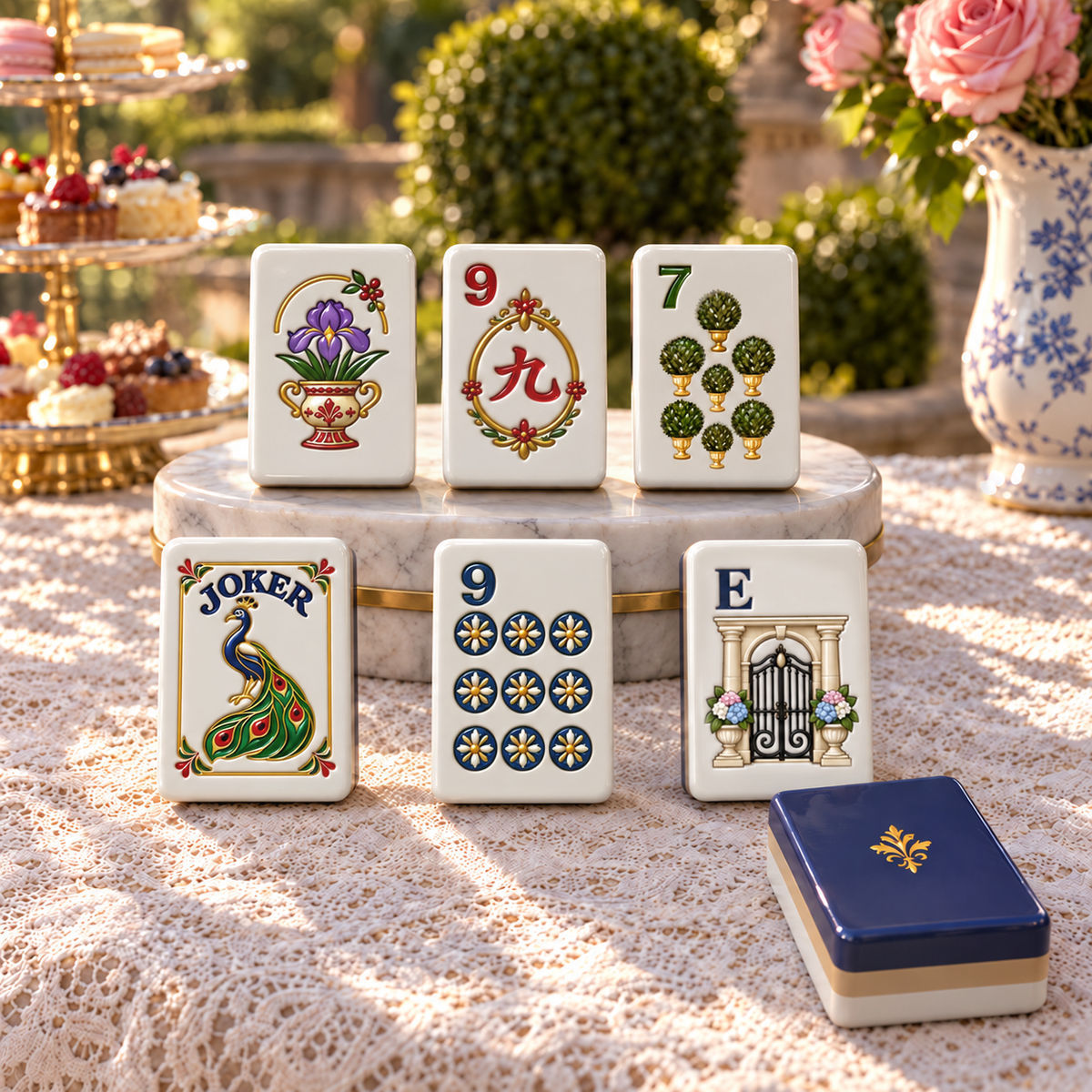
The 369 hands rule in American mahjong means you can only win using hands listed on the current year's National Mah Jongg League card. "369" refers to three categories of winning patterns: all pungs/kongs (sets of three identical tiles), all chows (sequences)—wait: American mahjong has no chows. You win by combining pungs (3 identical), kongs (4 identical), quints (5 identical), sextets (6 identical), pairs, and jokers exactly as shown on the card for that year. The hand must use precisely 14 tiles (1 pair + 13 exposed tiles or melds). You cannot improvise. Each spring the National Mah Jongg League publishes the only legal hands; you must match one of them to declare "Mahjong." Jokers can substitute for any tile in a pung, kong, quint or sextet—never in a pair or single tile. If your 14 tiles don't match a card hand, your win is invalid and play continues; your hand is exposed to all players. We've seen players lose by thinking a pattern "should" count: it doesn't unless it's on the card, so learn to read the card first.
What does "369 hands" actually mean?
The term "369" is historical shorthand: it once referred to three broad categories of winning patterns (like all-pung, all-mixed, etc.). Today it simply means "the hand must match the official card—period." The current year's National Mah Jongg League card lists roughly 70–80 unique hand structures, each repeatable with different suits and number combinations. When someone says "play 369 hands," they mean "play legal hands only," not hands you invent or think are fair. This distinction matters because some regional variants (Chinese, Hong Kong, Riichi mahjong) allow "going out" on combinations that American mahjong strictly forbids. If you're learning American mahjong, you must check the card every time. No card = no win. It's that hard stop.

How do you know if a hand is legal before you declare?
Before you call "Mahjong," scan the current year's card for a pattern matching your 14 tiles. Start by identifying what you have: count your pungs, kongs, quints, sextets, and pair. Write down the suit and number of each. For example, if you hold three 5 Dots, three 6 Dots, three 7 Dots, and a pair of Red Dragons, you're looking for a card entry with "three consecutive pungs in one suit + a Dragon pair." Flip through the card sections—the card is usually organized by hand type and number of melds—until you find an exact match. If your pattern appears, you're legal; call "Mahjong." If you cannot find it after a careful scan, do not declare. Many new players rush: they see "three pungs and a pair" and assume it's automatic. It's not. The card specifies which pungs, which suits, and which pair combinations count. A pung of 5 Dots is not interchangeable with a pung of 5 Bams for most hands. Slow down, check the card, and you'll avoid a dead hand.
What tiles can you expose during play?
In American mahjong, only certain melds are exposed (shown to the table): pungs (3 identical tiles), kongs (4 identical tiles), quints (5 identical tiles), and sextets (6 identical tiles). You can never expose a pair, a single tile, or a joker alone. Many players confuse this with Hong Kong mahjong, where chows (sequences like 1–2–3) are exposable. American mahjong has no chows; sequences are illegal entirely. When you pick a tile from the wall or claim a discard, if it completes a pung, Kong, quint, or sextet, you can meld it openly on your rack. If it doesn't, keep it hidden in your hand. Jokers substitute for missing tiles in any exposed meld—for example, two 8 Craks and a Joker count as three 8 Craks. But here's the trap: a Joker cannot be used in a pair, and it cannot be used alone. If your winning hand requires a pair of 5 Dots and you only have one 5 Dot and one Joker, you cannot use the Joker to make the pair; that hand is dead. Exposure timing is strict. Once you've declared "Mahjong," all your hidden tiles are revealed; if they don't form a legal hand, you pay a penalty and play continues.
🀄 Shop best-selling mahjong sets →
How do you score a valid 369 hand?
Scoring in American mahjong is determined by the National Mah Jongg League card: each hand has a point value printed next to it on the card. Unlike some variant games, there's no calculation. You look up your hand pattern on the card, read the points (usually 20–70 points, with some rare hands worth more), and that's your score. The player who won pays the other three players (or the payout is divided evenly if two players tied); in some friendly games, all losers pay the winner. The card also notes special modifiers: for example, some hands are marked "limit" or "ceiling," meaning they score maximum (often 70 points), regardless of how many jokers or exposures occurred. Others have no modifier and score their printed value straightforwardly. A few hands are marked "closed" (no melds exposed during play; you must draw the final tile or claim the discard and immediately declare). Understanding the card's notation is essential; a hand you think you've won might be a closed hand that you've already broken by exposing a meld. This is why reading the card correctly before the game starts—not during it—saves disputes and keeps the table moving. Pay attention to the printed value; don't trust memory.

Why do jokers sometimes make a hand illegal?
Jokers are powerful but rule-bound. A Joker can replace any tile in a pung, kong, quint, or sextet. However, it cannot be part of a pair, and it cannot exist as a single tile. This creates a common mistake: a player picks a discard, thinking a Joker in their hand will "complete" a pair. It won't. If you need two 9 Bams and you only have one 9 Bam and one Joker, you do not have a legal pair; you have one tile and a Joker, which is not a pair. When you're building a hand toward the card, count jokers as flexible substitutes only for open melds (pungs, kongs, quints, sextets). Count them as useless for pairs. Also, a hand can use multiple Jokers, but each Joker must replace a different tile or meld. For instance, a hand with a 5 Dot pung containing one Joker (representing the missing 5 Dot) and a 6 Bam pung containing another Joker (representing a missing 6 Bam) is legal. But two Jokers in the same meld mean two tiles are missing from that meld, and most hands don't allow that. Check the card to confirm how many Jokers a specific hand permits. Learn how jokers work in detail if you're new to the game; it'll save you money and embarrassment.
What's the biggest mistake new players make with 369 rules?
The biggest mistake is assuming a pattern is legal without checking the card. New players see "three pungs and a pair" and think "that's a hand." It's not—not unless that specific combination appears on the card with those exact suits and numbers. We've watched players discard a tile they thought was "dead," only to realize later it would have completed a legal hand they didn't recognize. Another common error is using a Joker in a pair or as a single tile, then being confused when the hand is rejected. Jokers are flexible, but only in visible melds (pungs, kongs, etc.). A third mistake is not checking what year's card you're using. The National Mah Jongg League issues a new card every spring, and hands change. If you're playing with an old card from 2024 and someone else pulls out the 2026 card, you'll have a conflict. Many players carry the current year's card in their rack bag. Finally, not paying attention during the Charleston or early game—the tile exchange before play—means you miss information about what's already discarded or what your opponents might be chasing. Slow, deliberate play and constant reference to the card protect you from all of these.
A Quick Comparison: Hand Validity Checklist
Check | Action | Red Flag |
Do you have exactly 14 tiles? | Count: 1 pair + 13 melds/tiles | Fewer or more = no win |
Does your pattern match the card? | Scan all sections; write down your meld types | Can't find it = not legal |
Are all pairs and melds identical? | Each pung = three same tiles (e.g., 5 Dot, 5 Dot, 5 Dot) | Mixing suits or numbers = no |
Are Jokers only in exposed melds? | Check that Jokers replace tiles in pungs/kongs/quints/sextets | Joker in pair or alone = illegal |
Did you expose any melds during play? | If yes, confirm the hand is not marked "closed" on the card | Closed hands must remain hidden until win |
What to check before you buy a mahjong set for 369 play
Before investing in a mahjong set, confirm it includes a current-year National Mah Jongg League card or that you can access one online (most sites and stores provide the free PDF for the current year). Without the card, you cannot play 369 hands legally. A standard American mahjong set contains 152 playing tiles plus spare jokers; our best-selling sets arrive with the card printed or a link to download it. Verify the set includes all tile types: three suits (Bams, Craks, Dots) numbered 1–9 (four copies each), 16 winds (four each of North, East, West, South), 12 dragons (Red, Green, White), eight flowers, and eight jokers. Count the jokers; many new players unknowingly discard a joker early and then can't complete a hand later. If you're hosting a weekly game, a durable mat with clear zones and a set of racks with pushers make tile management faster and reduce disputes about hand layout. A good rack keeps your hidden tiles upright and organized so you can scan the card and your hand simultaneously without fumbling. Finally, keep the current-year card in a visible spot—not in a drawer—so everyone can reference it during play. A laminated card or a card stand helps prevent spills and keeps it readable through a full evening of games.
🎁 See our most-loved mahjong sets & accessories →
Related reading: How to play American mahjong
If you're brand new to the game, start with the basics. American mahjong is rule-heavy but fair once you know the foundation. The 369 rule is just one pillar; understanding the Charleston (the tile-passing ritual before play), how to draw and claim tiles, and when to hold or discard rounds out your toolkit. Every rule exists to keep the game balanced and prevent luck from dominating skill.
✨ Find your Mahstead set — free US shipping →

FAQ
Can you win a hand that isn't on the card?
No. American mahjong allows only hands listed on the current year's National Mah Jongg League card. If your 14 tiles don't match a card pattern exactly, your win is invalid. Your hand is then exposed, and play continues. This rule is absolute and non-negotiable in all American mahjong clubs and tournaments.
What does "closed hand" mean, and how does it affect 369 play?
A closed hand is one you must keep entirely hidden during play. You cannot expose any melds (pungs, kongs, etc.) before declaring. Once you draw the final tile or claim a discard, you immediately call "Mahjong," and your tiles are revealed. If the card marks a hand as closed, exposing even one meld before winning makes that hand dead. Always check the card notation before committing to a closed pattern.
Can a Joker substitute for a tile in a pair?
No. Jokers can only substitute for tiles in exposed melds (pungs, kongs, quints, sextets). A pair must consist of two identical, non-Joker tiles. If you need a pair of 3 Craks and only have one 3 Crak and one Joker, you cannot use the Joker to complete it. Your hand is dead.
What happens if I call "Mahjong" on an illegal hand?
You pay a penalty (usually the full point value of the hand or a fixed amount; your table determines this before play starts). Your hand is revealed to all players, and play resumes. The next player to draw or claim a discard gets a turn. Most friendly games impose a small fixed penalty; tournament play may have stricter consequences.
How do I know if my hand pattern is on the card?
Write down the suit, number, and count of each meld (e.g., "pung of 5 Dots, pung of 6 Dots, pung of 7 Dots, pair of Red Dragons"). Then systematically flip through the card sections, looking for that exact arrangement. The card is usually organized by hand structure (all-pung, mixed, etc.) and then by suit and number. If you can't find a match after a careful search, the pattern isn't legal for that year.
What's the difference between a pung and a kong?
A pung is three identical tiles (e.g., three 7 Bams). A kong is four identical tiles (four 7 Bams). Both are exposed melds in American mahjong. A hand can include pungs, kongs, quints (5 identical), and sextets (6 identical). Some hands on the card specifically require a kong; others forbid it. Check the card notation to confirm what your pattern allows.
Can American mahjong hands use sequences like 1–2–3?
No. American mahjong does not allow sequences (chows). Hands are built entirely from pungs, kongs, quints, sextets, and one pair. This is a major difference from Chinese, Hong Kong, and Riichi mahjong, where sequences are core. If you're switching between variants, be careful not to mix the rules.


View More
View More
View More
