
Chinese Official Mahjong Quick Start Guide
Last updated: Nov 23, 2026
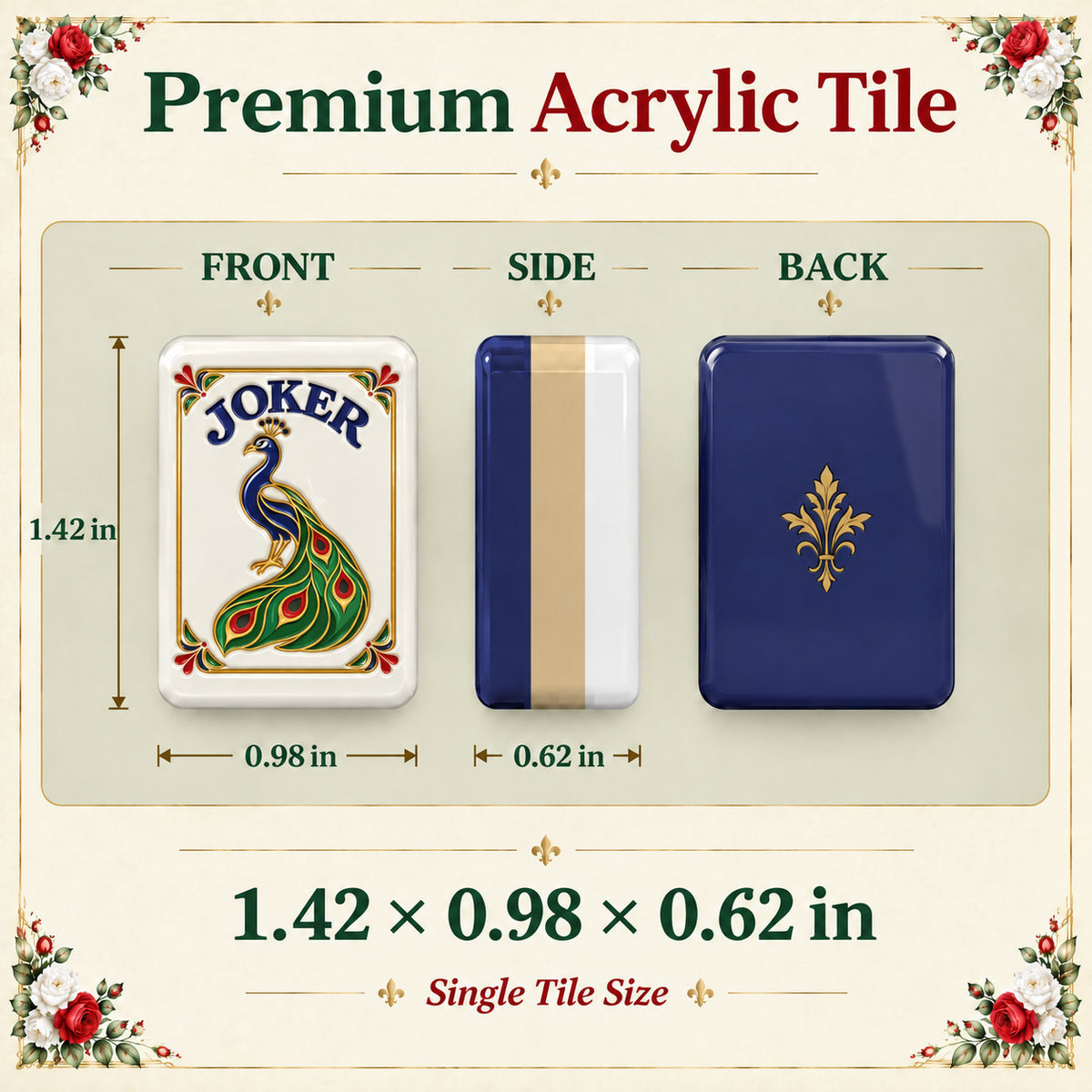
Chinese official mahjong—also called Cantonese mahjong—uses 136 tiles (four of each: numbered 1–9 in three suits: Bams, Craks, Dots, plus winds, dragons, and flowers). The goal is identical to American mahjong: form and expose melds (Pungs of three, Kongs of four, and sequences called Chows that can be called and exposed, unlike American play). Rounds are faster; drawing and discarding tiles continues until someone wins with a complete hand. There's no annual card, no Charleston passing, and no jokers—pure strategy from tile one. A full set costs roughly what an American set does. Chinese mahjong plays best with four players and takes 15–30 minutes per hand. The biggest trap beginners hit: forgetting that Chows (sequences like three 4s, then 5s, then 6s of the same suit) are legal and exposed, making hand-building wider and more tactical than American rules allow.
What is the core difference between Chinese and American mahjong?
American mahjong prohibits sequences (Chows) entirely—you may only expose three, four, five, or six identical tiles. Chinese mahjong allows and rewards Chows. Where American play demands an exact hand from a set card issued each spring, Chinese mahjong has no card; winning patterns are determined by point-scoring rules baked into the game itself. American uses 152 tiles plus jokers; Chinese uses 136 tiles, period. American rounds require a formal tile pass (the Charleston) before play; Chinese starts drawing immediately. American games end after four hands; Chinese rounds continue as long as players wish. The shift from card-driven rigid hands to sequence-friendly flexible patterns makes Chinese mahjong feel looser and faster.

How do you build and expose a winning hand?
A winning hand in Chinese mahjong has four melds and a pair (14 tiles total). A meld is either a Pung (three identical tiles), a Kong (four identical), or a Chow (three consecutive tiles in the same suit—like 5, 6, 7 Dots). The pair is always two identical tiles. You build your hand by drawing one tile at the start of your turn and discarding one at the end. Once you have three tiles that form a legal meld, you may call and expose it face-up on the table immediately—any player can discard into that meld if it completes a pair or fills a Chow slot. This is radically different from American play, where your entire hand stays hidden until you declare a win. Speed comes from the fact that exposed melds telegraph strategy; players adapt and block faster. The first player to declare a complete, exposed hand wins that round.
🀄 Shop best-selling mahjong sets →
What are the winning rules and scoring basics?
In Chinese mahjong, declaring a win (called "Hu" or "Mah-jong") requires a complete hand: four melds and a pair, all exposed or ready to expose when you take the winning tile. Winning is binary—either your hand is valid or it is not. Points vary widely by ruleset; common scoring counts pungs and kongs differently, assigns bonus points for self-drawn tiles versus tiles taken from another player's discard, and awards extra for "limit hands" (certain rare patterns). A typical hand worth 8–20 points is paid by all three opponents; higher-scoring hands multiply the payout. Play rotates dealer position after each win or "dead hand" (no winner). Most casual games play best of four or six rounds, with the dealer keeping position if they win and moving if they don't. The simplest version: winner takes all; runner-up settles ties by comparing tile combinations. This flexibility means groups can set house rules, making Chinese mahjong adaptable to any skill level.
How does the tile draw and discard sequence work step-by-step?
Step 1: All players draw 13 tiles; the dealer (East) draws one more, starting with 14.
Step 2: East discards one tile face-up in the center discard zone.
Step 3: South takes their turn: draw one tile (to 14), then discard one face-up.
Step 4: If any player can use the discard to complete a meld, they call it immediately ("Pung," "Kong," or "Chow") and expose it on the table. If no one calls, the next player draws.
Step 5: Play continues clockwise. A player who draws the winning tile declares immediately; a player who takes a discard as their winning tile must call before the next player draws.
Step 6: If no one reaches 14 tiles in a legal winning configuration after all tiles are drawn, the round is dead (no winner), and the dealer button moves.
The flow feels like a live auction—every discard invites three opponents to claim it. Beginners often stall because they're counting combinations; speed improves after two or three rounds once muscle memory takes over.

How does Chinese mahjong differ from Japanese Riichi and Hong Kong variants?
Variant | Tile Count | Sequences (Chows) | Card Needed? | Jokers/Wildcards | Exposure Rules | Win Speed |
Chinese Official | 136 | Yes, legal & called | No | None | Open melds anytime | 15–30 min |
Japanese Riichi | 136 | Yes, but "closed" | No | None | Hidden until win | 20–40 min |
Hong Kong | 136 | Yes, called | No | None | Open melds + luck tiles | 20–35 min |
American | 152 + jokers | No sequences | Yes (annual card) | 8 jokers | Exposed pungs/kongs only | 30–60 min |
Chinese official mahjong sits between Japanese Riichi (which hides melds until winning) and Hong Kong style (which allows "bonus" tiles and floor luck). If you've played American mahjong, the shift to sequences will feel like relearning hand patterns—but it opens strategy. Japanese Riichi is more cerebral and defensive; Chinese is more social and reactive. Hong Kong adds luck elements (bonus tiles drawn from the wall) that feel like wildcards. For a newcomer, Chinese official is the fastest entry point and plays best in social settings where players want quick rounds and visible progress.
What equipment do you actually need to play Chinese mahjong?
You need one 136-tile set (consisting of four copies each of numbered 1–9 in Bams, Craks, and Dots—108 tiles—plus 16 winds, 12 dragons, and optional flowers). No jokers, no blanks. A best-selling mahjong set designed for American play will have extra tiles; set them aside and use exactly 136. You'll want a hard surface (table or mat) to protect the tiles and give you clear zones for your hand, melds, and the discard pile. Some groups use mahjong racks with pushers to organize their hand and push tiles forward when they meld; they're optional but reduce fumbling. A mahjong mat is helpful if your table is bumpy or you want to contain noise. Dice are less critical for Chinese play than American (you still need to determine the dealer), but nice to have. If you're traveling to a tournament or playing weekly, a travel bag or case keeps your set safe. The beauty of Chinese mahjong is that it doesn't demand the annual card, so you can play anywhere, anytime, with anyone who knows the rules.
🎁 See our most-loved mahjong sets & accessories →
What are the most common beginner mistakes and how to avoid them?
Mistake 1: Forgetting Chows are legal. New players from American backgrounds assume you can't call sequences. You can. Always. Practice naming Chows aloud: "Five, six, seven Dots" to build the habit.
Mistake 2: Holding onto high-value pairs too long. Dragons are tempting; discarding them early often saves you. If three players are hoarding them, they're probably not winning material.
Mistake 3: Calling every meld immediately. Sometimes holding a hidden meld keeps your options open. Call only when it blocks an opponent or you're one tile from winning.
Mistake 4: Misreading the discard zone. In Chinese play, all discards stay visible on the table in turn order. Use that memory—opponents telegraph their strategy through the tiles they've thrown away.
Mistake 5: Confusing the dealer button. In Chinese mahjong, the dealer keeps their position if they win; if they lose or the round is dead, the button moves clockwise. Track it visually or assign someone as scorekeeper.
Mistake 6: Ignoring time. Chinese rounds are fast. If you take more than five seconds to decide, you slow the table. Play decisively; overthinking kills momentum.
The fastest way to dodge these: play two practice rounds before keeping score, and ask the most experienced player to call out illegal declarations during hand 1.
What to check before you buy a set for Chinese play:
Tile size: Chinese sets often have slightly smaller tiles than American (roughly 0.75 inches vs. 1 inch). Smaller tiles fit in racks better if you use them; they also feel less "clunky" in hand. Check your table height and hand comfort.
Wear and corner chips: Acrylic tiles chip when stacked or dropped. If you play weekly, invest in a set with thick acrylic; resin tiles wear faster. Mahstead's best-selling sets use durable acrylic rated for regular play.
Engraving clarity: If tiles are engraved (not printed), they last longer. Printed tiles fade after two years of heavy use. Engraving is permanent.
Weight and feel: A heavier tile feels more premium and shuffles more predictably. Most players prefer 30–40 grams per tile; lightweight sets (under 20g) feel plasticky.
Storage and transport: If you host weekly, a mahjong bag or case with dividers for tiles, racks, and mats saves setup time and protects your investment.
✨ Find your Mahstead set — free US shipping →
Why start with Chinese mahjong if you already play American?
American mahjong is card-bound, hand-locked, and strategic in a static way—you know the legal hand before you draw a tile. Chinese mahjong is tile-driven, real-time, and reactive. It teaches you to think in sequences, not just pungs. Rounds finish in 15 minutes instead of 45, so you can play eight games in one session instead of two. The absence of an annual card means you can learn one ruleset and play forever—no spring card rotation. Most importantly, Chinese mahjong is played worldwide by millions; if you travel or play online, Chinese rules are the common tongue. Many American players who learn Chinese report they enjoy American more when they return, because the slower pace and fixed hands feel luxurious. The two games are complementary, not competing.

FAQ
Do I need a special tile set for Chinese mahjong, or can I use my American set?
You can use an American 152-tile set for Chinese play—just set aside the extra tiles (jokers and blanks) and use 136 tiles. However, American sets are built larger than many traditional Chinese sets, so your hand may feel crowded in racks. A true Chinese set is sized and weighted for that play style.
How long does a typical Chinese mahjong game take?
A single hand plays in 10–20 minutes for experienced players. A full session (four to six hands, like a match) runs 60–90 minutes. American mahjong rounds take 30–60 minutes per hand, so Chinese is significantly faster.
Can I play Chinese mahjong with fewer than four players?
Traditional Chinese mahjong is designed for exactly four. Two and three-player variants exist, but they require house rules or different tile distributions. We recommend learning four-player first, then exploring adaptations once you're fluent.
What happens if two players draw the winning tile at the same time?
The player whose turn it was has first claim. If both drew from the discard, the player sitting closer to the discarder (usually the next in turn order) wins. House rules vary; agree before you begin.
Is there a difference between "Cantonese mahjong" and "Chinese official mahjong"?
Cantonese mahjong is the most common Chinese variant (played in Hong Kong and southern China) and uses 136 tiles with Chows. "Chinese official" rules were standardized in the 1990s for tournaments. They're nearly identical for casual play; official rules have stricter scoring and naming conventions for limit hands.
Do I need jokers to play Chinese mahjong?
No. Chinese mahjong uses zero jokers or wildcards. The 136 tiles are fixed and immutable. This is one reason it feels cleaner and more mathematical than American play, where jokers add complexity.


View More
View More
View More
