
13579 Section of the Mahjong Card Explained
Last updated: Nov 23, 2026
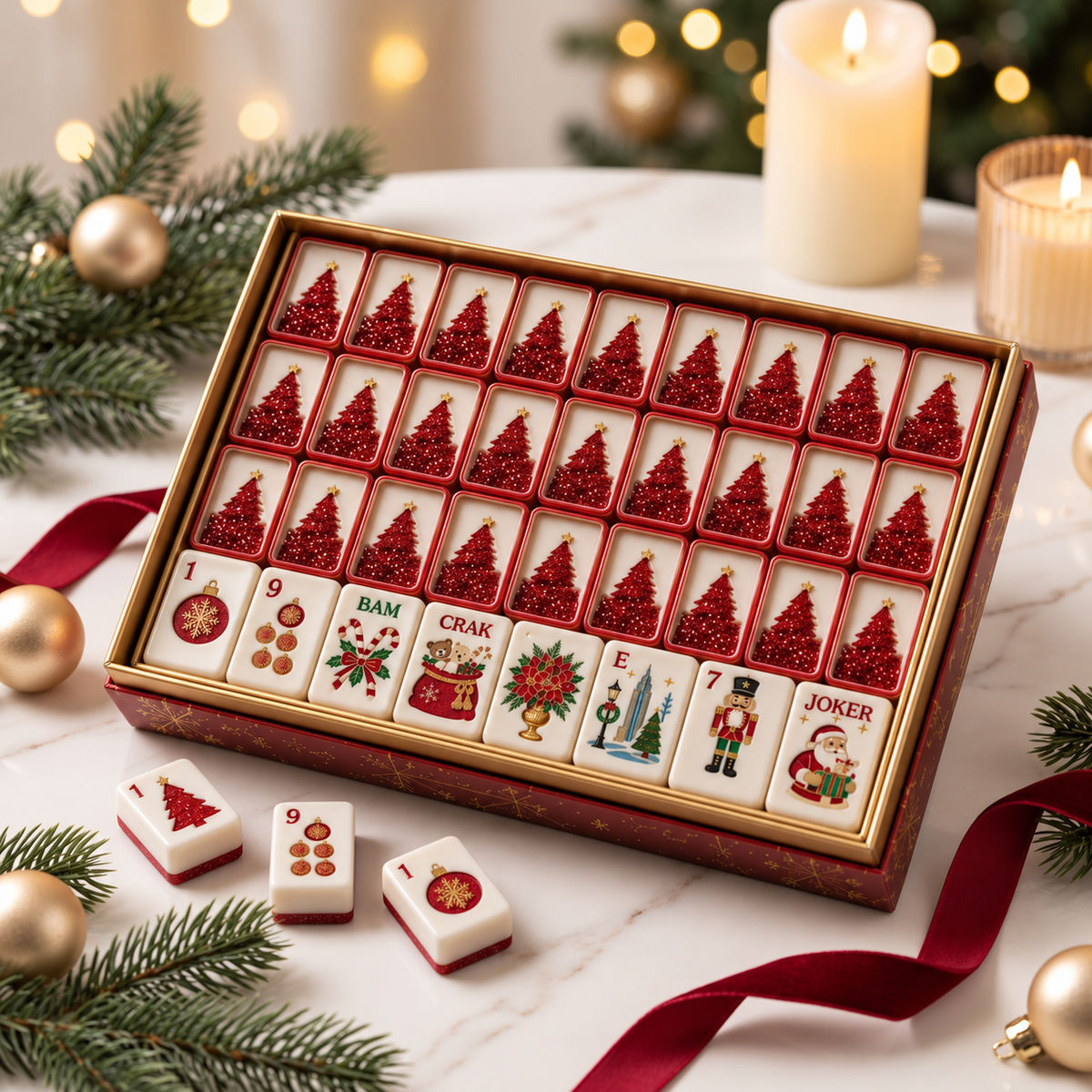
The 13579 section of the National Mah Jongg League card contains hands composed entirely of odd-numbered tiles (1, 3, 5, 7, 9) across one or more suits. These hands appear in their own dedicated row or rows on the current year's card and are prized for their visual symmetry and the habit they build in tile recognition. The section typically occupies a handful of lines on the printed card and includes patterns ranging from simple pungs and kongs of single odd numbers to complex mixed-suit combinations using all five odd values. Because they exclude all even tiles (2, 4, 6, 8), spotting a 13579 hand is faster than hunting through multi-suit options; you can eliminate half the deck instantly. Mahstead's printed card comes with every set we sell, so you'll have your own reference during games.
The 13579 section of the mahjong card groups hands built only from odd numbers: 1, 3, 5, 7, and 9 in any suit or combination of suits. Unlike sections organized by number of melds or joker count, 13579 is defined purely by tile composition—no even tiles (2, 4, 6, 8) appear in any valid hand in this section. This constraint makes it one of the easiest sections to navigate once you understand the rule. Most weeknight games see at least one player build a 13579 hand per session, making it practical to master early.
When you spread your 14 tiles at the start of a hand, scan for odd numbers first. If you're holding mostly 1s, 3s, 5s, 7s, and 9s with few or no even tiles, you're primed for 13579. The card lists these hands in rows—often grouped by number of melds, suit composition, or pung/kong structure within the section—so you can reference them quickly without flipping through unrelated patterns. Understanding the layout saves time and keeps the game moving.
Where does the 13579 section sit on the card?
The 13579 section occupies a fixed position on the current year's National Mah Jongg League card, typically found on one side of the printed sheet alongside other tile-composition sections. Each year's card redesigns slightly, so position varies; however, the section is always clearly labeled. Flip to the 13579 label, and you'll find all hands for that season grouped below. Most players keep a card within arm's reach or use a printed reference to quickly find hands during play. Knowing where the section lives on your card saves seconds per draw—and seconds add up over a two-hour session.

How do you spot a 13579 hand in your rack?
Look at your 14 tiles and count odd numbers (1, 3, 5, 7, 9) versus even (2, 4, 6, 8). If odd tiles outnumber even by a margin, or if you have zero even tiles, check the 13579 section first. Most 13579 hands require all 14 tiles to be odd, or allow jokers (which substitute any tile) and one or two even tiles in specific positions. Common patterns include three or four pungs (3 matching odd tiles each), or a mix of pungs and a quint (5 matching tiles). Once you spot three matching odd tiles, keep drawing odd-number discards and passing odd-number tiles during the Charleston. The habit of sorting odds versus evens becomes automatic after a few games.
What types of 13579 hands exist?
Within the 13579 section, hands vary by number of melds, suit mix, and use of jokers. A single-suit hand might require four pungs of odd Bams (1, 3, 5, 7 Bams) plus one pair. A mixed-suit hand could call for two pungs of odd Dots, two pungs of odd Craks, and one pair of odd Bams. Some hands allow one or two jokers to substitute for missing odd tiles; others forbid jokers entirely. By reading the card row by row within the section, you'll see the full spectrum. Early in your session, scan the 13579 rows once to familiarize yourself with the legal patterns—it takes less than a minute and sharpens your eye for the rest of the game.
🀄 Shop best-selling mahjong sets →
How many 13579 hands are on the card?
The exact count changes yearly as the National Mah Jongg League refreshes the card each spring. Typically, the 13579 section contains between 6 and 12 distinct hand patterns, depending on the year's design. These hands are distributed across a small number of rows, making the section compact and navigable. Rather than memorizing all of them, most players learn to scan the section in order as tiles arrive, checking each pattern until one matches. This reactive approach works well and requires no memorization. Keep your printed card visible and treat the 13579 section as a quick-reference tool during play, not a memory test.

What's the difference between 13579 and other odd/even sections?
American mahjong also includes sections for even-only hands (2468), mixed odd-and-even patterns, and sections organized by pung/kong count rather than tile composition. The key difference: 13579 is purely compositional—all tiles must be odd—whereas an "all pungs" section might mix odd and even freely. The 2468 section mirrors 13579 (all evens, no odds), while sections labeled "mixed" allow both. When reading the card, the section label tells the story: if it says 13579, you're in odd-only territory. This clarity means less second-guessing mid-game and fewer missed hands.
Section Type | Tile Rule | Typical Hand Count | When to Check It |
13579 (odd-only) | All tiles 1, 3, 5, 7, 9 | 6–12 patterns | Holding mostly odd tiles |
2468 (even-only) | All tiles 2, 4, 6, 8 | 6–12 patterns | Holding mostly even tiles |
Mixed odd/even | Any combination allowed | Varies by section | Holding varied tile values |
Single-suit | All one suit (any numbers) | Varies | Holding primarily one suit |
🎁 See our most-loved mahjong sets & accessories →
How do jokers factor into 13579 hands?
Jokers are wild tiles that substitute for any value you need. Within the 13579 section, some hands explicitly allow jokers (noted on the card), while others forbid them. A hand reading "1-3-5-7-9 Bams pung, joker" means you can use a joker in place of any missing odd Bam. However, a pair can never contain a joker—both tiles must be identical actual tiles. If a 13579 hand shows zero jokers, every odd tile must come from your actual draw; no wildcards allowed. Study the joker notation on each row: it's the difference between a legal hand and a dead end. Understanding joker rules is essential to avoiding costly mistakes at the table.
Common mistakes when reading 13579
Mistake 1: Including an even tile accidentally. You spot three odd Craks, assume you can play 13579, then realize you've got a 2 Crak hidden in your rack. Always re-count: zero even tiles required? Move forward. One allowed? Know where. Careless even tiles waste a draw.
Mistake 2: Confusing 13579 with the 2468 section. They're opposites. Double-check the card label before declaring. A caller asking for 1, 3, 5 is not the same as 2, 4, 6.
Mistake 3: Forgetting to scan the full section. You match one pattern and stop. Other patterns in 13579 might also use your tiles and need fewer calls. Always scan the entire section for all valid hands before committing to one.
Mistake 4: Misreading joker allowances. A hand with "no jokers" requires all odd tiles from your actual draw. If the card says one joker is allowed, use it wisely—don't waste it on a tile you might draw next turn.
What to check before you declare a 13579 hand:
Verify every tile is odd (1, 3, 5, 7, 9) or a joker. Rescan your rack once more—even tiles are frequent surprises.
Count your melds. Does your pung/kong/quint/sextet count match the card's requirement?
Confirm suit and number matches. Each pung must have three identical tiles; each pair must match exactly.
Check the joker line on the card. Zero, one, or two jokers? Are they placed where the card shows?
Look one row down for a better match. You might find a higher-scoring or easier hand just below.
✨ Find your Mahstead set — free US shipping →
Playing 13579 hands weekly builds the fastest tile-recognition habits in American mahjong. Most experienced players can spot a viable odd-only hand in under 30 seconds. The section's compact size and clear odd-only rule make it forgiving for beginners and efficient for veterans. If you're just starting out, learn the basics of American mahjong first, then return to 13579 as your second focus area. With a well-printed card and a few hands under your belt, 13579 becomes second nature.
When setting up your weekly game, make sure each player has a current-year card and a clear view of the 13579 section during their turn. If you're sourcing new sets for a group, our best-selling mahjong sets all include printed cards with the full layout. Pair a set with a durable mahjong mat so every player can spread their hand clearly and read odd versus even tiles without squinting. Strong equipment and clear card access turn 13579 from a puzzle into a rhythm.

FAQ
Can a 13579 hand include a joker?
Some 13579 hands allow jokers; others forbid them. Always check the card's joker notation for each specific hand. A pair can never include a joker—both tiles must be actual matching tiles, whether odd or even.
Is 13579 easier to build than mixed-suit hands?
Yes, because you ignore half the deck (all even tiles) instantly. This narrower focus speeds up scanning and reduces the mental load compared to multi-suit patterns that accept any tile value.
How many times per session do 13579 hands typically appear?
Frequency varies by tile luck and player skill. In a four-player game, expect one to three 13579 hands per session, but they're never guaranteed. Some nights yield none; others yield four or five.
What's the difference between 13579 and 2468?
13579 uses only odd-numbered tiles (1, 3, 5, 7, 9). 2468 uses only even-numbered tiles (2, 4, 6, 8). They're mirror-image sections with identical structural rules but opposite tile restrictions.
Should I pass odd tiles during the Charleston if I want 13579?
Generally, yes—pass even tiles and request odd tiles from your partners during the Charleston exchange. However, balance this with other hands you might build, since telegraphing 13579 too early can shift the table's strategy against you.
Can all four players chase 13579 hands in one round?
Theoretically yes, but unlikely. There are only 36 odd-numbered tiles total (1–9 in three suits, four copies each), so four simultaneous 13579 attempts compete for limited tiles. Expect most rounds to have one or two players targeting 13579, not all four.


View More
View More
View More
