
Modern Mahjong Travel Bag: What to Pack & How to Choose
Last updated: Nov 23, 2026
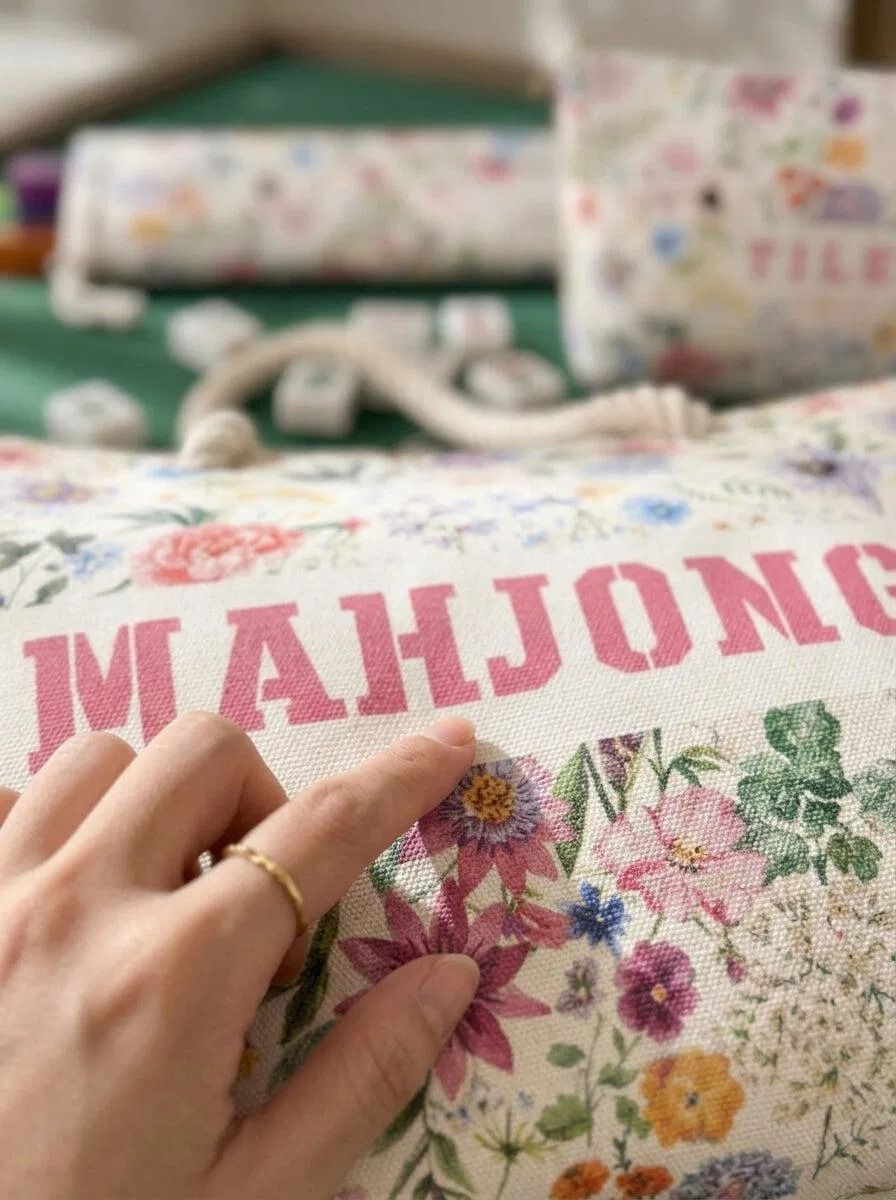
A modern mahjong travel bag is a padded carrying case designed to hold a complete 160-tile American mahjong set, often alongside a mat and racks with pushers. Most are soft-sided canvas or nylon with shoulder straps and interior compartments; some feature rigid frames. Sizes range from compact single-set carriers (14–16 inches) to large tournament bags (18–22 inches) that fit multiple sets plus accessories. Our travel-bag collection includes options with divided pockets for tiles, dice, and score pads. Cost varies by material and padding; canvas with modest insulation suits casual weekly players, while quilted or hard-shell designs protect premium sets during frequent transport. Before buying, measure your mat (most are 27–36 inches rolled) and confirm the bag's interior depth and width match your rolled mat plus set box. Avoid bags without reinforced seams or zippers—cheap hardware fails fast when loaded. 🀄 Shop best-selling mahjong sets →
What size bag do you actually need?
The short answer: measure your mat rolled and add 2–3 inches. Most American mahjong mats roll to 27–36 inches long and 6–8 inches in diameter; your bag's length must clear that. If you carry only a set and no mat, a compact 14-inch bag works. For weekly games with mat, racks, and scoring pads, choose 18–20 inches. Tournament players moving multiple sets choose 22+ inches or a roller. The rule is simple—lay your items out, roll them, and match the bundle length plus a safety margin.

Soft-sided vs. hard-shell: which protects better?
Soft-sided bags (canvas, nylon) are lighter, fold flat when empty, and fit standard car trunks. Hard-shell cases add weight but shield tiles from crushing if the bag tips. For casual weekly play in a climate-controlled car, soft-sided with 1–2 inches of padding is enough. If you travel by plane, share a cramped backseat, or live in extreme heat (tiles can warp), hard-shell pays for itself in durability. Most home players never need hard-shell; the upgrade makes sense only if your bag gets thrown, stacked, or exposed to pressure.
How do you pack a mahjong travel bag properly?
Start with your mat rolled and placed along the bag's spine. Lay your set box next to it; if the box fits beside the mat with 1 inch clearance, you're in the right size. Pack racks, pushers, and small items (dice, score pads, chalk) in side pockets or a small cloth pouch to prevent shifting. Never overstuff—zippers that strain will split. Place heavier items (set, mat) at the bag's base and lighter items (score pad, joker tracker) on top. Pad any gaps with a soft cloth or towel to stop tiles from sliding during a sharp turn. When you arrive, unroll the mat first and let it settle for 5 minutes before play—rolled mats can feel slightly stiff.
✨ Find your Mahstead set — free US shipping →
What features save you money and headaches?
Look for reinforced stitching at seams (not glued edges—they peel). A divided interior with elastic loops keeps your set's box upright and prevents other items from crushing the lid. Shoulder straps rated for 15+ pounds prevent strap failure mid-carry. Water-resistant material (canvas with wax or nylon with coating) protects tiles if you're caught in rain or near a kitchen sink. Zippered pockets let you organize tiles, pushers, and scoring materials separately, so you're not hunting through a black hole before game time. Skip bags with thin padding and no interior dividers—they're cheaper but you'll replace them within a season. Mahstead's bags and cases are designed by players who've tested every failure point.
Who should buy a travel bag vs. a mat bag?
A mat bag holds only your rolled mat and is best for players who store their set at home. A full travel bag fits set, mat, and racks—ideal for rotating host houses each week. A small clutch or pouch works if you carry only tiles and dice to someone else's game. Most of us host or rotate, so a mid-size travel bag (18–20 inches with dividers) is the practical baseline. If you're a tournament player with two sets, a 22-inch bag or a roller bag saves your back and protects both sets equally.

What to check before you buy
Feature | Why it matters | Red flag |
Interior length | Must fit your rolled mat + 2" | Listed as "exterior" not "interior" |
Stitching | Holds up to weekly use & car trunks | Glued seams only; visible loose threads |
Padding thickness | Protects tiles from crushing | Thin or none; tiles rattle when shaken |
Zippered pockets | Keeps tiles organized & separated | No pockets; loose items roll around |
Strap rated weight | Carries full set + mat safely | Flimsy webbing or no weight rating |
Water resistance | Keeps tiles dry near drinks/sinks | Plain cotton with no coating |
Shoulder comfort | Worn weekly without shoulder pain | Narrow straps or no padding |
🎁 See our most-loved mahjong sets & accessories →
How does travel bag style fit different play styles?
Casual weekly-game host: mid-size soft-sided bag (18–20 inches), modest padding, one or two pockets. Carry-anywhere player: compact bag (14–16 inches), water-resistant, lightweight. Frequent traveler or tournament player: hard-shell or quilted bag (20–22 inches), wheels optional. Gift for a new player: a set with a small carry bag bundled together—no surprises about fit or quality.
Real-world packing example
You host Tuesdays and play Thursdays at a friend's house. Your mat rolls to 30 inches. Your set box is 11 × 7 × 4 inches. Your racks and pushers fit in a 6-inch pouch. An 18-inch bag is too short—the mat's rolled diameter leaves barely an inch clearance. A 22-inch bag is overkill for one set. Buy a 20-inch bag with one long zippered pocket and elastic mat loops. Place the mat along the left wall, set box on the right, pouch in the front pocket. Strap it over your shoulder, and you carry everything in one trip. Compare this to juggling a bag, a loose mat roll, and a set box—the unified bag wins every time.
Why Mahstead bags work for active players
We design engraved American mahjong sets and play weekly, so we know what travel gear fails. Bags are tested by our own games—seams are double-stitched, zippers are all-metal, and interior layout is drawn from real-world host rotations. We don't make bags that look good but fall apart in six months. Our travel-bag line covers the gap between cheap tote bags and over-engineered cases, so you spend once and stop replacing gear.
Quick decision framework
1. Do you host or rotate? → Travel bag (full-size). 2. Do you travel by air or car only? → Soft-sided for car, hard-shell for air. 3. How many sets do you own? → One set = compact bag; two+ sets = large or roller. 4. Do you sit near drinks or food? → Yes = water-resistant material essential. 5. What's your mat length when rolled? → Add 3 inches and choose that interior dimension minimum.
If you checked "yes" to question 4 and question 1, go to Mahstead's travel-bag collection and filter for water-resistant, mid-size options. Most of us do both, so that's the sweet spot.

FAQ
Can I use a regular gym duffel for my mahjong set?
Yes, if it's padded inside and your rolled mat fits lengthwise with room to spare. The risk: tiles can shift and crack during quick stops or if the bag tumbles. A dedicated mahjong travel bag has interior dividers and elastic loops that keep everything stable—worth the focused design for weekly play.
How do I know if the bag's interior dimensions fit my mat?
Measure your mat rolled end-to-end, add 3 inches, and compare to the bag's interior length (not exterior). Ask the seller for interior depth and width too. If the listing shows only exterior size, email before buying—most travel-bag sellers will clarify.
Do I need padding if I keep my bag in the car between games?
Light padding (½–1 inch) is enough for a parked car in a garage. If your car sits in direct sun or you drive on bumpy roads weekly, quilted or 1.5–2 inch padding prevents tile warping and cushions impacts from potholes or sharp turns.
What should I pack inside the bag to keep tiles from sliding?
Place your set box upright against one wall. Roll your mat and lay it along the spine, snug against the box. Fill any gaps with a soft cloth or towel. Store racks, pushers, and dice in a small pouch inside a zippered pocket so they don't rattle. Everything should fit with zero movement when you shake the bag gently.
How much does a good mahjong travel bag cost?
See current price on the product page—costs vary by material, size, and padding. Most players find mid-range soft-sided bags fit their budget and protect a standard set well. Upgrade to hard-shell only if you travel by plane or own multiple premium sets.
Can I use the same bag for both American and Chinese mahjong sets?
Yes, if the bag is large enough. American sets use 152 playing tiles (160-tile total with spares); Chinese sets are typically 144 tiles. Both fit in a standard 20+ inch travel bag. The interior should have enough depth and width for the box plus a mat. Check the dimensions of both your sets and the bag before ordering.
What's the difference between a mahjong travel bag and a regular tote?
A mahjong travel bag has padded walls, reinforced seams, interior dividers, and elastic loops designed to keep tiles organized and protected. A tote is flat, unpadded, and designed for flexibility, not security. For weekly games, a travel bag prevents tile damage and keeps everything accessible; a tote risks tiles spilling or shifting in transit.


View More
View More
View More
