
Taiwanese Mahjong vs Sichuan Mahjong: Key Rules & Differences
Last updated: Nov 23, 2026
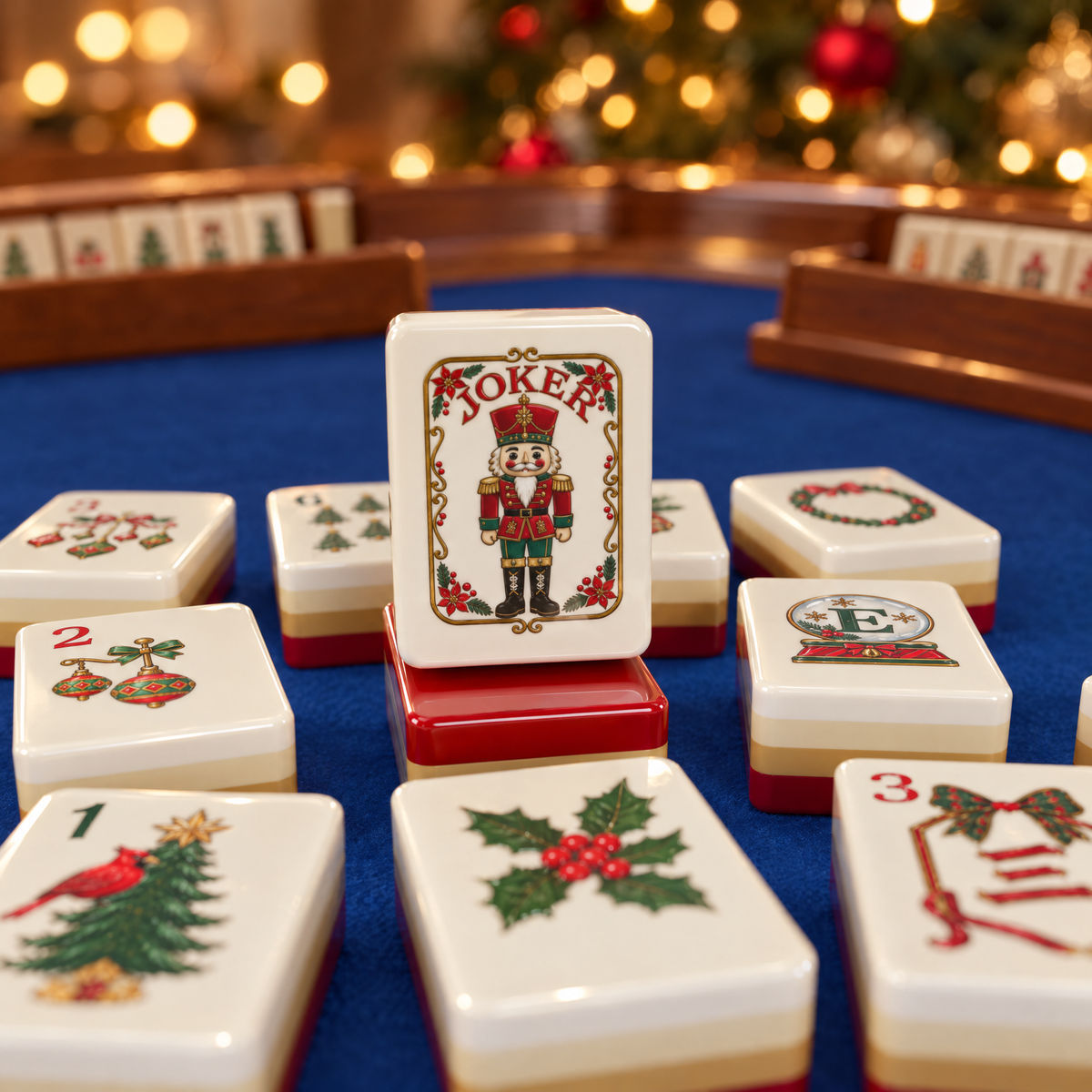
Taiwanese mahjong uses 144 tiles (four copies each of 1–9 in three suits, four winds, three dragons) and requires pungs (three identical tiles) and kongs (four identical tiles) to form hands; players win by completing a specific hand pattern plus a valid pair. Sichuan mahjong uses the same 144-tile base but adds flexible winning patterns: players can declare win with quints (five tiles) or sextets (six tiles), and some regional rules allow sequences (chows)—sets of three consecutive tiles in the same suit—to count toward a winning hand. Both variants use smaller tile counts than American mahjong's 152-tile standard, feature different scoring systems (typically honor-based rather than point-driven), and play at faster paces. Taiwanese rules lean conservative and pattern-strict; Sichuan rules embrace complexity and regional house variations. Neither uses the American mahjong card or the Charleston tile pass. If you're familiar with American mahjong, expect a different tile economy, faster decisions, and fewer jokers (or none at all in some Taiwanese games).
Taiwanese mahjong and Sichuan mahjong sit on opposite ends of the Chinese regional spectrum—one prioritizes elegance and discipline, the other rewards flexibility and speed. Both are rooted in Hong Kong mahjong ancestry, but they've evolved into distinct games with their own tile inventories, hand patterns, and winning logic. If you've played American mahjong or are considering learning a regional variant, understanding these two will help you pick the right game for your table.
What is the core tile difference between Taiwanese and Sichuan?
Both games begin with 144 tiles: four copies each of 1–9 in Bams, Craks, and Dots (108 tiles), plus four winds and three dragons (16 tiles total). Taiwanese mahjong stops there—a pure, minimal set. Sichuan mahjong often adds optional tiles (jokers or special honor tiles) depending on regional house rules, but the base remains 144. American mahjong, by contrast, uses 152 tiles because it includes all three dragons (Red, Green, White) plus 8 flowers and 8 jokers, creating a different hand-making ecology. For your home game, the 144-tile count of Taiwanese and Sichuan mahjong means faster rounds and tighter tile distribution than American play—there's less buffer, so discards matter more urgently.

How do hand-winning patterns differ?
In Taiwanese mahjong, a winning hand must contain exactly four melds (pungs, kongs, or chows) plus one pair (two identical tiles). A pung is three identical tiles; a kong is four identical; a chow is three consecutive tiles in the same suit (e.g., 3 Dot, 4 Dot, 5 Dot). The hand is rigid: the pattern is fixed, and all four melds must be "pure" (no tile can be used in more than one meld structure). Scoring is honor-based—certain melds earn points, and declaring win on your own drawn tile (self-draw) scores higher than winning on a discard.
Sichuan mahjong loosens these rules. Many regional variants allow winning hands to include quints (five identical tiles) or sextets (six identical tiles) in place of standard melds, and some permit mixed honor-and-suit combinations that Taiwanese rules forbid. Sichuan games often permit jokers (wildcards) that substitute for any tile, which Taiwanese games typically do not. This flexibility makes Sichuan faster but less predictable—house rules vary by town or even by table, so you must clarify the ruleset before sitting down.
American mahjong, which we play weekly in our Dallas sessions, shares the four-meld-plus-pair structure but uses only pungs, kongs, quints, and sextets (no chows at all). American hands come from the current year's National Mah Jongg League card, which dictates exactly which patterns are valid; this makes American mahjong highly standardized and portable across clubs. Taiwanese and Sichuan mahjong have no such card—players learn canonical hands through tradition or local custom.
Which variant is fastest to learn?
Taiwanese mahjong has the gentler learning curve because its rules are narrower and more consistent year to year. Once you know that a pung equals three, a kong equals four, a chow is a run, and you need four melds plus a pair, you can sit down and play. The hand patterns are predictable, and the elegance appeals to players who like structure.
Sichuan mahjong requires you to know your table's specific ruleset first—quints count or don't? Can jokers wildcard any tile, or only certain ones? Are sequences allowed? This variability makes it harder for newcomers but more engaging for experienced players who enjoy regional micro-cultures. American mahjong occupies a middle ground: the rules are globally consistent, but the hand card itself—listing 75+ valid patterns—takes weeks to memorize.
For a beginner sitting at a Taiwanese table, expect to learn the basics in one session. For Sichuan, add 20–30% more confusion due to house variations.
Can you play Sichuan rules with Taiwanese tiles?
Technically yes, but it's not ideal. Sichuan play often benefits from jokers, which Taiwanese tile sets omit or include in minimal numbers. If you're playing Sichuan rules and your tile set has no jokers, the game becomes mathematically tighter—fewer wildcards mean fewer flexible melds, which slows tempo and favors defensive play. Conversely, trying to play Taiwanese rules with a joker-heavy tile set creates ambiguity: are jokers in play or not?
The best practice: match your tile set to your intended variant. A traditional 144-tile Taiwanese set (no jokers or extras) signals "we're playing Taiwanese rules." If your group prefers Sichuan flexibility, ensure your set includes the jokers your regional ruleset demands. American players who own best-selling mahjong sets often appreciate that our 160-tile sets come with spare jokers—useful for American play, but also a signal that American rules (which are joker-heavy) are in effect.
What scoring and payment systems do they use?
Taiwanese mahjong typically uses an honor system: each meld type earns a fixed point value (a pung in honors might be worth 2 points, a kong in suits worth 4, a self-draw win worth a bonus). Winners collect points from each loser, and the math compounds over multiple rounds. It's transparent and quick to settle.
Sichuan mahjong variants often employ multiplier scoring: a win might be worth 2× or 4× the base depending on hand rarity, whether the winner drew their own tile, or special melds (a hand of all sequences, for example). Some regional rules use "fa" (betting units) that multiply by hand difficulty. Settlement is less standardized—you may see one table use 1-point base and another use 5-point base.
American mahjong uses point-based scoring tied to specific hand patterns on the card. A hand with five Bams in a pung might be worth 50 points, while the same hand with a "like number" pattern bonus might earn 60 points. Winners collect from each of three losers separately. American scoring is table-agnostic: if you travel to a club in another city with the current year's card, the point values remain the same.
For home-game simplicity: Taiwanese = clearest math, Sichuan = most variation, American = most structure.
Aspect | Taiwanese | Sichuan | American |
Tile count | 144 (no extras) | 144 + jokers (varies) | 152 + spares |
Melds allowed | Pung, Kong, Chow | Pung, Kong, Chow, Quint, Sextet (varies) | Pung, Kong, Quint, Sextet (no Chow) |
Jokers in play | Rarely | Often | Always (8 in game) |
Hand patterns | By tradition | By local custom | Official yearly card |
Sequence/Chow | Yes, counts toward win | Yes, region-dependent | No—never |
Self-draw bonus | Standard scoring boost | Varies by region | Yes, +10 points |
Difficulty | Moderate | High (rules vary) | Moderate (card-heavy) |
Beginner-friendly | Yes | No (house rules) | Yes (standardized) |

How do these variants relate to Hong Kong mahjong?
Both Taiwanese and Sichuan mahjong evolved from Hong Kong mahjong, which remains the most widely played variant across Asia and among diaspora communities. Hong Kong mahjong uses 144 tiles, allows chows, and permits jokers in many modern house games. Taiwanese players adopted the Hong Kong base but streamlined it—removing jokers to enforce discipline and emphasizing honor-suit balance in hand design. Sichuan players took the opposite path: they layered on regional melds (quints, sextets) and joker wildcarding to speed up play and increase volatility.
American mahjong never descended from Hong Kong rules; it was invented in the 1920s by American players who adapted principles from multiple Chinese regional games and created an entirely new system with the annual card, the Charleston pass, and a fixed 152-tile count. This independence is why American mahjong feels so different—it's not a "simplification" of Hong Kong, but a distinct reinvention.
If you've played Hong Kong mahjong, Taiwanese will feel familiar (tighter). If you've never touched an Asian variant, American mahjong is your easiest entry point because it's fully standardized and taught via the card.
🀄 Shop best-selling mahjong sets →
What should you check before choosing a variant for your table?
Rule consistency first. If you want to play Taiwanese mahjong, verify that everyone at your table knows the same pattern definitions. If anyone is learning from a different region's tradition, you'll argue over what counts as a hand. For Sichuan, establish the house rules in writing—which melds are allowed? Do jokers wildcard or do they count as a tile suit? Without this clarity, the first 30 minutes will dissolve into debate.
Tile set alignment. A Taiwanese set without jokers is a message: "we're playing Taiwanese strict rules." If you show up with a joker-laden set, your group will expect different play. American mahjong sets from best-selling collections are explicitly built for American rules—our 160-tile sets include 8 jokers in play plus spares, so there's no ambiguity. If you're learning Taiwanese or Sichuan at home, buy or borrow a set that matches your variant.
Local teacher or guide. Regional mahjong is best learned from someone who grew up playing it. A YouTube tutorial or rulebook can teach mechanics, but a live mentor will show you the unwritten customs—which discards are "safe," how to read your opponents' signals, speed expectations. If you're in a city with a Chinese community center, library, or Asian cultural organization, ask about mahjong clubs; they'll have players comfortable teaching Taiwanese or Sichuan rules.
Time commitment. Taiwanese games run at steady pace and end quickly once people know the patterns—good for a 2-hour session. Sichuan games with complex house rules can drag if players need to clarify scoring; plan 3 hours minimum. American mahjong rounds also run 2–3 hours depending on how fast players read the card and call tiles.
🎁 See our most-loved mahjong sets & accessories →
Starting a Taiwanese or Sichuan game at home: a quick checklist
Know your ruleset: Write down agreed-upon hand patterns and scoring system before tiles are shuffled.
Match tiles to rules: Use a 144-tile traditional set for Taiwanese; if playing Sichuan, confirm your set includes the jokers your house rules allow.
Teach positions first: North, East, South, West seating; who draws first; turn order (almost always counterclockwise in both variants, clockwise in American).
Play one practice round: Let players discard and pick up tiles for 5–10 turns before declaring any wins; this builds comfort.
Have a scoring sheet: Write down points for each player after each hand; it avoids disputes later.
Agree on payment method: Cash, Venmo, or points-only—settle this before the first tile lands on the table.
For equipment, a quality mahjong mat with clear bamboo-rail borders and marked tile spaces helps everyone see who's holding what and keeps tiles from sliding during the shuffle. If players have weak hands or prefer not to grip tiles, racks with pushers make tile management gentler and games faster.
Common mistakes when switching between variants
Assuming chows work everywhere. Taiwanese and Hong Kong mahjong allow sequences; American does not. If you've learned Taiwanese rules, sit down to American, and try to build a hand with 1 Dot, 2 Dot, 3 Dot as a meld, you'll be told your hand is invalid. American melds are always pungs, kongs, quints, or sextets—identical tiles only.
Forgetting the tile count. American games use 152 tiles in play; Taiwanese and Sichuan use 144. This changes draw-to-discard ratios and how long a game lasts. A hand that feels "open" in American (many tiles still in the wall) might feel "dead" in Taiwanese because the smaller pool means fewer options.
Mixing joker rules mid-game. "Can I use this joker to complete my pung?" In Taiwanese strict rules, no. In many Sichuan variants, yes. If you decide halfway through a hand, players will feel cheated. Commit to your joker rules upfront.
Misreading the learning curve. Taiwanese mahjong is easier to learn than Sichuan because house rules don't vary wildly. If you're teaching someone Sichuan, expect them to ask "wait, does this count?" more often. Be patient and write the exceptions down.
✨ Find your Mahstead set — free US shipping →

FAQ
Can I play Taiwanese mahjong with American tiles?
Not comfortably. American sets include 152 tiles, eight flowers, and eight jokers—Taiwanese games use 144 tiles and typically exclude jokers. You'd have 8 extra tiles cluttering the table and potentially confusing players about which tiles are "in play." Use a 144-tile set designed for Taiwanese or Hong Kong play for clarity.
Do Taiwanese and Sichuan mahjong use the same winning hand patterns?
No. Taiwanese patterns are narrower and consistent—a pung is always three identical, a chow is always a sequence of three. Sichuan patterns vary by region; some allow quints (five identical), sextets (six identical), or mixed honor-suit combinations that Taiwanese rules forbid. Always clarify which ruleset your table is using before the first hand.
How long does a typical Taiwanese or Sichuan game last?
A Taiwanese game usually runs 1 to 2 hours for four players (8–12 rounds). Sichuan games can stretch 2 to 3 hours if players debate house rules or scoring multipliers. American mahjong typically runs 2 to 3 hours per session due to the need to read the card for each new hand.
Is Taiwanese mahjong easier for an American player to learn?
Yes, in some ways. Taiwanese rules are more consistent and less variable than Sichuan. But American players will find American mahjong itself the gentlest entry point because it has a standardized card and unified ruleset across all clubs in North America—you learn once and play anywhere. Taiwanese requires familiarity with specific hand patterns, which takes practice.
What is the biggest rule difference between Taiwanese and Sichuan?
Taiwanese strictly forbids most jokers and extra melds, keeping the game elegant and pattern-focused. Sichuan embraces jokers, quints, sextets, and regional house variations, making it faster and more volatile. If you want predictability, choose Taiwanese; if you want speed and flexibility, choose Sichuan—but confirm your table's house rules first.
Can jokers substitute for any tile in Sichuan mahjong?
Usually yes, but not always. Some Sichuan regional rules restrict jokers to only certain suits or honor tiles. Ask before you assume a joker can wildcard a dragon or wind. This is why house rules matter in Sichuan—they are not standardized across all players or regions.


View More
View More
View More
