
Chinoiserie Mahjong Racks with Pushers: Design, Fit & Which to Choose
Last updated: Nov 23, 2026
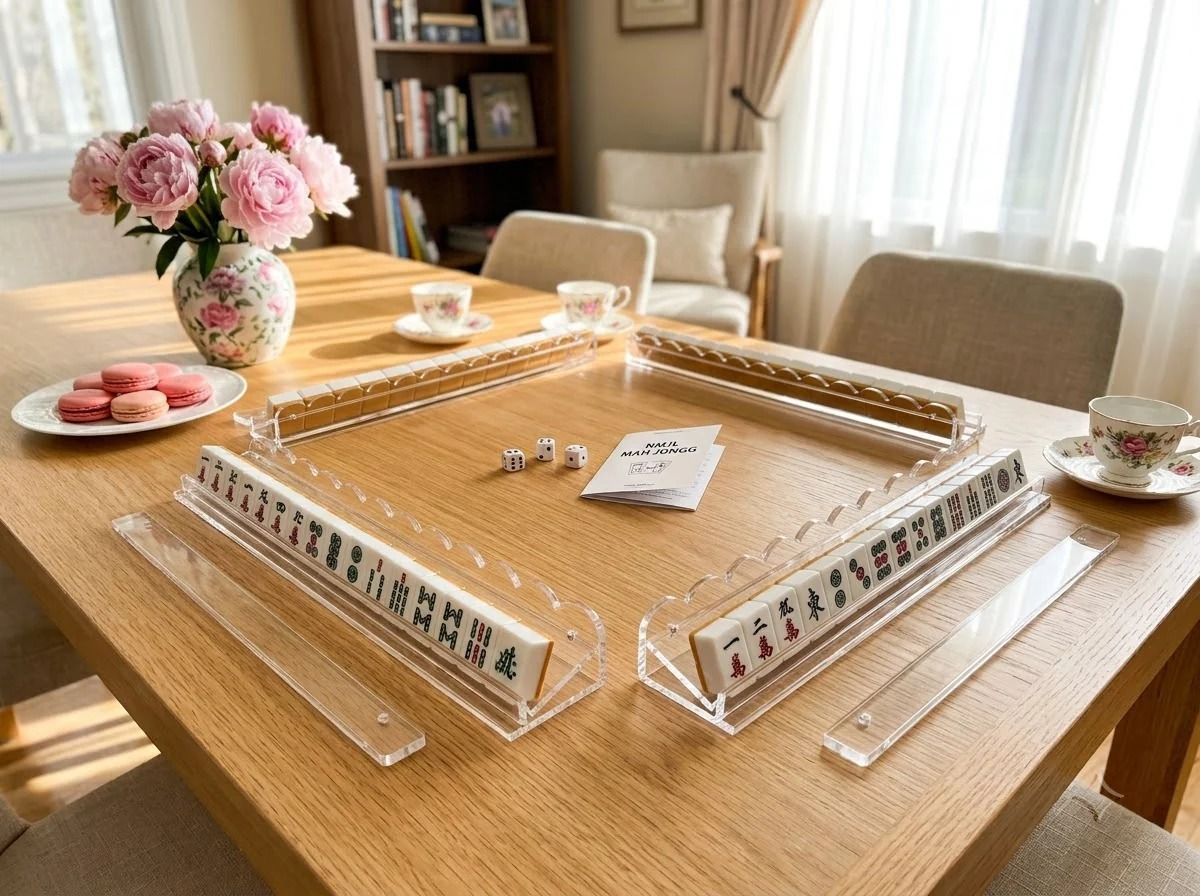
Chinoiserie mahjong racks with pushers marry hand-crafted design with functional tile management. These racks—typically carved wood, inlaid acrylic, or hybrid styles—hold 13–14 tiles upright per player, paired with a pusher (a small stick or paddle) to draw and discard cleanly. Mahstead offers racks in multiple aesthetic traditions: some feature inlaid East Asian motifs (dragons, cloud patterns, lattice), others blend contemporary angles with traditional symbolism. Pricing varies from entry-level acrylic to premium hand-carved wood; see current price on the product page. Key before purchase: measure your set's tile width (American tiles are thicker than Asian variants), confirm rack depth for your table layout, and verify the pusher weight matches your preference. Explore our mahjong racks collection to compare styles, materials and dimensions side by side.
What makes a rack "chinoiserie" rather than plain functional?
Chinoiserie design draws on Asian motifs—landscape carving, symbolic animals, geometric lattice, gilt inlay—rendered in Western materials or techniques. A plain acrylic rack holds tiles; a chinoiserie rack does that and adds visual storytelling. Many feature dragons (power, prosperity), peonies (wealth), or cloud scrollwork (celestial connection). The aesthetic elevates the game table from utility to ritual. When you choose a chinoiserie design, you're signaling that mahjong isn't a quick pastime—it's a hosted event worth the visual and tactile investment.
How do rack materials differ, and which suits your setup?
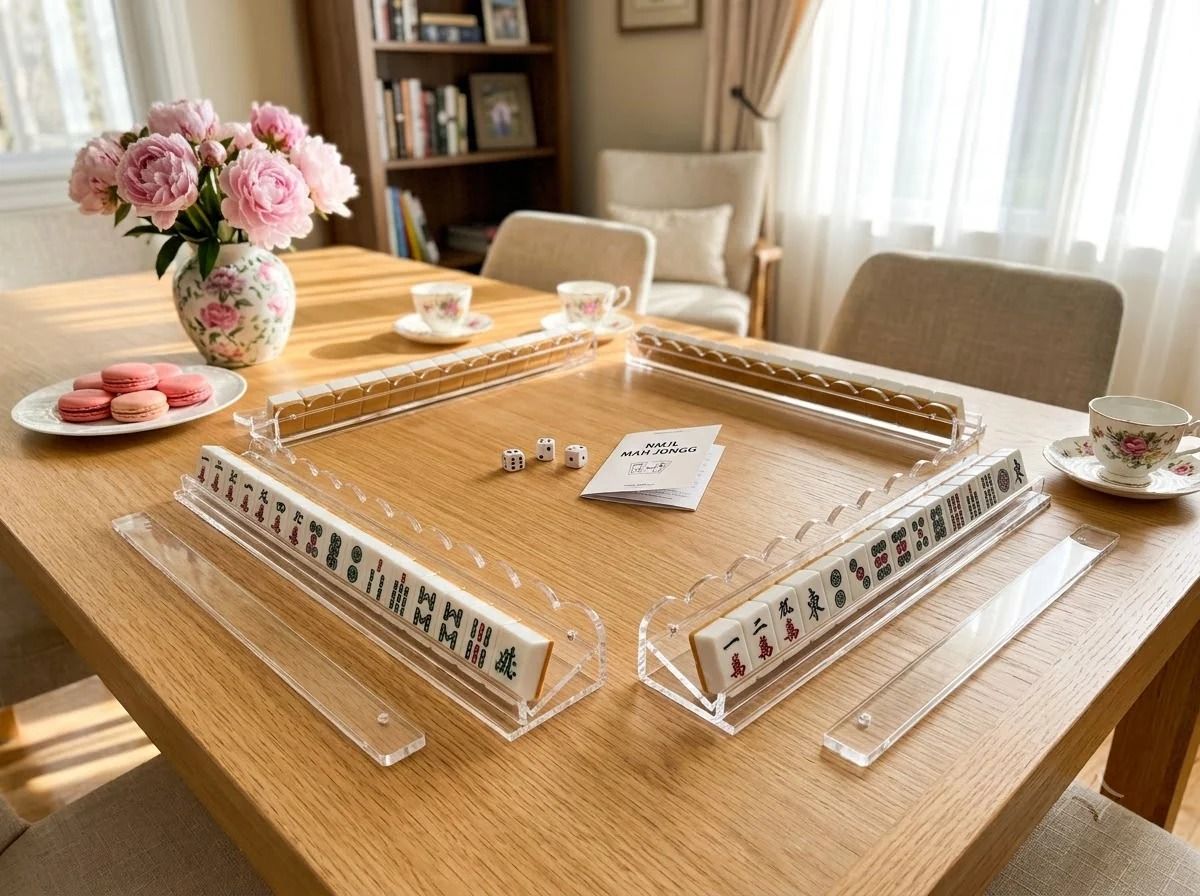
Wood (carved or laminated) offers warmth, weight, and traditional feel; it ages visibly and requires occasional care. Acrylic (solid or with inlaid designs) is durable, lighter, dishwasher-safe, and easier to clean between games. Hybrid racks combine wood base with acrylic tile holders or pushers. For weekly home games, acrylic with chinoiserie inlay strikes the balance: it resists staining from snacks or drinks, and the design won't chip from packed storage. Wood suits collectors who display their set and play in climate-controlled rooms. Check the product page to confirm material and care instructions before ordering.
What size and pusher weight should you match to your tiles?
American tiles are roughly 1⅜″ × 1″ × ¾″. Most racks hold that footprint comfortably, but acrylic sets from some makers vary slightly. Before purchasing, measure your widest tile (usually a 9 Bam or flower). A good rack leaves ⅛″ clearance on each side—too tight and tiles jam; too loose and they wobble. Pushers range from lightweight (3–5 ounces) to substantial (8+ ounces). Lighter pushers suit players with hand weakness or arthritis; heavier pushers appeal to players who prefer deliberate control. Test a friend's rack and pusher together if possible; if ordering blind, the product description should specify weight and material. Most Mahstead racks list pusher specs—read the full details to avoid surprises.
🀄 Shop best-selling mahjong sets →
Should you buy a matching set-and-rack bundle, or mix and match?
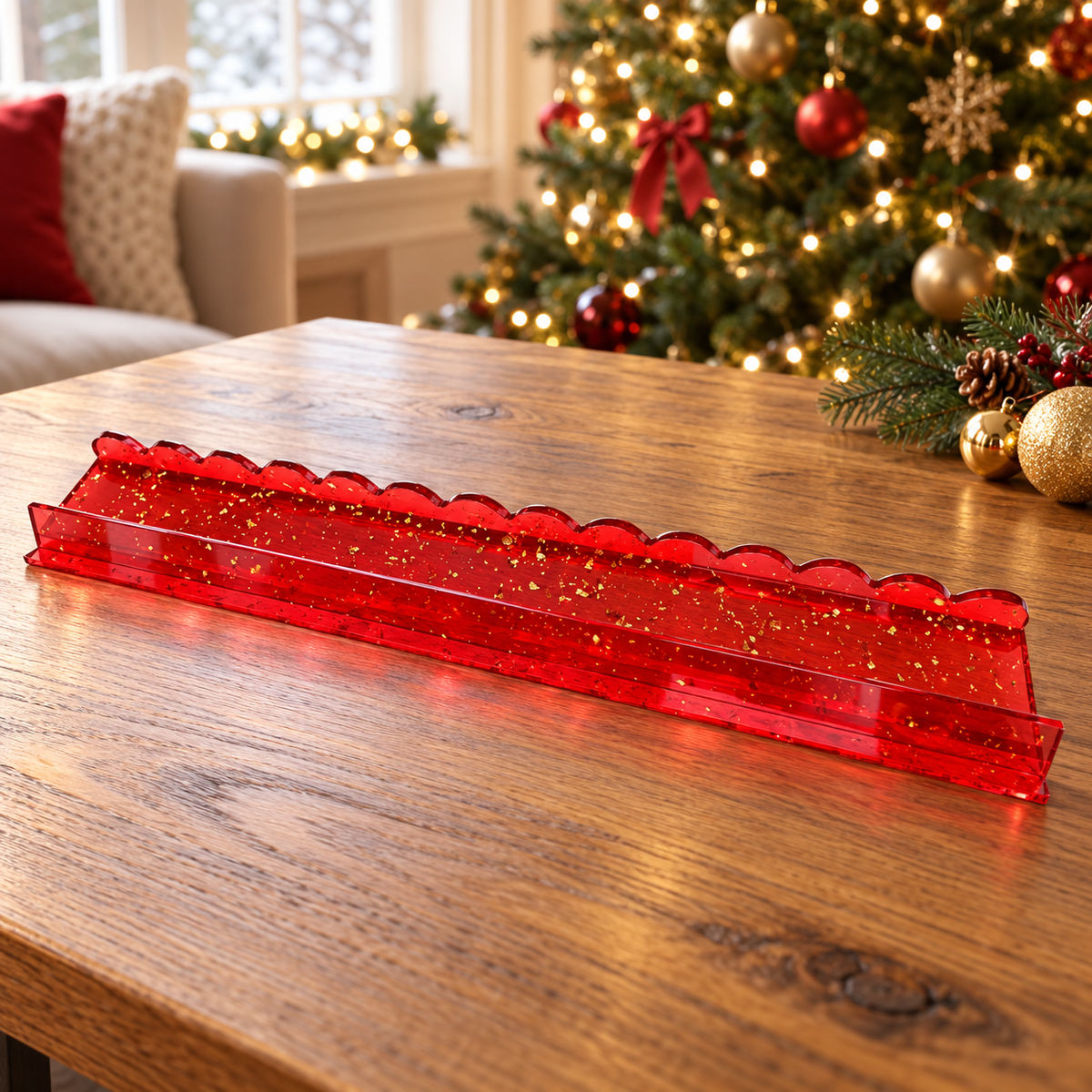
Bundling (set + racks + mat sold together) simplifies ordering, ensures tile-to-rack compatibility, and often saves money. Mix-and-match lets you pair a beloved tile set with a specific aesthetic you've chosen separately. The trade-off: bundled racks sometimes use generic (non-chinoiserie) styling to keep costs down, while standalone chinoiserie racks let you prioritize design. If you're hosting weekly games and display your set between sessions, a cohesive bundle is simpler. If you're a collector building a curated table experience, mix-and-match lets you source each component to your vision. Either way, confirm tile dimensions on both product pages before clicking purchase.
How do rack sets compare by price, style, and player preference?
Design Style | Typical Material | Best For | Care | Durability |
Carved wood with inlay | Solid wood + jade/bone | Collectors, formal hosting | Occasional polishing | High; develops patina |
Acrylic with etched motif | Clear or frosted acrylic | Weekly casual play | Dishwasher-safe | Very high; UV-fade risk outdoors |
Hybrid (wood + acrylic) | Laminated + acrylic inserts | Mixed-taste households | Wipe down | High; depends on joinery |
Contemporary geometric | Powder-coated acrylic | Modern aesthetics | Easy cleaning | High; minimal ornamentation |
Choose carved wood if you value heirloom feel and store indoors. Choose acrylic inlay if you host frequently and need low-maintenance durability. See our full mahjong racks collection to compare all styles in stock.
What should you check before you buy?
Tile dimensions: Measure your widest tile; confirm the rack accommodates American standard (1⅜″ width typical).
Table fit: Will the four racks fit comfortably around your mahjong table or dinner table surface? Check depth and angle.
Pusher feel: Is it solid enough for your hand grip? Lightweight, mid-weight, or heavy options?
Finish: Glossy racks show fingerprints; matte or etched surfaces hide wear better.
Inlay quality: If chinoiserie, are motifs hand-carved (higher maintenance, visual depth) or surface-etched (lower maintenance, less tactile)?
Joker/blank tile storage: Some racks include a small notch for spares; others don't—confirm if relevant.
Shipping: Mahstead ships free across the US; racks are well-padded to avoid damage in transit.
🎁 See our most-loved mahjong sets & accessories →
We've learned from hosting games every week that a good rack isn't just about function—it's the first thing players touch, and it sets the tone for the session. Chinoiserie racks signal care. They're the difference between "we grabbed some tiles" and "we're honoring a game with history." If you're pairing a curated American mahjong set with racks that match its spirit, start by confirming tile width, then browse Mahstead's rack designs to see which aesthetic aligns with your table's personality. Read each product page carefully—material, pusher weight, and care instructions matter more than any single review.
For players new to American mahjong, racks are optional but recommended; learn how to play American mahjong first, then invest in racks as your skill and hosting frequency grow. For seasoned players, a well-chosen chinoiserie rack is an investment in the ritual itself.
✨ Find your Mahstead set — free US shipping →

FAQ
Can I use the same chinoiserie rack style for all four players, or should each player have a different design?
All four racks should be identical in size, height, and depth for fair gameplay and even table appearance. Matching racks also simplify storage and transport. Choose one chinoiserie style you love; buy four of the same.
Do racks with pushers fit inside standard mahjong bags and cases?
Most standalone racks don't fit inside travel bags; they're typically stored on the table or in a dedicated rack case. Check mahjong bags and cases to see if any include a dedicated rack pocket. Soft cases sometimes have exterior straps or a separate compartment for racks.
My American tiles are thicker than my friend's Hong Kong tiles. Will the same rack fit both?
No. Hong Kong tiles are thinner (about ⅝″) and narrower than American standard (¾″ × 1⅜″). A rack designed for American tiles will be too wide for Hong Kong tiles, causing them to lean or fall. Always match rack to your specific tile set before ordering.
Is a carved wooden rack with chinoiserie inlay worth the extra cost compared to acrylic?
If you display your set year-round and value heirloom aesthetics, yes. If you play weekly in a kitchen or casual home setting, acrylic inlay offers 90% of the visual appeal with easier cleaning and lower breakage risk. Choose based on your use case and storage environment.
What's the difference between a rack with a built-in pusher holder and one where the pusher sits loose on the table?
Built-in holders keep the pusher attached to the rack and reduce fumbling; loose pushers can roll under the table during play. Built-in is convenient for frequent play; loose gives more flexibility if a pusher breaks. Confirm on the product page which style you're ordering.
Can I order a chinoiserie rack separately and pair it with a tile set I already own?
Yes. Measure your existing tiles first (width, thickness, height), then select a rack that matches those dimensions. Mahstead lists tile compatibility on each rack product page. Mix-and-match is common among collectors.


View More
View More
View More
