
Two-Player Mahjong Winning Hands: Rules & Strategy
Last updated: Nov 23, 2026
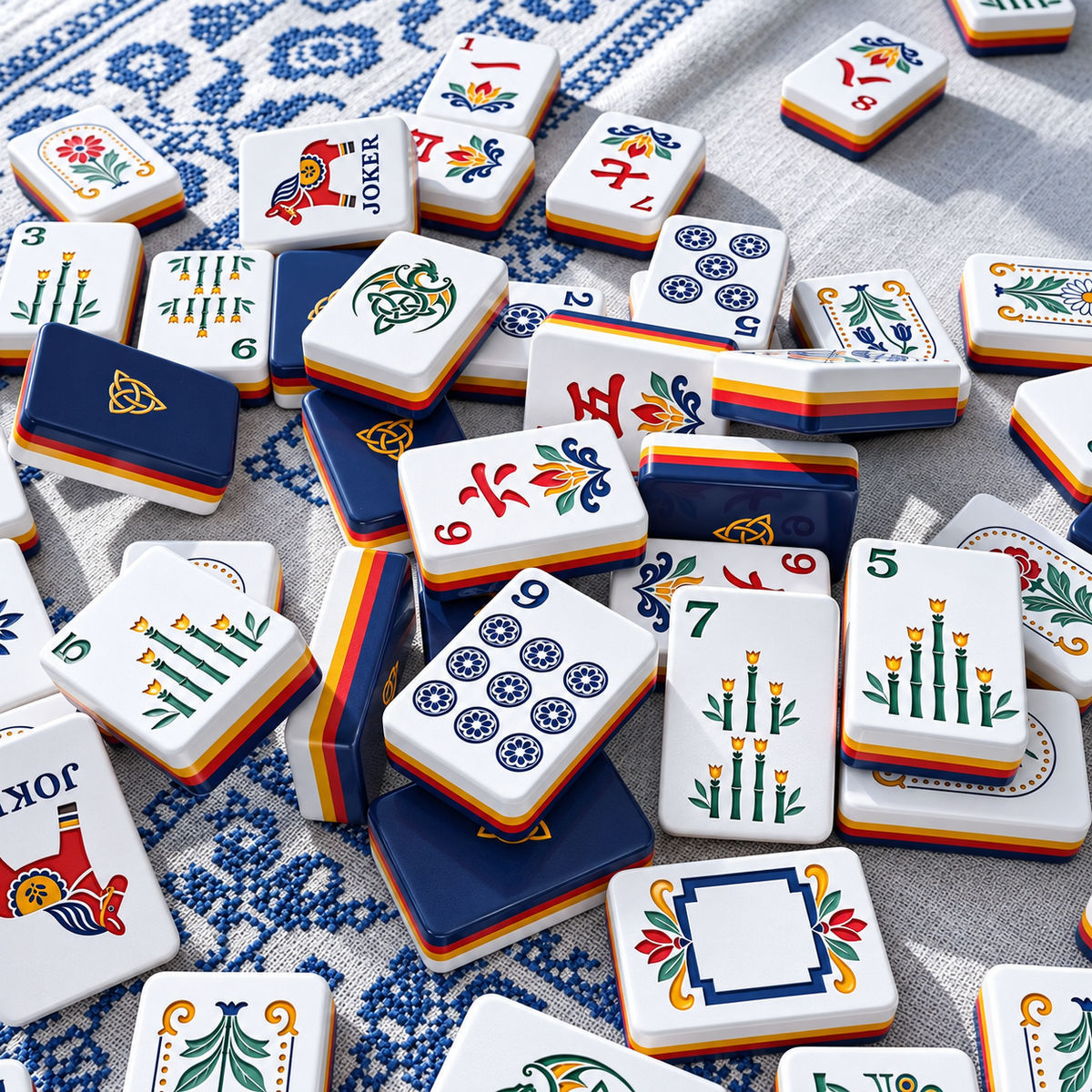
Two-player mahjong uses adapted American rules: each player draws from a 152-tile wall, but the game reduces active melds and speeds up winning conditions to compensate for fewer players. Hands still come from the current National Mah Jongg League card, but you'll often see modified hand limits (typically 2–3 melds instead of full hand complexity) to keep the pace competitive. You can still form only pungs, kongs, quints, and sextets—no chows—and jokers work under standard rules. The Charleston ritual shrinks: usually one pass per direction instead of three full rounds. Winning remains tied to completing a valid hand from the card for the season. We recommend playing two or three-player adapted rules before designing house variations; a full best-selling mahjong set works perfectly once you've agreed on tile draw patterns and hand thresholds. 🀄 Shop best-selling mahjong sets →
What tile distribution matters most in two-player games?
In four-player American mahjong, each player holds 13 tiles after the Charleston and opening draw. Two-player variants typically reduce this to 10–12 tiles per hand to avoid dead walls and speed up circulation. Some groups deal 8 tiles each, then draw rapidly; others stick to 13 but compress the Charleston to one pass. The key: fewer players mean fewer competitive melds on the table, so your exposure window shrinks. Test a few draw patterns in your first session and lock in the one that keeps tile flow steady without dead rounds.

Can you use the standard League card for two players?
Yes, but with a caveat: the National Mah Jongg League card lists full four-player hands. Many hands require five or six melds—impossible to build with only 10–12 tiles. Most two-player groups pick a subset of hands from the card, focusing on simpler two- to three-meld combinations, or adopt house rules that mark certain hands as "two-player valid" each season. Some players create a simplified reference card showing only the patterns that work with reduced tile counts. You're not breaking the rules; you're adapting them fairly for both players. Start by selecting 15–20 hands from your current card that fit your tile limit, then expand as comfort grows.
How does joker usage differ in head-to-head play?
Joker rules stay identical: you can use them as wild tiles in pungs, kongs, quints, and sextets, but never in a pair or single. However, because fewer melds are exposed, jokers circulate faster and become more visible to your opponent. If you play three jokers in one meld, your opponent learns your strategy immediately. Two-player games reward tight meld discipline: hold jokers for your final meld if possible, or use them early in obvious patterns so your opponent doesn't read too much into your tile draws. Tracking which jokers have been played becomes more critical with two players—keep a mental tally of how many are still in the wall.
What's the fastest winning strategy for head-to-head games?
Speed wins because dead rounds hurt you both equally. Prioritize open melds (pungs and kongs drawn from the discard pile) over concealed patterns; this keeps the game flowing and forces your opponent to adapt on the fly. Build melds that use common tiles—dots and bams that appear frequently—rather than rare dragons or wind combinations. Watch your opponent's discards obsessively: if they throw three 3 Craks, they're unlikely to hold another. Two-player games reward aggressive calling over passive hoarding. The player who completes a valid hand first wins, so risk early melds to signal intent and disrupt your opponent's rhythm.
How do you handle the wall and dead rounds in two-player formats?
With 152 tiles and two players, the wall depletes in roughly 12–15 draws per player (after an initial deal and Charleston). Some groups set a "dead wall limit"—if only 10 tiles remain unused, the hand ends in a draw and you reset. Others play until someone wins or the wall is exhausted, then reshuffle and begin again. The second approach feels fairer but extends games. We recommend deciding this before your first hand: pick either "reshuffle at wall's end" or "declare a dead wall limit at turn 10," then stick with it. Consistency matters more than the rule itself; changing it mid-game frustrates both players.

Two-Player Winning Hand Comparison
Hand Type | Melds Required | Tile Count | Ideal For | Risk Level |
Two pungs + one quint | 3 | 11 | Fast pace, beginners | Low |
Three pungs + one pair | 4 | 13 | Standard four-player variant | Medium |
Two quints + one kong | 3 | 13 | Skill-focused play | Medium–High |
One sextet + two pungs | 3 | 12 | Joker-heavy games | High |
How to adapt popular American hands for two players
Start with hands listed in the "Consecutive Pungs" or "Like Numbers" sections of the standard card. These hands typically use 2–3 melds of the same suit and are easy to explain to a new opponent. Avoid "All Flowers," "Mixed" suit hands, or complex "Quint and Kong" combinations until both players understand the basics. Create a house reference sheet showing 10 valid hands for your group, printed or written on an index card. Laminate it if you play weekly; this saves arguments and speeds setup. Share it with your opponent before shuffling—transparency builds trust in house rules.
🎁 See our most-loved mahjong sets & accessories →
Why a good mat and rack setup matters even more with two players
Four-player games let you hide your hand behind noise and distance. Two-player mahjong puts you face-to-face across a table, making tile reads and discards far more transparent. A quality mat with clear player positions—marked by engraved or printed zones—keeps both of you organized and reduces misreading tile calls. A mahjong rack with pushers keeps your tiles upright and hidden from casual glance; pushers let you shift melds cleanly without fumbling, which speeds play and prevents argument about which tile you're discarding. We've watched competitive pairs elevate their game simply by upgrading to a dedicated mat; the visual clarity alone cuts disputes by half.
Setting a scoring system for two-player games
Standard American scoring assumes four players splitting the payout. Two-player games need adjustment: many groups double the base point value to keep stakes meaningful, or use a "win–loss" tracker instead of chip tallies. Some play "first to three wins" or "winner takes 50 points from loser per hand." Decide your scoring method before the first hand and write it down. If money is involved, keep records on paper, not memory. The most sustainable two-player groups we know use a simple ledger: "Date | Winner | Points | Running Total." This builds friendly competition without friction.
What to check before you buy a two-player set
Tile count: Ensure you have a full 160-tile American set—all 152 playing tiles plus spares. Two players need every tile in circulation; missing even one Bam or Dot breaks the game.
Joker clarity: Count your jokers (should be 8 in any standard set). In two-player games, jokers move fast; if they're hard to spot on the table, misreads happen.
Rack and pusher fit: If your set includes racks with pushers, test them before committing. Push mechanism should glide smoothly; worn pushers slow the game.
Mat space: A mahjong mat for two players should show clear "East" and "West" zones and fit your table. Measure your playing surface beforehand.
Tile size and weight: Two players see every tile closely. Larger tiles reduce read errors; heavier tiles (bone or acrylic) stay in place during rapid discards.
League card version: Confirm you have the current year's card. Hands change every April; an old card leads to invalid hand disputes.
✨ Find your Mahstead set — free US shipping →

FAQ
Can I use a standard 152-tile four-player set for two players without modifying rules?
Yes, but the game will feel slow and incomplete. The wall depletes faster, and hand-building becomes choppy. We recommend playing one-pass Charleston and reducing target melds from 4–5 to 2–3 to keep momentum. The set itself doesn't change; only your house rules adapt.
How many tiles should each player hold in a two-player game?
Most groups start with 10–12 tiles per player after the (shortened) Charleston and first draw. This leaves enough wall depth for 8–10 more draws per player before the wall exhausts. Test both and pick what feels balanced; consistency matters more than the exact number.
Do jokers work differently in two-player versus four-player American mahjong?
Joker usage rules stay the same (no pair, no single, only in melds). However, with two players, jokers cycle through faster and become more readable to your opponent. Playing jokers early and openly often beats holding them; visibility can work in your favor.
What happens if the wall empties before anyone wins?
Decide beforehand: either the hand is declared a draw and you reshuffle to begin again, or you set a "dead wall limit" (e.g., "if fewer than 10 tiles remain, hand ends"). Write it on your house-rules sheet and don't change it mid-game. Most pairs prefer the draw-and-reshuffle rule for fairness.
Can two players use the current National Mah Jongg League card directly without changes?
You can, but most hands on the card require 4–6 melds and won't fit your tile count. Pick a simplified subset of 15–20 hands from the card that work with 10–12 tiles (focus on two- and three-meld patterns), or adopt a modified "two-player" version circulated by your local club. Transparency helps: tell your opponent which hands are "valid" before shuffling.
How long does a typical two-player hand take compared to four-player games?
Two-player hands often finish in 10–15 minutes with a shortened Charleston; four-player games typically run 20–30 minutes. Fewer melds and reduced wall depth speed things up. Keep a timer your first few sessions to find your group's natural pace.


View More
View More
View More
