
Why Absolute Beginners Love Mahjong: The Real Reasons
Last updated: Nov 23, 2026
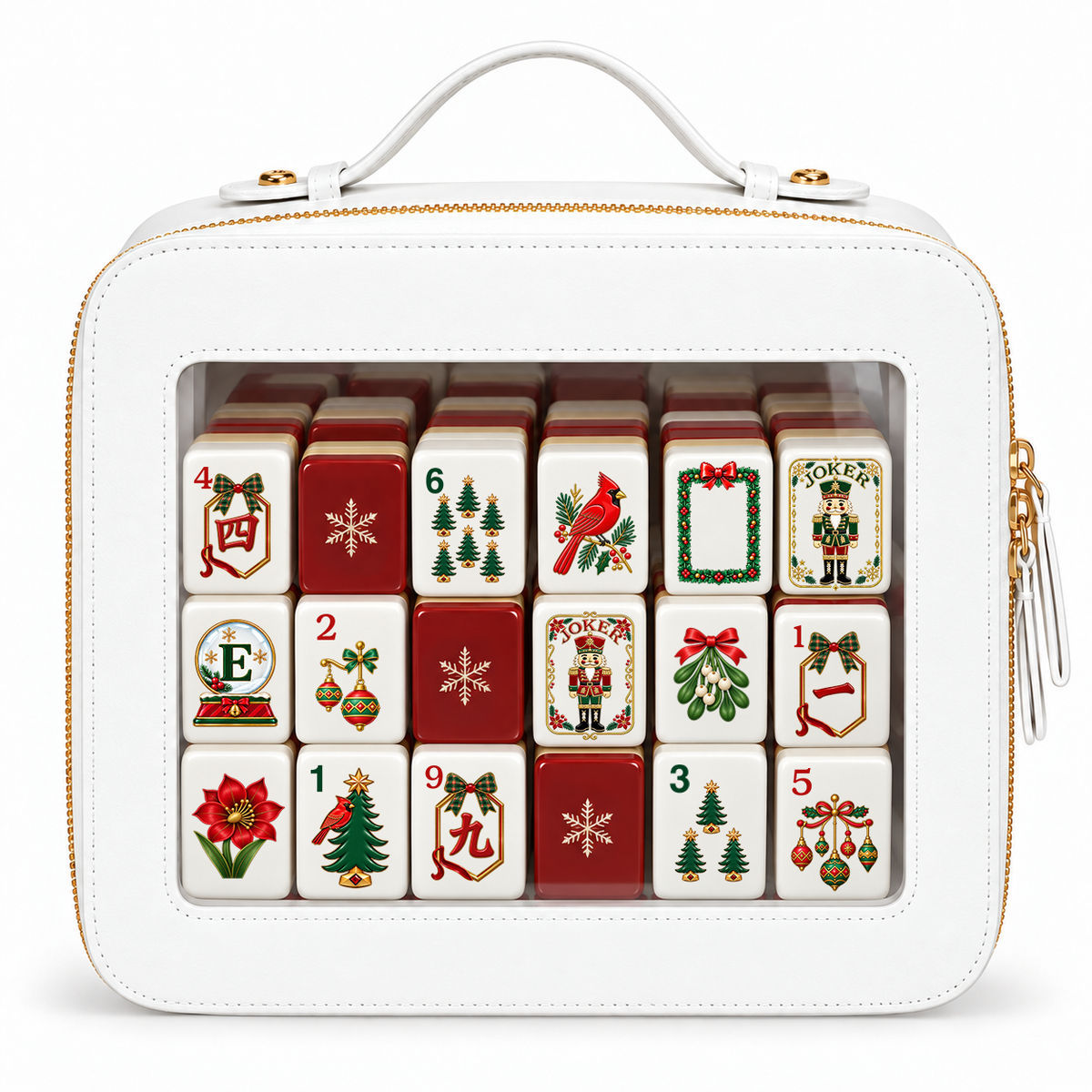
Beginners fall in love with mahjong because it feels achievable on day one. Unlike chess, you don't memorize positions for years; instead, you learn one hand at a time from the current season's National Mah Jongg League card, and that single reference sheet is your roadmap. The game combines luck (tile draws), strategy (hand-building decisions), and social rhythm (the tile-passing Charleston before play). A typical beginner plays their first complete hand within 30–45 minutes of learning, and that immediate payoff—seeing all 14 tiles lock into a winning pattern—creates a dopamine hit no tutorial can fake. Players tell us the turning point isn't memorizing rules; it's the moment you recognize a pattern on the card and reach for your joker. The barrier to entry is low (one set, four players, one card), but the depth keeps you coming back.
Why does mahjong feel less intimidating than chess or bridge?
Mahjong hands reset every season. You play only the hands on the current year's card—never the entire historical rulebook. A chess beginner must learn openings, endgames, and tactics across hundreds of positions; a mahjong beginner carries one laminated card. You can flip that card during play, ask the table for hints, and restart from scratch next week without penalty. The National Mah Jongg League refreshes its official card every spring, so no one has an unfair advantage; everyone learns the same 75–80 hands for that season. This annual restart and permission to reference rules mid-game lower the cognitive load enough that people enjoy their first session instead of drowning in theory.

What makes the first win feel so satisfying?
Your first completed hand is a tangible moment: all 14 tiles displayed, every group (pung, kong, pair) locked into a pattern from the card, jokers in their legal places. You call "mahjong," your three opponents confirm the win, and you score. It happens fast—often within the opening 30 minutes—so the reward arrives before frustration sets in. In bridge or poker, newcomers often lose 20 hands before winning; in mahjong, someone at every table wins, and the rotation means you get a turn quickly. Beginners also appreciate that winning doesn't require reading opponents' minds; it requires spotting a pattern, managing 13 tiles in your rack, and making sound exchanges during the Charleston. That's learnable and repeatable.
How do the social rhythms keep beginners hooked?
The Charleston—the tile-passing ritual before each hand—creates built-in conversation breaks. You pass tiles three times (to your right, across, left) according to the ritual, and during those exchanges, players chat, joke, and level-set expectations ("This is my second hand ever"). The four-player format means you're never alone learning; your neighbors coach you on hand choices, and the whole table benefits when someone new asks a good question. Beginners report that the social element—laughter, banter, genuine encouragement—matters more than rule mastery. You sit at a table with people you trust, hold tiles in your hands (not a screen), and take turns in a predictable rhythm. That sensory and social experience is why many beginners return week after week even if they haven't studied the card.
What's the hidden advantage of learning with one engraved set?
When you own a set from our best-selling collection, every tile becomes familiar. You recognize the bird on the 1 Bam, the distinct creak of acrylic, the weight of a pung in your rack. That tactile consistency builds unconscious pattern recognition; after five or six games, your hands know where the dragons sit and how to build a pung without thinking. A borrowed set, a plastic set, a mismatched set—each one resets that learning. Beginners who own their own tiles practice between sessions (shuffling, arranging, reading the card), and that solo play cements the patterns faster than passive watching. The engraving or title on your set also transforms it from "the mahjong set" to "my set," which reinforces commitment and pride of ownership.
🀄 Shop best-selling mahjong sets →

What do absolute beginners get wrong, and how do you avoid it?
Mistake | Why It Trips Beginners | How to Avoid It | Outcome |
Chasing sequences (1-2-3) | Looks like poker or bridge | American mahjong has NO sequences; only pungs (3), kongs (4), jokers (5+) | Cleaner strategy, fewer missed calls |
Overstuffing the rack | Holding 15+ tiles instead of 14 | Count tiles before you pass the Charleston; use your rack or pusher to hold exactly 14 | Easier to spot winning patterns |
Ignoring the card | Memorizing one hand perfectly | The card is YOUR MAP; flip it every turn | Confidence and speed |
Playing without a mat | Tiles scattered, confusion, dropped pieces | Cleaner play, fewer arguments over positioning | |
Assuming jokers work like wildcards | Thinking jokers replace any tile in a pair or single | Jokers can ONLY replace tiles in exposed groups (pung, kong, quint, sextet), never in a pair or single tile | Correct hand reading, no penalties |
The most common beginner error is holding 15 tiles after the Charleston and not noticing until mid-hand. The fix: count aloud as you organize your rack. The second error: not flipping the card often enough. Give yourself permission to reference it every turn; that's not cheating, it's how the game is designed.
🎁 See our most-loved mahjong sets & accessories →
How do you set up a beginner-friendly first session?
Assign a dealer (East) and give them the official current-year card.
Shuffle all 152 tiles (no blanks or extra jokers) face-down on your mat or table.
Each player draws 13 tiles in a specific wall-drawing order; the dealer draws 14.
Perform the Charleston: pass right, pass across, pass left, then pass right again (optional). Allow talk during this ritual.
Place your 14 tiles in your rack (or a pusher-assisted holder if you want to keep hands steady).
The dealer discards one tile; then players take turns drawing from the wall and discarding.
When someone completes a legal hand from the card (all 14 tiles in winning groups plus pair), they call "mahjong."
Check the hand against the card, score if correct, and rotate dealers counterclockwise.
The first hand rarely completes within 10 minutes; that's normal. Most games hit rhythm by hand three or four.
Learn more about how the Charleston works so you can teach it with confidence.
Why beginners succeed faster in a regular weekly group
Consistency teaches. When you play the same four people, the same time, the same rules every week, your brain stops fighting the framework and starts playing within it. After four or five sessions, you recognize card patterns without flipping; after ten sessions, you can glance at your tiles and know if you're chasing something realistic. Casual players who go six months between games reset themselves each time. Beginners who commit to one weekly two-hour session progress visibly month to month. Many of our players started as absolute novices in a home group and now teach others. That progression is only possible because mahjong rewards regular, low-pressure repetition—not because you're memorizing; because you're recognizing the same patterns under the same social conditions.
✨ Find your Mahstead set — free US shipping →
What to check before you buy your first set
Tile material: Acrylic tiles are durable, easy to clean, and feel substantial in the hand. Bamboo and bone are beautiful but need care.
Number of tiles: You need exactly 152 playing tiles plus 8 jokers for legal American mahjong. A 160-tile set includes spares; never add spares to play.
Racks and pushers: Beginners benefit from racks that hold tiles upright and pushers that keep your hand organized. Check if your set includes them or buy them separately.
Mat or cover: A dedicated mat protects tiles, clarifies tile placement, and signals "mahjong night" to your household.
Bag or case: If you'll travel to a game, a padded bag or hard case saves you from lost tiles and scratched racks.
Free shipping: Mahstead ships across the US at no extra cost, so you can buy with confidence.

FAQ
How long does it take a beginner to feel comfortable playing?
Most people feel competent after 4–6 games. You recognize card patterns, stop overthinking the Charleston, and enjoy the rhythm. Mastery takes years, but comfort arrives in weeks.
Do I have to memorize the entire mahjong card?
No. You reference the card during every hand; flipping it mid-play is standard. Over time, you absorb common hands passively, but the card is always legal to use.
Can I play mahjong if I'm not good at memory games?
Yes. Mahjong is pattern-matching and decision-making, not pure memory. You build tiles into visible groups on the table, so you see your own strategy unfold. Many tile players score low on memory tests.
What's the difference between the Charleston and regular play?
The Charleston is the pre-game tile-passing ritual where each player exchanges tiles three times. It randomizes the starting position and prevents one player from dominating early. After the Charleston, play begins normally.
Why do beginners prefer owning their own set instead of borrowing?
Ownership builds familiarity and commitment. You practice shuffling between sessions, recognize your tiles by feel, and feel pride in your set. Borrowed sets reset your learning each time.
Is American mahjong harder than Chinese mahjong?
They're different, not harder. American mahjong uses one official card per season, making it beginner-friendly; Chinese mahjong has more hand types but no card. American is easier to learn quickly; Chinese offers more variety once you master it.


View More
View More
View More
