
Mahjong for Millennials: Why Gen Y Is Rediscovering This Ancient Game
Last updated: Nov 23, 2026
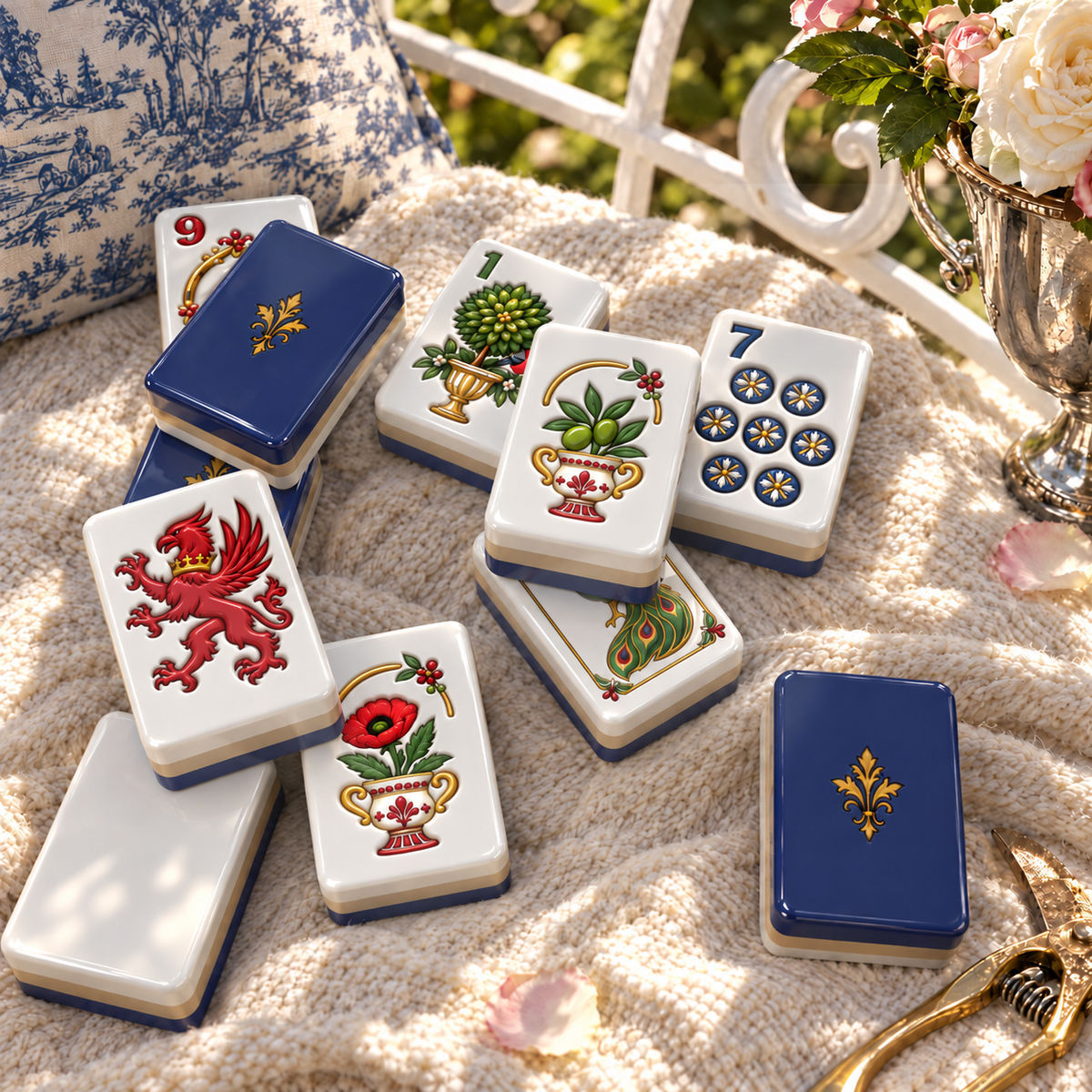
Mahjong for millennials is the same game that's been played for centuries, but reframed as intentional offline time in a screen-saturated world. The American version uses 152 tiles across three suits, four winds, and dragons, played in a four-player format that lasts 30–90 minutes per hand. You learn hands from the current-year National Mah Jongg League card, master the Charleston (the ritual pre-game tile pass), and build sets of identical tiles—pungs (3), kongs (4), or longer sequences. Most millennials start with a best-selling acrylic set that arrives ready to play, costs less than dinner out, and ships free to your door. The learning curve is real: expect 2–4 weeks of regular play before hands click, but the game rewards strategy, memory, and forward planning. What to avoid: jumping into a live club game before you've played casually at home—the speed and score-calling will overwhelm you.
Why Are Millennials Actually Playing Mahjong?
Mahjong hit the millennial cultural moment because it offers what TikTok and doom-scrolling don't: a bounded, social, fully offline experience with zero ads and zero competitive performance anxiety. Unlike chess or poker, mahjong is fundamentally collaborative—you're building from a card, following rules everyone agrees on, and the luck of the draw matters as much as skill. For millennials managing remote work, constant notifications, and dating-app fatigue, a weekly mahjong night became the antidote: four people, one table, no phones, one to three hours of pure attention. The aesthetic helped too. Acrylic tiles in millennial-approved colors—pastels, jewel tones, marble finishes—made mahjong feel modern and Instagram-friendly. But the real draw? Winning a hand feels earned, losses don't sting, and every game tells a story worth retelling. The game scales from total beginner to tournament-serious without forcing you to pick a lane.

How Do You Actually Start as a Complete Beginner?
Your first step is learning the tile set: 36 Bams (stick suit), 36 Craks (character suit), 36 Dots (circle suit), 16 winds, 12 dragons, 8 flowers, plus 8 jokers. The National Mah Jongg League card—issued every spring—shows legal hand combinations for that year. You don't memorize hands; you keep the card visible at the table and read it like a reference guide. Play your first three games with one experienced player walking the table through each turn: what to pick, what to discard, why a hand works. Most millennials find that a single 90-minute coached session removes 80% of the confusion. Then host a practice night with friends at the same beginner level—mistakes feel collaborative, not humiliating. The Charleston (the tile-passing ritual before play starts) takes two minutes to learn and becomes the ritual heart of game night. You're not paying dues, joining a club, or traveling anywhere. You're sitting in someone's living room or at a local restaurant's back table.
🀄 Shop best-selling mahjong sets →
What Equipment Do You Actually Need?
A standard American mahjong night needs exactly one thing: a 160-tile acrylic set with eight jokers and a rack system. Tiles are printed or engraved plastic, shuffled face-down, then drawn into 13 initial tiles per player plus 1 to open play. A mat—cloth or felt with marked sections for hand layout—keeps tiles organized and makes tile movement quieter. A rack with pushers holds your hand at an angle, hides tiles from other players, and lets you push finished sets forward to expose them. A bag or case protects your tiles if you're hosting weekly or traveling. A coin or two dice resolves who deals first. Everything else—scoring sheets, timers, side bets—is optional. Millennials often start with just a set and mat, borrowing racks from the experienced player hosting. Once you're playing weekly, you'll want your own rack and eventually your own set with tiles you've chosen—engraved with names, initials, or inside jokes from our custom collections.
What You Need | Why | When to Buy |
160-tile acrylic set + jokers | Play full-rule American mahjong | Week 1, before your first game |
Mat | Organize tiles, muffle sound | Week 1 or 2; borrow first if you can |
Rack with pushers | Hide your hand, expose melds | Week 3 onward if playing weekly |
Bag or case | Transport tiles safely | Month 2 if hosting or traveling regularly |
National Mah Jongg League card | Read legal hands each year | Every spring (new card issued annually) |
Is There a Millennial-Friendly Way to Learn the Rules?
The National Mah Jongg League's official rulebook is thorough but written for players who already know the game. Instead, find a YouTube video made after 2020 by a player younger than 50; the pace and terminology will feel clearer. Read the how to play guide specifically for American rules, not Chinese or Hong Kong variants (they're different games with overlapping names). Then do this: watch a 15-minute video, play one practice hand with a friend following the video along, pause and rewind until you move tiles correctly. The learning sticks better when you do it, not just watch it. Key concepts to lock in first: jokers are wildcards and can never stand alone or as a pair; you cannot make a chow (a sequence like 1-2-3) in American mahjong—only pungs (three identical), kongs (four identical), or longer sets of the same tile; and the goal is to match a complete hand from the current year's card, not to create any hand you want. Once you've played three hands, you'll have internalized 90% of what you need. Rules about discarding order, dead wall, robbing kongs, and scoring are advanced—ask the experienced player at your table when they come up.
How Do You Find a Regular Game Near You?
Search Facebook groups for "[your city] mahjong beginners" or "mahjong social" and ask in the comments if anyone hosts a weekly casual table. Check Meetup.com and filter by "games," then sort by mahjong. Community centers, libraries, and synagogues often host open mahjong nights; their websites will list times and contact info. Some country clubs and restaurants with private event space rent tables to mahjong groups. Ask at local game shops or bookstores—they hear about these groups. If nothing exists, start one: rent a table at a restaurant or community center, post the invite, and teach week one from a YouTube video. Millennials often find a co-host, split the table cost, and build a regular crew from friends-of-friends. The beauty of mahjong culture is that newer players are always welcome—the game doesn't work with fewer than four, so an established table is actively recruiting. Be honest about your experience level when you reach out; experienced players remember what it felt like to not know what a pung was, and they'll adjust the table's pace for you.
🎁 See our most-loved mahjong sets & accessories →

What's the Millennial Angle—Why Does It Feel Different Now?
Mahjong in 2026 is a millennial reclamation project. Your parents' generation learned it from relatives or at retirement communities; you're learning it from TikTok, YouTube creators, and a friend who stumbled onto it in 2023 and now hosts every Thursday. The tile designs reflect that: modern aesthetics in pastel and marble finishes, inside-joke engravings, luxury-aesthetic packaging. The game itself hasn't changed—still 152 tiles, still the National Mah Jongg League card, still four players—but the context has. For millennials, it's a deliberate choice to play a game that requires you to show up, be fully present, and sit with people you actually like for two hours straight. It's rebellion against optimization culture: you can't rush mahjong, can't "hack" it, can't make it more efficient. Some games you'll lose badly. Some nights the tiles won't come. You'll sit there, drink tea or wine, and be bored sometimes, and that boredom feels radical. The social contract of a weekly table also appeals to millennials managing dispersed friend groups—it's the scheduled anchor that keeps friendships alive when everyone's working from home in different states or juggling parenting. Mahjong culture online celebrates the ritual (the shuffle, the Charleston, the tile-flip drama) as much as the gameplay, which aligns with how millennials document and honor their social experiences.
Before You Buy, Check These Five Things
Tile size and weight. Acrylic tiles come in standard size (about 1 inch × 0.75 inch) and mini versions. Standard is better for new players—easier to see, less hand strain, and more restaurants and tables accommodate them. Pick up a sample tile at a store if possible, or check product photos for a size reference.
Joker count and color. Every 160-tile American set includes eight jokers; that's the legal count. Verify the listing says "160 tiles" and "8 jokers" (or equivalent spare count). Jokers are usually a distinct color or pattern so you can spot them fast during play.
Mat dimensions. Mats range from compact (for tables under 36 inches) to large (for 42+ inches). Measure your table width before buying. A mat that hangs off the edge or crowds the center kills the game.
Rack compatibility. Buy a mat and rack from the same maker if possible, or check product pages to confirm they fit together. A mat too thick or thin will affect how tiles sit in the rack.
Shipping and returns. Confirm the seller ships to your address and has a return window if tiles arrive chipped or colors don't match the photos. Mahstead offers free US shipping, so factor that into your total.
What if You Want to Play Alone or in a Group Smaller Than Four?
Standard American mahjong requires exactly four players. Playing with two or three people requires special 2- and 3-player rules: you adjust the number of starting tiles, modify which suits are active, and change how discards and draws work. These variants are legitimate but less common; if you're learning, stick to four-player rules first, then explore variants after ten or twelve regular games. Some millennials practice alone by laying out hands from the card and seeing how many ways a tile set can make a valid combination—it sharpens your card-reading skills. Solo practice doesn't replace playing, though: the real game happens when you're picking and discarding in turn, reading other players' discards, and deciding whether to claim (or pass on) another player's tile to complete a set.
✨ Find your Mahstead set — free US shipping →
Our Pick: Starting Your Millennial Mahjong Table
If you're hosting your first game, grab a best-selling acrylic set in a color your friend group will love. Pair it with a mat that fits your table. Both ship free across the US, and you'll have everything you need to teach from a YouTube video. Once your group plays weekly, add racks with pushers so everyone can hold their hand properly. After a few months, if you've bonded over mahjong, consider a custom-engraved set with your group's inside jokes or initials—it becomes a memento of how a game saved your Thursday nights. No pressure, no "best" choice: start simple, learn the game, then upgrade as the habit sticks.

FAQ
Can I learn mahjong from an app instead of playing with people?
Apps teach tile recognition and rules, but American mahjong requires the current year's National Mah Jongg League card and live decision-making against other players. Apps help you drill, but live play teaches strategy, timing, and the social rhythm that makes the game work.
Do I have to play for money?
No. Most millennial casual tables play for points only, tracked on paper or a shared spreadsheet. Some groups keep a kitty (small stakes) to add tension, but it's entirely optional and usually under a few dollars per player per night.
How long does one game take?
One hand takes 20–45 minutes depending on player speed. A typical mahjong night is three to five hands, so plan for 1.5 to 3 hours total, including breaks and banter.
What's the difference between American and Chinese mahjong?
American mahjong uses 152 tiles, the National Mah Jongg League card, and no chows (sequences). Chinese mahjong uses 144 tiles, allows sequences and melded pairs, and has different winning rules. Learn American first if you're in the US; switching variants is confusing.
Do I need to buy my own set right away?
No. Borrow a set for your first three games, then buy one. You'll know if it's a hobby or a phase, and you'll have a sense of what size, color, and style you actually want.
Is mahjong hard to learn if I'm not good at games?
Mahjong is less about being "good at games" and more about pattern recognition, attention, and showing up regularly. Beginners beat experienced players all the time because the draw matters. Most people click with the game after five or six hands.
Can I play mahjong with people who learned a different variant?
Not in the same game. American, Chinese, and Hong Kong mahjong have different tiles, hands, and rules. Agree on which variant before you sit down, or stick to American if you're in the US and learning from your local community.
Do I need a rack to play?
No, but you'll want one within your first month of weekly play. It hides your hand from other players and makes tile organization faster. Borrowing one the first few times is fine.


View More
View More
View More
