
Mahjong Set for Small Tables: What Fits & How to Choose
Last updated: Nov 23, 2026
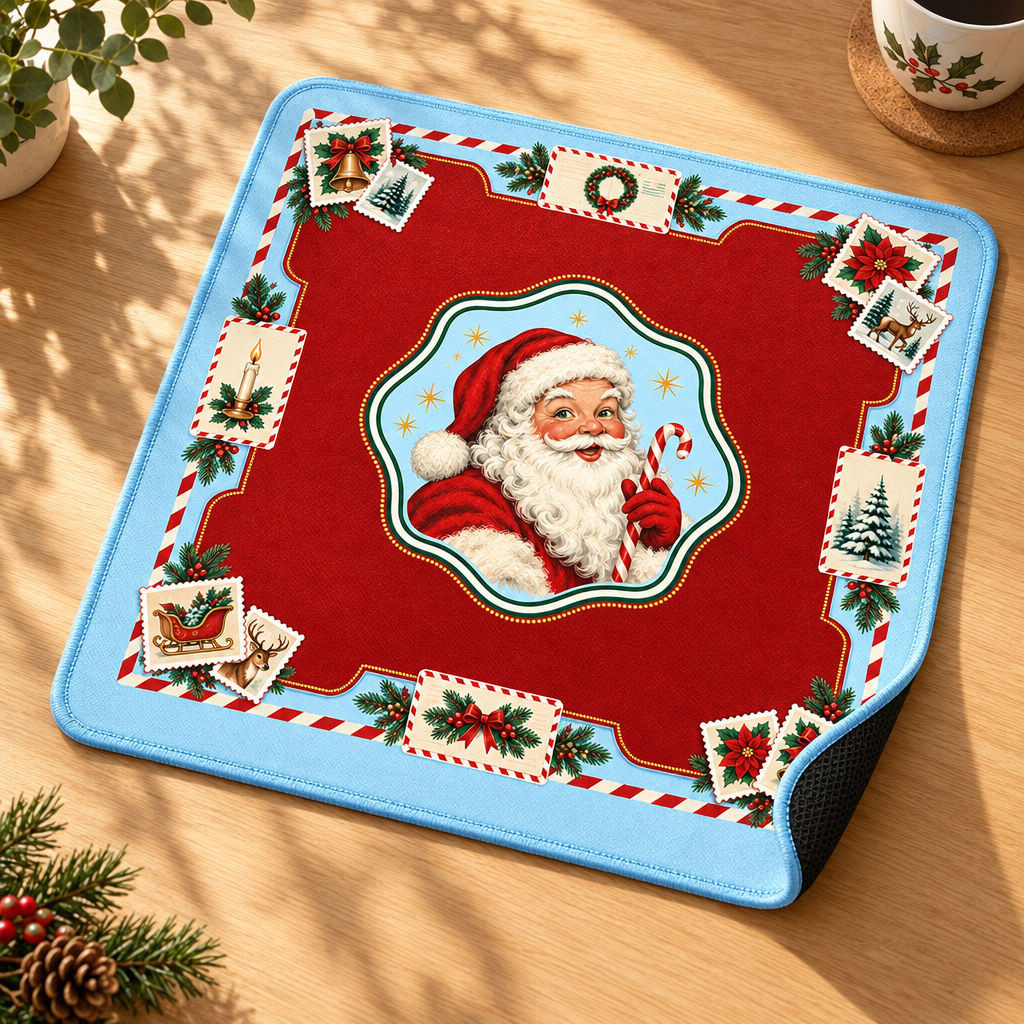
A mahjong set for small tables means tiles no larger than 1¼ inches and a mat or play area under 40 inches square—room enough for four players without elbows colliding. American mahjong uses 160 tiles total (152 playing tiles plus spares), so you need a compact mat, mid-size racks with pushers, and careful Charleston staging. Mahstead sells engraved acrylic sets in two main scales: larger tiles (classic 1⅜-inch) for standard tables, and scaled-down designs (typically ¾–1¼ inches) perfect for apartments, dorm rooms, and smaller dining tables. The difference in playability is real: on a 36-inch mat, oversized tiles leave no room for your hand or the dead wall. Check your table's usable surface before ordering—measure corner to corner minus 8 inches for player elbows—then choose tile size accordingly.
What tile size actually works on a small table?
Tile size matters more than you think on a compact surface. Our 1⅜-inch tiles (the classic standard) work best on tables 48 inches or larger; anything smaller and players spend more time shuffling than playing. Scaled tiles around 1 inch leave breathing room on a 36–42-inch table surface. A quick test: lay out 14 tiles in a row (your opening hand plus the dead wall draw). If they stretch more than 28 inches, you'll be crowded. Mahstead's smaller acrylic sets are engineered so the tile weight and click are identical to full-size, not a toy substitute—players don't lose the tactile satisfaction that makes mahjong a physical game. Measure your actual play surface, not the table perimeter, before you buy.
🀄 Shop best-selling mahjong sets →
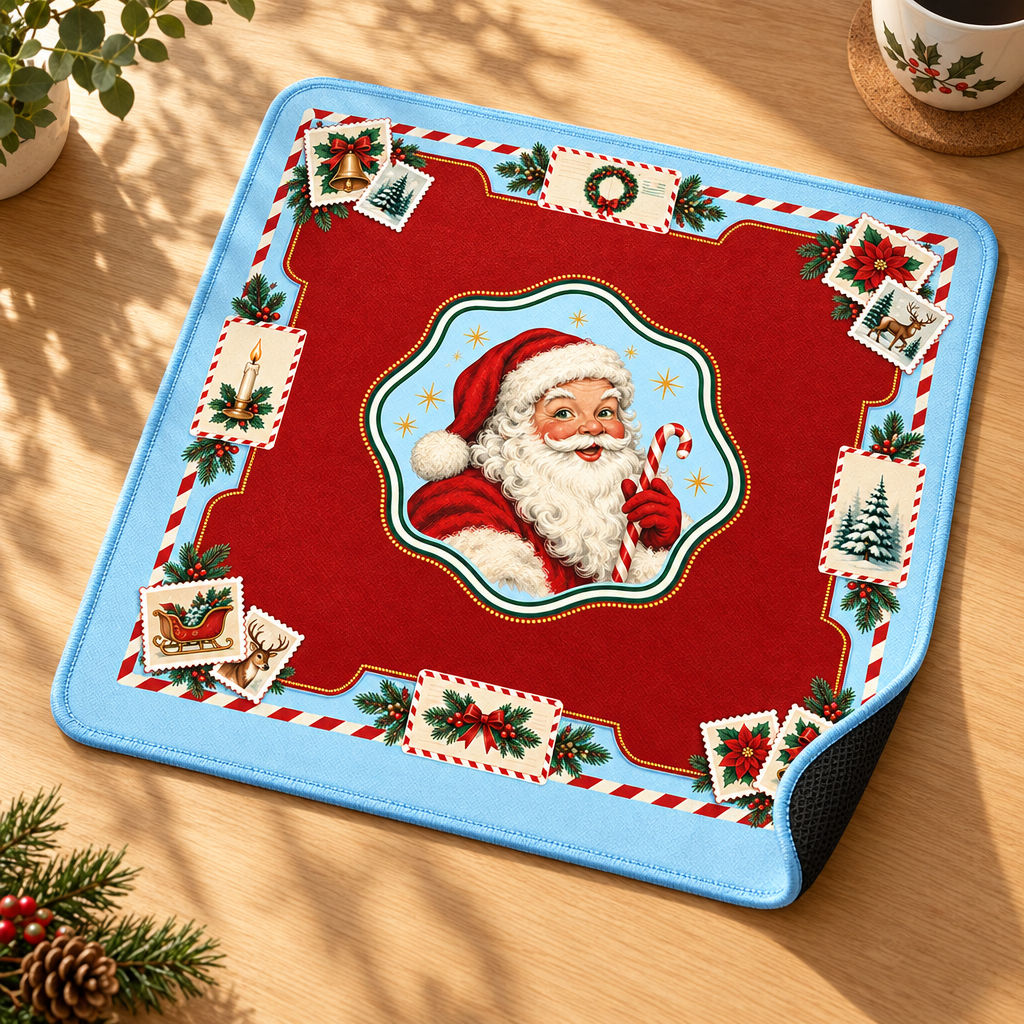
How much space does a mat really need on a small table?
A regulation mat for American mahjong is typically 36–40 inches square, but small tables often lack that luxury. If your table is 42 inches round or a 36×48-inch rectangle, a 36-inch mat fits with 3 inches of clearance on all sides—just enough. Narrower mats (30–33 inches) exist for tight spaces, though they compress the dead wall and Charleston stations. Our rule: if you're measuring in inches and counting on your fingers, you probably don't have space. The better move is a mat sized to your table's actual usable perimeter. Choose a mahjong mat by measuring the table's diameter or length and subtracting 12 inches for player comfort. For small tables, a 36-inch mat is the practical floor; go smaller and dealing becomes fiddly.
Which racks with pushers fit tight quarters?
Racks are the biggest space hog on a small table. Traditional racks with pushers can be 7–8 inches tall and 16–18 inches long per player—four of those around a 36-inch table and you've got no room for your drink. Compact racks scale down the rack height and bracket width while keeping the pusher mechanics identical. Mahstead's mahjong racks with pushers are designed so each player's rack takes up roughly 14–15 inches of table edge; on a small round table, that means racks touch end-to-end, which is actually ideal—it stabilizes the setup. The trick: confirm rack depth doesn't exceed 5 inches, or it'll spike into the center play area. Pusher mechanics on compact racks are as responsive as full-size; the real constraint is table diameter, not function.
What's the best mat and set combination for a cozy space?
Your space | Tile size | Mat size | Racks | Why it works |
30-inch round (dorm, card table) | ¾–1 inch | 30-inch mat or none | Compact, flat racks | Minimal footprint; Charleston on laps |
36-inch round or small rectangle | 1–1¼ inch | 36-inch mat | Standard compact racks | One set serves most home games |
42-inch round or 36×48 dining table | 1¼–1⅜ inch | 36–40-inch mat | Full-size racks with pushers | Comfortable for four; works for casual and league |
Mahstead's best-selling mahjong sets are engineered for home play on standard dining tables; if your table is materially smaller, pair a scaled tile set with a matching 36-inch mat. The combo keeps setup, play, and storage all proportional—no jury-rigging. On the smallest tables, skip the mat entirely and play directly on the table, then use a mat only for league or tournament games.
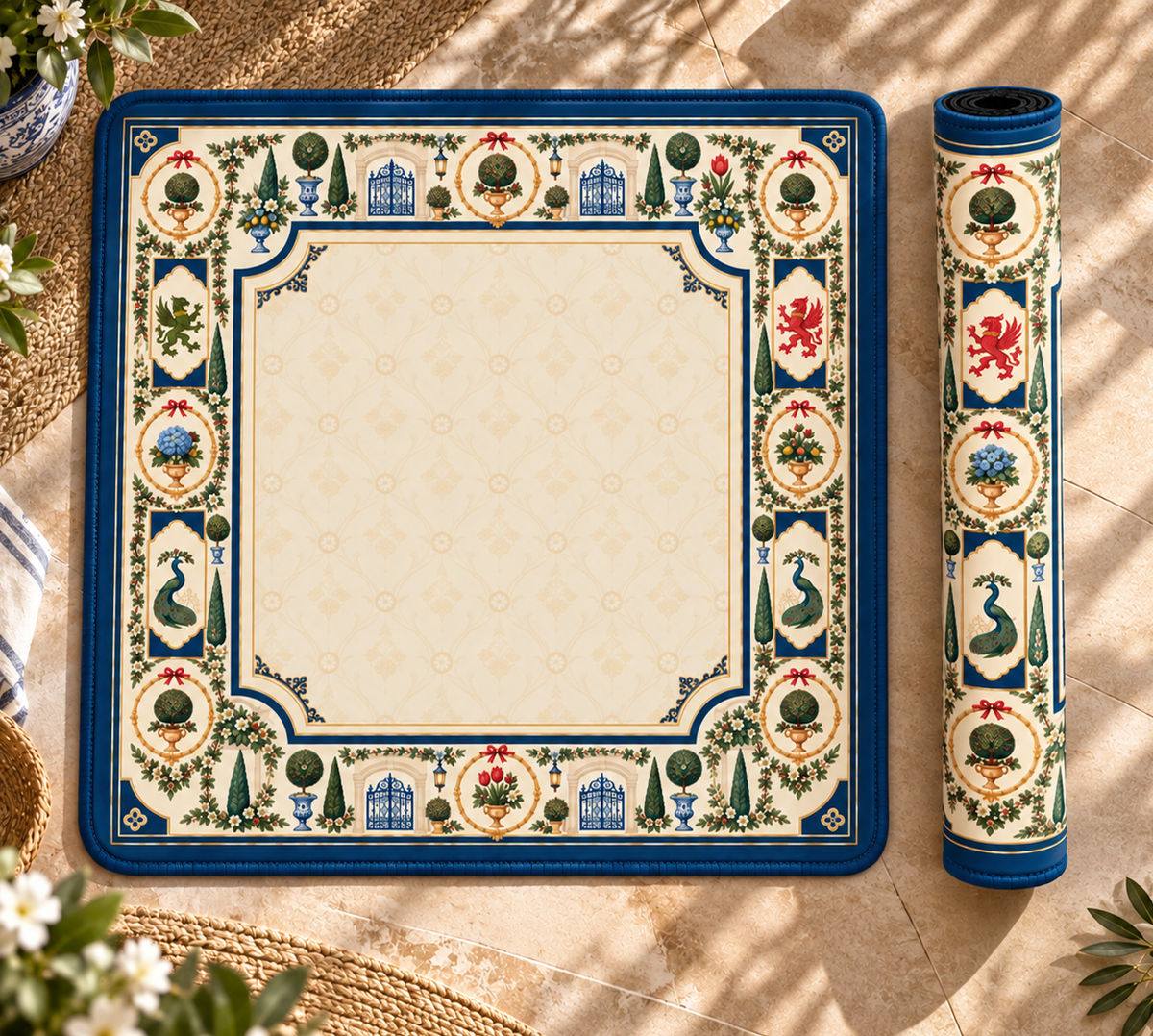
Should you skip a mat on a tiny table, or force it?
Skipping a mat on a small table is honest and practical. The mat's real job is to define the play zone, protect the table, and make tiles glide smoothly—but on a 30-inch table, the entire surface is the play zone. If you're in a dorm or apartment and space is the binding constraint, lay a washable cloth under the tiles, do the Charleston on your laps or a nearby shelf, and play directly on the table. Your set will survive; so will your hands. For league play or when you host regularly, invest in a mat that fits your table—the cost is small compared to the comfort gain. Mahstead's travel bag collection is worth considering if you play at multiple locations; a lightweight mat and compact set pack flat and ship free across the US. On a true small table, prioritize tile size and a working set of racks over mat luxury.
How do you store a mahjong set when your space is tight?
Storage is the hidden cost of owning a set. A full 160-tile set with a mat, racks, and accessories takes up a cubic foot, minimum. Mahstead's travel bags and cases are designed so a set, mat, and dice all nest together; check that the case's interior depth matches your rack height when closed. For apartment living, measure your closet shelf or under-bed space before you order. The acrylic tiles and racks are durable—they won't warp—but they do need a dry, flat spot. If you play only occasionally and space is scarce, a small set in a compact case is genuinely better than a large set shoved in corners. One realistic detail: once you own a mahjong set, you'll use it. Don't buy large if you can't store it.
What to check before you buy a set for a small table
Measure your table's usable surface (corner to corner, minus 8 inches for player space). Write it down.
Note tile size on the product page. Compare it to your hand span.
Check mat dimensions against your table. A 36-inch mat on a 42-inch table is right; a 40-inch mat on the same table is snug.
Verify rack footprint (length × depth). Compact racks should be ≤14 inches long, ≤5 inches deep.
Test storage by measuring where you'll keep the set—shelf, closet, under bed.
Ask yourself: do I play weekly or monthly? Weekly = buy once, size matters. Monthly = compact setup is fine.
🎁 See our most-loved mahjong sets & accessories →
Why acrylic tiles matter on a small table
On a cramped surface, tile quality feels more important, not less. Plastic or bamboo tiles can slip on folded-up mats or worn cloth; acrylic tiles from Mahstead have just enough weight and friction that they stay put even when racks are close. Engraved tiles also read faster under low light—critical when you're packed four to a small table and reading hands across the center is harder. The texture of acrylic (smooth but not slippery) makes the pusher feel responsive, which matters when you're moving tiles millimeters, not inches. If you're playing on a small table, you've already chosen proximity over sprawl; acrylic sets earn their cost back in ease of play. Beginner-friendly acrylic sets in Mahstead's lineup don't cost more than resin alternatives and handle compact play better.
✨ Find your Mahstead set — free US shipping →

FAQ
Can I play American mahjong on a table under 36 inches across?
Technically yes, but it's uncomfortable. You'll need ¾–1-inch tiles, a mat you can roll or skip entirely, and compact racks. The game itself doesn't change—you still draw 14 tiles and need room for the dead wall—but you'll feel cramped. Host at a larger table when possible; reserve small-table setups for casual play or traveling.
Do smaller tiles wear out faster?
No. Acrylic durability depends on material thickness and manufacturing, not size. Mahstead's scaled tiles are built with the same tolerances as full-size; they last equally long if stored dry and flat. Small tiles just mean fewer shuffles per game to cover the same play surface.
Should I buy a compact set or try to make a full-size set work?
Measure first. If your table is genuinely 42 inches or larger, a full-size set (1⅜-inch tiles) works fine with a 36-inch mat—no compromise needed. If your table is smaller, a scaled set is faster than jury-rigging. Mahstead's best-selling collection shows both sizes side by side; compare photos against your table before ordering.
What's the cheapest way to set up small-table mahjong?
Buy a scaled set, skip the mat (use a cloth), and use flat racks instead of racks with pushers. Flat racks take no vertical space and cost less. You lose the pusher's convenience, but on a small table, that's a fair trade. Add a mat and racks when you play more often.
Can I use a small mahjong set for teaching beginners?
Yes. Beginners benefit from seeing the whole board at once; a compact set on a smaller table can actually be clearer than a full-size set across a wide table. Pair it with a printed reference guide on how to read the mahjong card and you've got a teaching setup that works. Once players are comfortable, they graduate to a standard table.
Do I need to buy a special mat for a small table, or can I use any mat?
Measure before buying. A mat that's too large (40–42 inches) on a small table (36 inches) folds over itself, making the dead wall confusing and tiles hard to move. A mat that's too small (30 inches) leaves no margin for the eye. A 36-inch mat fits most small tables; go smaller only if your table is 30–33 inches and you're playing casually with people who know the game.


View More
View More
View More
