
Where to Play Mahjong in Tucson: Local Spots & How to Start
Last updated: Nov 23, 2026
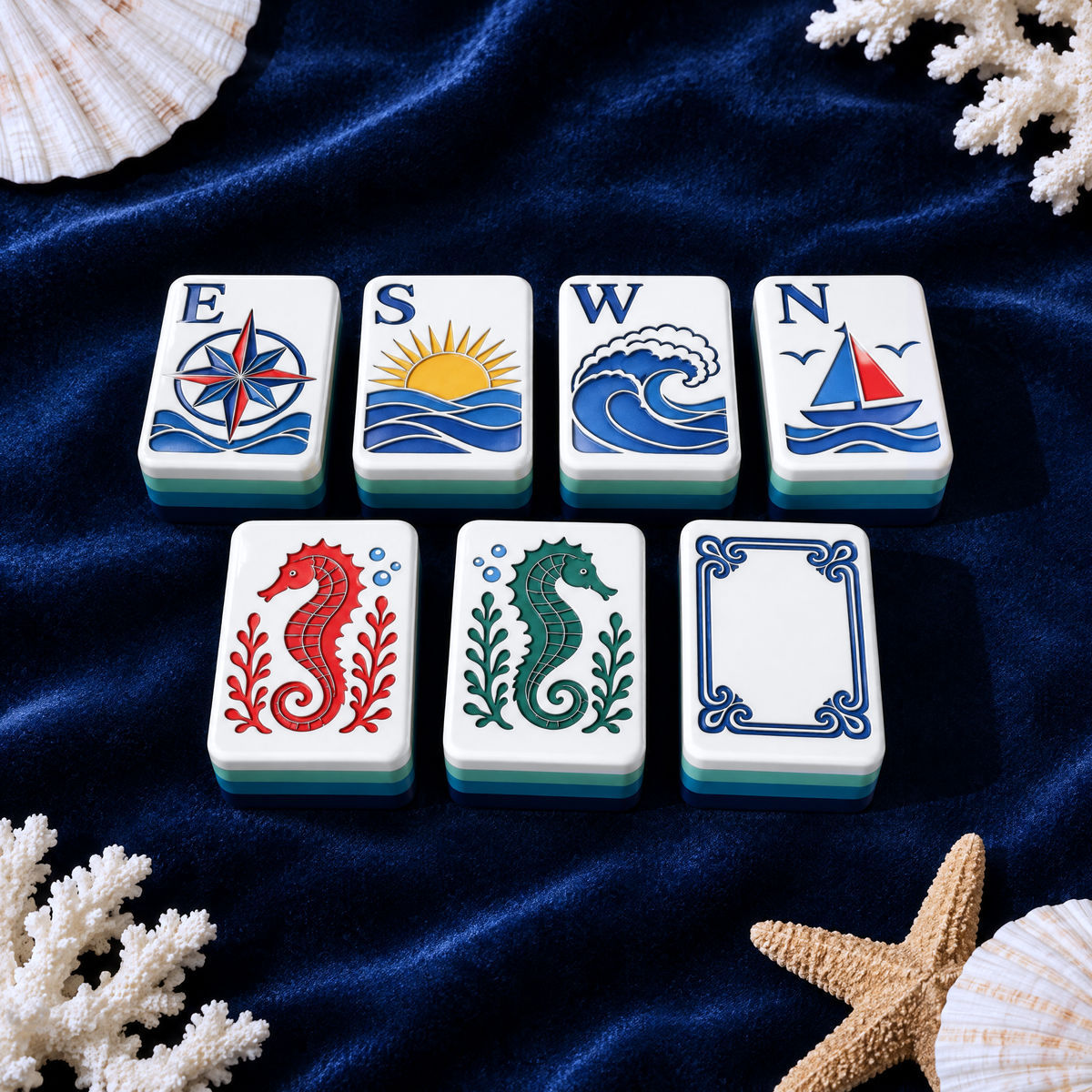
Mahjong in Tucson lives in three main places: public programs at community recreation centers and libraries (usually free or low-cost drop-in sessions), private clubs and synagogues hosting weekly games (often invite-only or membership-based), and casual neighborhood groups meeting in homes. Start by calling your local community center's recreation department or checking the activities calendar at your neighborhood library—many run beginner-friendly sessions on weekday evenings or Saturday mornings. You can also search social meetup boards and neighborhood apps to find local game hosts. Most public games follow American mahjong rules and use the current year's National Mah Jongg League card; bring a notepad and willingness to learn, since the first game is always slower. If no nearby game fits your schedule, hosting your own weekly group is easier than it sounds—you'll just need a set (we design best-selling mahjong sets for exactly this), a mat, and four consistent players.
Where to play mahjong in Tucson: local spots & how to start
Mahjong in Tucson lives in three main places: public programs at community recreation centers and libraries (usually free or low-cost drop-in sessions), private clubs and synagogues hosting weekly games (often invite-only or membership-based), and casual neighborhood groups meeting in homes. Start by calling your local community center's recreation department or checking the activities calendar at your neighborhood library—many run beginner-friendly sessions on weekday evenings or Saturday mornings. You can also search social meetup boards and neighborhood apps to find local game hosts. Most public games follow American mahjong rules and use the current year's National Mah Jongg League card; bring a notepad and willingness to learn, since the first game is always slower. If no nearby game fits your schedule, hosting your own weekly group is easier than it sounds—you'll just need a set, a mat, and four consistent players.
What are Tucson's main public mahjong venues?
Tucson Parks and Recreation runs drop-in and class-based mahjong at branches across the city—check their full activity schedule online or call ahead for current game times and skill levels. Several public libraries, especially larger branches in central and north Tucson, host free or small-fee mahjong sessions; ask at the reference desk or check the events calendar. Jewish Community Center and other faith-based organizations often welcome players of all backgrounds to weekly games; call to confirm newcomer policies. Senior centers and active-adult communities sometimes run games; membership or residency may apply. Community colleges occasionally offer mahjong classes paired with open play.

How do I find private mahjong groups and home games?
Private groups advertise on Nextdoor, Facebook community boards, and Meetup.com—search "mahjong Tucson" or "mahjong [your neighborhood]." Ask staff at your library or community center for word-of-mouth recommendations; many regulars know home game hosts. When you find a group, confirm the rule variant (American is most common in the Southwest), the night and time, cost (if any), skill level required, and whether they welcome complete beginners. Attending one public game first helps you learn the rhythm before joining a private table; experienced players are usually generous with teaching.
What skill level should I bring to my first Tucson game?
Complete beginners are welcome at almost every public mahjong venue in Tucson—no prior knowledge needed. Most public programs explicitly market beginner classes; even drop-in sessions accommodate new players because the rules are learnable in one evening. Private home games vary: confirm the host's expectation before showing up. If you've never played, expect to sit out the first hand or two while players explain the Charleston (the tile-passing ritual before each game) and how to recognize hands on the current year's mahjong card. Bring patience, a pencil, and openness to making mistakes; every experienced player started exactly where you are now.
What equipment do I need to host or join a game?
If you're joining, bring nothing—your host provides the set, mat, and tile rack. If you're hosting or organizing a regular group, you'll need four essential pieces: a 152-tile American mahjong set (typically includes wind tiles, dragon tiles, flowers, jokers, and numbered suits), a mahjong mat or designated play surface, individual tile racks (one for each player; many sets include these), and the current year's National Mah Jongg League card. A second set or spare jokers is handy if tiles get lost. If your group plays weekly, invest in a durable travel bag to keep everything protected between sessions.
Equipment | Why it matters | Typical setup |
152-tile set | Standard American game size; has all suits, winds, dragons, flowers, jokers | One per table; acrylic or bamboo |
Mahjong mat | Keeps tiles from sliding; marks the discard row | 27–31" square; felt or vinyl |
Individual racks | Holds your tiles vertically so other players can't see them | 4 racks, one per player |
Current mahjong card | Lists all legal hands for the year; no hand is playable without it | Printed or laminated, usually supplied by host |
Dice | Determines East player and tile distribution | Often included in a set |

How do American mahjong rules differ from other variants?
American mahjong has specific rules that differ from Chinese, Hong Kong, and Riichi versions. The most important: American mahjong has no chows or sequences you can call or expose—you can only expose pungs (three identical tiles), kongs (four identical tiles), and longer runs of the same tile. Jokers are wildcards but can never be used in a single tile or as a pair. Every hand must match a pattern on the current year's National Mah Jongg League card; hands do not carry forward year to year. Before play begins, all four players perform the Charleston—a ritual passing and exchanging of tiles three times around the table. This is not optional; it starts every game. Games are always 152 tiles plus 8 jokers. Understanding these rules before your first game gives you confidence; we've written a full how to play American mahjong guide that covers the Charleston, exposure rules, and hand-winning conditions in detail.
What to check before you buy or bring a set
If you're buying your first mahjong set to host a Tucson game, verify the tile count (must be 152 tiles, plus spare jokers and blanks). Check that tiles are clearly marked—acrylic sets with printed or engraved numbers are easier to read at a distance than hand-painted bamboo when you're new. Make sure the set includes a mat, racks with pushers (small tools that let you push tiles forward neatly), and a carrying bag or box; loose tiles become frustrating on a crowded table. If you're joining an existing game, ask your host whether they need you to bring a snack or contribute to the pot—most casual groups handle this clearly upfront. Before your first session, skim the basics of reading a mahjong card so you recognize which hands are valid and when someone wins.
🀄 Shop best-selling mahjong sets →
Why host your own weekly mahjong group in Tucson?
Hosting gives you full control over the game night—your time, your friends, your rule variant, your pace. Tucson's dry, mild climate makes weekly mahjong especially appealing; many groups meet year-round. You'll need four consistent players (or a rotating backup list), a set, a mat, tile racks, and snacks. Start with friends or coworkers who are curious but have never played; teaching beginners as a group is simpler than teaching one person alone. Choose a recurring night—Thursday evenings, Saturday mornings—and stick to it; consistency builds a habit. After two or three sessions, your players will know the rules well enough to focus on strategy. Many Tucson hosts find that home games become a cherished social anchor, especially during winter months when the weather makes gathering easy.
🎁 See our most-loved mahjong sets & accessories →
How to find or start a beginner-friendly mahjong group step by step
Search local public venues: Call your nearest Parks & Recreation center or library and ask for mahjong program times.
Check online community boards: Search Nextdoor, Facebook groups, or Meetup for "mahjong Tucson" and RSVP to a public game.
Attend one public session: Learn the rules, meet regular players, and ask where private games meet.
Ask about private groups: If public play is too crowded or scheduled at an inconvenient time, request referrals from experienced players.
If no game fits your schedule, host one: Gather four interested friends, buy or borrow a set and mat, print the current year's card, and pick a weekly night.
Invite consistently: Send a calendar invite or text reminder each week; regularity builds commitment.
Teach the Charleston and hand recognition first: The rules are learnable in 30 minutes if you focus on these two concepts.
Beginner groups in Tucson typically play three to four hands per session (roughly 90 minutes) and end with snacks and conversation. The first night is slowest; by week three, play flows naturally.
✨ Find your Mahstead set — free US shipping →

FAQ
Are there beginner mahjong classes in Tucson right now?
Tucson Parks & Recreation and public libraries offer beginner-friendly drop-in sessions and classes year-round. Check your local library's events calendar or call the Parks Department directly—program names and times change seasonally. Most are free or cost under $10 per session.
What's the difference between American and Chinese mahjong?
American mahjong (used in Tucson public venues) uses 152 tiles, no sequences you can call, and hands from the current year's card only. Chinese mahjong has different tile counts, hand patterns, and scoring. Tucson plays almost exclusively American mahjong in public and most private games.
Do I need to own a mahjong set to play in Tucson?
No. Joining a public game or private group requires no equipment—the host provides everything. If you host regularly, you'll want your own set, mat, and racks; a durable travel bag protects them between sessions.
How much does it cost to join a mahjong game in Tucson?
Public programs through Parks & Recreation and libraries are free or low-cost (typically under $5 per session). Private home games may have a small buy-in or pot (usually $2–$5 per hand) to cover snacks and tiles; clarify before attending.
Can I play mahjong with fewer than four players?
American mahjong is designed for exactly four players. If you're interested in two- or three-player variants, they exist but follow different rules and are less common; ask an experienced player or check our 2 and 3 player mahjong rules guide.
How often should a beginner-friendly group meet?
Weekly is ideal—same night, same time, same place. Consistency builds habit and allows players to retain rules between sessions. Many Tucson groups meet Thursday or Saturday evenings; pick what works for your circle and stick to it.
What's the Charleston and why do we do it every game?
The Charleston is a ritual exchange of tiles before the hand begins; each player passes tiles three times around the table. It randomizes the hand distribution and is mandatory in American mahjong. Learn how it works step-by-step in our Charleston explained guide.


View More
View More
View More
