
What Is Self Pick in American Mahjong?
Last updated: Nov 23, 2026
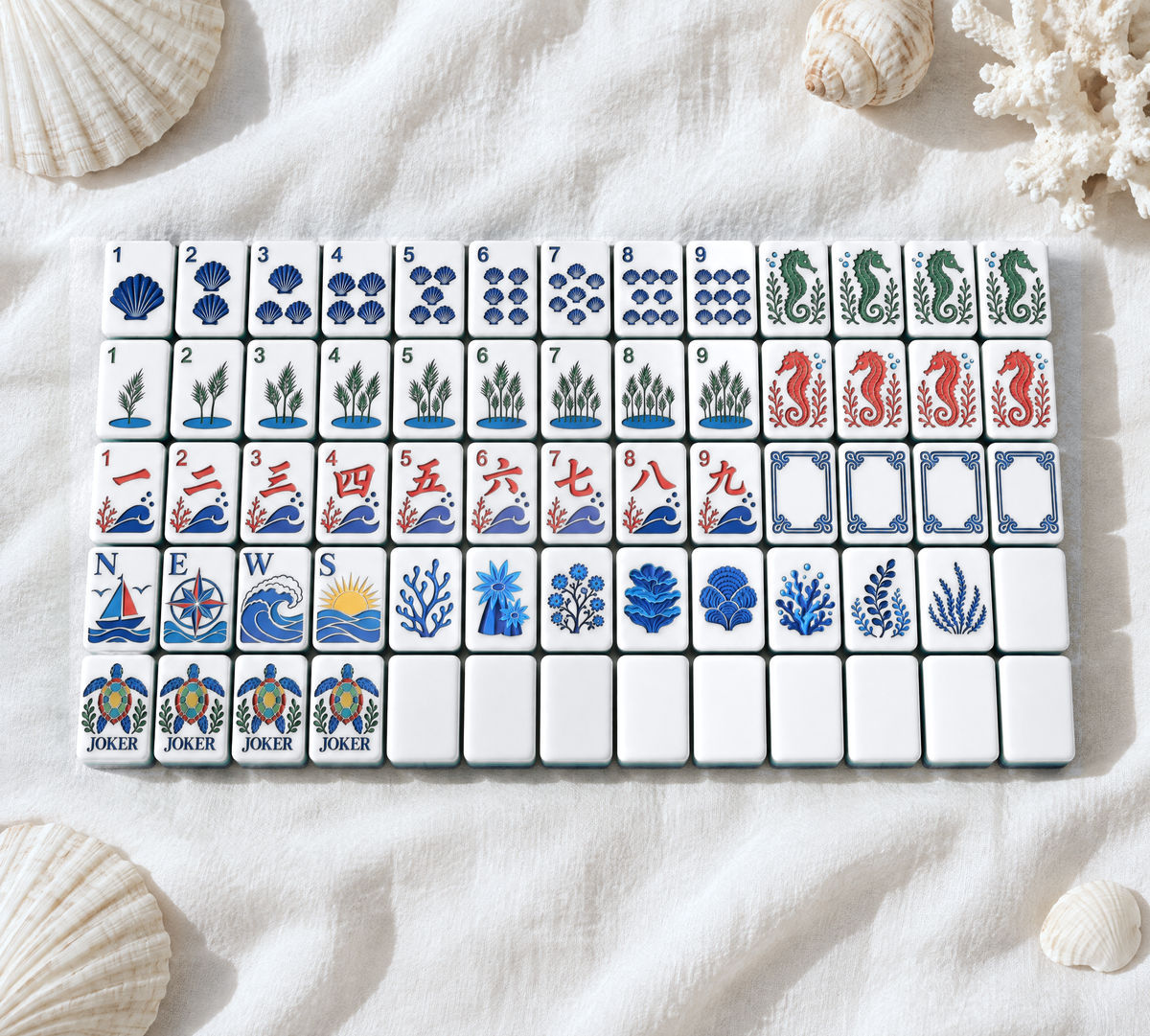
Self pick—also called "drawing from the wall" or winning on your own turn—happens when you draw a tile from the live wall and it completes your hand to win, rather than claiming someone else's discard. In American mahjong, this distinction matters legally: a self-picked hand lets you keep certain melds hidden until you declare mah jongg, whereas a hand won on a claim (taking a discard) requires all your melds to be exposed and verified on the card before you win. Self pick uses the same 152-tile wall and follows the National Mah Jongg League card rules. The move takes a few seconds—you simply draw from the wall on your turn, check your tiles, and announce mah jongg if you've matched the card. Many weekly players find self-pick hands feel faster than calling discards because fewer tiles get exposed mid-game, though both routes to winning are equally valid.
In American mahjong, you win by matching one of the hands printed on that year's National Mah Jongg League card. Most players learn early that you can win two ways: claim someone's discard, or draw your own winning tile from the wall. Self pick is the second path—and it changes the game in subtle but important ways that affect strategy, hand visibility, and scoring.
Why does self pick matter differently than claiming a discard?
When you claim a discard, you're taking a tile someone else just threw away. You must expose your entire hand immediately—all your melds (pungs, kongs, quints, sextets) and your pair—and verify it matches the card before you're declared the winner. Everyone sees exactly what you're holding.
When you self-pick, you're drawing from the wall on your turn. At the moment you pick that winning tile, you can delay exposing your hand. You verify the match with the card, but your hidden melds stay facedown until the win is official. This means:
Other players see fewer of your tiles during play.
Your strategy stays slightly more hidden.
You still must have every meld and pair legal on the current year's card—no exceptions.
Scoring is identical to a claim win, but some players feel self-pick wins carry subtle psychological weight in friendly games.
The legal requirement is the same: your final thirteen tiles plus the fourteenth (the winning draw) must form exactly one valid pattern from the card.

How do you actually draw from the wall in play?
Here's the step-by-step. The wall sits in the center of the table, arranged in stacks (usually two tiles per stack, four stacks per player's side). When it's your turn, you follow this order:
Claim or pass on any discards. If the player before you threw a tile and you don't want it, the draw happens.
Draw the next tile from the wall. Move from right to left along the wall in standard play. If someone has called a discard, skip the draw.
Check your tiles. Count them—you should have fourteen.
Discard one tile. Throw it faceup in the center so the next player can claim or pass.
If your new tile completes a hand on the card, announce mah jongg. You've self-picked.
The wall moves clockwise through the players. After the Charleston (the initial tile-passing sequence), the East player draws two tiles, then each player draws one per turn. The wall shrinks as tiles are drawn, so games rarely reach the very end without someone winning.
One practical note: count your tiles often. Miscounting leads to false wins or rule challenges—not fun for anyone at the table.
What hands can you self-pick versus claim?
Technically, any valid hand on the card can be won by self-pick. The card doesn't distinguish between self-pick and claim wins; it simply lists legal patterns.
However, strategy matters. Some hands are easier to build through draws because they use common tiles. Others depend on calling specific discards (like a pair you need or a particular number in a suit). If you're holding a hand that needs only one more tile and that tile appears in four copies on the wall, self-pick odds are reasonable. If you're waiting for a specific tile your opponent just threw, you'll claim.
The best players play multiple hands at once—keeping their options open. They might track which tiles their opponents have discarded, guess what they're building, and adjust their own hand selection mid-game. Understanding how to read the card helps you spot which tiles are "hot" (likely to be drawn soon) versus "cold" (already in players' hands).

Common mistakes players make with self-pick
Miscounting your tiles before announcing. You should always have exactly thirteen tiles in hand, plus the fourteenth you just drew. If you announce with fourteen tiles but one meld is illegal, the win is void. Double-check your pungs (three identical), kongs (four identical), quints and sextets (special patterns on the card). Many new players rush; take three seconds to verify.
Forgetting that all melds must be on the card. A self-pick win is not "freestyle"—every meld and your pair must appear together as a single pattern on the current year's card. You can't mix and match patterns. If the card shows a hand with three 5 Dots and three 5 Bams and three 5 Craks, you need exactly those nine tiles plus a pair. No substitutions.
Exposing tiles too early. Some players flip their entire hand before they've fully verified the card match. This invites table disputes. Wait until you're certain your hand is legal before exposing. Take your time on self-pick wins—no one expects you to declare instantly.
Confusing joker rules. Jokers can be used in any meld (pung, kong, quint, sextet) but never as a single tile or as half of a pair. If your hand needs a pair of 1 Dots, you can't use one real 1 Dot and one joker. This catches many beginners on self-pick wins. How jokers work covers this in detail.
Self-pick wins and table etiquette
When you self-pick, say it clearly: "Mah jongg" or "I have it." Place your hand faceup on the mat or table and point to the matching pattern on the card. The other players verify the match. If everyone agrees, you win and settle the score.
If someone disputes your hand, don't panic. Check the card together. If your hand is legal, you win. If it's not, your win is void and play resumes—you keep your tiles but don't score. Disputes are rare in friendly games but do happen, so stay calm and verify.
Many players enjoy self-pick more than claim wins because they feel less pressured by discards. You're building toward an internal goal rather than hoping someone throws away what you need. Over time, you'll feel the rhythm of the wall and develop a sense of when self-pick is likely versus when you need to wait for a claim.
🀄 Shop best-selling mahjong sets →
Setting yourself up: what to check before you play
Before your next game, verify a few things so self-pick wins go smoothly:
Check | Why | Quick fix |
Tiles count to 152 + spares | Incomplete set = disputed draws | Count all four suits, winds, dragons, flowers, jokers before the Charleston |
Tiles are readable | Worn or unclear tiles cause errors | Check lighting; use high-contrast sets if tiles fade |
Mat is clear | Hidden melds on poor surfaces risk miscounts | Use a mahjong mat with clear sections to organize your hand |
Everyone has current year's card | Outdated card = invalid hands | Get the new National Mah Jongg League card every spring |
Wall is built correctly | Wrong wall = wrong draws | Build two stacks per player side per rules; East player draws two first |
A high-quality set with durable tiles and a well-designed mat will reduce misreads and disputes. Our engraved American mahjong sets are built to last through years of weekly play without fading or chipping, so self-pick wins (and claims) stay clear and verifiable.
🎁 See our most-loved mahjong sets & accessories →
Self-pick winning is one of the two legal routes to victory in American mahjong. It offers a different rhythm than claiming—your hand stays private longer, and you rely on wall luck rather than opponent generosity. Master the tile count, verify every meld against the card, and announce clearly. With practice, self-pick wins become natural, and you'll start to read when the wall is giving you chances. That's when the real pleasure of American mahjong shows: strategy, timing, and the satisfying moment your fourteenth tile completes the pattern you've been building all hand.
✨ Find your Mahstead set — free US shipping →

FAQ
Can I self-pick on my first turn?
No. After the Charleston, East draws two tiles, then play passes. You can only self-pick on a regular turn after you've discarded, not on your first draw.
What if I announce mah jongg on a self-pick but I miscounted my tiles?
If you have more or fewer than fourteen tiles, the win is void and play resumes. You keep your tiles; no one scores. Always count to fourteen before announcing.
Do self-pick hands score differently than claim wins?
No. Both score the same points based on the pattern matched on the card. The scoring does not distinguish self-pick from claim.
Can I use a joker in a pair if I self-pick?
No. Jokers can never be part of a pair in any hand, self-pick or claim. A pair must be two identical tiles with no jokers.
If the wall runs out, can I still self-pick?
The wall rarely empties in American mahjong because someone usually wins before that. If it does, play ends and no one scores—a "dead wall."


View More
View More
View More
