
What Is Second Charleston in American Mahjong
Last updated: Nov 23, 2026
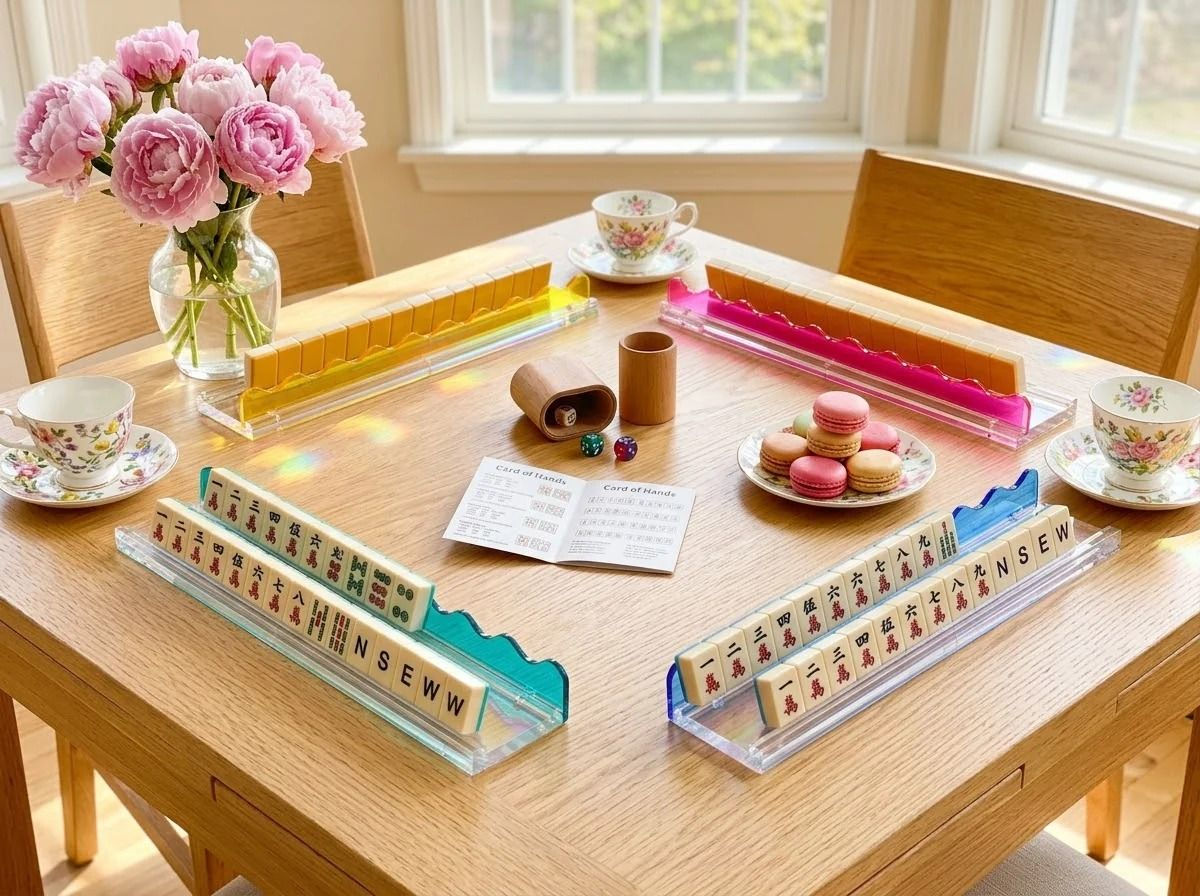
The second Charleston is the final counterclockwise pass of three tiles in the pre-game exchange ritual. In American mahjong, after the first Charleston moves tiles clockwise (each player passing right), the second Charleston reverses direction—you pass to your left. Each player passes three tiles face-down at once; you must accept what comes to you. The second Charleston happens after the first Charleston and before the optional pass-or-draw (dead-wall pull). This ritual is unique to American mahjong and must follow the National Mah Jongg League card hand requirements. If a player declares "pass" during the second Charleston, no tiles move; play begins immediately. The entire Charleston—both rounds—takes five to ten minutes depending on table pace and player familiarity with the sequence.
🀄 Shop best-selling mahjong sets →
How does the second Charleston fit into the full exchange sequence?
The full Charleston ritual consists of four distinct passes: first Charleston (three tiles to the right), second Charleston (three tiles to the left), third Charleston (one optional three-tile pass to the right, or "pass" if you're satisfied), and the dead-wall pull (each player draws one tile from the dead wall in turn order). The second Charleston happens immediately after the first. If all four players declare "pass" after the second Charleston, you skip the third Charleston entirely and move to the dead-wall pull—play begins as soon as each player has drawn one extra tile from the back of the wall. This sequence is codified in American mahjong rules and happens the same way every game.
Why do you pass left in the second Charleston instead of right?
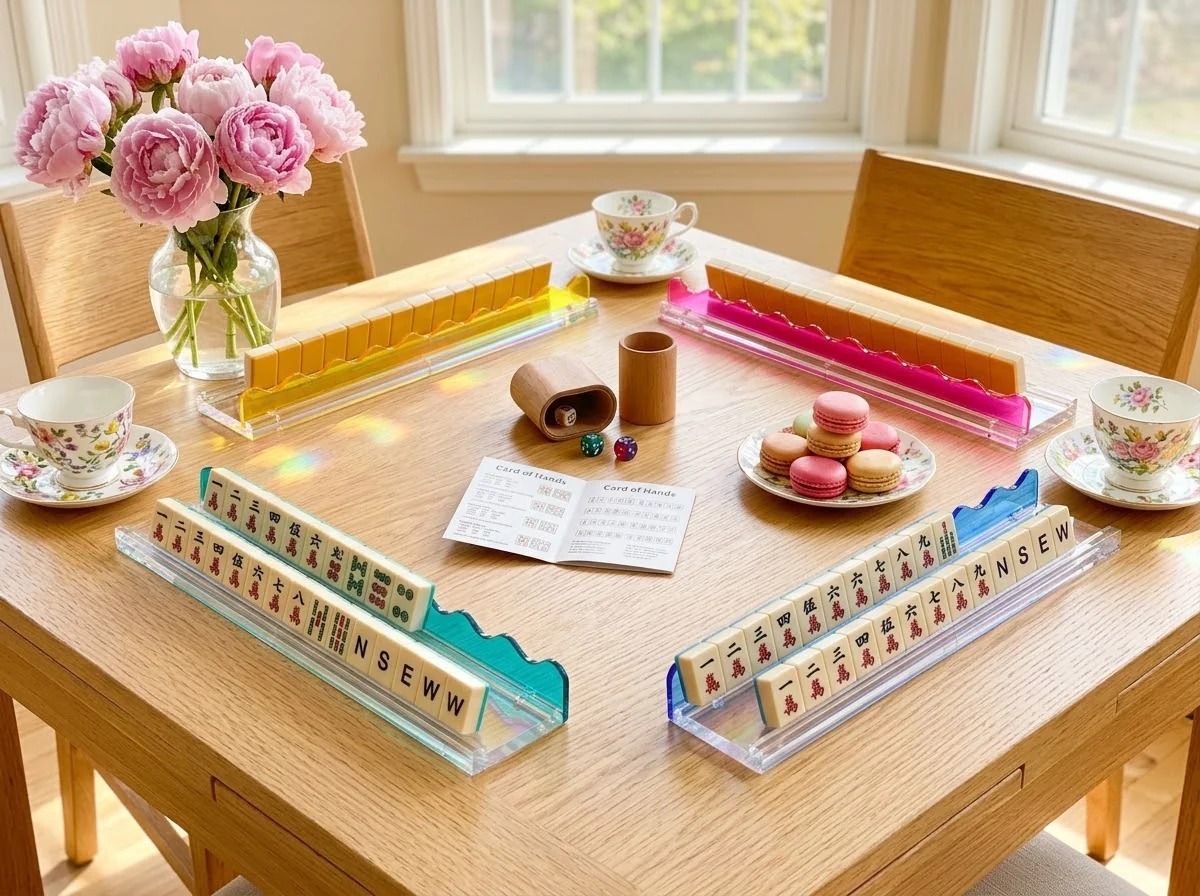
Passing left in the second Charleston creates strategic variety and redistributes tiles more evenly across the table than two consecutive right passes would. The directional shift ensures that each player has a better chance of receiving tiles they actually need, rather than allowing any one player to advantage-stack through repeated directional passing. In Chinese, Hong Kong, and Taiwanese mahjong, similar exchange rituals exist but differ in structure: some allow multiple passes, others use no pre-game exchange at all. American mahjong's Charleston—with its bidirectional passes—is one of the few variants that builds in this deliberate back-and-forth. The left-pass rule also adds a social rhythm to the table: after passing right, turning to face your left neighbor creates a natural pause and makes it easier to remember the direction change.
What happens if you pass tiles the wrong direction by accident?
If tiles are already face-down and passed in the wrong direction, most casual tables accept the mistake and continue—the game does not restart. Experienced players, however, catch the error before tiles are picked up and correct the direction immediately. If you notice the error mid-pass (some tiles have moved, others haven't), stop, collect all tiles back to the center, and restart the second Charleston. At competitive play or league tables, passing in the wrong direction is grounds for a replay of that entire round of the Charleston, as it can affect hand randomization and fairness. The best practice: call out "second Charleston—passing left" as the exchange begins, so all four players confirm the direction aloud before tiles move. This takes five seconds and prevents almost all directional confusion, especially helpful if the table includes a new player or if you host weekly games with rotating players.
What tiles should you actually pass in the second Charleston?
You pass three tiles face-down; the choice depends on what you drew in the first Charleston and what you now hold. If the first Charleston gave you duplicate winds or dragons you don't need for any hand on the card, those are strong pass candidates—you're unlikely to collect a pung (three identical tiles) by game's end if you're only down to one surplus copy. Conversely, if the first Charleston gave you tiles that match a hand you're building (say, four 5 Bams and you see two hands on the card that use 5 Bams in a pung), hold the two or three you'll need and pass the fourth. Many players pass their lowest-ranking tiles by habit, but this wastes the second Charleston's power: pass the tiles you know don't fit any live hand on the card. If you're holding 14 tiles after the first Charleston (the starting 13 plus one draw from the Charleston), you pass three and keep 11; then you draw one from the dead wall and end with 14 again at the start of play.
Can you pass jokers in the second Charleston?
No. Jokers never move during the Charleston—they stay in your hand and are never offered to pass. If you picked up a joker during the first Charleston, keep it; if you already held one before play began, it remains yours. This rule prevents players from trading luck or advantage mid-ritual and keeps the Charleston purely mechanical. Jokers are wildcards used during play to complete pungs, kongs, quints, and sextets, so they retain their full value regardless of which player holds them. The American mahjong rules treat jokers as you-own-them-for-the-duration-of-the-hand, so they do not cycle through players or the wall. When counting your 14 tiles before passing in the second Charleston, count any jokers you hold as part of your static 14, then select three of the other tiles to pass.
How do you know when all second Charleston passes are complete?
All four players pass simultaneously (face-down), then all four players simultaneously pick up what arrives from their left. There is no turn order; everyone passes at the same moment. You know the round is complete when every player has received three tiles from their left neighbor and set them on the rack or in hand. A caller (dealer or host) can say "ready?" before passing and "pick up?" after three seconds, prompting everyone to move at once. If one player is slow or distracted, the table waits; once all four have physically picked up, the second Charleston is finished and the optional third Charleston (pass-or-draw) begins. Many tables adopt a house rule that the third player to pick up calls "second complete" to signal the end, avoiding ambiguity.
🎁 See our most-loved mahjong sets & accessories →
How does the second Charleston differ across mahjong variants?
American mahjong uses a bilateral Charleston (first direction, then opposite), making it unique among major variants. Comparison of pre-game exchange across variants:
Variant | Exchange Type | Passes | Direction(s) | Jokers Move? |
American | Charleston | 2–4 | Right, then left, optional | No |
Chinese | None | 0 | N/A | N/A |
Hong Kong | Chow exchange (optional) | 1 | Either | No |
Riichi | Optional discard | 1–2 | Either | No |
Taiwanese | Optional pass | 1 | Right | No |
The second Charleston exists only in American mahjong. Chinese mahjong players draw from the wall and begin immediately with no pre-game exchange. Hong Kong players may propose a "chow" (exchange) after looking at their initial 13 tiles, but it's singular and voluntary, not ritual. Riichi players draw tiles and discard one immediately with no pre-game exchange. Understanding these differences is essential if you host games with players trained in multiple variants—make clear at the table which rules apply before the first Charleston begins.
✨ Find your Mahstead set — free US shipping →
Common second Charleston mistakes and how to avoid them
Mistake: Forgetting which direction. Solution: call out "passing left" aloud as the second Charleston begins. Hear it, confirm it, pass it.
Mistake: Passing face-up tiles. Solution: tile-handling rule is always face-down during Charleston; if you see the tiles, the exchange is invalid. Use a barrier (a mat or your other hand) to keep passed tiles hidden until they're received.
Mistake: Holding jokers back from the Charleston. Solution: jokers never move—no need to guard them or count them as part of your "pass pool." They're separate.
Mistake: Passing without a strategic reason. Solution: before passing, cross-reference your 14 tiles against the current year's National Mah Jongg League card. If a tile matches no live hand, it's a good pass candidate; if it completes a pung or matches two other tiles you hold, keep it.
Mistake: Taking too long to decide what to pass. Solution: decide during the first Charleston. By the time the second Charleston arrives, you should know your three tiles within five seconds. Pre-decide so the table keeps pace.
What to check before you buy a mahjong set for regular home play
Hand position and view clarity — if players can't see which direction the tiles are traveling during the Charleston, confusion spreads; an acrylic set with contrasting tile faces (engraved suits and numbers) keeps everyone oriented.
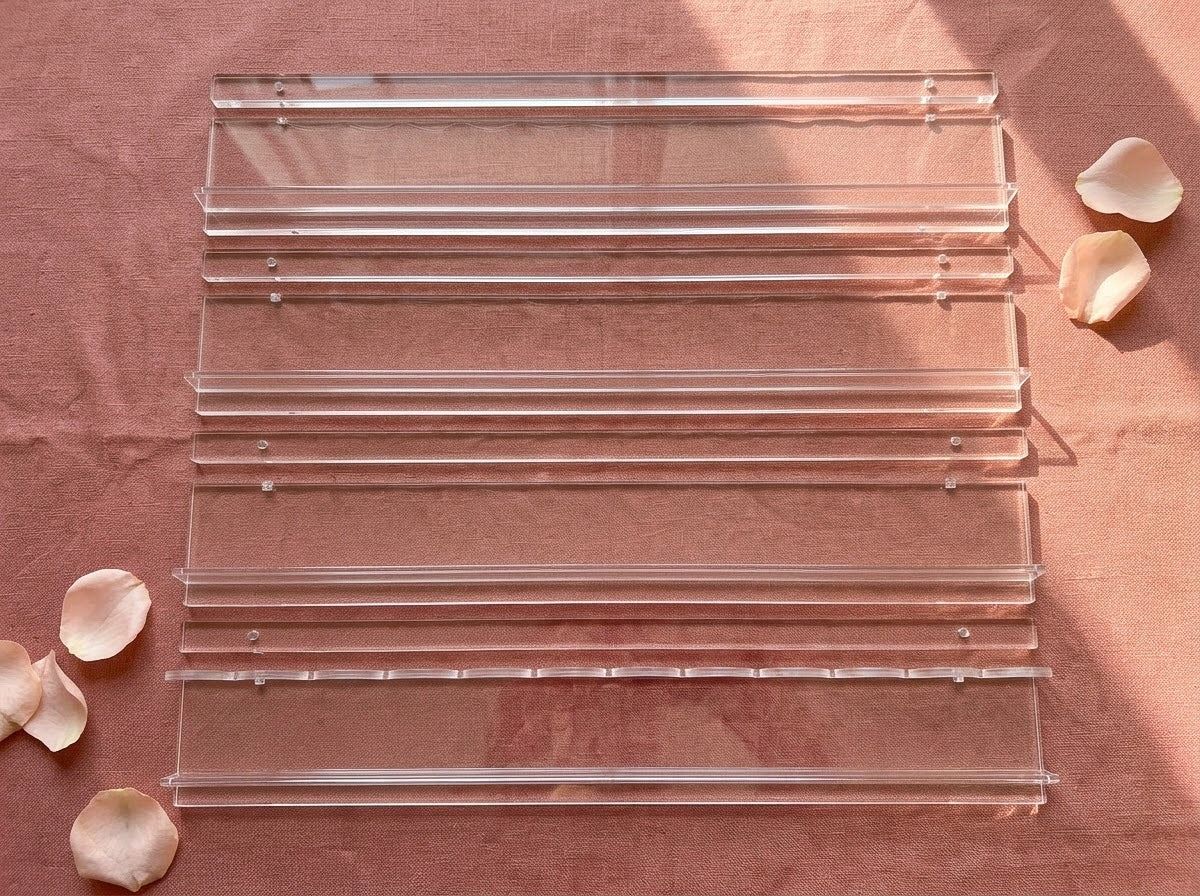
Rack functionality — pushers on your racks speed up the Charleston ritual; without them, players spend time aligning tiles, which slows the exchange.
Mat with defined zones — a mat shows clearly where the wall sits, where the Charleston tiles land, and where your hand sits. This spatial clarity prevents mispassing.
Joker visibility — if jokers are hard to spot in your set, you risk accidentally mixing them into a Charleston pass (which is invalid but causes table arguments). Choose a set where jokers are visually distinct.
Our pick for smooth, confident Charleston play
Our best-selling acrylic American mahjong sets ship with tiles large enough to read at a glance and durable enough to handle repeated handling during Charleston. Each set is engraved with clear suit markers—Bams, Craks, Dots, winds, and dragons—so you never misidentify a tile mid-pass. The sets include mahjong racks with pushers, which keep your hand organized and make the third pass (pass-or-draw) faster and cleaner. If you host weekly games, pair your set with one of our mahjong mats—a mat defines the wall, the discard center, and the Charleston passing zones, so your table runs smooth every single game.

FAQ
Can the second Charleston be skipped?
No. American mahjong requires the second Charleston as a mandatory part of the ritual. You may skip the third Charleston (pass-or-draw) if all players agree, but the first and second Charleston always happen.
What if someone passes four tiles instead of three?
Stop immediately and recount. The passer pulls one tile back, and the second Charleston restarts. If the error is discovered after tiles are picked up, most casual tables accept it; competitive play may call for a full second Charleston replay.
Do you announce which tiles you're passing?
No. All passes in the Charleston are face-down and silent. You never say what you're passing or ask what you're receiving.
What if you accidentally see a tile while passing?
If you see your own tile before you pass it, no problem—you chose it. If you see a tile arriving from your left neighbor, do not reveal it to the table. Set it aside face-down and continue; reveal it when you pick up all three and add them to your hand.
How many tiles do you have in your hand after the second Charleston?
You have 11 tiles after passing 3, then you draw 1 from the dead wall for a total of 12 tiles before the optional third pass. If the third pass happens, you pass 3 and draw 1 again, ending with 14 tiles at game start. If the third pass is skipped (all players pass), you draw 1 from the dead wall only and have 12 tiles total.
Can you refuse the second Charleston?
No. Everyone must accept whatever three tiles arrive from their left neighbor. Once they touch the table, they're yours; you may not negotiate or swap. "Passing" in American mahjong only applies to the optional third Charleston.


View More
View More
View More
